In This Guide
The rain in Castilla doesn't politely drizzle. It dumps. Sheets of water hammer the corrugated roofs along Carrera 65 until conversation becomes impossible, and then — maybe twenty minutes later — it just stops. The gutters drain, somebody cranks up vallenato from a second-floor window, and the neighborhood slides back into its evening like nothing happened.
I walked into Castilla on a Thursday in late March, shoes already soaked from a downpour near Caribe station, and ended up staying until almost midnight watching a tejo league match behind a tienda that doesn't appear on Google Maps. That night rearranged what I thought I knew about Medellín's barrios populares. Most travel coverage sends you to Comuna 13 for street art and calls it a day. Castilla has its own mural corridor, its own food logic, and its own way of spending a night — and almost nobody writes about it.
1. Getting there, and why the Metro matters more than you think
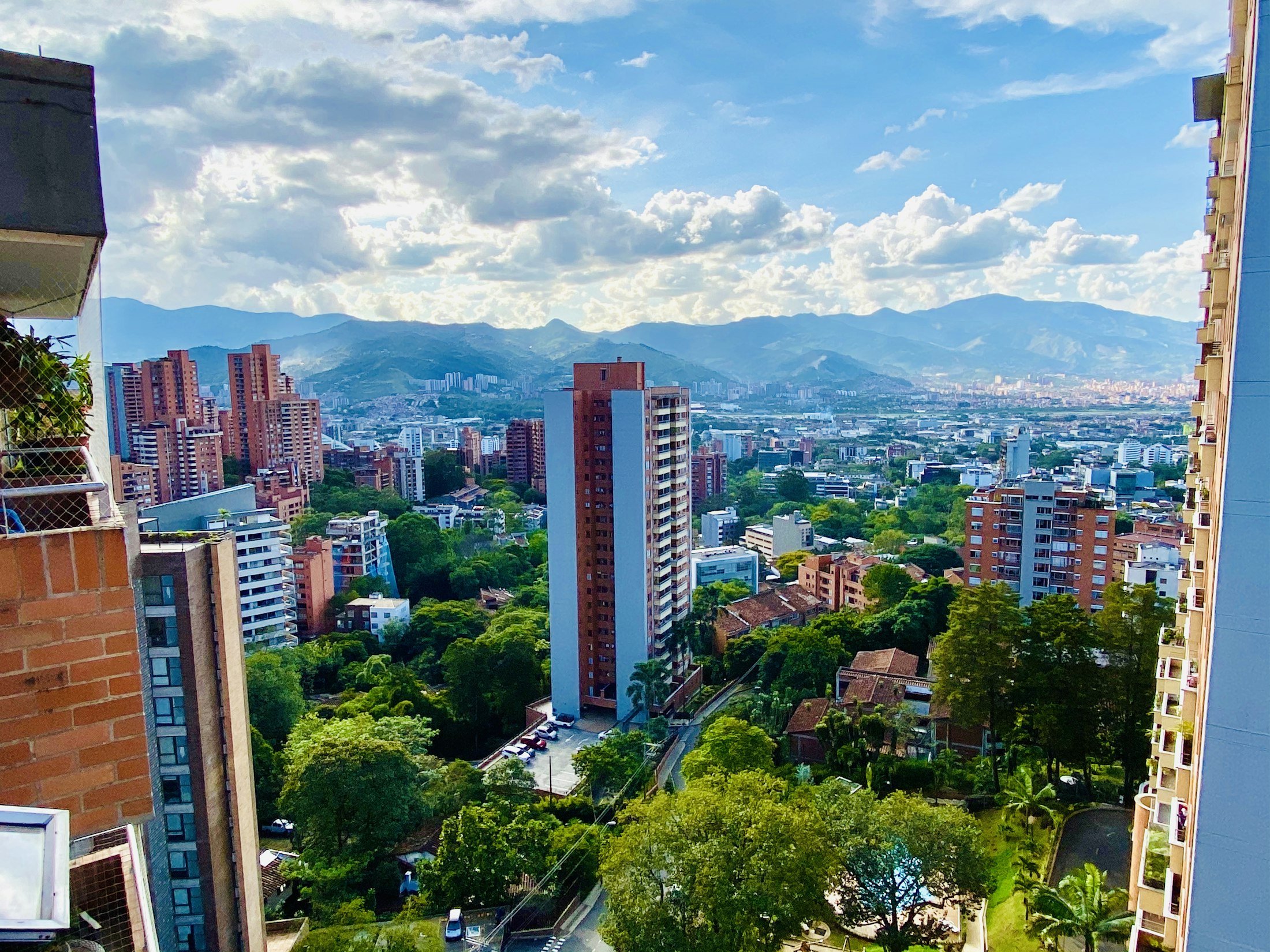
Castilla is in Medellín's northwestern sprawl, Comuna 5. From El Poblado — where most visitors sleep — you're looking at a Metro ride of about 35 minutes to Caribe station, then a 10-minute walk northwest along Carrera 65. A taxi from Laureles runs around 12,000–15,000 COP, but the Metro costs 2,950 COP per trip and drops you closer to the action.
Don't take an Uber here after 10 p.m. and expect a smooth pickup on the way back. Drivers cancel frequently in this part of the city after dark, and cell signal gets spotty on some of the side streets near the tejo courts. I learned that the hard way. Take the Metro back toward Caribe or flag a yellow cab on the main drag.
March through May brings afternoon storms almost daily, usually between 2 and 5 p.m. Arrive after 5:30 and you'll catch the post-rain cool, which drops temps from the low 80s to maybe 72°F. That window — 6 to 9 p.m. — is when Castilla actually wakes up.
Pro tip:Caribe station has a Civica card reload machine that accepts cash. Load at least 10,000 COP so you're not fumbling at turnstiles later.
2. The mural corridor nobody puts on the itinerary
Skip the guided mural tours in Comuna 13 if you've already done them once. I know that's borderline heresy in Medellín travel circles, but hear me out: Comuna 13's escalators now draw so many tour groups that the art functions as backdrop for selfies, not something you actually stand in front of and read. Castilla's mural corridor — concentrated along Calle 93 between Carreras 65 and 70 — doesn't have escalators or tour guides or souvenir stands. It has paint on concrete, and neighbors who'll tell you who made it if you ask.
The murals here skew political. Displacement, memory, Afro-Colombian identity. One piece near the corner of Calle 93 and Carrera 68, by a local collective whose tag reads "MalaHierba," covers an entire two-story wall with hands reaching out of floodwater. No plaque. No QR code.
You can walk the full stretch in about 25 minutes if you don't stop, but stopping is the point.
3. Tejo league nights behind the tienda
Tejo is Colombia's ancestral sport: you hurl a metal puck at a clay-packed board rigged with small paper triangles filled with gunpowder. When you hit one, it explodes. Beer is involved.
Castilla runs informal tejo leagues on Thursday and Saturday nights. The court I stumbled into sits behind a tienda on Carrera 67 near Calle 96 — look for the hand-painted "TEJO" sign and follow the sound of small detonations. Entry for a lane runs about 5,000 COP per person. Beers (Pilsen or Águila, no craft options) go for 3,000–4,000 COP. League play starts around 7:30 p.m., but the courts open earlier if you want to practice without an audience.
Here's the thing most guides get wrong about tejo: they frame it as a novelty activity, something to check off. In Castilla, these Thursday leagues have teams that have played together for years. Decades, in some cases. You can absolutely join a pickup game — people were generous with me — but show respect. Don't treat the court like a bar with a gimmick.
The gunpowder smell sticks to your clothes. Fair warning.
Pro tip: Bring closed-toe shoes. The clay gets slick, and I watched a guy in sandals eat it hard on his follow-through.
4. Chicharrón and the bandeja question
Castilla's food scene orbits pork. Specifically chicharrón — big slabs of pork belly fried until the skin cracks under a fork. The spot you want is Donde Memo, on Carrera 65 a few blocks south of Calle 93. A plate of chicharrón with arepa, rice, and beans costs around 18,000–22,000 COP depending on the cut. They serve until they run out, which on Saturdays can be as early as 7 p.m.
I'll be direct: skip the bandeja paisa at Donde Memo. It's fine, but every restaurant in Antioquia serves bandeja paisa; it's the default. The chicharrón here, ordered solo or as part of a "picada" shared plate, is the thing that justifies the trip. The skin has a shatter to it that I haven't found consistently in Laureles or El Poblado. Ask for it "bien tostado" if you want maximum crunch.
Across the street, a juice cart sets up most evenings selling lulo and maracuyá in bags with straws. 2,000 COP. Cold, tart, necessary after pork.
Pro tip:Donde Memo doesn't take cards. Bring cash. The nearest ATM is back toward Caribe station on Carrera 65.
Stay in Medellín
Top-rated hotels near Medellín
Best locations · Verified reviews · Free cancellation
View deals
Expedia →5. What happens after 9 p.m.
Castilla isn't a nightlife neighborhood in the way Provenza or Parque Lleras are. No cocktail bars. No DJ sets. What there is: corner tiendas where plastic chairs appear on the sidewalk, reggaeton bleeding from car speakers, and conversations that run long.
A billiards hall on Calle 95 near Carrera 66 stays open until midnight most weeknights. Games cost 4,000 COP per round. The tables lean slightly — play a practice round before you bet anything.
I wouldn't recommend wandering too far off the main carreras alone after 10 p.m. if you don't know the area. Castilla is not dangerous in the way some outdated security briefings suggest, but it's residential, poorly lit on side streets, and you're clearly a visitor. Stick to streets with foot traffic. The Metro's last run from Caribe is around 11 p.m.
6. Is Castilla worth the trip across town?
Depends on what you came to Medellín for. If your itinerary is Guatapé day trip, Comuna 13 tour, rooftop bar in El Poblado — Castilla won't make sense to you, and that's fine.
But if you want to sit in a plastic chair next to a tejo court while gunpowder cracks and somebody's abuela walks past carrying a bag of arepas, and nobody is performing anything for your benefit — then yes. Thursday night. After the rain. Bring cash and closed-toe shoes.
Pro tip: Thursday is the best single night to visit — tejo leagues run, Donde Memo is fully stocked, and the mural corridor has decent foot traffic without feeling crowded.
Stay in Medellín
Top-rated hotels near Medellín
Best locations · Verified reviews · Free cancellation
View deals
Expedia →Essential tips
Afternoon downpours hit Castilla almost daily from March through May, usually 2–5 p.m. Arrive after 5:30 to dodge the worst of it and catch the cooler post-rain window.
Carry cash in denominations of 10,000 and 20,000 COP. Most tiendas, tejo courts, and food stalls in Castilla don't accept cards. The closest reliable ATM is on Carrera 65 near Caribe Metro station.
Metro last departure from Caribe station is around 11 p.m. If you're staying for late tejo, arrange a yellow cab pickup on the main road — Uber availability drops sharply after 10 p.m. in this area.
Wear closed-toe shoes with some grip. Tejo courts have slick clay, and Castilla's sidewalks flood briefly during downpours — flip-flops are a liability.
Ready to visit Medellín?
Book your hotel, flights, and activities through our Expedia-powered search.