In This Guide
- 1.Getting there and the weather nobody warns you about
- 2.The champeta record dealers on Calle del Pozo
- 3.Fritter smoke: the morning economy of fried things
- 4.Plaza de la Trinidad before 10, after 10
- 5.Street art: what's worth looking at, what's wallpaper
- 6.Where to eat when you're past the fritter stage
- 7.The domino tables aren't a tourist attraction
- 8.Drinks after dark, and one bar to avoid
- 9.When to come, when to stay away
The first time I walked into Getsemaní at 6:30 a.m., I thought I'd gotten the neighborhood wrong. No backpackers doing mezcal shots on Plaza de la Trinidad. No drum circles. Just a woman dragging a cooler of bollo de mazorca across Calle de la Sierpe, a man hosing down the sidewalk in front of his house, and champeta leaking out of a speaker somewhere I couldn't locate. That's the version of this neighborhood I keep coming back for.
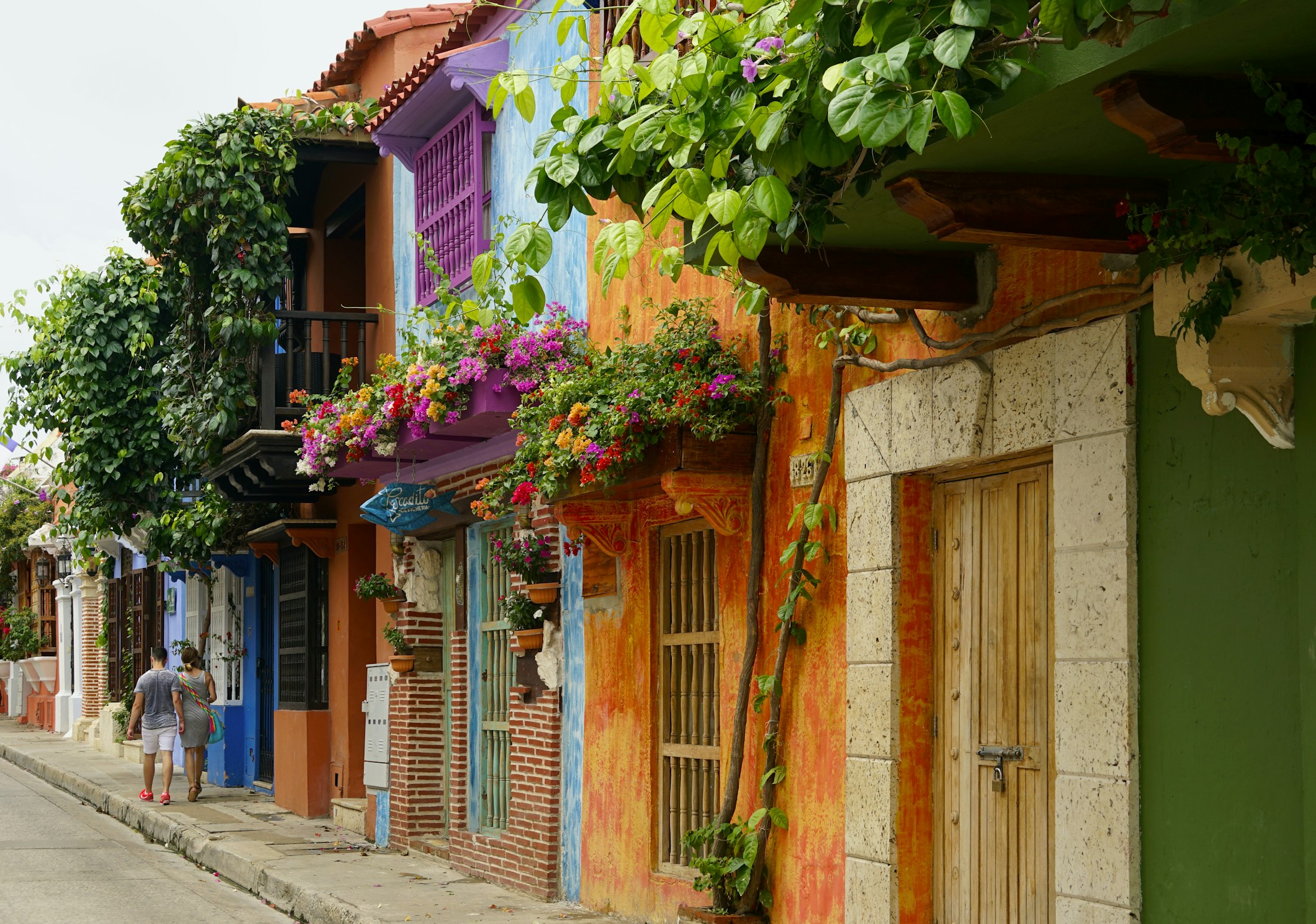
Most guides will tell you Getsemaní is Cartagena's creative heart, and sure, that's partly true. But the creative-heart framing flattens it. This is a residential neighborhood that has survived gentrification attempts, colonial neglect, and a decade of hostel developers sniffing around its edges. What keeps it interesting isn't the street art — though I'll get to that — it's the daily commerce that predates the mural tours. Fritter smoke at dawn. A guy selling used champeta vinyl out of a doorway on Calle del Pozo. Domino games that don't pause when you walk by.
1. Getting there and the weather nobody warns you about
Getsemaní sits just outside the walled city, across Avenida Venezuela. From the airport Rafael Núñez, the drive runs about 20 minutes without traffic, 40 with it — and Cartagena traffic at midday is a punishment. A taxi from the airport should cost around 25,000–30,000 COP. Don't let anyone charge you 50,000.
Now the weather. Cartagena is hot. Not "warm with a breeze" hot. I mean 33°C with humidity that sits on your chest like a weighted blanket, nearly every month of the year. The only real relief comes between January and March, when the trade winds pick up and nights drop to a tolerable 26°C. The rainy season — roughly October through November — brings afternoon downpours that flood the lower streets near Calle Larga. Pack shoes you don't care about.
Pro tip: Mornings before 9 a.m. and evenings after 5 p.m. are the only comfortable walking windows. The midday heat will end your sightseeing faster than any museum closing time.
2. The champeta record dealers on Calle del Pozo
Champeta is Cartagena's sound — Afro-Caribbean, percussion-heavy, built for enormous speakers at neighborhood picós (sound-system parties). Most tourists hear it thumping from a bar on Plaza de la Trinidad and leave it at that. That's a mistake. The music has a physical supply chain, and part of it runs through Getsemaní.
On Calle del Pozo, a couple of doorways function as informal record shops. One guy — I never got his full name, everyone calls him El Flaco — sells used vinyl and burned CDs from a folding table. His collection leans toward 1980s and '90s champeta criolla: Louis Towers, Viviano Torres, Charles King. Prices range from 5,000 to 20,000 COP depending on condition and how much he thinks you know. He's there most mornings from around 8 to noon, then disappears.
I made the mistake of trying to haggle him down on a Viviano Torres LP my first visit. He just stared at me, pulled the record back, and started talking to someone else. Fair enough.
Pro tip: If you want to experience a full picó event, ask around about weekend parties in Olaya Herrera or Bazurto — not in Getsemaní itself. The real sound-system culture happens in the outer barrios.
3. Fritter smoke: the morning economy of fried things
By 7 a.m., the fritter vendors are already working. The smell — corn oil hitting hot surfaces, dough crisping — drifts across several blocks near the intersection of Callejón Ancho and Calle de la Sierpe. You'll find arepas de huevo (whole eggs sealed inside fried corn dough, 3,000–4,000 COP), carimañolas (yuca fritters stuffed with seasoned meat, around 2,500 COP), and empanadas that cost less than a dollar.
The best arepa de huevo I've had in Getsemaní came from a woman who sets up a small cart near the corner of Calle del Espíritu Santo most weekday mornings. No sign. She fries in a blackened wok over a gas burner, and the egg inside comes out just barely set — still soft at the center. Get there before 8:30 or she runs out.
Skip the overpriced arepas at the tourist-facing cafés on Plaza de la Trinidad. They charge 12,000 COP for something worse than what you'll get on the street for a third of that price. The café versions sit under heat lamps. The street versions come straight from the oil.
4. Plaza de la Trinidad before 10, after 10
The plaza operates on a split personality. Before 10 a.m., it belongs to the neighborhood: old men on benches, kids cutting through on the way to school, someone sweeping the steps of the Iglesia de la Santísima Trinidad. After 10, the hostels empty out and it becomes a performance space — jugglers, guys selling mojitos out of thermoses, acoustic guitar that nobody asked for.
I don't hate the nighttime plaza. The energy is real. But I think the consensus that "Trinidad comes alive at night" has it backwards. The plaza is most alive at dawn, when it's doing what a neighborhood square is supposed to do: functioning as a living room for the people who actually live there.
Grab a beer from one of the tiendas on the east side — a Club Colombia runs about 4,000 COP — and sit on the church steps. Don't buy drinks from the walking vendors unless you want warm Aguila in a plastic cup for twice the price.
Pro tip:The church itself is usually open mornings until about noon. It's plain inside — whitewashed walls, wooden pews — but cool and quiet, which in Cartagena heat counts for a lot.
5. Street art: what's worth looking at, what's wallpaper
Y'all have seen the Instagram posts. Getsemaní's murals get photographed more than probably any other surface in Colombia outside of Guatapé. Some of them deserve it. The large-scale work by Jade Rivera and other Colombian muralists along Callejón Ancho is genuinely good — political, layered, tied to the neighborhood's Afro-Colombian identity.
But a lot of the newer stuff is decorative filler. Commissioned by hostel owners. Inoffensive geometric patterns and cartoon animals that exist to be backdrops for selfies. Walk past Calle de la Sierpe and you can feel exactly where the art shifts from community expression to real-estate marketing.
The piece I keep going back to is a large mural of a woman's face on Calle del Guerrero, near the corner with Callejón Angosto. I don't know the artist. The paint is weathering badly. It looks better for it.
6. Where to eat when you're past the fritter stage
Café Stepping Stone, on Calle del Pozo No. 25-111, is a social enterprise that trains local youth in hospitality. The food is good without needing the backstory as justification — their limonada de coco alone is worth the walk. Lunch plates run 18,000–28,000 COP.
For something heavier, Restaurante Celele (Calle del Espíritu Santo) does modern Caribbean cooking that pulls from Afro-Colombian and indigenous ingredients. It's not cheap — expect 80,000–120,000 COP per person with drinks — but the research behind the menu is serious. They forage half their ingredients from markets and surrounding countryside. The kind of place where the waiter can explain what arracacha is and why it's in your broth.
Da Pietro, on Calle de la Sierpe, does wood-fired pizza that sounds like it shouldn't work in this context but does. Margherita for around 28,000 COP. Good for the night when you can't face another coconut rice.
Pro tip:Celele doesn't take walk-ins easily. Reserve at least a day ahead, two on weekends.
Stay in Cartagena
Top-rated hotels near Cartagena
Best locations · Verified reviews · Free cancellation
View deals
Expedia →7. The domino tables aren't a tourist attraction
On several corners — particularly along Calle Larga and near the Parque Centenario edge of the neighborhood — men set up folding tables and play dominoes in the afternoon shade. This is not a performance. Nobody is doing it for your benefit.
I mention this because I've seen travel blogs describe these games as "local color worth observing" as if the players are exhibits. They're not. If you walk by and someone waves you over, sit down. Otherwise, keep moving.
Getsemaní's biggest tension is the gap between what residents do for themselves and what gets repackaged for visitors.
8. Drinks after dark, and one bar to avoid
Café Havana, on the corner of Calle de la Media Luna and Calle del Guerrero, gets the most press. Live salsa bands, strong rum drinks, a storied reputation. Honestly, I think it's overrated — the music is usually good, but the crowd has tipped toward guided-tour groups who clap on the wrong beat, and the cover runs around 20,000 COP on weekends. Go on a Thursday if you can — smaller crowd, same band quality.
Alterna Bar, a couple blocks south on Calle del Pozo, pulls a younger local crowd and plays champeta and reggaetón at volumes that make conversation optional. Beers around 7,000 COP. No cover most nights.
Avoid the nameless cocktail bars that have sprouted along Calle de la Sierpe in the last two years — the ones with Edison bulbs and menus in English. They charge 35,000–45,000 COP for drinks you can get at Café Havana for less, and the bartenders look miserable.
Pro tip: Café Havana gets packed by 11 p.m. on Fridays and Saturdays. Arrive by 9:30 to get a table without waiting.
9. When to come, when to stay away
December through March is high season. Hotels double their rates, Plaza de la Trinidad turns into a nightly block party, and the neighborhood strains under the weight of group tours that roll through every 20 minutes. If you're here in January, you'll catch the Fiestas de la Candelaria preparations, which are worth seeing — but you'll also fight for sidewalk space.
The sweet spot is late March through May, or September. Prices drop. The heat is still oppressive, but the crowds thin out enough that Getsemaní starts to feel residential again. Last time I was there in late April, I had entire blocks to myself at 8 a.m.
June through August brings another tourist wave — summer vacationers from North America and Europe. Manageable but not quiet. October and November are the wettest months; the streets flood, some vendors don't bother setting up, and the murals look better in the rain than in the flat midday sun. That last part isn't a reason to come, but it's true.
Pro tip:If you're booking accommodation in Getsemaní itself, look for places on upper floors. Ground-level rooms on streets near Calle Larga can take water during heavy October rains.
Stay in Cartagena
Top-rated hotels near Cartagena
Best locations · Verified reviews · Free cancellation
View deals
Expedia →Essential tips
Carry small bills — 2,000 and 5,000 COP notes. Street vendors and corner tiendas rarely break 50,000, and they won't pretend to try.
Use InDriver or DiDi instead of hailing street taxis. Cartagena cabbies routinely quote tourists 3x the real fare from the walled city to Getsemaní, which should be an 8,000 COP ride at most.
Sunscreen reapplication matters here more than most places. The equatorial sun combined with ocean reflection will burn you through cloud cover in under 40 minutes.
Getsemaní is generally safe during the day, but keep phones in front pockets after dark, especially on the quieter streets south of Calle Larga. Petty theft spikes during high season.
Ready to visit Cartagena?
Book your hotel, flights, and activities through our Expedia-powered search.


