In This Guide
- 1.Getting there and what the weather actually does in July
- 2.The porches are the whole point
- 3.Afternoon tinto, and why you should stop ordering café con leche
- 4.Museo de Antioquia is close — but time it right
- 5.Walking route: Calle 51 to the Cementerio de San Pedro
- 6.Where to eat without leaving the neighborhood
- 7.The houses nobody's restoring
- 8.What to do when it's actually raining
- 9.Getting out before dark
Rain hits Medellín's Prado neighborhood around 2 p.m. most July afternoons, and the locals don't scatter — they just move under the nearest Art Deco porch and wait it out with a tinto in hand. I walked the district for three days last July and spent roughly half that time standing under eaves, which turned out to be the best way to actually look at the architecture.
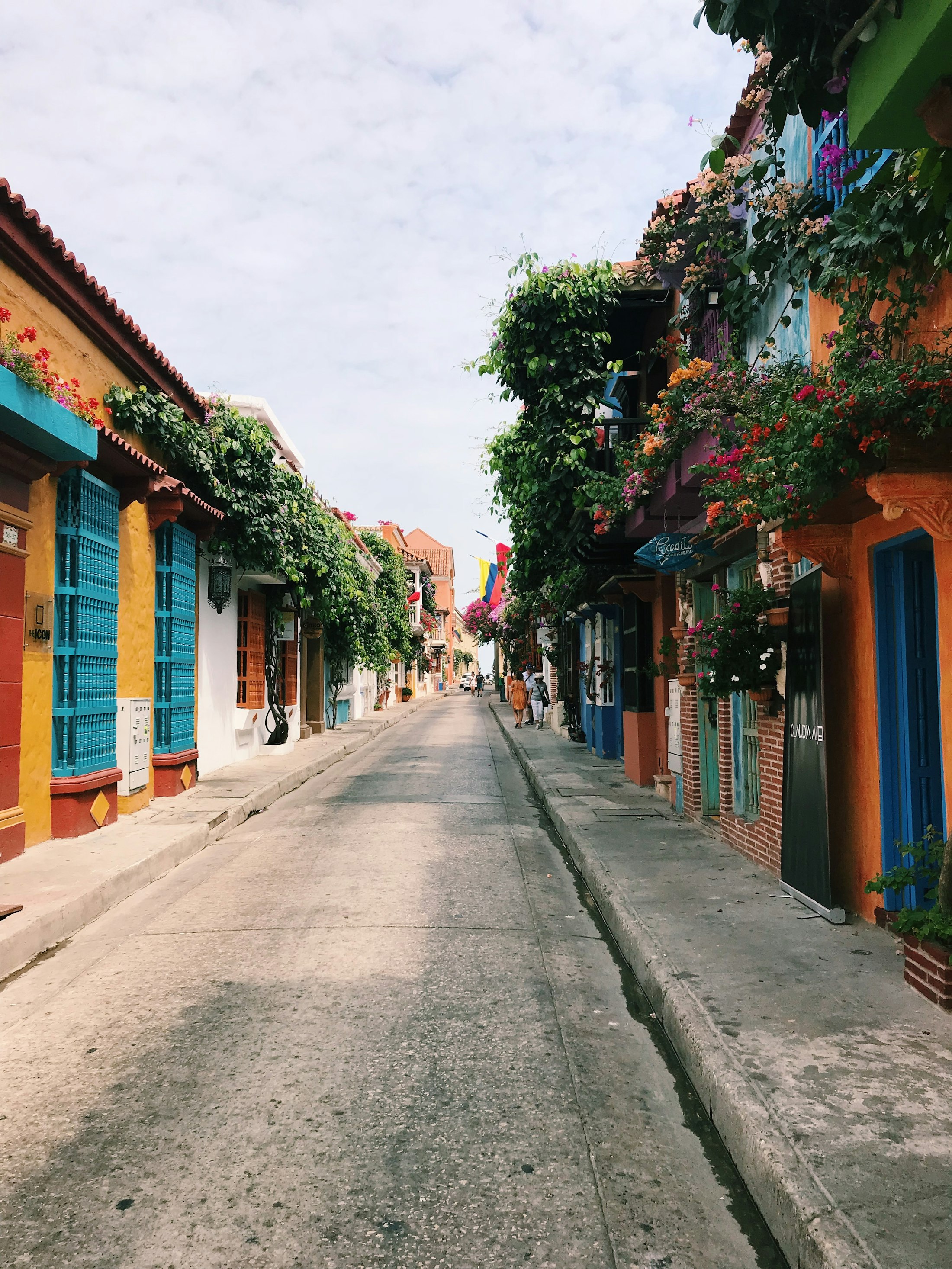
Prado sits north of the city center, a fifteen-minute cab ride from El Poblado that most visitors never bother to take. That's fine by me. The neighborhood is a declared heritage zone — over 600 properties protected by law — and it moves at the pace of an old man reading the newspaper. No rooftop bars. No hostel pub crawls. Just block after block of early-twentieth-century houses with geometric facades going soft at the edges.
1. Getting there and what the weather actually does in July
From El Poblado, a taxi to Prado runs about 12,000–15,000 COP. The Metro is cheaper: take Line A to Estación Universidad and walk northeast for ten minutes along Carrera 51. You'll know you've arrived when the streetscape shifts from commercial clutter to wide sidewalks and iron gates.
July sits in the middle of Medellín's second rainy season. Mornings are usually clear and warm — 24–27°C — but by early afternoon clouds stack up fast. Downpours tend to be hard and short, forty-five minutes to an hour. Bring a compact umbrella or accept getting soaked; ponchos from street vendors run about 3,000 COP. The rain cools things down nicely, and by 4 p.m. the light turns golden and the streets smell like wet concrete and gardenia.
Pro tip:Don't trust the morning sun. Carry a dry bag or Ziploc for your phone — July rain comes sideways when the wind picks up on Calle 51.
2. The porches are the whole point
Most guides will tell you to photograph the facades, and sure, they're worth it. But the porches are where Prado actually lives. These are deep, tiled overhangs — some with geometric railings, others with curved plaster columns — designed for a climate where afternoon rain is a daily fact. Stand under the porch of the Casa Barrientos on Calle 51 near Carrera 46 and you can watch the water sheet off a 1930s cornice while the owner's cat stares at you from behind the window glass.
Some houses show Republican-style details, others lean Deco, a few go full neo-Gothic. The mix doesn't feel chaotic — it feels like a neighborhood built by families with different tastes and the same budget range. Look for the tilework on the porch floors. Many use encaustic cement tiles in patterns you won't see replicated anywhere in the tourist shops downtown.
3. Afternoon tinto, and why you should stop ordering café con leche
Here's my contrarian position: café con leche is a waste of time in a neighborhood like Prado. Tinto — the small, sweet black coffee served in a plastic cup for 800–1,500 COP — is what people here actually drink, and it's better suited to the rhythm of the place. You don't sit down for a tinto. You take it standing, on a porch or a sidewalk, and you finish it in four sips. A punctuation mark in the day, not a destination.
The señora who sells tinto from a thermos cart near the corner of Carrera 45 and Calle 50 has been there every weekday afternoon for years, according to the neighbors. No sign. No menu. Tinto or agua de panela.
Skip the specialty coffee shop on Calle 49 with the chalkboard menu and the pour-over setup. It's fine coffee, but you'll pay 9,000 COP for the same experience you can get in El Poblado. You came to Prado for something different.
Pro tip:Tinto from street vendors is pre-sweetened. If you want it without sugar, say 'amargo' when you order.
4. Museo de Antioquia is close — but time it right
The Museo de Antioquia isn't technically in Prado, but it's a twelve-minute walk south to Plaza Botero, and you'll probably end up there anyway. The collection of Fernando Botero's work is the draw, obviously, but the second and third floors hold rotating exhibitions of contemporary Colombian artists that are often more interesting than the permanent stuff.
Admission is 20,000 COP for foreign visitors. Go on a weekday morning before 11 a.m. — by noon the ground floor fills with tour groups circling the Botero sculptures, and the plaza outside becomes a slow-moving crowd around the bronze figures. I made the mistake of arriving on a Saturday at 1 p.m. once and spent more time in other people's selfie backgrounds than looking at art.
The museum café serves decent lunch plates for around 18,000–22,000 COP, and the air conditioning alone is worth stopping in after walking Prado's humid streets.
Pro tip:The museum is closed on Tuesdays. Check their Instagram (@museodeantioquia) for current hours — they've shifted schedules more than once since 2023.

Stay in Medellín
Top-rated hotels near Medellín
Best locations · Verified reviews · Free cancellation
View deals
Expedia →5. Walking route: Calle 51 to the Cementerio de San Pedro
Start at the intersection of Calle 51 and Carrera 46. Walk north. The first four blocks give you the densest concentration of Deco and Republican houses. Pay attention to the second stories — the balconies have ironwork that varies house to house, and some still have original stained glass transoms.
At Carrera 51, turn east toward the Cementerio de San Pedro. The cemetery is free to enter and operates as a museum-park. Marble sculptures, elaborate family mausoleums, and a silence that feels almost aggressive after the street noise. Guided tours run on weekends — ask at the entrance gate for times, which change seasonally.
Thirty minutes without stops. With stops — and you will stop — budget ninety.
6. Where to eat without leaving the neighborhood
Prado doesn't have a food scene in the way El Poblado does, and that's part of what makes eating here feel normal instead of curated. Restaurante Doña Eunice on Carrera 46 near Calle 52 serves a corrientazo — the set lunch of soup, rice, beans, protein, and juice — for about 15,000 COP. The soup changes daily.
For breakfast, the panaderías along Calle 50 open by 6:30 a.m. Pandebono and buñuelos straight from the oven, 1,500–2,500 COP each. Pair with a tinto and you're out the door for under 5,000 COP.
There's an empanada stand near Estación Universidad that gets hyped on food blogs. The empanadas are fine — but they're the same empanadas you'll find at fifty other stands across the city. Don't make a special trip.
Pro tip:Corrientazo places serve lunch from about 11:30 a.m. to 2 p.m. After that, the kitchen's done. Arrive by noon or eat buñuelos.
Stay in Medellín
Top-rated hotels near Medellín
Best locations · Verified reviews · Free cancellation
View deals
Expedia →7. The houses nobody's restoring
Not everything in Prado is polished. Whole blocks have houses with cracked facades, collapsed balconies, and vegetation pushing through the roof tiles. Heritage protection doesn't come with heritage funding, and some families have held these properties for three generations without the money to maintain them.
This is what makes Prado different from a museum. A woman hangs laundry on a second-floor balcony whose railing is half gone. Kids ride bikes past a house with an exquisite tile entryway and a front door that doesn't close all the way.
I find this more honest than a fully restored heritage district. Your mileage may vary.
8. What to do when it's actually raining
Wait it out. Seriously.
Ducking into a tienda on any corner will get you a cold Pilsen for 3,500 COP or a Colombiana soda for 2,500 COP. Stand under the awning, watch the water run down the gutters, talk to whoever else is standing there. Forty-five minutes later the sun's back and the streets are steaming.
If you need structure, the Centro Colombo Americano on Carrera 45 No. 53-24 has a small gallery and a library. Free entry. Air-conditioned, quiet, and almost always empty in the afternoon.
Pro tip: Wet sidewalks in Prado get slick — the old tile sections especially. Wear shoes with actual tread.
9. Getting out before dark
Prado is safe during the day, but it empties out after sunset. Street lighting is inconsistent on the residential blocks, and there's no nightlife infrastructure here. By 7 p.m. it's a different place — quiet in a way that feels less peaceful and more vacant.
Head back to the Metro before 6:30 p.m. or grab a cab from Carrera 46. A ride to El Poblado at that hour runs about 15,000 COP, maybe 18,000 during light rain. InDriver and DiDi work more reliably here than hailing on the street.
If you come to Prado expecting a neighborhood that performs for tourists, you'll be disappointed. If you come to see how a Colombian city lived a hundred years ago and how it's still living now, block by crumbling block — that's Prado in July.
Essential tips
July rain usually hits between 2–4 p.m. Plan indoor activities for that window and save walking for morning or late afternoon.
Almost everything in Prado is cash-only — street vendors, tiendas, small restaurants. Carry bills under 20,000 COP; breaking a 50,000 note at a corner shop is a hassle.
Some Prado homeowners don't love people photographing their houses up close. A nod or a quick '¿puedo tomar una foto?' goes a long way. Most will say yes.
Estación Universidad (Metro Line A) is your anchor point. It's the closest stop to Prado and connects directly to El Poblado in about 20 minutes. Single ride: 2,950 COP with a Cívica card.
Ready to visit Medellín?
Book your hotel, flights, and activities through our Expedia-powered search.


