In This Guide
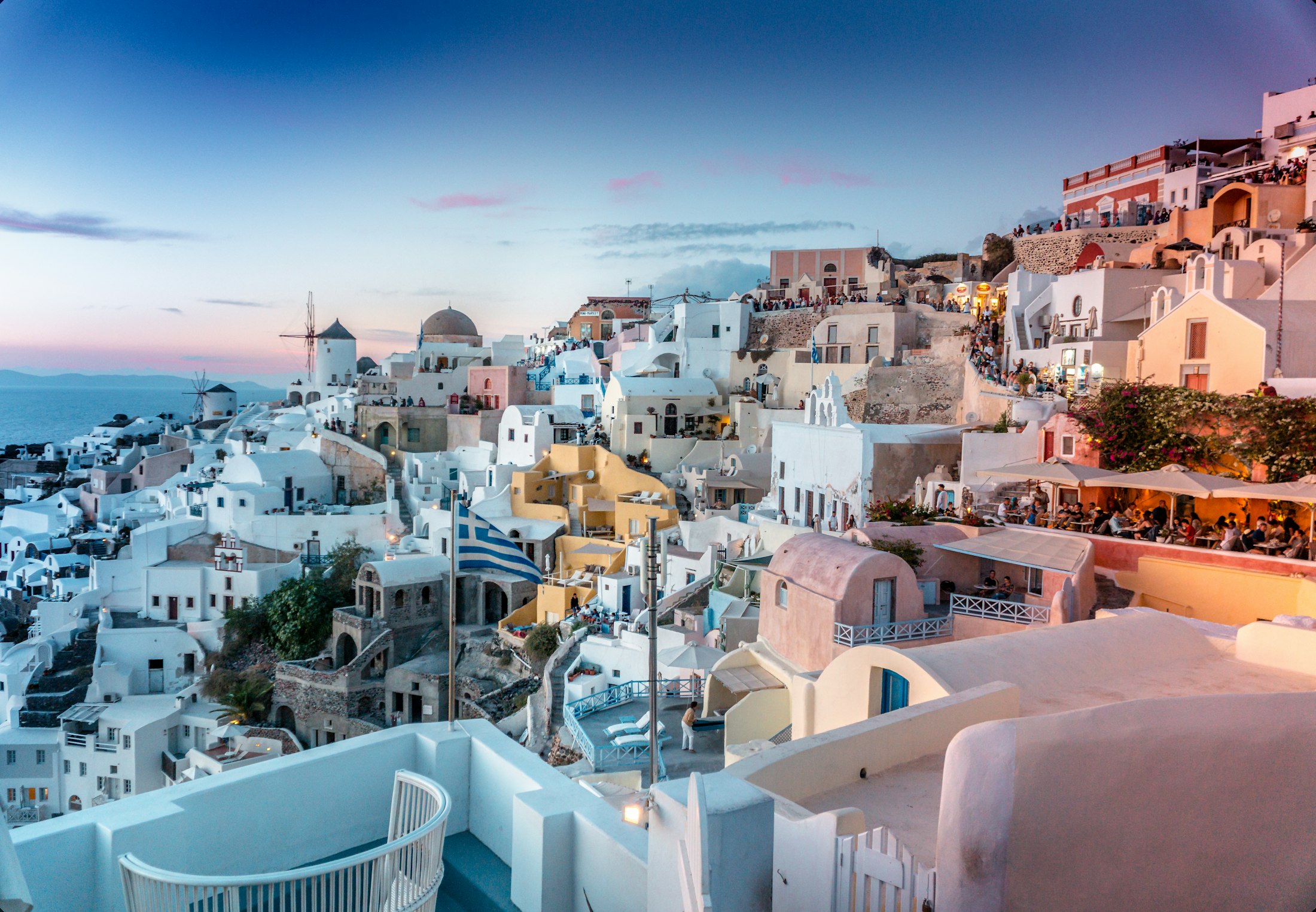
At 1:30 a.m., a man I'd never met handed me a curved grape knife and pointed at a row of Assyrtiko vines trained low in the kouloura basket style, maybe 30 centimeters off the volcanic soil. The headlamp he gave me was already dying. This is the nychteri harvest in Emporio, Santorini's most fortified medieval village — grapes picked at night to avoid heat damage, then pressed before dawn in canava cellars carved into the pumice centuries before anyone thought to put a blue-domed church on a postcard.
The word nychteri literally means "of the night." The resulting wine is a barrel-aged white with an oxidative edge and salinity that tastes like the caldera smells at low tide. Most visitors to Santorini drink it at sunset bars in Oia, paying €18 a glass while watching cruise ships. I'd rather be crouched in the dark with dirt under my fingernails, which is exactly where you end up if you show up to the right place in August.
1. Why grapes get picked at midnight here
Temperature. At 2 p.m. in August, Santorini's south-facing slopes hit 38°C. The Assyrtiko grape — thin-skinned, high-acid, grown ungrafted in phylloxera-free volcanic ash — oxidizes fast once cut. Picking after midnight, when ambient temperature drops to 22–24°C, gives harvesters a roughly five-hour window before the sun climbs back above the ridge east of Profitis Ilias (567 meters, the island's highest point).
The practice predates refrigeration by several hundred years. It also predates romanticism about it. This is agricultural logistics, not folklore, and the families in Emporio who still do it will tell you as much between drags on cigarettes.
Pro tip: Wear long pants and closed-toe shoes with grip. The vineyard rows sit on loose pumice gravel that eats ankles. Flip-flops will get you sent home.
2. Getting into Emporio's canava cellars
Emporio sits at about 100 meters elevation on Santorini's southeastern flank, roughly 5 kilometers from Fira by road. The village is a goulas — a Venetian-era fortified settlement built in concentric circles around a central tower. Below the houses, canava cellars tunnel into the soft tuff rock. Some run 15 meters deep.
The ones worth seeing aren't marked on Google Maps. Art Space Winery (Exo Gonia, technically just north of Emporio) operates in a canava open to visitors daily from 11:00 to sunset, tasting flights from €15. But the working canavas in Emporio proper — the ones where families still press Assyrtiko and Aidani in stone patitíria — require an introduction. I got mine through a guesthouse owner in Megalochori who made a phone call.
Skip the "cave wine tasting" tours sold on the Fira waterfront for €75–90. They bus you to a commercial facility near Kamari, pour you three glasses of mediocre Vinsanto, and call it authentic. It is not.
3. The harvest night itself
I joined a pick on August 22nd. The vines were in a parcel about 800 meters southeast of the Emporio goulas, accessible by a dirt track off the road toward Perissa. Twelve people worked the rows — family, a couple of seasonal hands from Albania, and me, the only one taking notes.
The kouloura-trained vines form a low wreath that shelters the grape clusters underneath from the meltemi wind. You kneel, reach in, cut the bunch at the stem. The grapes go into shallow plastic crates stacked four high. Each full crate weighs maybe 18 kilograms. A small tractor hauled them to the canava in loads of about 30 crates.
By 4:15 a.m. we'd cleared roughly 1.2 stremma (about a third of an acre). Not fast. Nobody rushed. There was a thermos of mountain tea and a bag of koulourakia cookies at the end of every second row.
The pressing started around 5:00, just as the sky over the Kameni islands turned gray. Two men fed clusters into a small pneumatic press — the old stone patitíri in this canava hasn't been used for actual production since the 1990s, though it's still intact, stained nearly black. The juice ran clear-gold into a steel tank sunk into the cellar floor where the rock keeps ambient temperature around 16°C year-round.
Pro tip: Bring a second headlamp or a clip-on book light. The ones provided are afterthoughts. A strong headlamp with a red-light mode keeps you working without blinding the person across the row.
Stay in Santorini
Top-rated hotels near Santorini
Best locations · Verified reviews · Free cancellation
View deals
Expedia →4. Nychteri vs. Vinsanto — the argument nobody settles
Consensus says Vinsanto is Santorini's flagship dessert wine. I think it's overrated compared to nychteri, and I'll keep saying it. Vinsanto gets the legend — sun-dried grapes, years in oak, Byzantine-era pedigree. Fine. But most commercial Vinsanto I've tasted on the island trades complexity for sweetness. A postcard in a glass.
Nychteri, done right, is harder to like on the first sip. It's dry, barrel-fermented, with a phenolic weight that resembles an aged white Burgundy more than anything typically Greek. The salinity isn't a marketing adjective — you taste dissolved volcanic minerals. The 2019 from Hatzidakis (the late Haridimos Hatzidakis's estate in Pyrgos Kallistis) is the best single bottle of Greek white wine I've had. If you find it, expect to pay €35–50 at island retail.
The PDO designation requires nychteri to be aged at least three months in oak. Most serious producers go nine to twelve. The alcohol often pushes past 14%.
5. Where to drink nychteri without the sunset markup
Oia's caldera-view bars charge €16–22 per glass for nychteri. You're paying for the geometry of the sunset, not the wine.
In Emporio, To Patitiri taverna sits inside the goulas walls and pours Gavalas nychteri by the glass for €8. The food is secondary — order the fava and the white eggplant and leave the rest. They close early on Mondays.
Sigalas estate in Oia (Baxes area, not the town center) does a focused tasting of four wines for €20, nychteri included, and the person pouring actually knows fermentation chemistry. Open 10:00–20:00, May through October.
Boutari's Megalochori facility charges €12 for a tasting but feels corporate. Skip it unless you're already in the area and thirsty.
I made the mistake of ordering nychteri at a seafood place in Kamari last September and got a glass that had clearly been open for days — flat, brown-edged, zero acidity left. If the bottle isn't in a wine fridge or freshly opened, pass.
Pro tip:Ask for nychteri by producer name, not just by style. "Sigalas nychteri" or "Gavalas nychteri" signals to the server that you know what you're after and won't accept whatever's already open.
Stay in Santorini
Top-rated hotels near Santorini
Best locations · Verified reviews · Free cancellation
View deals
Expedia →6. Walking the Emporio goulas in daylight
Worth doing before the harvest so you understand the architecture you'll be stumbling through in the dark. The goulas is a spiral of low-ceilinged passageways, exterior walls doubling as house walls, designed to confuse pirates. It works on tourists too.
Enter from the south side near the Church of Agios Nikolaos Marmaritis, which incorporates marble columns from an ancient temple to Athena. The central kasteli tower is closed, but you can see the full defensive geometry from the lane that wraps around it. The whole circuit takes maybe 20 minutes.
Don't use GPS inside the goulas. The passages are too narrow and the signal bounces. Just keep turning left.
7. Logistics of joining a harvest
No winery on Santorini runs a ticketed "midnight harvest experience." This is not Napa. If you want to participate, you need to be on the island in mid-to-late August (harvest timing varies by a week or two depending on the year's heat), and you need to ask around.
Start with smaller estates: Gavalas in Megalochori, Venetsanos on the caldera road above Megalochori, or Hatzidakis in Pyrgos Kallistis. Call or visit during business hours — not email, not Instagram DM — and ask if they need an extra set of hands for a night pick. Some years they'll say yes. Some years they won't. The labor is real, not performative, so showing up sober, on time, and dressed for fieldwork matters more than enthusiasm.
The alternative is to know someone who knows a family that farms. Guesthouse owners in Emporio, Megalochori, and Pyrgos are your best connectors. Buy a bottle of their wine first. Then ask.
Pro tip:Learn the phrase "Μπορώ να βοηθήσω στον τρύγο;" (Boró na voithíso ston trýgo?) — "Can I help with the harvest?" It opens doors that English doesn't.
Essential tips
Even at midnight in August, Santorini is 22–24°C with residual humidity. Bring a liter of water per person — there's no tap in the vineyards.
Rent an ATV or small car, not a full-size sedan. The dirt tracks to vineyard parcels around Emporio are single-lane and rutted. Avis at Fira charges from €35/day for a Fiat Panda.
Nychteri should be served at 12–14°C, not ice-cold. If a restaurant brings it in an ice bucket, pull the bottle out after five minutes. Over-chilling kills the barrel character.
Download offline maps of southern Santorini before heading to Emporio. Cell signal inside the goulas and in the surrounding vineyard valleys drops to zero on Cosmote and Vodafone.
Ready to visit Santorini?
Book your hotel, flights, and activities through our Expedia-powered search.