In This Guide
The first time I walked into Pyrgos, I wasn't looking for it. I was trying to find a shortcut from Megalochori to a winery and took a wrong turn up a road that got narrower and steeper until it wasn't really a road at all, just a passage between volcanic stone walls where someone had left a chair out and a cat was sleeping on it. That was five years ago, and I've been coming back every June since, because that's when the caper bushes burst open across the dry hillsides and the village smells like something between a garden and a sea cliff.
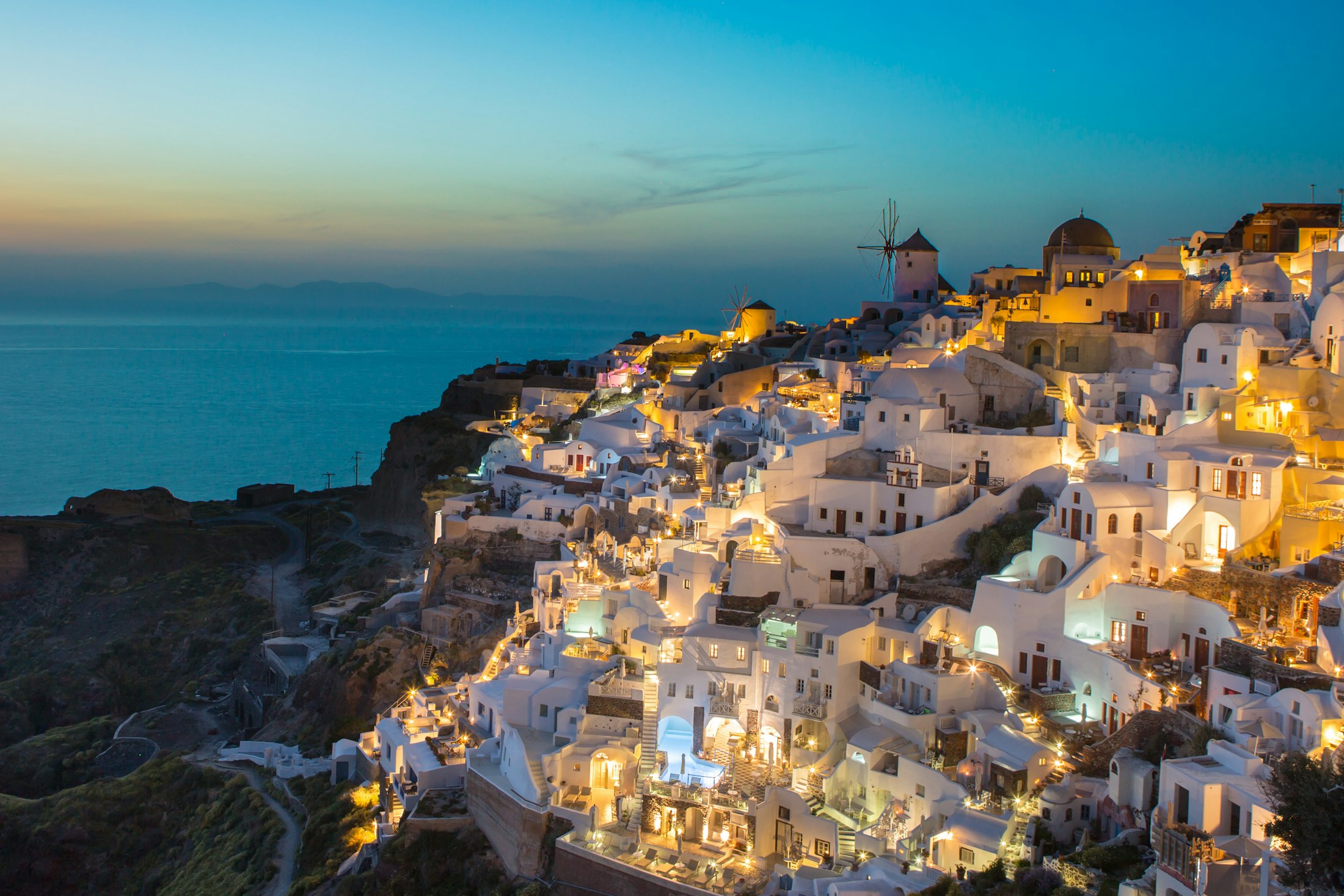
Pyrgos sits at Santorini's highest point, built around the ruins of a Venetian castle, and it is the anti-Oia in almost every way that matters. No blue-dome photo ops. No crowds shuffling sideways through a single lane with selfie sticks raised like lances. What it has instead: the best food-to-tourist ratio on the island, cave cellars where winemakers have been doing essentially the same thing since the 1800s, and a silence in the late afternoon that makes you forget you're on a Greek island that receives two million visitors a year.
1. The kasteli and why you should get lost in it on purpose
The kasteli — the fortified settlement at the top of the hill — is the oldest continuously inhabited part of Pyrgos, and it looks it. Houses were built into and on top of each other over centuries, so the layout isn't a grid or even a maze; it's a spiral that tightens as you climb, with staircases that dead-end into someone's front door and archways that frame nothing but sky.
Don't bother with a map. The whole kasteli is maybe 200 meters across, and the point is to wander until you reach the ruins of Kasteli church at the summit, where you'll get a 360-degree view of the caldera, the airport, the vineyards, the sea. Fifteen minutes to walk up if you don't stop, but you will stop.
Skip the kasteli at midday between July and September. It's a white stone oven with no shade. The walls radiate heat and there's nowhere to buy water once you're inside. Go before 9 a.m. or after 6 p.m.
Pro tip: Enter from the north side, near the small parking area off the road to Profitis Ilias. The south entrance spits you out near the churches but misses the best of the residential passages.
2. Caper season is the reason to come in June
Most guides will tell you Santorini's famous products are cherry tomatoes, fava, and wine. They're right, but they're sleeping on the capers. The caper bushes grow wild here, cascading over stone walls and out of cracks in volcanic rock, and in June the buds are small and tight — the stage just before they flower, which is exactly when you want to pick them.
Selene, the restaurant that essentially built the modern Santorini food canon before it closed its original location, used to serve caper leaves fried in a light batter. That tradition hasn't died. At Kallisti in Pyrgos, you can get a simple salad of caper leaves, local cherry tomatoes, and chlorotyri — a soft, tangy cheese that tastes like feta's less famous cousin — for around €9. The capers themselves show up brined, in spreads, folded into fava purée. They are salty and aggressive in a way that supermarket capers from a jar will never be.
I have a minor theory, which is that caper season is actually the best time to visit Santorini, period. The heat hasn't reached its August hostility, the cruise ship numbers are lower than peak, the light is long, and every taverna is doing something interesting with these tiny green buds. August gets the crowds. June gets the flavor.
3. Cave cellars and the wines no one exports
Santorini's winemaking reputation rests on Assyrtiko, and fairly so — it's a white grape that somehow thrives in volcanic soil with almost no rain and produces wines with a minerality that people use the word "electric" to describe. But the interesting drinking in Pyrgos happens in the cave cellars, the old canaves carved into the hillside where families stored wine in conditions that stayed cool year-round without any technology whatsoever.
Hatzidakis Winery operated out of a canava in Pyrgos for years and became one of the island's most respected producers. After the founder Haridimos Hatzidakis passed away in 2017, the estate continued under family direction. Their Assyrtiko de Mylos, from a single vineyard, is worth seeking out — expect to pay around €25-30 for a bottle on-island, though it's hard to find outside Greece. The tasting experience at small Santorini wineries is nothing like Napa; there are no velvet ropes, no $75 flight fees, no gift shops selling logo'd corkscrews. You sit, you taste, someone explains what the vine looked like that year.
A few of the old canaves in the village have been converted into short-term accommodations — thick walls, arched ceilings, a geological coolness that air conditioning can only imitate.
Pro tip: If you visit any winery near Pyrgos, ask specifically about Nykteri — a traditional wine made from grapes harvested at night and pressed before dawn. Production is small and most of it stays local.
Stay in Santorini
Top-rated hotels near Santorini
Best locations · Verified reviews · Free cancellation
View deals
Expedia →4. Where to eat (and one place not to bother with)
Franco's in Pyrgos does a slow-cooked lamb in parchment that I think about when I'm not on this island, which is an embarrassing thing to admit but there it is. The restaurant sits slightly below the kasteli with a terrace that faces east, which means you eat dinner without being blinded by the sunset — a genuine luxury on Santorini, where every restaurant markets its western exposure like it's a personality trait.
For something fast and cheap, the bakery on the main road through the village sells tiropita and spanakopita in the morning for €2-3 each. Gone by noon. Don't overthink it, just buy two.
Steer away from the places along the road between Pyrgos and Megalochori that have sprouted "caldera view dining" signs in the last few years. The views are fine. The food is an afterthought priced at a premium — €18 for a Greek salad that tastes like it was assembled from a Sysco delivery. You're better off eating in the village proper, where the kitchen is someone's actual reputation.
Pro tip:Dinner reservations at Franco's during June weekends should be made at least a day ahead. Ask for terrace seating on the lower level — less wind, same view.
5. The walk to Profitis Ilias and what it earns you
From the top of Pyrgos, a footpath leads up to the monastery of Profitis Ilias, the highest point on Santorini at 567 meters. The walk takes about 40 minutes and it is not shaded, so bring water and a hat and accept that you'll sweat through your shirt.
The monastery itself is often closed to visitors, but the area around it — the radio towers, the low scrub, the absolute quiet — gives you something Santorini rarely offers: solitude. On a clear day you can see Crete to the south. The wind up here is constant and serious. I once watched a woman's hat blow off and cartwheel down the slope for a solid thirty seconds before catching on a bush.
What most people don't realize is that the walk back down through Pyrgos in the early evening is the real reward. The village turns golden, then pink, then blue, and by the time you reach the lower streets, someone has set out chairs and there's wine open and you sit down and the day just ends, gently, the way days are supposed to.
Stay in Santorini
Top-rated hotels near Santorini
Best locations · Verified reviews · Free cancellation
View deals
Expedia →Essential tips
Parking in Pyrgos is limited to a small lot on the north edge of the village and a few spots along the main road. Arrive before 10 a.m. in summer or you'll be circling. The bus from Fira runs roughly every 30 minutes and drops you 100 meters from the village entrance.
There is almost no shade in the kasteli or on the path to Profitis Ilias. Sunscreen and a hat aren't optional — they're the difference between a good day and a headache by 2 p.m.
Bring a water bottle. The only shop selling drinks inside Pyrgos proper is a single minimarket near the main square, and it closes for afternoon hours. Fill up before you climb.
The kasteli's residential passages are genuinely someone's home. Laundry is hanging, doors are open. Photograph the architecture, not people's private spaces — this isn't a set built for tourists.
Ready to visit Santorini?
Book your hotel, flights, and activities through our Expedia-powered search.


