In This Guide
The fog rolls thick off the mountains around 4:30 a.m. in Medellín's barrio Aranjuez, and Belén Rincón is already scraping last night's rice across a blackened plancha. Calentado — literally "heated up" — is Colombia's great breakfast heresy: yesterday's beans, rice, hogao, and whatever protein survived the night, fried together until the edges crisp and the whole mess fuses into something new. Rincón has been serving it from a steel cart on Carrera 51 since 2011, and the line starts forming before the sun does.
I first showed up at her cart in March 2019, overdressed and undercaffeinated, because a taxi driver told me I was an idiot for eating hotel breakfast. He was right.
1. What calentado actually is (and isn't)
Calentado is not a recipe. It's a principle. You take what's left from dinner — red beans, white rice, maybe a scrap of carne molida or chicharrón — and you reheat it all together in a skillet or on a plancha with enough oil to get a crust going. The hogao (a cooked-down sauce of tomato, scallion, and cumin) binds everything. A fried egg goes on top. That's it.
Some restaurants in El Poblado try to dress it up with chorizo from boutique butchers and micro-greens. Skip those places. Calentado isn't supposed to be refined. The whole point is thrift and texture — the rice should crackle, the beans should be soft from sitting overnight, and the egg yolk should run into all of it when you break it. The moment someone puts it on a square plate, they've lost the plot.
Pro tip:If a menu calls it "artisanal calentado" or lists it above 18,000 COP, walk out. You're paying for the aesthetic, not the food.
2. Belén Rincón's cart on Carrera 51
Rincón sets up around 4 a.m. on Carrera 51, near the corner of Calle 92 in Aranjuez. She works from a modified steel cart with a single plancha, two burners, and a cooler full of eggs. The calentado comes in one size — heaped on a styrofoam plate with an arepa de maíz and a fried egg — for 8,000 COP. Coffee is 1,500 extra. She doesn't take cards.
Her rice has a particular scorched quality that I think comes from the plancha never being fully cleaned between batches. It sounds questionable. It tastes like the best thing at 5 a.m.
She's there Tuesday through Saturday, usually packed up by 7:30. Sundays and Mondays, the spot is empty. Don't show up at 8 expecting leftovers of the leftovers — when she's done, she's done.
Pro tip:Bring small bills. Rincón doesn't break anything larger than 20,000 COP, and she'll tell you so without smiling.
3. The fog matters more than you think
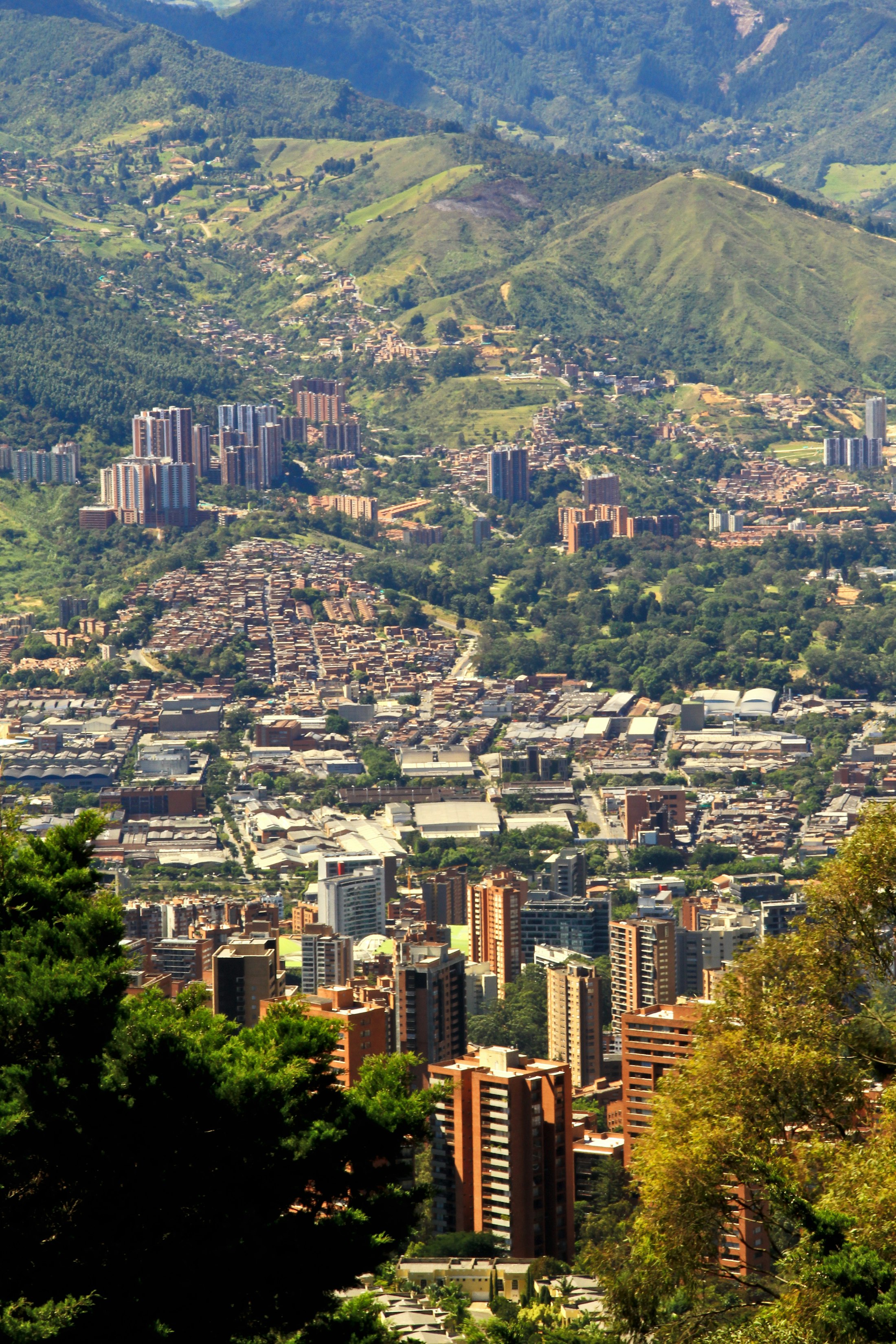
Medellín sits around 1,500 meters in the Aburrá Valley, and early mornings in neighborhoods like Aranjuez, Manrique, and Santa Cruz come with a damp chill that surprises people who packed for "eternal spring." Bring a light jacket. I've watched tourists in tank tops shivering at Rincón's cart, holding their coffee with both hands like it was a campfire.
The fog usually burns off by 8 or 9 a.m. That window between 5 and 7, though, is when calentado makes the most sense. Hot, greasy, heavy food in cold mountain air. The condensation beading on your tinto cup. Not photogenic. Correct.
4. Three other calentado spots worth the early alarm
Rincón isn't the only game in town. In barrio Prado, there's a small fonda called La Cocina de Marta on Calle 60 near Carrera 50A that opens at 5 a.m. and does a calentado with leftover sancocho broth mixed into the rice. Wetter, richer, 10,000 COP with juice. The place seats maybe twelve people on plastic stools.
Up in Santo Domingo Savio, near the Metrocable station, a woman named Doña Lucía runs a window-service operation out of her house. I don't have an exact address — you follow the smell of frying pork. Her version leans heavy on chicharrón and comes with a thick arepa that she splits and butters. 7,000 COP.
Down in the center, the Mercado del Río food hall has a calentado option at one of the stalls. Skip it. Clean, portioned, served on a real plate — a tourist interpretation that misses the point entirely.
Pro tip:La Cocina de Marta closes when the pot's empty, usually by 6:45 a.m. on weekdays. Saturdays she makes a bigger batch and lasts until maybe 7:30.
5. Getting to Aranjuez before dawn
If you're staying in El Poblado — and most visitors are — Aranjuez is about a 20-minute taxi ride at 4 a.m. when the roads are empty. Expect to pay around 12,000-15,000 COP. The Metro doesn't start running until 4:30 a.m. on weekdays (5 a.m. on Saturdays), so unless your timing is perfect, a cab is the move.
Uber and DiDi both work in Medellín, though drivers are scarcer before 5. I've had better luck with DiDi at that hour. Set your pickup pin carefully — GPS in the valley neighborhoods can drift a block or two, especially near the hillsides.
Medellín at 4 a.m. is a different city. Quiet streets, orange sodium lights, the occasional bus already grinding uphill. It beats sitting in Parque Lleras traffic at midnight by a wide margin.
Pro tip:Tell your driver "Carrera 51 con Calle 92, barrio Aranjuez" — not just "Aranjuez." The barrio is big and drivers will drop you at the Metro station otherwise.

Stay in Medellín
Top-rated hotels near Medellín
Best locations · Verified reviews · Free cancellation
View deals
Expedia →6. The argument against bandeja paisa for breakfast
Here's where I lose people: bandeja paisa is overrated as a morning meal. I know. It's the regional plate of Antioquia. It's on every postcard. But eating a full bandeja — with its ground beef, chicharrón, fried egg, chorizo, rice, beans, plantain, avocado, and arepa — at 7 a.m. is an act of self-destruction. You will be horizontal by 10.
Calentado gives you 70% of those flavors in a single cohesive pile, without the theatrical plating and the 28,000 COP price tag. It's the working person's version of the same tradition, and it's better because it doesn't try to be everything at once. The beans have already married the rice overnight. The proteins are a suggestion, not a parade.
I'll take Rincón's 8,000-peso plate over a sit-down bandeja every time.
7. What to drink with it
Tinto. Just tinto. The small, sweet, dark coffee served in a plastic cup that costs between 1,000 and 2,000 COP at any street cart in the city. It's not specialty coffee. It's not pour-over. It's often made with panela instead of sugar, and it's the only thing that belongs next to calentado.
Some of the fancier calentado spots offer fresh juice — lulo, maracuyá, guanábana. Fine for later in the morning. But at 5 a.m., with fog on your neck and grease on your fingers, a cold juice feels wrong. You want something hot and a little too sweet.
Pro tip:If you ask for "café" at a street cart, you'll usually get tinto. If you want milk, say "café con leche" or "perico" — though perico means something very different in other parts of Colombia, so be aware of where you are.
8. After the plate is empty
Aranjuez wakes up slowly. By the time you're done eating — maybe 6, 6:30 — the streets are starting to fill with people heading to work and kids in school uniforms. The Cementerio de San Pedro is a 15-minute walk south, and it opens at 8 a.m. if you want to kill time wandering its marble paths. Elaborate family crypts, sculptural work from the early 1900s, and almost no other tourists at opening.
Or just walk. Aranjuez has steep streets, painted houses, corner tiendas with cumbia leaking out of speakers. No agenda required.
The Metrocable Línea K, which runs from Acevedo station up to Santo Domingo Savio, starts at 4:30 a.m. on weekdays. If you time it right, you can eat calentado in Aranjuez, Metro north one stop to Acevedo, and ride the cable car up over the comunas as the fog lifts. The whole morning costs less than 15,000 COP including food.
Pro tip: The Metrocable gets crowded with commuters between 6:30 and 8 a.m. Ride it before 6 or after 9 for a car to yourself.
Stay in Medellín
Top-rated hotels near Medellín
Best locations · Verified reviews · Free cancellation
View deals
Expedia →Essential tips
Medellín mornings in the valley neighborhoods run 14-17°C before the fog burns off. A light rain jacket does double duty against chill and drizzle — leave the umbrella.
Street calentado vendors almost never take cards. Carry coins and small bills — 2,000 and 5,000 COP notes are ideal. ATMs inside Éxito supermarkets tend to dispense smaller denominations.
DiDi often has cheaper pre-dawn fares than Uber in Medellín. Download both apps before your trip; both require a Colombian phone number or international credit card to activate.
Most street calentado carts operate between 4:30 and 7:30 a.m., Tuesday through Saturday. Sunday service is rare. Monday is a near-total dead zone for street food breakfast in Aranjuez.
Ready to visit Medellín?
Book your hotel, flights, and activities through our Expedia-powered search.


