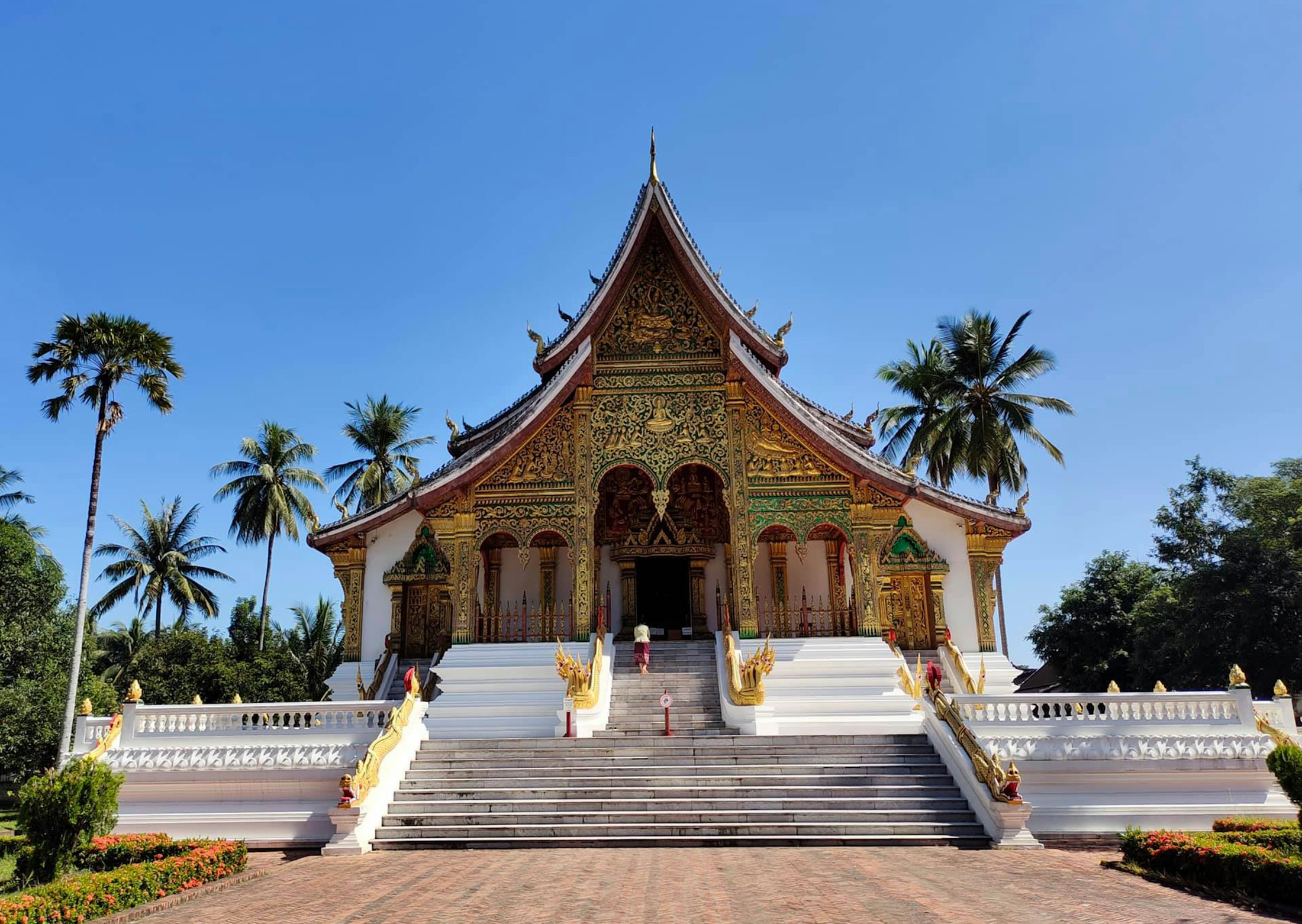
In This Guide
The Mekong was the color of coffee with too much milk, and it was moving fast. I arrived in Luang Prabang in September, peak monsoon, the kind of timing most travel advice tells you to avoid. The river had swallowed the lower bank restaurants along the peninsula's tip, and sandbags lined Thanon Khem Khong like a second sidewalk. Monks still walked their morning rounds in the rain. The night market still unfurled its tarps. And the noodle shops — the ones that matter — were open, because soup season is flood season, and flood season is when this town tastes best.
I'll say it plainly: Luang Prabang in the wet months is better for eating than Luang Prabang in the dry ones. The crowds thin. The broths get richer. You can actually get a table at places that require a forty-minute wait in January.
1. Khao piak sen is the only noodle soup that matters here
Forget pho. I know that's a hard sell, because every other blog post about Lao food tries to position khao piak sen as "Laos's answer to pho," which misses the point entirely. Pho is clear, sharp, architectural. Khao piak sen is thick, starchy, and a little sloppy — the noodles are made from rice flour and tapioca, so they give the broth a silky weight that coats the roof of your mouth. The comparison does both dishes a disservice.
The version at Xieng Thong Noodle, on the small lane just south of Wat Xieng Thong, costs 25,000 kip. The bowl comes with a heap of fresh herbs, fried garlic, and a lime half that you're meant to squeeze in without hesitation. The chicken version is better than the pork. I tried both on the same morning, sitting on a plastic stool while rain hammered the tin roof so loud I couldn't hear the woman next to me order.
There's a place on Thanon Sisavangvong near the old Royal Palace that several guidebooks recommend for khao piak sen. Skip it. The broth tastes like it came from a packet, the noodles sit too long, and you'll pay 45,000 kip for the privilege of eating next to someone filming a TikTok. Walk ten minutes in any direction and you'll do better.
Pro tip: Ask for extra fried garlic (krathiam jiaw). Most shops have a jar of it behind the counter and will add more if you point at it. It turns good broth into something you think about for days.
2. The morning market at Phousi, before it becomes a photo op
By 6:30 a.m., the Phousi Market on Thanon Kitsalat is already loud. Vendors arrive earlier during the rains because the afternoon storms make late selling impossible. This is where you find the Mekong riverweed — dried sheets of it, pressed with sesame seeds and tomato, called kaipen — stacked on plastic tables next to bins of tiny eggplants and bags of padaek, the fermented fish paste that anchors most Lao cooking.
I bought a bag of kaipen for 15,000 kip and ate half of it standing there, which the vendor found either endearing or baffling. The sheets are brittle and salty and faintly green, like a nori chip with more personality.
Don't confuse this with the tourist night market on the main street. Same Elephant Brand t-shirts you'll find in Vientiane and Chiang Mai, and the food stalls there have figured out that foreigners will pay 30,000 kip for a mediocre crêpe. Phousi Market is for people who actually cook, or at least for people who want to eat something a Lao grandmother would recognize.
Pro tip:If you see fresh mak nao (Lao limes) at the market, buy a bag. They're smaller and more fragrant than what you get anywhere else in Southeast Asia, and they cost almost nothing — 5,000 kip for a generous handful.
Stay in Luang Prabang
Top-rated hotels near Luang Prabang
Best locations · Verified reviews · Free cancellation
View deals
Expedia →3. Baci threads and a swollen river
On my third evening, a guesthouse owner on Thanon Sakkarin invited me to a baci ceremony for her niece who was leaving for university in Vientiane. White cotton threads tied around your wrists while an elder chants wishes for safe travel, health, the usual large hopes compressed into string. You're supposed to wear them until they fall off naturally.
We sat on the floor around a cone of marigolds and banana leaves. The food afterward was the real event: laap with raw beef and tripe, sticky rice in bamboo baskets, a jeow bong (chili paste with buffalo skin) that had a slow heat I could still feel an hour later. Someone handed me a glass of lao-lao, the local rice whiskey, which tastes like gasoline that went to finishing school.
Outside, the Mekong was lapping at the road. You could hear it between conversations, this low insistent sound, the river reminding everyone it was still rising. The threads on my wrist got wet walking back. They stayed on for three weeks.
Stay in Luang Prabang
Top-rated hotels near Luang Prabang
Best locations · Verified reviews · Free cancellation
View deals
Expedia →4. Where to eat when the river eats the restaurants
Flood season relocates things. The bamboo platform restaurants along the lower Mekong bank — Dyen Sabai being the most famous — close or move to higher ground between July and October. Don't build an itinerary around them if you're visiting in the wet months.
What stays open: Tamarind, on Thanon Kingkitsalat, which has been teaching tourists about Lao food for years and does it well enough that I don't resent the mission. Their tasting plate (around 85,000 kip) is a legitimate way to try stuffed lemongrass, various jeow dips, and purple sticky rice in one sitting. The staff will explain every component without being asked, which I appreciated the first time and found slightly exhausting the second.
JoMa Bakery Café on Thanon Chao Fa Ngum serves credible coffee and pastries and stays dry even when the water creeps close. Foreigner-friendly in a way that usually makes me suspicious, but the croissants are actually good and the espresso is pulled from Bolaven Plateau beans. Sometimes you just want Wi-Fi and a chair with a back.
Skip the Kuang Si waterfall trip if you're here in peak monsoon. The falls turn brown, the trails are slick mud, and the turquoise pools everyone photographs are gone — replaced by a churning khaki torrent. Half the tour operators won't tell you this because they still want your 200,000 kip.
The real advantage of wet-season eating is home food. Accept every invitation. The best laap I've ever had came from a kitchen I couldn't find again if I tried.
Pro tip: Tamarind also runs cooking classes (mornings, around 350,000 kip) that include a market visit. Book directly at the restaurant; the price through hotel concierges is higher for no reason.
Essential tips
Pack sandals that grip on wet tile. Luang Prabang's temple steps and market floors become ice rinks in the rain. I watched two people go down in one morning.
Carry kip in small denominations (10,000 and 20,000 notes). Noodle shops and market vendors rarely break 100,000 kip bills, and ATMs on Thanon Sisavangvong dispense only large ones.
The alms-giving ceremony (tak bat) at dawn is not a spectator sport. If you go, stand well back, don't use flash, and absolutely do not buy the tourist rice baskets sold on the street — the food in them is often stale and monks have said so publicly.
Noodle shops along the peninsula generally open between 6:30 and 7:00 a.m. and many sell out of broth by 11:00 a.m. Go early or accept that you're having sticky rice and laap for lunch instead, which is not a punishment.
Ready to visit Luang Prabang?
Book your hotel, flights, and activities through our Expedia-powered search.


