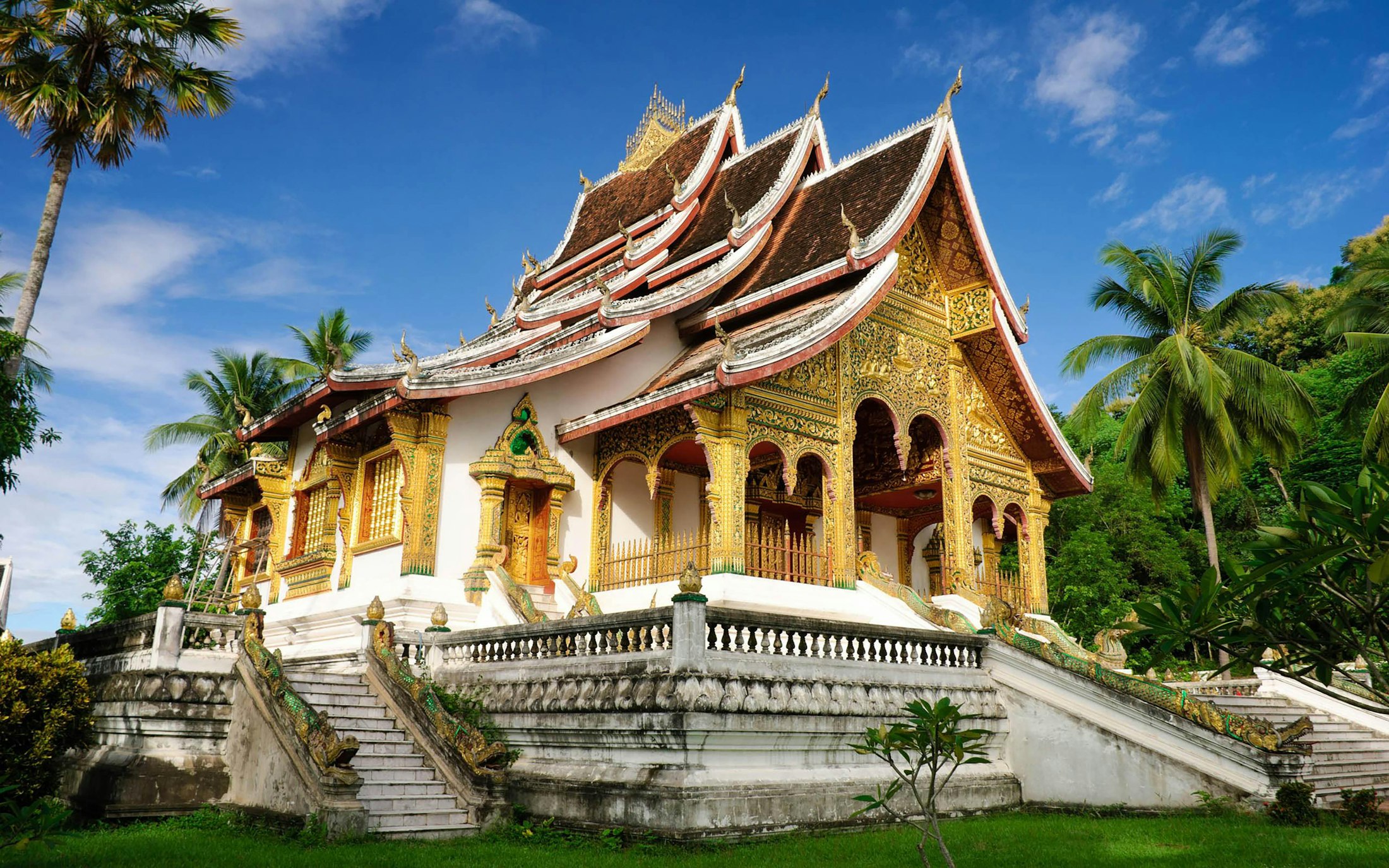
In This Guide
- 1.Khao piak sen is not pho, and I need you to stop calling it that
- 2.The morning bowl at Xieng Mouane
- 3.The Mekong at high water
- 4.Joma Bakery Café and the rainy-day refuge question
- 5.The night market in monsoon (and what replaces it)
- 6.Where to stay when everything's damp
- 7.Sticky rice, and why the basket matters
- 8.Kuang Si in the rain — worth it or not
- 9.One more bowl before leaving
The rain started at 4 a.m. and didn't negotiate. It just fell — a vertical wall of water on the tin roof of my guesthouse on Ban Vat Sene, loud enough that I stopped trying to sleep and walked to the Mekong instead. Luang Prabang in monsoon season is not the town you see in November travel spreads. The river is brown and swollen and moving with real purpose. Half the restaurants on Sakkaline Road are empty. The night market shrinks by two-thirds. And the food — the food gets better.
I don't fully understand why. Maybe it's the cooler mornings pulling people toward hot broth. Maybe the cooks who stay open through low season are the ones who actually care. Whatever the reason, I ate better during five rainy days in July than I did on a packed December trip three years earlier. This is about one bowl in particular, the places around it, and why you should stop waiting for perfect weather.
1. Khao piak sen is not pho, and I need you to stop calling it that
I've read it in guidebooks, heard it from other travelers, seen it captioned on Instagram. "Laotian pho." It's not. Khao piak sen is a tapioca-and-rice-flour noodle soup. The noodles are thick, round, slippery — closer to udon than anything Vietnamese. The broth is starchy because the noodles themselves thicken it as they cook, giving it a body that pho never aims for. It's a different thing in the mouth entirely.
The standard version comes with chicken or pork, fried garlic, cilantro, lime, and chili. Some shops add a spoonful of pork crackling on top. The texture is what stays with you — that slightly gelatinous give when you bite through the noodle, the broth coating everything. Comparing it to pho flattens it into something it isn't, and Luang Prabang deserves better than lazy shorthand.
2. The morning bowl at Xieng Mouane
Most mornings I ended up at a shop on Xieng Mouane road, a few minutes' walk past Wat Xieng Thong. No English sign — just a woman with a steel pot and a charcoal setup under a corrugated awning. Khao piak sen with chicken, 25,000 kip. She ladles the broth over the noodles to order. You sit on a plastic stool and the rain drips off the edge of the roof about six inches from your elbow.
She doesn't rush. The bowl comes when it comes. I watched her pull noodles from a tray, portion them, check the broth temperature, add a second ladle. The fried garlic goes on last — a small handful, still warm from the oil. I went four out of five mornings. On day three she nodded at me. On day four she had my bowl started before I sat down.
There's a tourist-facing khao piak sen place closer to the main peninsula that charges 45,000 kip and adds bean sprouts and hoisin sauce on the side, like it's cosplaying as something else. Skip it.
Pro tip: Get there before 7:30 a.m. She runs out of noodles by 9 most days, earlier on alms-giving mornings when monks pass through and the neighborhood is already awake.
3. The Mekong at high water
People talk about Luang Prabang's rivers the way they talk about wallpaper — as backdrop. But the Mekong in monsoon is not backdrop. It's the loudest thing in town. The current pulls whole branches downstream. The confluence with the Nam Khan, normally a gentle meeting of two calm bodies, turns into a visible collision of brown and green water fighting for the same channel.
I sat on the bamboo platform behind Saffron Coffee on Sakkaline Road one afternoon and watched a long-tail boat try to cross. The driver angled upstream at maybe forty-five degrees just to hold position. Took him ten minutes to make a crossing that would've been three in dry season.
4. Joma Bakery Café and the rainy-day refuge question
Here's my contrarian take: Joma is fine. It's a Vientiane-based chain with air conditioning and drip coffee and pastries that taste like pastries. Every travel forum tells you to avoid it because it's "not authentic." But when it's been raining for nine hours straight and your shoes are soaked through and you've already had two bowls of soup, sometimes you want a dry seat and a flat white that costs 35,000 kip. Authenticity policing is exhausting, and the almond croissant is genuinely decent.
The one on Chao Fa Ngum Road has the better seating — second floor, windows facing the river. Go there instead of the Sakkaline branch, which fills up with tour groups sheltering from the weather.
Pro tip:Joma's Wi-Fi actually works, which is not universally true of Luang Prabang café Wi-Fi. If you need to get something done, this is the spot.
5. The night market in monsoon (and what replaces it)
Don't plan your evenings around the night market if you're visiting June through September. It still technically operates, but half the vendors don't show when the rain is heavy. The ones who do are mostly selling the same Beerlao tank tops and printed elephant pants you can find in any Southeast Asian tourist zone.
What does happen — and this took me two days to figure out — is that the food stalls shift to the covered alley behind the old post office on Sisavangvong Road. Grilled meats on sticks, khao lam (sticky rice cooked in bamboo), and tam mak hoong (the Lao papaya salad, heavier on fermented fish paste and padaek than the Thai version). A full dinner from the stalls runs maybe 40,000–60,000 kip. The lighting is bad and the seating is communal and none of it photographs well, which is probably why it stays good.
Pro tip:The tam mak hoong vendor closest to the alley entrance makes a version with raw crab. If you're not sure about your stomach, ask for the one without — "boh sai poo" gets the point across.
6. Where to stay when everything's damp
Accommodation in rainy season is a different calculation. You need air conditioning that actually dehumidifies, not just a fan that rearranges the moisture. You want to be on the main peninsula between the rivers, because the unpaved roads in the outer neighborhoods turn to mud — real mud, ankle-deep, the kind that pulls your sandal off.
I made the mistake of booking a place across the Nam Khan my first monsoon trip. Getting to the main town meant crossing a bamboo footbridge that swayed in the current and got dismantled entirely after one heavy night. Spent an evening stranded on the wrong side eating instant noodles. Lesson learned.
Ban Vat Sene and the streets around Wat Sensoukharam are your best positioning. Close to food, walkable in rain, and most guesthouses there are concrete builds that handle the humidity. Prices drop 30–40% from peak season — I paid 250,000 kip a night for a room that would've been 450,000 in December.
Pro tip:Ask to see the room before you commit. Some places store linens in closets that don't ventilate, and you'll know immediately from the smell whether the bedding has been aired recently.
Stay in Luang Prabang
Top-rated hotels near Luang Prabang
Best locations · Verified reviews · Free cancellation
View deals
Expedia →7. Sticky rice, and why the basket matters
Khao niao — sticky rice — comes in a small woven basket called a tip khao. You pull a clump, roll it between your fingers, and use it to pick up whatever's on the plate next to it. Laap, jaew bong, grilled fish. The rice is the utensil.
What I didn't appreciate until this trip is how much the freshness of the rice matters. At the better morning food stalls (the cluster near the Phousi Market entrance, open by 6 a.m.), the sticky rice is steamed to order in bamboo baskets over boiling water. Warm, pliable, slightly sweet. At tourist restaurants, it comes pre-steamed and sits in the tip khao for who knows how long, turning dense and cold. The difference is enormous — like comparing fresh bread to something that's been sitting in a bag since yesterday.
A tip khao of fresh sticky rice at the market stalls costs 5,000 kip. There is no reason to eat the cold stuff.
8. Kuang Si in the rain — worth it or not
Everyone goes to Kuang Si Falls. In dry season, the water is that surreal turquoise you've seen in every Laos tourism ad. In monsoon, it's brown. Full volume, powerful, but brown. Some people are disappointed by this. I thought it was better — the falls actually feel like falls instead of a swimming pool, and the trails are empty enough that you can hear the water over the crowd, which in December you absolutely cannot.
The drive takes about 45 minutes from town. Songthaews leave from near the old stadium and charge around 50,000–60,000 kip per person round trip if the truck is full. In rainy season they sometimes don't fill up, which means you're either waiting or negotiating a private rate (250,000–300,000 kip for the whole truck, split however many of you there are).
Wear shoes that can get muddy. The trail to the upper pools is slick laterite clay. I watched a woman in Birkenstocks slide about four meters down a slope. She was fine, but the Birkenstocks were not.
Pro tip: The bear rescue center at the base of the falls is free with your entry ticket (20,000 kip for foreigners). Go early — the bears are active in the morning and comatose by afternoon.
Stay in Luang Prabang
Top-rated hotels near Luang Prabang
Best locations · Verified reviews · Free cancellation
View deals
Expedia →9. One more bowl before leaving
My last morning. Rain had stopped for the first time in three days. The air was heavy and everything smelled like wet laterite and frangipani. I walked to the Xieng Mouane shop one more time.
Same stool. Same 25,000-kip bowl. The woman added extra garlic without asking — her version of a farewell, I think. I ate slowly. A monk walked past in saffron robes with an umbrella, which felt redundant given the break in weather but maybe he knew something I didn't. The Mekong was still high and brown behind the tree line.
I don't think you go to Luang Prabang in the rain for comfort. You go because the town stops performing. The restaurants that survive low season are feeding locals, not optimizing for TripAdvisor. The food is hotter, the portions less precise, the broth a little richer because someone had time to let it go an extra hour.
Essential tips
Pack a lightweight rain jacket, not an umbrella. The rain comes sideways off the Mekong, and you'll need both hands free for food stalls and plastic stools.
ATMs on Sakkaline Road dispense kip. BCEL Bank's machine reliably accepts Visa and charges a 20,000 kip fee per withdrawal. Bring enough cash for a day before counting on one — machines run empty in low season.
Leave leather shoes and nice sandals at home. Rubber-soled shoes you can rinse off are the only sane footwear June through September. The red laterite clay stains everything permanently.
Food stalls operate on a morning economy. The best khao piak sen and sticky rice are available between 6 and 9 a.m. By 10, your options narrow to sit-down restaurants with laminated menus.
Negotiate tuk-tuk prices before getting in — 20,000 kip within the main peninsula is reasonable. Drivers will start at 40,000–50,000 for foreigners. Saying the price in Lao ("sao phan") tends to reset the conversation.
Ready to visit Luang Prabang?
Book your hotel, flights, and activities through our Expedia-powered search.


