In This Guide
- 1.What bánh tằm bì actually is, since most guides get it wrong
- 2.The noodle factories on Tân Kỳ Tân Quý
- 3.Bánh tằm bì Mỹ Tho — the one I keep coming back to
- 4.Skip the downtown "artisan" versions
- 5.Getting to Bình Tân without losing your mind
- 6.The coconut cream question
- 7.What to eat after (or instead of) the noodles
- 8.Monsoon margins
The first time I ate bánh tằm bì in Bình Tân, I was standing under a corrugated tin awning while rain hit the street so hard it bounced back up to my shins. The noodles were thick, slippery, tangled like something that had been alive recently, and the coconut cream pooling around them was warm and sweet and slightly grassy in a way that made me forget I was soaked from the knees down. That was four years ago. I've been back to this district on the western fringe of Saigon three times since, always in monsoon season, always eating the same thing, always getting wet.
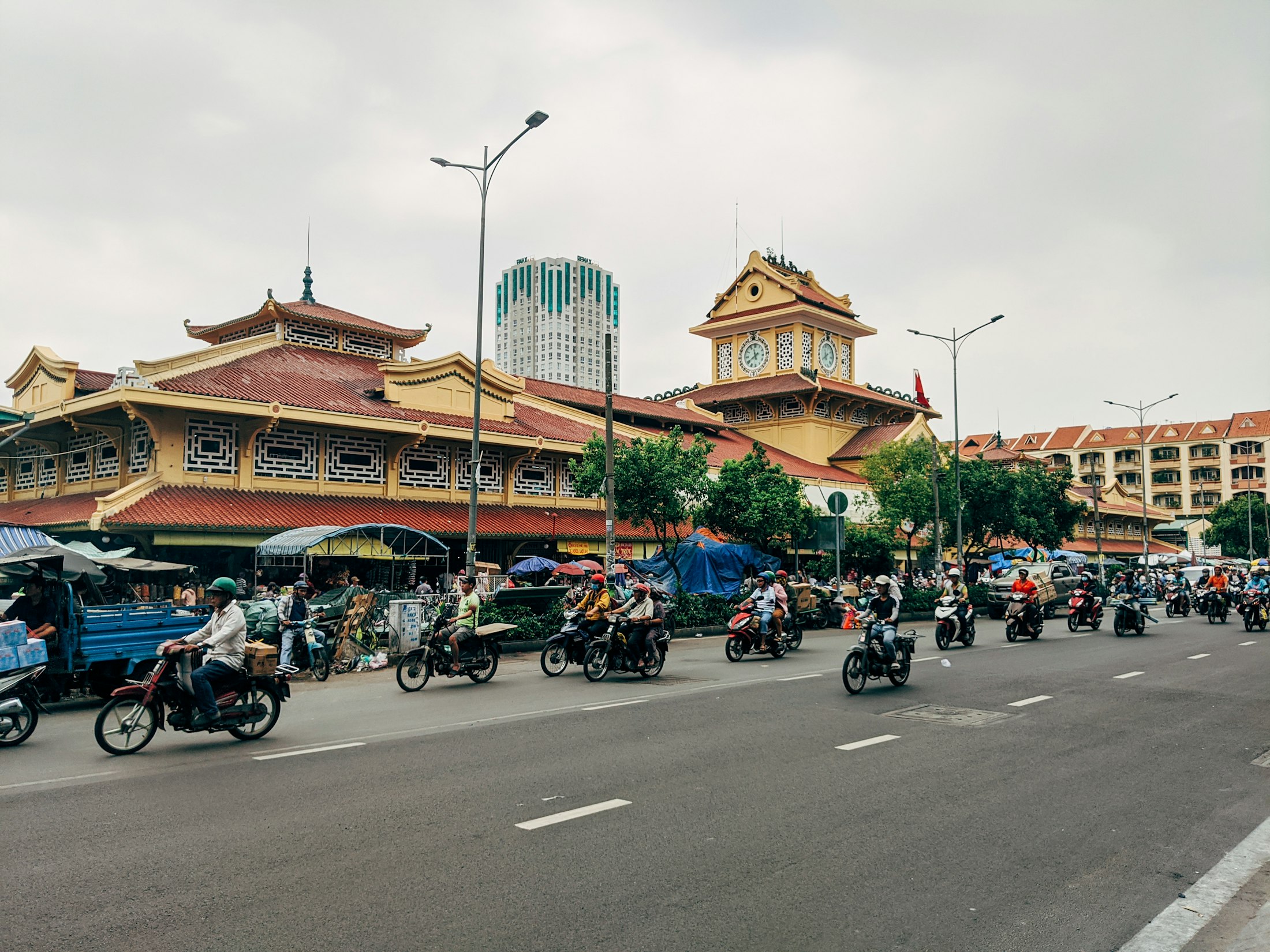
Bình Tân doesn't appear on most tourist itineraries, and honestly, good — the factory-adjacent noodle shops here don't need the friction of someone waving a gimbal around at 7 a.m. What they do need is customers who will sit on a plastic stool and eat without asking for the WiFi password. The bánh tằm bì made in this district is different from what you'll find downtown: chewier, fatter, less polished, made sometimes within sight of the production floor where the noodles are extruded and cut. This is where the noodle comes from before it becomes a menu item somewhere air-conditioned.
1. What bánh tằm bì actually is, since most guides get it wrong
Let me be blunt: if you've read that bánh tằm bì is "Vietnamese coconut curry noodles," you've been misinformed. There's no curry. The dish is thick rice-and-tapioca noodles — rounder and more substantial than bún, with a starchy chew that's closer to udon — served with shredded pork skin (the bì), a ladleful of warm coconut cream, and a side of nước chấm that you add yourself. The coconut cream is not coconut milk from a can. It's freshly pressed, sometimes sweetened with a little sugar, sometimes not, and it sits on top of the noodles in a pale slick that you toss through with chopsticks until everything is coated.
The bì — julienned pork skin mixed with toasted rice powder — adds texture more than flavor. Dry and faintly nutty against the wet noodles. Some versions include chả (pork loaf), sliced thin, or a few leaves of rau răm, the peppery herb that southern Vietnamese cooks reach for the way Italians reach for basil.
Most food blogs insist the dish originates from Bến Tre province. That's probably true. But the version that migrated to Saigon's western districts — Bình Tân, Bình Chánh — evolved its own personality, with thicker noodles and a heavier hand with the coconut.
2. The noodle factories on Tân Kỳ Tân Quý
Bình Tân's noodle production concentrates along and around Tân Kỳ Tân Quý, a long commercial street that runs northwest through the district. The factories are small — three or four workers, a couple of machines, steam rolling out of open doorways at 4 a.m. — and they supply not just the neighborhood shops but stalls across Saigon.
I visited one operation near the intersection with Bình Long in 2023. The owner, a woman in her fifties who asked me not to use her name, showed me the extrusion setup: rice flour and tapioca starch mixed with water, fed through a press that pushes the dough out in fat ropes, then cut and dropped into boiling water for a brief cook before being rinsed and oiled. The whole cycle from dry flour to finished noodle takes about forty minutes. She produces roughly 200 kilograms a day and sells them for around 15,000–20,000 VND per kilogram to wholesale buyers.
The noodles at this stage are plain — no coconut, no pork, just starch and water. Bundled into plastic bags, loaded onto motorbikes, and distributed before dawn.
Pro tip: If you want to see noodle production, arrive before 6 a.m. By 8 a.m., the machines are off and the floors are being hosed down.
3. Bánh tằm bì Mỹ Tho — the one I keep coming back to
There's a shop on Tân Kỳ Tân Quý, closer to the Bình Tân side near Hương Lộ 2, that goes by Bánh Tằm Bì Mỹ Tho. No English signage. The seating is four or five metal tables on the sidewalk, and the woman who runs it works from a glass cart packed with noodles, sliced chả, shredded bì, herbs, and a pot of coconut cream kept warm over a small gas burner.
A bowl runs 30,000–35,000 VND. You get a generous tangle of noodles, a mound of bì, two slices of chả, a drizzle of the coconut cream, and a small bowl of nước chấm on the side. The coconut here is richer than at most downtown spots — slightly thick, almost like the top layer of unshaken canned coconut milk, but fresh and without that metallic aftertaste.
I made the mistake of ordering two bowls my first visit, thinking I'd compare them. One was plenty. The tapioca starch in the noodles is filling in a way that sneaks up on you.
Open roughly 6:30 a.m. to around 10 a.m., or until she runs out. Closed Mondays, though I've shown up on a Monday and found her open, so treat that as a guideline.
Pro tip: Ask for extra nước chấm. The coconut cream is rich enough to flatten the dish without the acid and chili of the dipping sauce cutting through it.

Stay in Ho Chi Minh City
Top-rated hotels near Ho Chi Minh City
Best locations · Verified reviews · Free cancellation
View deals
Expedia →4. Skip the downtown "artisan" versions
I know this is a contrarian position, but the prettified bánh tằm bì you'll find at restaurants in District 1 and District 3 — the ones with the noodles arranged in neat coils and microgreens on top — miss the point entirely. The dish is supposed to be a mess. The noodles stick together. The coconut cream pools. You eat it fast because the texture changes as it cools, and that urgency is part of it.
Skip Bánh Tằm Bà Hai on Nguyễn Trãi if you're after the real thing. It's frequently recommended, it's fine, but it caters to a lunch crowd that wants something quick and clean, and the coconut tastes like it came from a carton. The noodle shops in Bình Tân are forty minutes away by motorbike, yes, but that's the trade-off.
5. Getting to Bình Tân without losing your mind
Bình Tân is not central Saigon. It's a sprawling, industrial-feeling district west of Tân Phú, and during rush hours — roughly 7–9 a.m. and 4:30–7 p.m. — the traffic on its main roads is apocalyptic. Grab bike is the fastest option. From District 1, expect to pay 40,000–70,000 VND depending on surge pricing, and the ride takes 25–40 minutes.
Do not attempt this in a Grab car during morning rush. I sat in one for over an hour once, watching the meter climb, while motorbikes threaded past on both sides.
If you're staying in the Phú Nhuận or Tân Bình area, the ride is shorter — 15 to 20 minutes outside of peak hours. Metro Line 2, if it's ever completed, will eventually connect Bến Thành to Tham Lương, which would put Bình Tân within reach by rail and a short bike ride. But as of mid-2024, that line is still under construction.
Pro tip:Screenshot the address in Vietnamese and show it to your Grab driver. Many drivers from other districts don't know Bình Tân's side streets well.
Stay in Ho Chi Minh City
Top-rated hotels near Ho Chi Minh City
Best locations · Verified reviews · Free cancellation
View deals
Expedia →6. The coconut cream question
Every bánh tằm bì shop in Saigon faces the same daily calculation: fresh coconut cream is labor-intensive and spoils fast; packaged coconut cream is consistent and cheap. The shops in Bình Tân that still press their own — grating the coconut meat, squeezing it through cloth with hot water — charge the same 30,000–35,000 VND per bowl as the ones using packaged. The margin difference comes down to a few thousand đồng per serving, but over hundreds of bowls a day, it adds up.
You can taste the difference. Fresh-pressed coconut cream has a faintly vegetal quality, almost green, that disappears within hours of pressing. The packaged stuff is sweeter, flatter, more uniform. I prefer the fresh, obviously, but I'll admit the gap is smaller than coconut purists like to claim.
The tell: if the coconut cream is served from a stainless steel pot kept warm on a burner, it's more likely fresh. If it comes from a squeeze bottle, it isn't.
7. What to eat after (or instead of) the noodles
Bình Tân is not a one-dish destination. While you're out here, eat the bánh cuốn at the stalls near the Bình Tân market on Lê Văn Quới. Thinner and more delicate than the northern-style versions that dominate District 1's tourist-facing restaurants, with ground pork and wood ear mushroom inside and a fish sauce that's more sugar-forward than I usually like but works here.
Also worth your time: the cơm tấm shops that open for breakfast along Tân Kỳ Tân Quý, serving broken rice with grilled pork chops, a fried egg, and bì — the same shredded pork skin you'll find on the bánh tằm. A full plate runs 35,000–45,000 VND.
Bún riêu if you want soup. There's a cart near the corner of Gò Xoài and Lê Văn Quới that does a crab-and-tomato version with a reddish, tangy broth and cubes of congealed pork blood that you either love or push to the side of the bowl.
Pro tip: Order the bún riêu with extra rau (herbs). The basket of greens — banana flower, perilla, bean sprouts — is free and enormous.
8. Monsoon margins
I keep coming during monsoon season — May through November — partly because flights are cheaper and partly because Bình Tân in the rain makes a specific kind of sense. The district floods. Not catastrophically, but persistently: ankle-deep water on side streets, motorbikes pushing through it with engines whining, vendors pulling their carts under awnings and waiting it out. The noodle shops keep serving. You eat with your feet on the stool rung to keep them dry, and the steam from the coconut cream mixes with the humidity until the air itself feels thick and starchy.
There's an argument for visiting in the dry season, December through April, when the streets are navigable and you can sit outside without getting rained on mid-bowl. A reasonable argument. I just don't find it very interesting.
The rain changes the texture of the experience. Fewer customers, longer conversations, more willingness from shop owners to explain what they're doing and why. Last July, the woman at the Mỹ Tho shop spent twenty minutes showing me how she tests noodle texture by pressing a strand between her thumb and forefinger — if it bounces back, the tapioca ratio is right. She wouldn't have had time for that in January.
Pro tip:Bring a lightweight rain jacket, not an umbrella. You'll need both hands free for eating and for holding onto a motorbike.
Essential tips
Use Grab bike, not Grab car, to reach Bình Tân. Traffic on Tân Kỳ Tân Quý is dense, and a motorbike will cut your travel time in half during morning rush.
Most bánh tằm bì shops in Bình Tân are breakfast-only operations, open from around 6:30 a.m. to 10 a.m. Arrive by 8 a.m. for the best noodle texture — they get gummier as they sit.
Carry cash in small denominations. Most sidewalk stalls in Bình Tân don't accept cards or mobile payment. A bowl of bánh tằm bì runs 30,000–35,000 VND (roughly $1.20–$1.40 USD).
During monsoon season (May–November), afternoon downpours typically hit between 2 and 5 p.m. Morning food runs are usually dry if you start early.
Ready to visit Ho Chi Minh City?
Book your hotel, flights, and activities through our Expedia-powered search.


