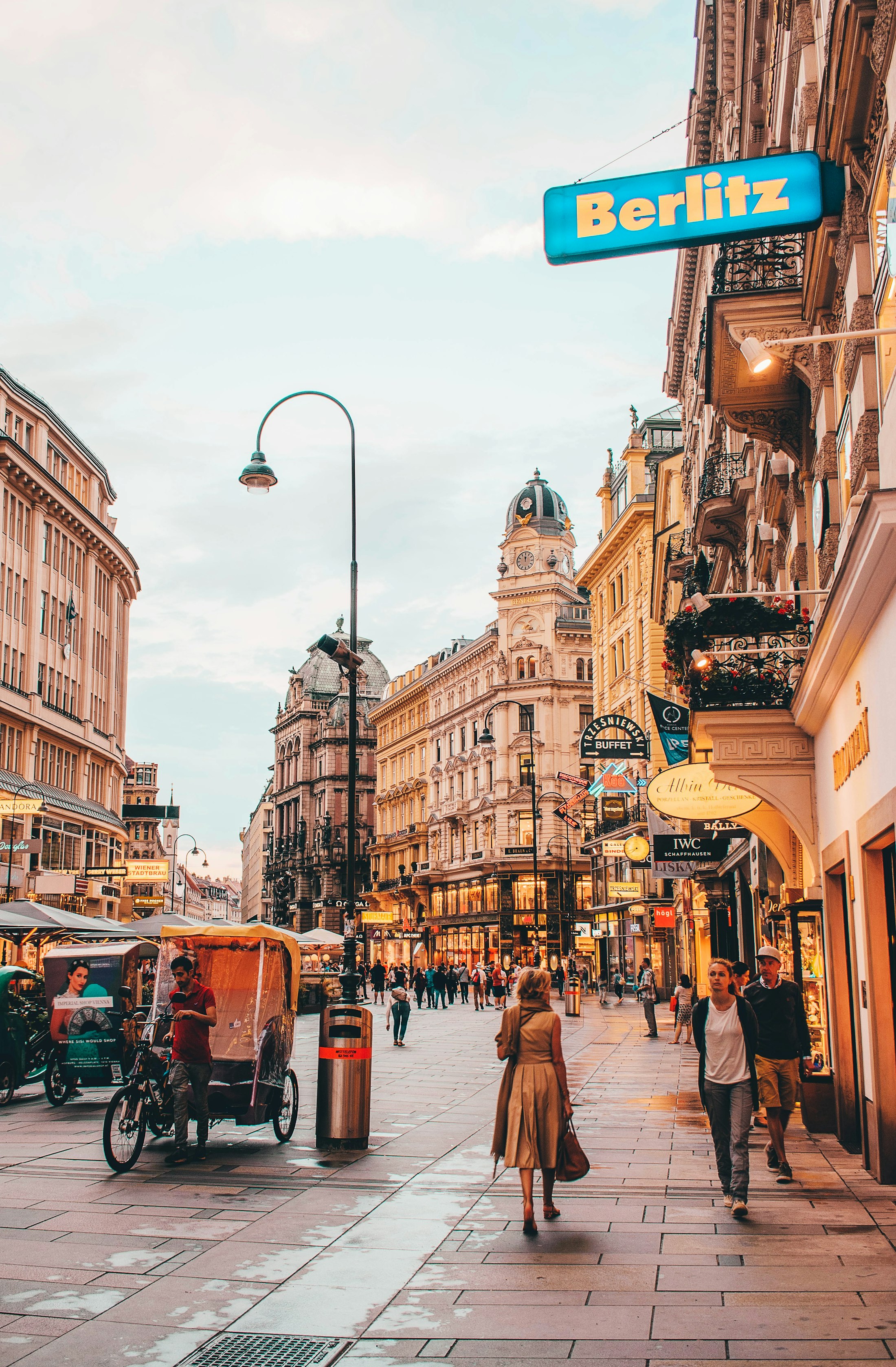
In This Guide
- 1.The Lobau isn't a beach — that's the point
- 2.Getting into the Lobau without a car
- 3.What to eat before you swim (or: why I skip the Naschmarkt in summer)
- 4.Swimming the Dechantlacke at 3 p.m.
- 5.The ride back through Kaisermühlen at golden hour
- 6.Now: the Heuriger
- 7.What Liptauer actually tastes like when it's made that morning
- 8.If you want a second Heuriger option (or a contrarian one)
- 9.The tram home, 10 p.m., full and quiet
The water was colder than I expected and greener than any lake I'd seen outside of Slovenia, and I remember thinking: this is Vienna? The Vienna of opera houses and Sachertorte and men in wool coats? Because what I was looking at, chest-deep in an oxbow lake in the Lobau, was a floodplain forest so wild it felt like it had nothing to do with a capital city at all.
Vienna in July is a different animal. The tourists clog the Ringstraße and the MuseumsQuartier, and good for them, but the Viennese themselves are somewhere else entirely — cycling through the Donau-Auen National Park, floating in backwater channels with the sun cutting through poplar canopy, then riding home at dusk to drink cold Grüner Veltliner at a Heuriger where the wine is three weeks old and the bread is still warm. That's the July I want to give you.
1. The Lobau isn't a beach — that's the point
If you want a manicured swimming spot with changing rooms and a kiosk selling overpriced Aperol Spritz, go to the Alte Donau or the Gänsehäufel. Those are fine. They're also packed to the guardrails every Saturday from June through August.
The Lobau is the opposite. It's the southern arm of the Donau-Auen National Park, reachable by U-Bahn — take the U2 to Donaustadtbrücke, then cycle or bus the remaining stretch into the park. What you get is a network of oxbow lakes and slow channels shaded by willows and black poplars, with muddy banks where you lay your towel on grass and slip in. No lifeguard. No admission fee. No Aperol.
The water in the Dechantlacke and the Panozzalacke is warm enough to swim by late June, hovering around 22–24°C in a proper July. You'll share the banks with herons and the occasional nudist — FKK culture is alive and unapologetic here, so if that startles you, you've been warned. The Obere Lobau is quieter and wilder than the Untere Lobau, which sits closer to the road and draws more families.
Pro tip: Bring water shoes with actual grip. The lake bottoms are silty and punctuated by submerged branches. I learned this the hard way.
2. Getting into the Lobau without a car
You don't need one. From the city center, the U2 to Donaustadtbrücke takes about 18 minutes, and from there bus 92A runs to Lobau Haupteingang (main entrance). The whole trip is covered by a standard Wiener Linien ticket — €2.40 single, or use whatever pass you already have.
But the better move is a bicycle. Vienna's bike-share system, WienMobil Rad, has stations near the U2 stops, and the ride into the Lobau along the Donauinsel is flat, shaded, and roughly 20 minutes. The cycling paths are well-marked once you're in the national park, though phone signal gets spotty deeper in, so download your route beforehand.
3. What to eat before you swim (or: why I skip the Naschmarkt in summer)
I'll say it plainly: the Naschmarkt in July is not worth your time. It's hot, it's shoulder-to-shoulder, half the stalls are selling the same €7 falafel wrap, and the produce vendors who made the market worth visiting twenty years ago are being edged out by tourist-facing restaurants with laminated menus. Skip it.
Instead, stop at Zur Alten Kaisermühle (Schüttaustraße 64, 1220 Wien) on your way to the Lobau. It's a Gasthaus in Kaisermühlen that serves proper Viennese food without the performative nostalgia. The Schweinsbraten comes with a crackly crust and a knödel the size of your fist, and the Kaiserschmarrn — torn, caramelized, dusted — is the version I measure all others against. Main dishes run €12–€18. They close on Mondays.
Pack what you don't eat. You'll want something at the lake.
Pro tip:If you're buying picnic supplies, the Billa Plus on Wagramer Straße (near Donaustadtbrücke) has a decent deli counter where you can grab Leberkäse-Semmel for about €2.50. It travels well in a backpack for an hour.
4. Swimming the Dechantlacke at 3 p.m.
The best swimming hour is around three in the afternoon, when the water has had the full weight of the sun on it and the morning cyclists have gone home. You'll have stretches of bank to yourself if you walk past the first obvious clearing — most people stop at the nearest access point and don't go further.
There's no current to speak of. The water is still and tannin-dark, not murky but not transparent either, and when you float on your back the only sounds are woodpeckers and the occasional cargo barge horn from the Danube proper, which is closer than it feels. I spent an hour and a half in the Dechantlacke last July and didn't want to leave.
The mosquitoes arrive at dusk. They are not casual about it.
5. The ride back through Kaisermühlen at golden hour
Dry off, shake the grass out of your towel, and get back on the bike by 6:30 p.m. The ride west along the Donauinsel at this hour is the single best free experience in Vienna, and I'll defend that against anyone who says it's the view from Kahlenberg. The light goes copper over the river, the Donauturm catches it, and you're cycling through warm air that smells like cut grass and river silt.
Kaisermühlen itself is not a neighborhood anyone visits on purpose, which is part of why I like passing through it. Soviet-scale housing blocks, a surprisingly good Vietnamese place called Nguyen's Phở Haus on Schüttaustraße, a few old Viennese sitting outside their ground-floor apartments watching the evening come in. A city not performing for you.
Pro tip:If you're staying in the 2nd or 20th district, the ride home from the Lobau is under 30 minutes by bike — shorter than the U-Bahn once you factor in waiting.
Stay in Vienna
Top-rated hotels near Vienna
Best locations · Verified reviews · Free cancellation
View deals
Expedia →6. Now: the Heuriger
A Heuriger is a wine tavern that serves the current vintage — by law, only its own production. The tradition dates to a 1784 decree by Joseph II allowing vintners to sell their wine directly, and it survives most honestly in the outer districts: Stammersdorf (21st), Neustift am Walde (17th), Grinzing (19th). Grinzing is the one you'll see in guidebooks. Grinzing is also the one most full of tour buses.
Go to Stammersdorf instead. Take the tram 31 from Floridsdorf to the end of the line and walk uphill. The vineyards start immediately.
Heuriger Wieninger (Stammersdorfer Straße 78) is the one I return to. Fritz Wieninger makes serious wine — his Grüner Veltliner Grand Select has shown up on international lists — but the Heuriger side of the operation is relaxed in the best way. You sit in the garden under walnut trees, order a Viertel (250ml) of the young white for around €4, and eat from a buffet of cold cuts, spreads, and bread that you pay for by the plate. A full plate of Liptauer, Verhackert, sliced radish, dark bread, and a few cuts of Schweinsbraten runs about €10–€14 depending on what you pile on.
Pro tip: The Heuriger typically opens at 3 p.m. and the buffet starts strong. By 8 p.m. on a Friday, the best spreads are gone. Arrive by 6.
7. What Liptauer actually tastes like when it's made that morning
Most people outside Austria have never had Liptauer that wasn't a sad pink smear from a supermarket tub. At a good Heuriger, it's mixed fresh — Topfen (quark), butter, paprika, capers, onion, sometimes caraway — and it has an actual bite to it, a sharpness that cuts through the fat of the bread and meat. You eat it on dark rye with sliced red onion and a cornichon, and you drink the wine, and the evening cools off around you, and nobody is in a hurry.
8. If you want a second Heuriger option (or a contrarian one)
Fuhrgassl-Huber in Neustift am Walde (Neustift am Walde 68, 1190 Wien) is larger, louder, and more popular with families, but the wine is excellent and the garden is enormous — terraced up a hillside with views over the northwestern suburbs. They serve a Gemischter Satz (a field blend traditional to Vienna) that's dry and herbal and slightly better, I think, than Wieninger's version of the same grape mix. People will argue with me about that. Fine.
The buffet here skews meatier: roast pork knuckle, sliced Leberkäse, thick wedges of Emmentaler. A Viertel of house white runs €3.50–€4.50. Open Wednesday through Sunday in summer, usually 3 p.m. to midnight, but check the Aussteckzeiten (the posted schedule of which weeks the Heuriger is actually open — they rotate).
Take the 35A bus from Volksoper to the door.
Pro tip:Aussteckzeiten matter. A Heuriger is legally only allowed to be open a certain number of days per year. Check heurige-wien.at before you go, or you'll find a locked gate and a dark garden.
Stay in Vienna
Top-rated hotels near Vienna
Best locations · Verified reviews · Free cancellation
View deals
Expedia →9. The tram home, 10 p.m., full and quiet
Vienna's public transit runs late enough in summer that you don't need to worry. The tram 31 back from Stammersdorf runs until roughly midnight, and the U-Bahn operates 24 hours on Friday and Saturday nights. You'll be on the tram with other people coming back from Heurigen — a little flushed, carrying empty bottles, speaking softly.
The city passes by in the dark. You smell like sunscreen and lake water and wine.
Essential tips
A 24-hour Wiener Linien pass costs €8 and covers all U-Bahn, tram, and bus routes including the 92A to the Lobau. Buy it at any station machine — the English interface is straightforward.
Lobau mosquitoes peak at dusk in July. Bring actual DEET-based repellent, not the herbal stuff. Apply it before you get to the lake because by the time you notice them, you're already bitten.
At a Heuriger, you order wine by the Viertel (250ml, ~€3.50–€4.50) or Achtel (125ml). Don't order a bottle — that's not how it works, and you'll get a look.
Phone signal drops to nothing in the deeper Obere Lobau. Download offline maps (Google Maps or Mapy.cz, which has better trail detail in Austria) before you leave the U-Bahn station.
Ready to visit Vienna?
Book your hotel, flights, and activities through our Expedia-powered search.


