In This Guide
- 1.Start at Euljiro 3-ga station, exit 4
- 2.Eulji Myeonok, because cold noodles shouldn't cost ₩18,000
- 3.The printing shops are not a museum
- 4.Makgeolli at Eulji Darak, after 6 p.m.
- 5.Café culture in a pipe-fitting warehouse
- 6.Cheonggyecheon in the rain is better than Cheonggyecheon in sunshine
- 7.Nogarigolmok, or: drinking under fluorescent lights
- 8.Getting out, and what not to combine this with
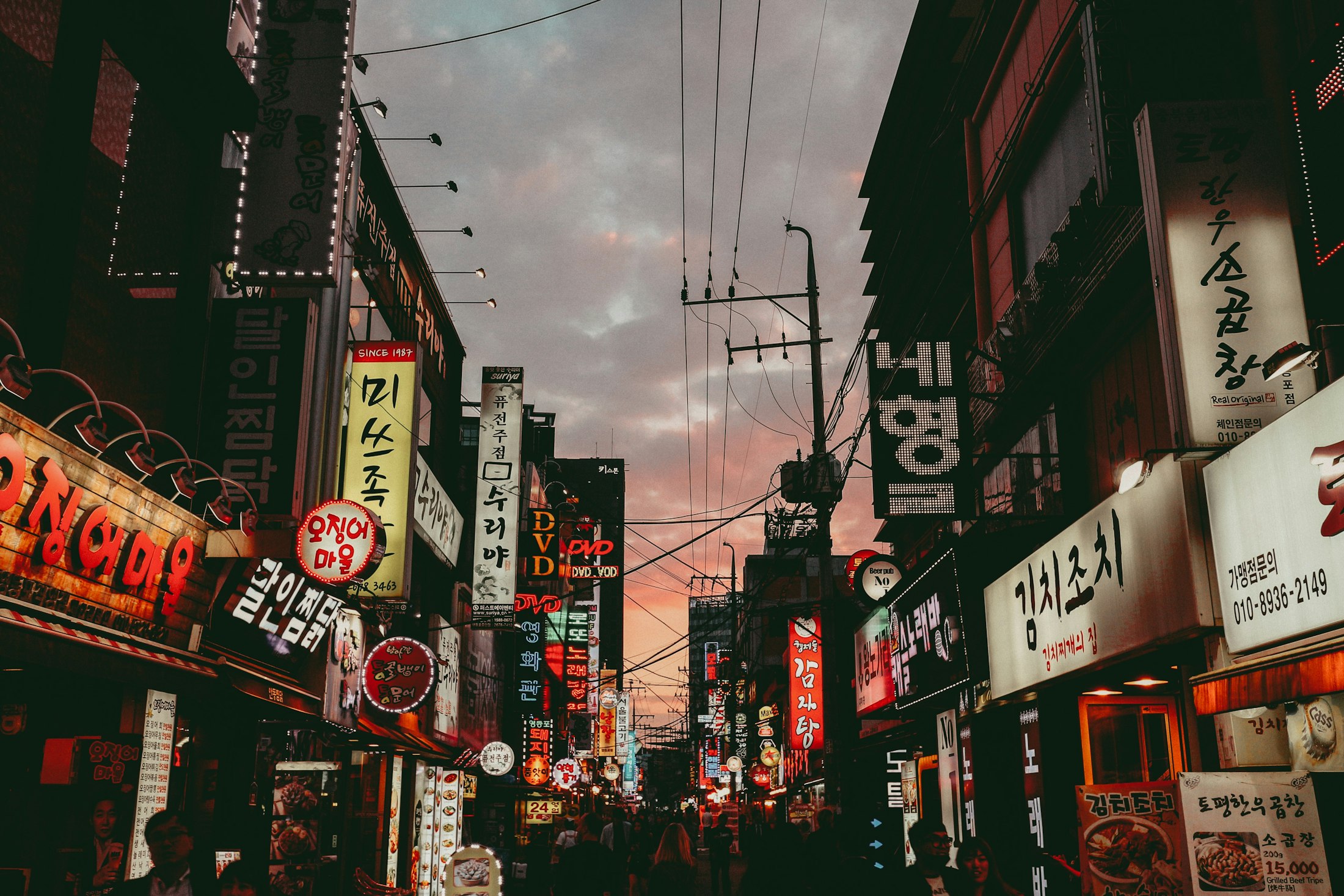
It was raining the kind of rain that makes you stop pretending your umbrella works. July in Seoul, the monsoon weeks when the city goes damp and irritable and the only rational response is cold noodles. I was in Euljiro, the old printing and metalworking district wedged between Jongno and Myeongdong, where the alleys still smell like ink solvent and the lunch crowds haven't been replaced by content creators. Not yet, anyway.
Euljiro during monsoon season isn't photogenic. The gutters flood, the signage drips, and everything feels slightly adhesive. But the neighborhood eats extraordinarily well in the heat, and it drinks even better after dark. This is how I'd spend a wet day here.
1. Start at Euljiro 3-ga station, exit 4
Exit 4 drops you into the hardware alley side. Turn left and you're immediately in the thick of it — welding shops, signage fabricators, stacks of acrylic sheets leaning against walls. The storefronts advertise in fonts that predate the internet.
Don't bother with a map for the first twenty minutes. The grid is loose and the fun is acoustic: metal saws, the clatter of offset presses, a radio playing trot music from a shop the size of a parking space. You'll orient yourself soon enough. The main commercial streets run east-west; the interesting alleys cut north-south.
Pro tip:Euljiro 3-ga and Euljiro 4-ga stations are one stop apart on Line 2. If you're coming from Myeongdong, 3-ga is closer. If you're coming from Dongdaemun, use 4-ga.
2. Eulji Myeonok, because cold noodles shouldn't cost ₩18,000
The consensus pick for naengmyeon in Euljiro is Pyongyang Myeonok over on Jangchungdan-ro. I think it's overrated. Fine broth, sure, but the wait regularly hits 40 minutes in summer and the portions have gotten conservative for ₩16,000.
Eulji Myeonok, on the second floor of a building near Euljiro 4-ga, does mul-naengmyeon — buckwheat noodles in iced beef broth — for ₩12,000. The broth is sharper, more vinegar-forward, which is exactly what you want when the humidity is 90%. The noodles have actual chew. They serve a decent yukjeon (pan-fried beef patty) as a side, ₩8,000, and the whole meal takes about twenty-five minutes from sitting down to leaving.
No English menu last time I checked. Point at the wall.
Pro tip: Add mustard oil from the squeeze bottle at the table. A little. It opens the broth up without wrecking it.
Stay in Seoul
Top-rated hotels near Seoul
Best locations · Verified reviews · Free cancellation
View deals
Expedia →3. The printing shops are not a museum
Some travel pieces treat Euljiro's printing district like a living heritage exhibit. It isn't. These are working businesses with deadlines. The letterpress shops along the alleys between Eulji-ro 13-gil and 15-gil still take commercial orders — business cards, wedding invitations, hanbok rental receipts. If you want to watch, stand at the doorway and be unobtrusive. Don't walk in filming.
A few shops will do small custom jobs for walk-ins. I had 50 letterpress cards printed at one place for ₩25,000. Took two days. The owner picked the typeface for me, which was the right call.
The metalworking side of the district, south toward Cheonggyecheon, skews louder and less visitor-friendly. Skip it unless you genuinely need industrial lighting fixtures or a custom steel bracket.
4. Makgeolli at Eulji Darak, after 6 p.m.
Euljiro's evening shift belongs to makgeolli. The milky rice wine goes down dangerously fast in hot weather, and the neighborhood has more good places to drink it than Jongno or Ikseon-dong, at lower prices and without the reservation anxiety.
Eulji Darak, on Eulji-ro 11-gil, pours house makgeolli from a brass kettle into shallow bowls. ₩5,000 per kettle. The pajeon (scallion pancake) is thick and oily in the best way — ₩15,000, feeds two comfortably. The space is a renovated second-floor workshop with metal-frame windows and zero interior design ambition, which is why it works.
Get there by 6:30 on Fridays or you'll wait.
Pro tip: Makgeolli is typically 6-8% ABV but the sweetness masks it. Drink water between kettles. This is not optional advice.
Stay in Seoul
Top-rated hotels near Seoul
Best locations · Verified reviews · Free cancellation
View deals
Expedia →5. Café culture in a pipe-fitting warehouse
Euljiro's café wave peaked around 2019-2020, when every third article about Seoul mentioned "industrial-chic coffee shops in old factories." Some of those places have closed. Others calcified into Instagram sets where people photograph lattes against corrugated metal.
The one I still like is Coffee Hanyakbang, in a former traditional medicine shop near Euljiro 3-ga. They kept the old wooden medicine cabinet behind the counter. Drip coffee is ₩5,500. Maybe eight seats. The barista doesn't rush you.
Skip Café Onion Seongsu if someone suggests it as an alternative. It's in a different neighborhood entirely and the line wraps around the building. You will spend more time queueing than drinking.
6. Cheonggyecheon in the rain is better than Cheonggyecheon in sunshine
I generally dislike urban stream restoration projects, but Cheonggyecheon, the restored stream running along the northern edge of Euljiro, is actually good during monsoon season. The water rises, the stone banks darken, and the usual crowds thin to almost nobody. Walk it eastbound from Gwanggyo toward Ogansumun. Fifteen minutes, no umbrella needed — the elevated road above provides cover for long stretches.
In dry weather it's an overcrowded pedestrian highway with colored lights at night. I don't see the appeal.
Pro tip:The stepping stones across the stream near Gwanggyo get submerged when the water's high. Check before you commit to crossing.
7. Nogarigolmok, or: drinking under fluorescent lights
Nogari Golmok — "dried fish alley" — is the strip of outdoor pojangmacha-style bars along Eulji-ro 14-gil. Plastic chairs, dried pollack (nogari) for ₩5,000-7,000, and cheap draft beer. The overhead lighting is fluorescent and unflattering. None of this matters after the second round.
I went on a Saturday in peak summer once. The alley was so packed that strangers were sharing tables, which sounds convivial but mostly meant someone's elbow in my beer. Weeknight visits, Tuesday through Thursday, are better. The regulars are calmer. The ajummas running the stalls are more likely to toss in extra dried fish if you're polite and not filming everything.
Most stalls open around 5 p.m. and close when the crowd thins, usually by midnight.
Pro tip:Nogari is an acquired taste — salty, chewy, faintly sweet. Don't order three portions your first time. One is enough to know.
8. Getting out, and what not to combine this with
Euljiro is a half-day neighborhood. You could stretch it to a full day with the eating and drinking, but don't try to combine it with Myeongdong shopping or Namsan Tower in the same afternoon. Myeongdong is a ten-minute walk south but it's a different universe — skincare samples, tour buses, ₩10,000 street food that isn't worth ₩4,000.
The better pairing is Jongno 3-ga, one subway stop north, which has its own pojangmacha alleys and the Tapgol Park area.
Or just stay in Euljiro until it gets dark and the workshops close and the neighborhood shifts from industrial to social. Metal shutters rolling down, makgeolli places filling up, steam from a noodle shop fogging someone's glasses. That shift, around 7 p.m. on a rainy weeknight.
Essential tips
Seoul's monsoon (장마, jangma) typically runs late June through late July. Bring shoes that can handle standing water — the Euljiro alleys don't drain well.
Many Euljiro restaurants and pojangmacha stalls are cash-only or cash-preferred. Carry at least ₩30,000-50,000 in notes. There's a Hana Bank ATM near Euljiro 3-ga exit 3.
English menus are rare in this part of the district. Naver Papago translates Korean menus via camera better than Google Translate does — download it before you go.
Euljiro 3-ga station serves both Line 2 and Line 3. If you're transferring, follow signs carefully — the platforms are far apart and the corridors are long.
Ready to visit Seoul?
Book your hotel, flights, and activities through our Expedia-powered search.


