In This Guide
- 1.Num banh chok: the dish that organizes everything
- 2.The stall on Bình Tây market's north side
- 3.Skip the Bình Tây market interior for food
- 4.Hủ tiếu Nam Vang vs. Phnom Penh noodle soup: the same thing, rebranded
- 5.Bún nước lèo and the Trà Vinh connection
- 6.The afternoon gap
- 7.Chùa Giác Lâm is not in District 6, but go anyway
- 8.Getting to District 6 without overpaying
- 9.What nobody tells you about eating here
The rain hits District 6 like it has a grudge. I was last here in August, standing under a corrugated awning on Ngô Nhân Tịnh while the gutters turned into rivers, eating a bowl of num banh chok that cost me 35,000 đồng and wondering why every food writer in Saigon was still filing dispatches from Bùi Viện.
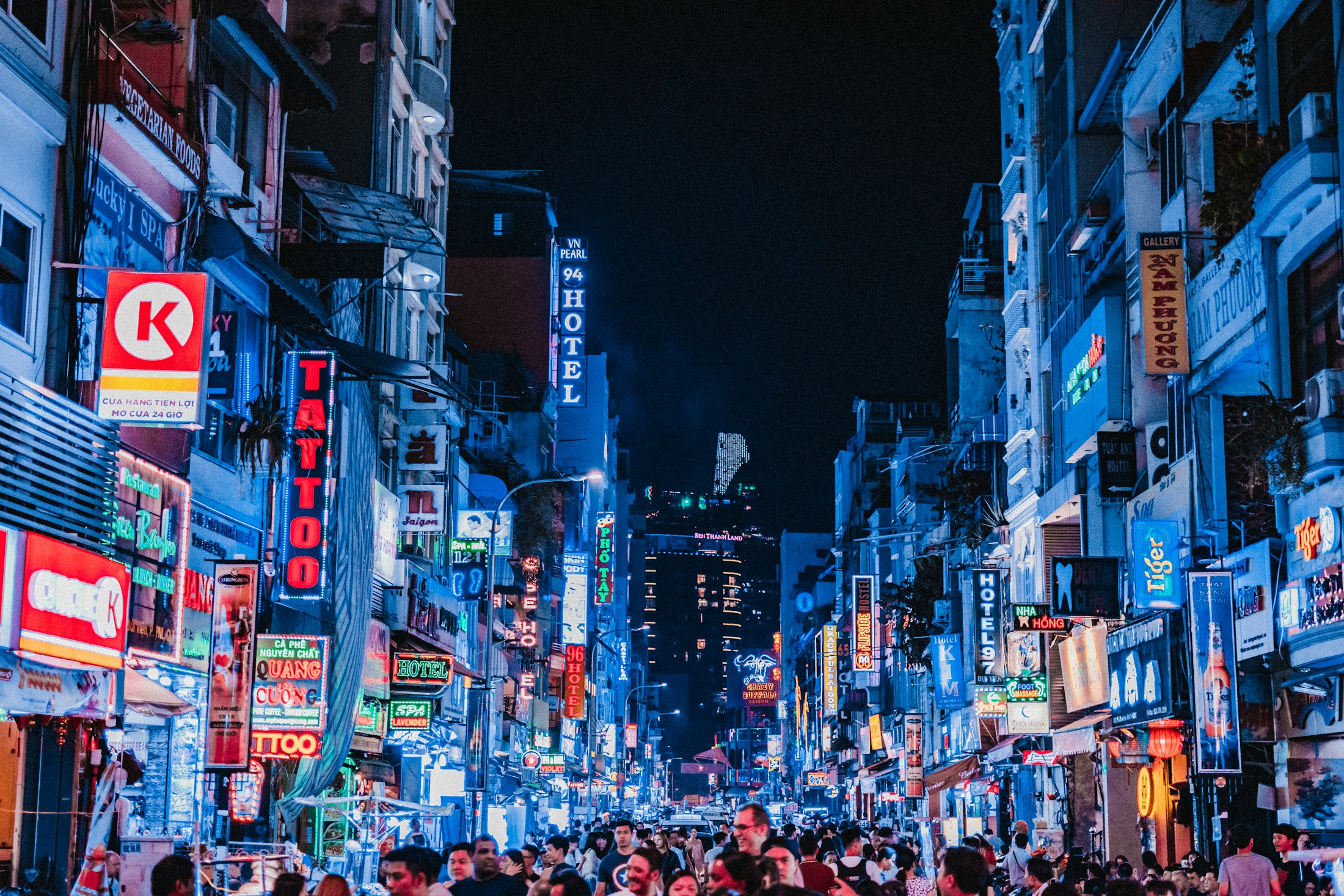
District 6 is the Khmer quarter — or what's left of it. Generations of ethnic Khmer and Teochew families have run noodle kitchens out of shophouses here since before anyone called this city Ho Chi Minh. The food owes more to Phnom Penh than to Phở Hòa. You won't find many tourists. You will find fish amok broth ladled out of pots the size of a toddler, and rice noodle preparations that don't exist anywhere else in Vietnam's culinary geography. Bring an umbrella from June through November, or just get wet. The soup is worth pneumonia.
1. Num banh chok: the dish that organizes everything
Start here or don't bother coming. Num banh chok is Khmer rice vermicelli in a green fish curry — lemongrass, turmeric root, kaffir lime, pounded in a mortar with snakehead fish until the broth goes the color of pond water. That sounds unappetizing. It is beautiful.
The noodles are made fresh, extruded through a press and dropped straight into the bowl. They have a springiness that dried noodles can't replicate, and they start going starchy within thirty minutes of being made, which is why the good stalls sell out by 9 a.m.
Most District 6 versions come with a fistful of raw banana blossom, bean sprouts, and morning glory on the side. You tear the herbs and dump them in yourself. Nobody arranges anything for you.
Pro tip:Arrive before 7:30 a.m. for the freshest noodle texture. By 8:30 you're eating yesterday's ambition.
2. The stall on Bình Tây market's north side
There's a woman who sets up on the narrow pavement along the north edge of Chợ Bình Tây, across from the parking lot entrance on Tháp Mười. No signboard. A blue tarp, two aluminum tables, plastic stools that put your knees near your ears. She does num banh chok and nothing else.
35,000 đồng a bowl. She pours the curry from a dented pot balanced on a charcoal burner. The broth is thicker than most versions — almost gravy-like — and she uses more galangal than anyone else in the district. I watched her prep once: she was grinding paste at 4 a.m., alone, under a fluorescent tube.
She's there daily except Sundays, roughly 6 a.m. to whenever she runs out, which is usually before 9.
3. Skip the Bình Tây market interior for food
I know it's the logical move — you're right there, the market is enormous, there are food stalls inside. But the interior food court is overpriced by district standards and the quality is aimed at wholesale traders who need calories, not flavor. A bowl of anything inside will run you 50,000–65,000 đồng and taste like it was made in bulk at midnight.
The real eating happens on the surrounding streets: Ngô Nhân Tịnh, Phan Văn Khỏe, and the alleys behind the market's south gate. Walk two minutes in any direction and you'll halve your bill.
4. Hủ tiếu Nam Vang vs. Phnom Penh noodle soup: the same thing, rebranded
Vietnamese menus call it hủ tiếu Nam Vang. Khmer stalls just call it noodle soup. Same dish. Clear pork broth, rice noodles, ground pork, shrimp, a few slices of liver if you're lucky, fried garlic on top. "Nam Vang" is just the Vietnamese name for Phnom Penh, which tells you everything about where this came from.
The consensus pick in District 6 is Hủ Tiếu Nam Vang Liến at 284 Hậu Giang, and for once the consensus is mostly right. The broth is clean without being thin, and they don't overload it with MSG the way some competitors do. A regular bowl is 45,000 đồng. The đặc biệt with extra offal is 55,000.
But here's my contrarian note: the best hủ tiếu Nam Vang I've had in this district wasn't at a Khmer stall. It was at a Teochew-Chinese place on Bình Tiên whose name I can never remember because the sign is faded beyond legibility. The Teochew version uses a darker, caramelized broth with dried squid undertones. Two food cultures arguing over the same bowl, and the argument is delicious.
Pro tip:Ask for noodles "khô" (dry) if you want the broth on the side. It's the same price and lets you control how soupy things get.
5. Bún nước lèo and the Trà Vinh connection
Bún nước lèo is the district's other essential Khmer noodle. The broth is built on fermented fish paste — prahok — simmered with lemongrass and coconut milk. It smells confrontational. If you can get past the initial funk, it rewards you.
The dish traces back to Trà Vinh province in the Mekong Delta, where the Khmer population is much larger. District 6 families brought it north during various waves of migration. The version here tends to be less coconut-heavy than the Delta original, probably because coconut milk is pricier in the city.
There's a stall on Ngô Nhân Tịnh — look for the hand-painted sign that says "Bún Nước Lèo Trà Vinh" near the intersection with Bà Hom — that does a solid rendition for 40,000 đồng. They add sliced eggplant, which not everyone does. Open from about 6:30 a.m. to 2 p.m.
Pro tip:If fermented fish paste terrifies you, this is not your bowl. Don't try to ease into it. You're either in or you're out.
Stay in Ho Chi Minh City
Top-rated hotels near Ho Chi Minh City
Best locations · Verified reviews · Free cancellation
View deals
Expedia →6. The afternoon gap
District 6's noodle kitchens are a morning economy. Most serious stalls close by early afternoon. Between 2 p.m. and 4 p.m. the streets go quiet and the metal shutters come down.
Don't fight it. This is not a neighborhood that performs for your schedule. Use the dead hours to walk the residential alleys south of Hậu Giang, where Khmer-script signs still hang over a few doorways and the temples are small enough that you might miss them if you're looking at your phone.
7. Chùa Giác Lâm is not in District 6, but go anyway
It's in Tân Bình, about a fifteen-minute motorbike ride north. But if you're already out in this part of Saigon — the un-touristed western quadrant — you might as well keep going. Chùa Giác Lâm dates to 1744, and it feels nothing like the lacquered tourist temples downtown.
The interior is dark, crammed with old wooden statuary, and smells like decades of incense embedded in the walls. Monks still live and practice here. Entry is free. Take off your shoes.
A xe ôm from District 6 should cost around 25,000–35,000 đồng, or you can use Grab.
Pro tip: Visit between 11 a.m. and noon when the monks eat lunch and the main hall is empty. The silence is uncommon for Saigon.
Stay in Ho Chi Minh City
Top-rated hotels near Ho Chi Minh City
Best locations · Verified reviews · Free cancellation
View deals
Expedia →8. Getting to District 6 without overpaying
From District 1, take bus route 01 from Bến Thành bus station toward Chợ Lớn. Get off at Chợ Bình Tây. The ride takes thirty to forty-five minutes depending on traffic. Fare is 6,000 đồng. Six thousand.
Grab will charge you 40,000–70,000 đồng for the same trip, depending on surge pricing, and you'll sit in the same traffic. The bus is air-conditioned and has Wi-Fi that occasionally works. I genuinely don't understand why people take taxis here.
If you're coming from further out — Thủ Đức, Bình Thạnh — Grab makes more sense. From the backpacker district, just take the bus.
Pro tip:Download the BusMap app. It works for Ho Chi Minh City's entire bus network and shows real-time positions. It's free and more reliable than Google Maps for local routes.
9. What nobody tells you about eating here
The stalls don't have English menus. Some don't have menus at all. You point, you hold up fingers for quantity, you sit down. Nobody is going to explain the dish to you, and nobody is going to judge you for mispronouncing things. The transactional bluntness is refreshing after the performative hospitality of the tourist corridor.
Bring cash. Small bills. Nothing larger than 100,000 đồng or you'll get a look. Several stalls don't give receipts. Not an expense-account neighborhood.
One more thing. The stools are low, the tables are metal, and you will sweat. No linen napkins, no curated playlists, no one asking about your dietary restrictions. Just noodles, broth, and the sound of motorbikes.
Essential tips
Plan to arrive in District 6 by 7 a.m. The best noodle stalls open at 6 and sell out before 9. By 10 a.m. you're picking through leftovers.
Carry small denominations — 10,000 and 20,000 đồng notes. Most bowls cost 35,000–55,000 đồng, and breaking a 500,000 note at a street stall is a social crime.
June through November is monsoon season. Afternoon downpours are daily and violent. A cheap foldable poncho from any convenience store (10,000 đồng) beats an umbrella in the wind.
Bus 01 from Bến Thành to Chợ Bình Tây costs 6,000 đồng and runs every 10-15 minutes. Air-conditioned. Faster than a taxi during morning rush.
Ready to visit Ho Chi Minh City?
Book your hotel, flights, and activities through our Expedia-powered search.


