In This Guide
The hammers have stopped. The plastic squeaky ones, I mean — the ones strangers use to bonk you on the head during São João, Porto's wildest night, the 23rd of June. By the first week of July, the confetti's been hosed off the Aliados steps, the sardine smoke has thinned to a memory, and the city exhales. Campanhã, the eastern parish most tourists never reach because the train station there is just a transfer point, gets especially quiet.
This is when I like Porto best. The restaurants that spent June feeding festival crowds go back to serving regulars. Prices haven't crept up for August. The tascas along Rua do Heroísmo don't have lines, and the woman at the counter actually wants to talk to you about the tripas.
1. Tripas à moda do Porto, and why most people eat the wrong version
Porto's signature dish is tripe stew. I know. Stay with me.
Tripas à moda do Porto — white beans, chorizo, pig ear, chouriço de sangue, and yes, honeycomb tripe — is one of those dishes that separates people who eat to post from people who eat to eat. The consensus version, the one you'll find on Ribeira menus for €14-16, is usually timid. Beans overcooked to paste, tripe cut small so you can pretend it's something else. Tripe with training wheels.
The version at Taberna Santo António on Rua das Flores (not Campanhã, but worth the detour) convinced me years ago that real tripas should be aggressive — chunks of stomach you have to chew through, fat rendering into the broth, cumin hitting you in the back of the throat. But in Campanhã proper, the one I keep returning to is the plate at Cantina 32's more casual sibling concept or, better yet, the no-name lunch counter on Rua do Freixo where the daily special board is handwritten in marker and tripas show up on Thursdays. €7.50 for a full plate with rice. The tripe is cut in wide ribbons. You will know exactly what you're eating.
Pro tip:Thursday is traditional tripas day across Porto. If you're building a food itinerary, anchor it there.
2. The sardine question: grilled at home or grilled for you
After São João, sardines don't vanish — they just stop being mandatory. June sardines are a social contract: you grill them outside your door, the smoke drifts across the street, your neighbor does the same, the whole city smells like a beach bonfire. July sardines are a choice.
The best post-festival sardines I've had in Campanhã came from a guy working a charcoal grill outside Mercado do Bolhão's eastern entrance — except Bolhão is technically Bonfim, not Campanhã, and people will correct you. Fine. In actual Campanhã, try Churrasqueira do Cativo on Rua do Cativo, where the grill runs from noon until they sell out, usually by 2 p.m. Four sardines, bread, boiled potatoes, a salad that's mostly onion: €6. No English menu. The sardines are fat and July-sized, which means bigger than the scrawny June ones everyone romanticizes.
June sardines are overrated. They're smaller, the demand is insane, and half the ones served on São João night have been frozen. July sardines, when the fishmongers at Campanhã market actually have time to pick the good ones, are the real thing.
3. Mercado de Campanhã, early morning
Skip the renovated Bolhão if you only have time for one market. I know it's beautiful — all that ironwork, the new food hall upstairs — but in July it's thick with day-trippers buying €4 pastéis de nata they could get for €1.20 elsewhere. Campanhã's market, officially Mercado Temporário de Campanhã on Rua de São Roque da Lameira, is where actual residents buy their week's groceries.
Get there before 9 a.m. The produce vendors are fully stocked, the fish counter still has the morning catch, and there's a coffee stand near the south entrance selling bicas (espressos) for €0.70. The cheese situation is serious: wheels of Serra da Estrela so ripe they sag in the middle, sliced to order. One vendor — older woman, always in a blue apron, northeast corner — sells homemade requeijão that I've dreamed about on planes.
By 11 a.m. half the stalls start packing up. The morning window is the whole point.
Pro tip:Bring cash. Most market vendors don't take cards, and the nearest Multibanco (ATM) is a five-minute walk on Rua da Estação.
Stay in Porto
Top-rated hotels near Porto
Best locations · Verified reviews · Free cancellation
View deals
Expedia →4. Bifanas at a gas station (trust me)
Last July I made the mistake of asking a cab driver for a bifana recommendation and he took me to a BP station on the edge of Campanhã. I thought he was joking.
He was not. The bifana — thin-pounded pork cutlet marinated in garlic and white wine, served on a cheap bread roll — was devastating. The bread soaked through with pan juices. The pork had actual spice heat, which is rare; most bifanas are gentle. I don't have the exact address because it's literally a gas station café on Estrada da Circunvalação, but if you're driving the ring road and see a BP with a full parking lot at 1 p.m., that's it. Bifana and an Imperial (draft beer) ran me €3.50 total.
Bifanas are Porto's real fast food. Not the francesinha — that's a commitment, a thing you sit down for. The bifana is standing-at-the-counter, paper napkin, done in four minutes.
5. Wine, but not where you think
You do not need to cross the river to Gaia to drink port wine. The lodges over there — Taylor's, Graham's, Sandeman — are fine if you want the tour-and-tasting circuit, but in July they're packed and the tastings feel procedural. Forty-five minutes, four samples, a gift shop.
In Campanhã, wine drinking happens at tascas, and the wine is almost never port. It's vinho verde from jugs, or a rough Douro red sold by the glass for €1.50. The spot I go to is Tasca do Chico (not the Fado one in Lisbon — different place, same name) on a side street off Largo da Igreja de Campanhã. Tiny room, maybe eight tables. The owner pours from unlabeled bottles and if you ask what you're drinking he shrugs and says "tinto." There's always a dish of tremoços (lupin beans) on the bar, free.
For something more curated, Genuíno on Rua de Santa Catarina (technically just outside Campanhã's border) does an excellent glass of white Douro for €3 and has a terrace that catches the late-July light until almost 9 p.m.
Pro tip: If you want port specifically, buy a bottle at Mercado de Campanhã — vendors sell late-bottled vintage tawnies for €8-12, well below lodge prices — and drink it at your rental.
Stay in Porto
Top-rated hotels near Porto
Best locations · Verified reviews · Free cancellation
View deals
Expedia →6. The francesinha problem
Every Porto guide leads with the francesinha: bread, steak, sausage, cheese, egg, drowned in tomato-beer sauce. I love a francesinha. But the obsession has flattened Porto's food identity into a single sandwich.
In Campanhã, the francesinha options are limited and that's fine. Café Santiago and Bufete Fase, the two names everyone drops, are both in Baixa, a 15-minute bus ride west. If you must, Santiago is the better of the two — the sauce has a darker, almost bitter edge that I prefer. Skip Bufete Fase; it coasts on reputation at this point.
What Campanhã does better than anywhere in Porto is the uncelebrated daily lunch. Prato do dia. Grilled fish, a pork chop, maybe arroz de cabidela (chicken rice cooked with blood and vinegar — less alarming than it sounds). These €7-9 plates at workers' canteens along Rua do Heroísmo are the meals nobody writes about because they're not photogenic.
Pro tip: Lunch service at most Campanhã tascas runs 12:00-14:30. Show up at 12:15 for the best selection before dishes sell out.
7. Walking it off along the Douro, east side
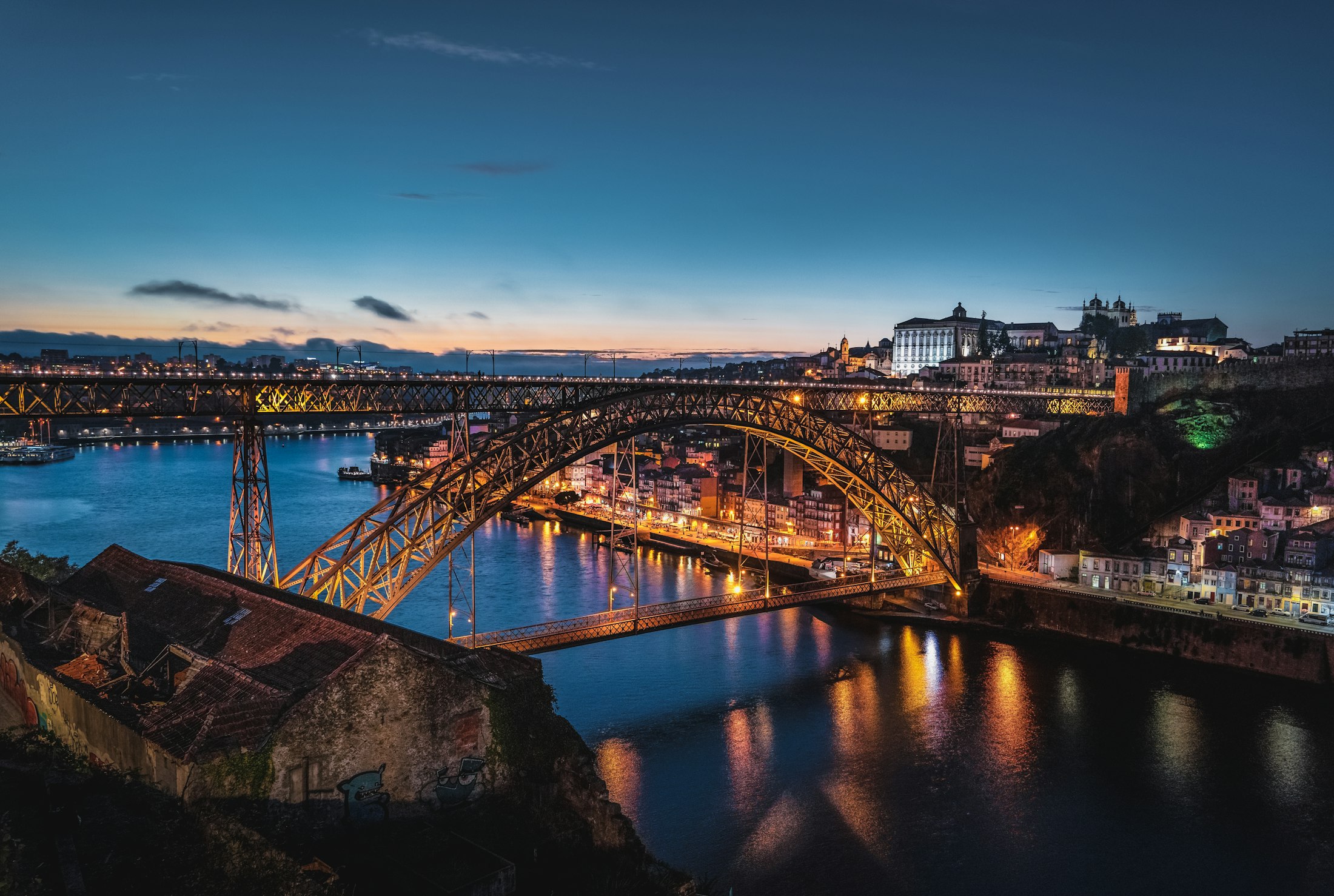
After eating your way through Campanhã — and you will eat too much, the portions here are calibrated for stonemasons, not journalists — walk east along the river. The path from Ponte do Freixo toward the old Quinta da China estate is flat, mostly paved, and almost empty in July evenings.
No guided tours. No tile museums. Just the river turning copper as the sun drops behind the Arrábida bridge to the west, the sound of trains crossing overhead on the Campanhã rail line, and the occasional fisherman who's been sitting in the same spot since you started your lunch three hours ago.
A good last stop: the small kiosk bar near the Freixo marina, if it's open (hours are unreliable — weekends are safer). Imperial for €1.50, a bench, the river.
Essential tips
Campanhã station is on Metro lines B, C, E, and F. From central Porto (Trindade), it's a 10-minute ride, €1.55 with an Andante card loaded with a Z2 fare.
English is hit-or-miss in Campanhã tascas. Learn 'prato do dia' (daily special), 'tinto' (red wine), and 'a conta, por favor' (the check, please). Pointing at what someone else is eating also works.
Many small restaurants and market stalls are cash-only. Carry at least €20-30 in small bills; breaking a €50 at a lunch counter will get you a look.
July afternoons in Porto regularly hit 30°C+ but buildings in Campanhã are not reliably air-conditioned. Eat lunch early, walk the river in the evening, and sit inside during the 3-5 p.m. dead zone when most places close anyway.
Ready to visit Porto?
Book your hotel, flights, and activities through our Expedia-powered search.

