In This Guide
- 1.The sardines come first, everything else comes after
- 2.Largo da Severa and the ghost of Maria Severa
- 3.The manjerico question
- 4.Where to drink when your legs give out
- 5.The marchas populares (and why you shouldn't obsess over them)
- 6.After midnight, the neighborhood tilts
- 7.The morning after Santo António
The smoke finds you before the music does. You turn a corner on Rua dos Cavaleiros and it's already in your hair, your clothes, the back of your throat — sardines splitting open on makeshift grills that someone dragged out of a garage an hour ago. It's the night of June 12th, the eve of Santo António, and Mouraria has given itself permission to be loud.
I have a theory that Lisbon reveals its actual personality only twice a year: once during a proper Atlantic storm in January, and once on this night. The rest is performance. But on Santo António's Eve, the neighborhood where fado was born stops curating itself and just goes. Entire streets become dining rooms. Grandmothers judge your grilling technique from plastic chairs. Someone is always crying during a fado vadio set, and nobody pretends they aren't.
1. The sardines come first, everything else comes after
Let me be clear about priorities: you eat before you do anything else. The sardinha assada — whole sardines grilled over charcoal until the skin blisters and the fat runs — is not a side dish on Santo António's Eve. It is the event. You'll find them everywhere in Mouraria, but the best ones I've had were from a grill set up on the corner of Rua do Capelão and Largo do Terreirinho, run by a family who brings their own charcoal from somewhere outside the city and won't tell you where.
The protocol is simple. You get a sardine on a slice of broa — that dense corn bread — and you eat it with your hands. No fork. The bread catches the oil. You chase it with cheap red wine or a Super Bock, which will cost you about €1.50 from the nearest makeshift bar.
Skip the sardine-themed menus at the tourist restaurants along Rua Augusta. Those are January sardines from a freezer, marked up to €14 and served with a sprig of something irrelevant. The street food on Santo António's Eve costs €2-3 per sardine and it's better by a factor of ten.
Pro tip: Eat your sardine head-to-tail. Locals do. The spine pulls away clean if the fish is properly grilled, and hesitating with a knife marks you immediately.
2. Largo da Severa and the ghost of Maria Severa
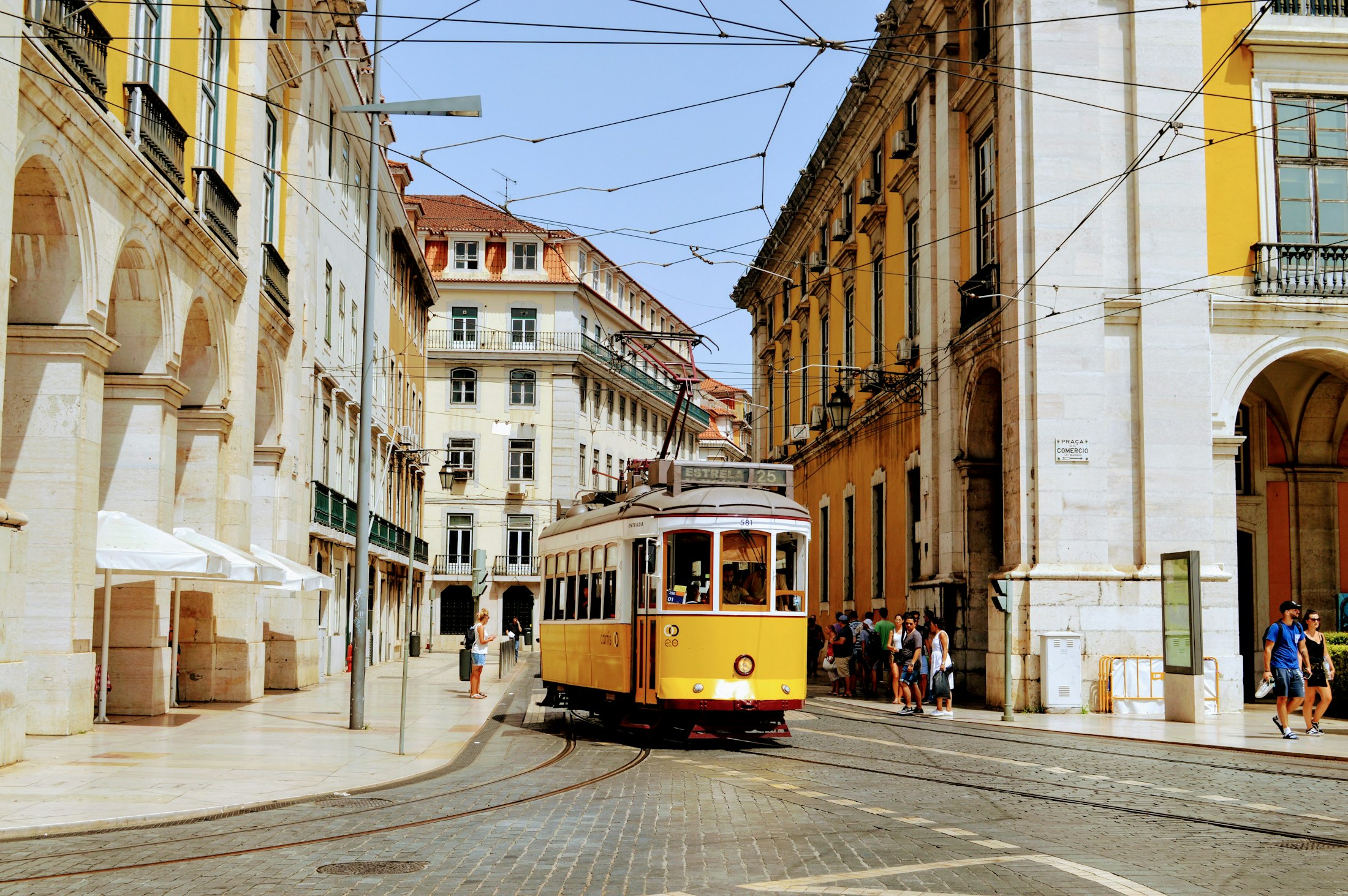
Mouraria claims fado the way New Orleans claims jazz — with evidence and attitude. The largo named after Maria Severa, the 19th-century fadista who allegedly invented the genre's emotional vocabulary, sits at the intersection of Rua do Capelão and Rua da Guia. There's a mural of her there now, enormous, watching over the neighborhood with an expression that could be sorrow or impatience.
On Santo António's Eve, this tiny square fills past capacity. A small stage appears. The fado vadio begins.
Fado vadio — "vagrant fado" — is the amateur version, and I'd argue it's more honest than what you'll hear in the Alfama fado houses charging €45 for a set menu and two songs. Here, anyone can sing. A retired postman. A teenager with an extraordinary tremor in her voice. The guitarristas tune up between each singer, and the crowd knows the etiquette: absolute silence during a song, then explosive applause. I watched a man in a Santos FC jersey sing "Estranha Forma de Vida" last year and half the largo was in tears by the second verse.
Pro tip:Arrive at Largo da Severa by 9:30 p.m. if you want a sightline to the stage. By 10:30 you'll be listening from two streets away.
Stay in Lisbon
Top-rated hotels near Lisbon
Best locations · Verified reviews · Free cancellation
View deals
Expedia →3. The manjerico question
You will be handed a small basil plant. This is the manjerico, the symbol of Santo António, and it comes in a pot wrapped in foil or colored paper with a love poem — a quadra popular — stuck on a little paper flag. The tradition is to give it to someone you love, though in practice, people just buy them for €1-2 from vendors on every corner and carry them around all night like aromatic accessories.
Do not eat it. I know it's basil. I know you're thinking about it. The Santo António manjerico is ornamental, a different cultivar with smaller leaves and a sharper scent, and putting it on a pizza would be both a culinary and a cultural crime.
4. Where to drink when your legs give out
Mouraria is vertical. After two hours of walking its staircases with a belly full of sardines, you will want to sit. Resist the urge to retreat downhill toward Martim Moniz, which on this night becomes an overcrowded plaza with a DJ playing music that has nothing to do with anything.
Instead: Tasca do Chico on Rua dos Remédios in Alfama (a short walk from Mouraria's eastern edge) is open late and hosts its own fado vadio sessions, though you need a reservation even on a normal night — on Santo António's Eve, arrive early or accept your fate. Closer to the heart of Mouraria, Zé da Mouraria on Rua João do Outeiro 24 keeps things simple: cold beer, petiscos, plastic tables outside. The tremoços — those briny lupini beans — are free with your drink. Last June they were also pouring ginjinha for €1.50 a shot, which is the correct price for ginjinha; anything above €3 is a shakedown.
For something quieter, climb to the Miradouro da Graça. Not the famous one everyone photographs — walk past it, another 200 meters northeast to the garden behind the Igreja da Graça. Fewer people, same city.
Pro tip:Ginjinha is served with or without the sour cherry at the bottom — "com elas" or "sem elas." Say "com elas." The cherry is half the point.
Stay in Lisbon
Top-rated hotels near Lisbon
Best locations · Verified reviews · Free cancellation
View deals
Expedia →5. The marchas populares (and why you shouldn't obsess over them)
Here's my contrarian position: the marchas populares — the elaborate costumed parades where each Lisbon neighborhood competes with choreographed routines down Avenida da Liberdade — are overrated. There. I said it. Locals will argue about this, and some neighborhoods pour months of rehearsal into their marcha, and I respect that. But standing for three hours on the Avenida watching sequined groups pass by one after another is an endurance test that mostly rewards patience, not curiosity.
Watch fifteen minutes of the marchas if the timing works. Then go back to Mouraria.
The real competition happens at street level, between neighborhoods grilling against each other, decorating their alleys with paper streamers and sardine cutouts, blasting music from balconies. The official parade is spectacle; the streets are the thing itself.
Pro tip: The marchas usually begin around 9 p.m. on Avenida da Liberdade and continue past midnight. If you do go, stand near Praça dos Restauradores rather than midway up the avenue — less crowded, easier exit.
6. After midnight, the neighborhood tilts
Something shifts around 1 a.m. The families with children disappear. The grills cool. What's left is younger, louder, and — if you've stayed in Mouraria — surprisingly intimate. The streets narrow to the point where a party of four fills the entire width of a rua, and you end up in conversation with strangers because geometry demands it.
I made the mistake of wearing new shoes last year and paid for it with a blister the size of a 50-cent coin by 2 a.m. Wear something broken in. The calceteiro cobblestones — those black-and-white limestone mosaics — are gorgeous and ruthless on your feet.
Some bars stay open until 4 or 5 a.m. on this night. The ones along Rua do Benformoso cater to Mouraria's South Asian and Chinese communities and keep different hours than the rest of the neighborhood year-round, which means on Santo António's Eve they become accidental after-parties. A plate of chicken biryani at 3 a.m. for about €7. After six hours of sardines, you might want it.
7. The morning after Santo António
June 13th itself — the actual feast day — is a public holiday in Lisbon. The city sleeps in. Mouraria is quiet in a way that feels post-confessional, all the evidence of last night swept into gutters or still drying in the sun. Sardine scales on the pavement catch the light.
Walk through in the morning and you'll see the neighborhood plain. The azulejo tiles with cracks nobody's fixed. The construction scaffolding that's been there since your last visit. The old woman watering her manjerico on a second-floor balcony.
Get a galão — basically a latte, but don't call it that — at Padaria do Povo on Largo do Terreirinho. Around €1.20. Sit outside. The quiet after Santo António is its own kind of fado.
Essential tips
Take the green metro line to Martim Moniz and walk uphill into Mouraria. Don't bother with taxis after 8 p.m. on June 12th — the streets are closed to traffic and your driver will abandon you at Largo do Intendente anyway.
Bring cash in small bills. Most street vendors, grill stations, and makeshift ginjinha bars don't take cards. ATMs near Martim Moniz charge fees; withdraw from your bank's network earlier in the day.
Wear shoes with actual grip. Mouraria's limestone cobblestones become slick with sardine grease and spilled wine. Sandals are a liability, not a style choice.
June nights in Lisbon hover around 17-20°C. Bring a light layer — the river breeze finds you on the higher miradouros even when the lower streets feel warm from all the grill smoke.
Ready to visit Lisbon?
Book your hotel, flights, and activities through our Expedia-powered search.