In This Guide
The last time I walked through Shinsekai during Obon week, a Tuesday in mid-August, I counted more cats than tourists. The neighborhood's usual crowd — domestic day-trippers, retirees killing time at shogi parlors, college kids lining up for fried things on sticks — had largely decamped. What remained was the neon, the grease, and an almost eerie quiet that let you hear the tick of the Tsutenkaku Tower elevator from street level.
Most guides will tell you Shinsekai is best experienced during the day, shoulder to shoulder with everyone else. I disagree. Come during Obon (roughly August 13–16, though some shops close as early as the 11th), preferably after 7 p.m., and you get the rare chance to eat slowly in a neighborhood that normally runs on turnover.
1. The kushikatsu situation
Shinsekai's identity is built on kushikatsu — battered, deep-fried skewers of pork, lotus root, shrimp, quail egg, whatever fits on a stick. The canonical rule, posted in every shop: no double-dipping in the communal sauce. You already knew that.
During Obon, the wait at Daruma (3-9-2 Ebisuhigashi, Naniwa-ku) drops from 40 minutes to almost nothing. I walked in at 8 p.m. on August 14 and sat down immediately. A set of five skewers runs about ¥700–¥900 depending on what you pick. The renkon (lotus root) has a shatter to it that the shrimp doesn't — go heavy on vegetables here, which is not advice I give often.
Yaginoya (2-3-17 Ebisuhigashi) is less famous and slightly cheaper. The counter seats maybe twelve people. The beer is Asahi, the skewers come fast, and nobody is trying to upsell you on a course menu.
Pro tip:If you're solo, counter seats at Yaginoya are easier to grab than at Daruma even on normal days. Point at the Japanese menu on the wall — the English one is incomplete.
2. Skip Tsutenkaku at sunset
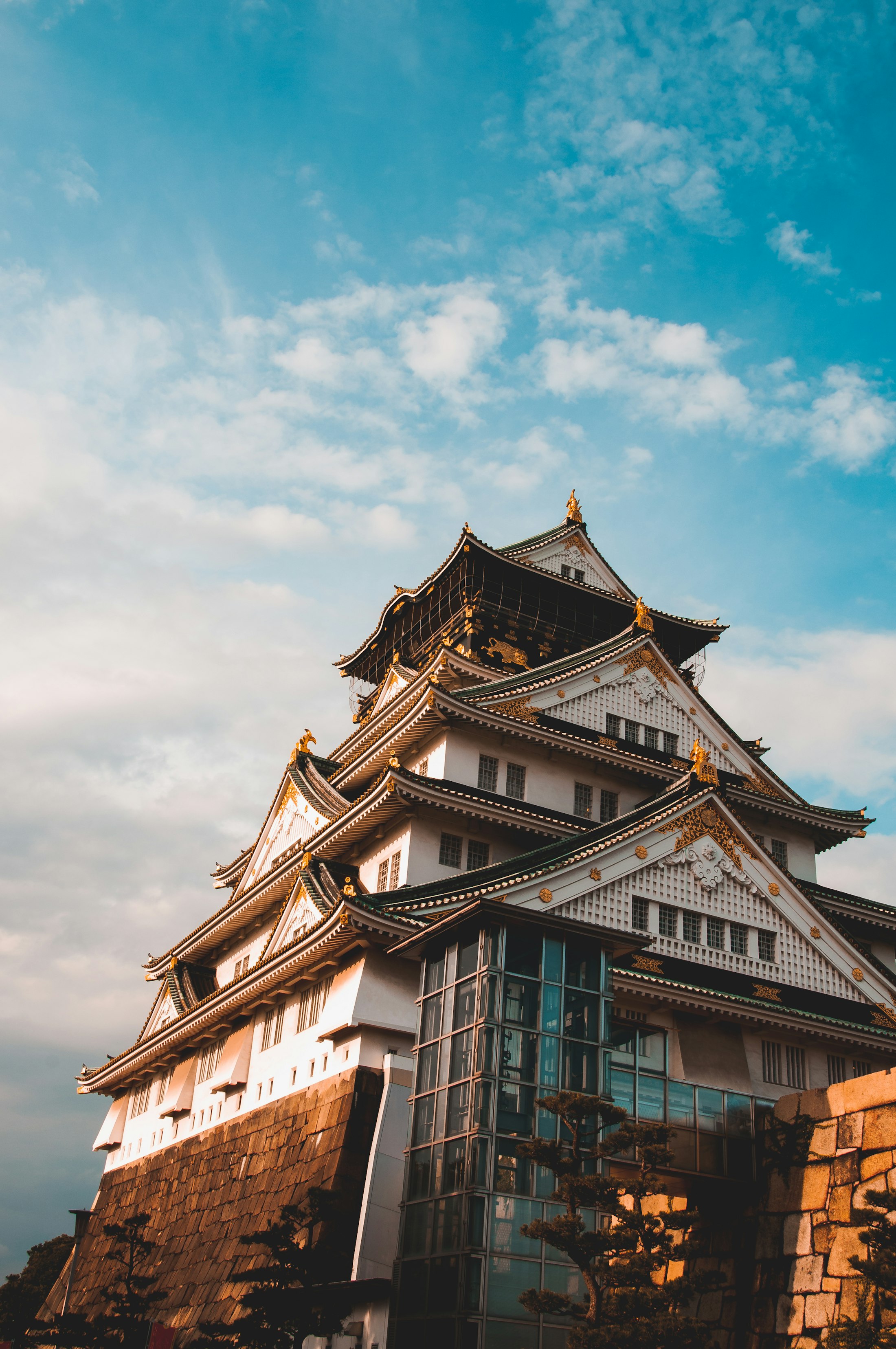
Every neighborhood guide dutifully sends you up Tsutenkaku Tower. Fine. But the ¥900 observation deck fee buys you a view of South Osaka that is, frankly, not that interesting — flat city in every direction, no water, no mountains close enough to matter. The tower is more useful as a landmark than as a destination. Look at it from below, note the Hitachi sign, move on.
If you need height, Abeno Harukas is twenty minutes south on foot and the view actually earns the price.
3. Jan Jan Yokocho after the shogi players leave
Jan Jan Yokocho is the covered arcade running south from the main Shinsekai drag. During the day it's shogi parlors and cheap izakayas. By 9 p.m. during Obon, most of the shogi places have closed and the arcade gets dim — not dangerous, just empty in a way that feels like trespassing.
There's a tiny takoyaki stand about halfway down the arcade, no English sign, recognizable by the rotating griddle in the window. Eight takoyaki for ¥500. The woman running it during my last visit was listening to a Tigers game on the radio and did not seem interested in conversation, which I respected.
The pachislot parlors at the south end stay open late regardless of Obon. Noise leaks out every time the automatic doors open. Walk past them and you're basically in Tennoji.
Pro tip: Jan Jan Yokocho connects Shinsekai to Tennoji on foot in about ten minutes. Use it as a walking shortcut instead of the subway.
4. Where to drink without a cover charge
Most Shinsekai bars are really just standing counters attached to kushikatsu shops. Fine for a beer with dinner but less fine for a second or third drink when you don't want more fried food.
Asahi Gekijō (5-2-22 Ebisuhigashi) is a sort of indoor drinking alley — a building with maybe eight or nine tiny bars sharing a common hallway. Each bar seats four to six people and serves whatever the owner felt like stocking. No cover charge at most of them, though some will set out a small otoshi (snack plate) for ¥300–¥500. One bar I ended up in served only highballs and canned nuts.
The whole complex smells like cigarette smoke. If that's a dealbreaker, this isn't your spot.
Drinking hours during Obon are erratic. Some bars close early, some stay open later than usual because the owner has nowhere else to be. Don't plan around posted hours.
Pro tip: Bring cash. Almost nothing in Asahi Gekijō takes cards.
Stay in Osaka
Top-rated hotels near Osaka
Best locations · Verified reviews · Free cancellation
View deals
Expedia →5. Spa World is exactly what it sounds like
Spa World (3-4-24 Ebisuhigashi) is a massive onsen theme park a block south of Tsutenkaku. It rotates its European-themed floor and Asian-themed floor between genders monthly — check the schedule on their website before you go or you'll end up in the Roman bath when you wanted the Bali one, or vice versa.
General admission is ¥1,500 on weekdays. Worth it if you've been walking all day and want to soak without the fuss of finding a neighborhood sentō. The pool zone on the upper floor costs extra and is mostly for families. Skip it.
Spa World doesn't pretend to be a spiritual experience. It's a big commercial bath with fake columns and mood lighting. You go in tired, you come out less tired.
Pro tip: Tattoo policies at Spa World have loosened in recent years but are inconsistently enforced. Small tattoos are generally tolerated; large visible pieces may still get you turned away at the door.
Stay in Osaka
Top-rated hotels near Osaka
Best locations · Verified reviews · Free cancellation
View deals
Expedia →6. Getting there and getting out
Dobutsuen-mae Station (Midosuji Line and Sakaisuji Line) drops you at the south end of Shinsekai. Ebisucho Station (Sakaisuji Line) is closer to Tsutenkaku. Either works.
From Namba or Umeda, the subway takes about ten minutes and costs ¥230–¥280. A taxi from Namba would run roughly ¥1,000, which is ¥1,000 you could spend on twelve kushikatsu skewers instead.
Last trains on the Midosuji Line leave Dobutsuen-mae around midnight. Miss it and Tennoji Station is walkable, with slightly later JR options.
Essential tips
Obon dates shift slightly by business. Most Shinsekai closures cluster August 13–16, but some restaurants shut down August 11–17. Don't rely on Google Maps hours that week — they're often wrong.
Carry at least ¥5,000 in cash. Many Shinsekai kushikatsu counters and all of the tiny bars in Asahi Gekijō are cash-only.
Mid-August Osaka is 34°C with brutal humidity. Shinsekai has almost no shade outside the covered arcades. Drink water aggressively or you will regret the third highball.
An Osaka Metro day pass (Enjoy Eco Card, ¥820 on weekdays, ¥620 on weekends/holidays) pays for itself in three rides and covers the lines serving Shinsekai.
Ready to visit Osaka?
Book your hotel, flights, and activities through our Expedia-powered search.


