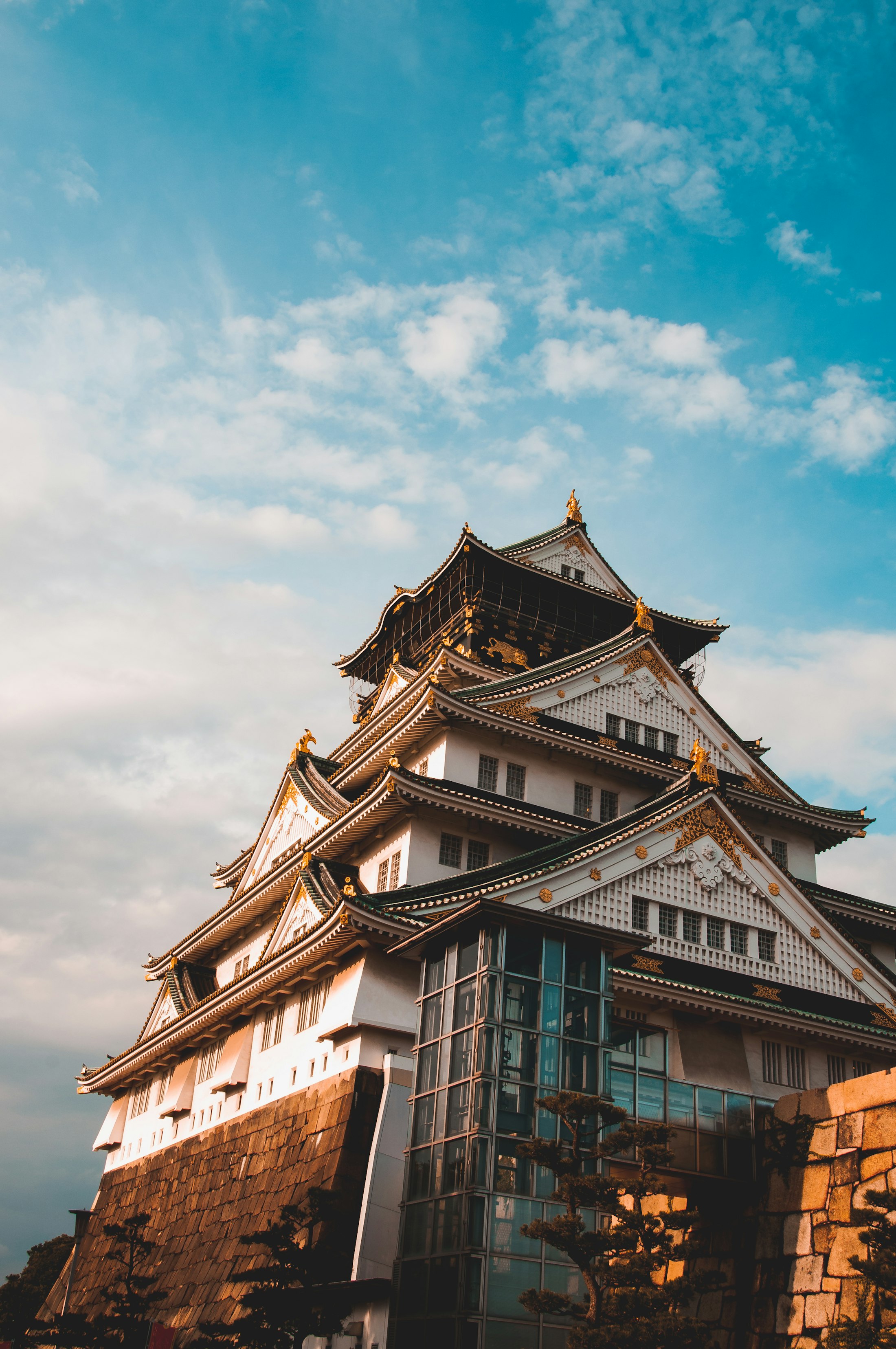
In This Guide
- 1.Kushikatsu: the only rule that matters
- 2.Daruma vs. Yaekatsu vs. the rest
- 3.What to order when the menu is a wall of kanji
- 4.Janjan Yokocho in the wet
- 5.Tsutenkaku Tower: skip it
- 6.Beer, dote-yaki, and the side of Shinsekai that isn't kushikatsu
- 7.Where to stay if you want to walk to dinner in the rain
- 8.Tsuyu timing: why the rainy season is actually when to go
- 9.Spa World, if you're already soaked
The rain started on a Tuesday and didn't quit. Tsuyu — Osaka's rainy season, roughly mid-June through late July — turns the city into a low-ceilinged steam room, and Shinsekai into something better than it deserves to be in sunshine. The neon bleeds downward on wet asphalt. The Tsutenkaku Tower dissolves into cloud at its upper third. And the kushikatsu shops, which never really close and never really empty, fill with the particular fog of hot oil meeting humid air.
I walked in from Dobutsuen-mae Station on the Midosuji Line, exit 1, umbrella already broken. Shinsekai in rain is not photogenic in the way travel brochures require. It's loud, close, and it smells like cabbage and pork fat. I liked it immediately.
1. Kushikatsu: the only rule that matters
Kushikatsu is deep-fried skewered food — meat, vegetables, cheese, whatever fits on a stick and survives a batter dip. The singular rule in Shinsekai: do not double-dip in the communal sauce. Signs say it in Japanese, English, Korean, and Chinese. Cartoon characters warn you. The sauce trough sits between you and the cook, brown and thin, and you get one pass.
This is not a complex cuisine. That's the point. The batter should be light, the oil should be clean, and the thing on the stick should be identifiable. When a shop is doing it right, the coating crackles when you bite and gives way to something that still tastes like itself — a shrimp, a lotus root, an asparagus spear. When a shop is coasting on tourist traffic, you get a greasy shell around nothing in particular.
Pro tip: The communal sauce trough is refilled, not replaced. If you want more sauce on a half-eaten skewer, use the cabbage leaf on your plate as a spoon to scoop sauce onto it. Every table has one.
2. Daruma vs. Yaekatsu vs. the rest
Kushikatsu Daruma is the name everyone knows. There are multiple branches on Janjan Yokocho and the main Shinsekai drag. The mascot — an angry-faced daruma figure — is hard to miss. Lines form by 11:30 a.m. on weekends, rain or not.
Here's my contrarian position: Daruma is fine. It is not the best kushikatsu in Shinsekai. It is the most famous, which is a different thing. The batter runs slightly thick, and the set meals push you toward volume over quality. I've had better skewers at Yaekatsu (八重勝), about 40 meters east on the same street, where the counter seats maybe twelve people and the old man working the fryer has been doing it long enough that he doesn't look at the oil anymore. A five-skewer set at Yaekatsu runs around ¥800.
The line at Yaekatsu can also be long, but it moves faster because the place is smaller and solo diners cycle through. Go at 2 p.m. on a weekday if you can.
Pro tip:Both Daruma and Yaekatsu are cash-only as of my last visit. There's a 7-Eleven ATM on the east side of Tsutenkaku's base — international cards work.
3. What to order when the menu is a wall of kanji
Most kushikatsu counters list items individually (¥100–¥250 per skewer) or offer sets. If you don't read Japanese, the sets are easier. Point at the omakase option — the chef picks — and hold up fingers for how many skewers you want. Five is a reasonable start. Eight is a meal.
The skewers I'd actually request by name: renkon (lotus root, ¥150 at most shops), ushi (beef), and camembert cheese, which sounds wrong and tastes absurdly good fried. Skip the quail egg. It's on every tourist set and it's the least interesting thing in the fryer.
4. Janjan Yokocho in the wet
Janjan Yokocho is the covered shopping arcade running south of Shinsekai's main intersection. Covered matters during tsuyu. The arcade keeps rain off but traps humidity, so the air hangs thick with whatever the nearest stall is cooking.
This is where you find the shogi and go parlors — old men bent over boards in fluorescent-lit rooms, cigarette smoke drifting out the open doors. It feels like 1975 in there. A few of the parlors let you watch if you stand quietly. Most of the shops in the arcade are not food-related: shoe repair, used clothing, a place that sells nothing but buttons.
Last time I walked through in June, a woman was selling handmade pickles from a card table near the south end. ¥300 for a bag of mixed nukazuke. I ate them on the train. Cold, sour, right for the weather.
5. Tsutenkaku Tower: skip it
I'll say it plainly: skip Tsutenkaku Tower. The observation deck costs ¥900, the view is unremarkable — Osaka has taller buildings with free lobbies — and the interior is a gauntlet of Pocky-branded photo ops and Billiken statue gift shops. The tower matters as a silhouette, a landmark that orients you in Shinsekai from street level. It does not reward going inside.
If you want a high view of Osaka, Abeno Harukas is ten minutes south and 300 meters tall. Or just look up from the street and watch the tower disappear into tsuyu cloud. That's free.
6. Beer, dote-yaki, and the side of Shinsekai that isn't kushikatsu
Kushikatsu dominates the conversation, but Shinsekai's other signature dish is dote-yaki — beef tendon and konnyaku simmered in white miso until everything goes soft and sweet. It's bar food. You'll find it at most of the standing-only izakaya along the main street, served in a small bowl for ¥400–¥500.
The standing bars are better than the seated restaurants for this. You drink an Asahi draft (¥400–¥500 for a medium), eat your tendon, watch the rain through the open front, and leave. No ceremony. The whole transaction can take fifteen minutes.
One place I keep returning to is Asahi (朝日), a tiny standing bar near the base of Tsutenkaku with no English signage. The dote-yaki is dark and sticky. They pour beer fast.
Pro tip: Standing bars in Shinsekai rarely charge a seating fee (otoshi). Seated izakaya almost always do — usually ¥300–¥500 per person, added automatically. Check the bill if it seems high.
7. Where to stay if you want to walk to dinner in the rain
Shinsekai is not a hotel district. The accommodation around it tends toward budget business hotels and a few hostels, which is fine — you don't need a lobby bar when the street is the bar.
The area around Dobutsuen-mae and Shin-Imamiya stations puts you within a five-minute walk. Shin-Imamiya has a complicated reputation; the adjacent Nishinari ward was historically a day-labor district, and some travel forums still warn people off. In practice, the streets are quiet at night and the hotels are cheap. I stayed at a business hotel near Shin-Imamiya station for ¥4,500 a night. The room was the size of a generous coffin. The shower worked. I walked to kushikatsu in slippers.
If you want more breathing room, the Tennoji area south of Shinsekai has larger chain hotels and is connected by the same subway line.
Pro tip:Shin-Imamiya station serves both JR and Nankai lines. If you're arriving from Kansai Airport on the Nankai rapi:t, you can be in Shinsekai in under fifty minutes without transferring.
Stay in Osaka
Top-rated hotels near Osaka
Best locations · Verified reviews · Free cancellation
View deals
Expedia →8. Tsuyu timing: why the rainy season is actually when to go
Most people aim for cherry blossom season or autumn leaves. Tsuyu gets avoided. I think that's backward, at least for Shinsekai.
The rain thins the tourist crowds. The humidity makes you want fried food and cold beer, which is exactly what Shinsekai sells. The neon — and there is an unreasonable amount of neon — looks better reflected in wet pavement than it does under a clear sky. And the prices don't change. This is not a neighborhood that does seasonal surcharges.
Tsuyu typically runs mid-June to late July in Osaka, though it shifts by a week or two each year. Bring a compact umbrella and shoes that can handle puddles. Leave the waterproof hiking boots at home — you'll sweat through them in ten minutes.
One warning: some smaller shops close early on heavy rain days. The big kushikatsu places don't.
9. Spa World, if you're already soaked
Spa World sits at the north edge of Shinsekai — a massive onsen complex with themed floors (one "Asian," one "European," with the gender assignment rotating monthly). It's ¥1,500 for a standard entry. The baths are hot, the décor is unhinged, and the logic of putting a Roman-themed soaking pool above a kushikatsu district is so specifically Osaka that I can't argue with it.
I made the mistake of going on a Saturday afternoon once. Packed. Families with small children, groups of teenagers. Go on a weekday morning if you want actual quiet. The facility opens at 10 a.m.
After a few hours in the rain, after the oil and the miso and the standing-bar beer, sinking into a hot bath on the fourth floor while your wet clothes tumble in a basement dryer — that is the correct ending to a day in Shinsekai during tsuyu. Dryers cost ¥100 per cycle.
Pro tip: Spa World has a rest area with reclining chairs where you can nap after bathing. An overnight stay (past midnight) incurs an additional surcharge of around ¥1,400.
Stay in Osaka
Top-rated hotels near Osaka
Best locations · Verified reviews · Free cancellation
View deals
Expedia →Essential tips
Take the Midosuji Line to Dobutsuen-mae Station, exit 1. You'll surface directly at Shinsekai's south entrance. Avoid Ebisucho Station — it drops you on the wrong side of a busy road.
Carry cash. Most kushikatsu counters and standing bars in Shinsekai do not accept credit cards. The 7-Eleven near Tsutenkaku's east base has an international ATM.
Convenience stores sell plastic umbrellas for about ¥500, but they break in any real wind. Bring a compact travel umbrella from home and keep it in your bag through tsuyu.
The sweet spot for kushikatsu without a queue is 2–4 p.m. on weekdays. Lunch rush ends around 1:30, dinner buildup starts at 5. Weekend lines at popular spots can hit 30+ minutes by noon.
Ready to visit Osaka?
Book your hotel, flights, and activities through our Expedia-powered search.


