In This Guide
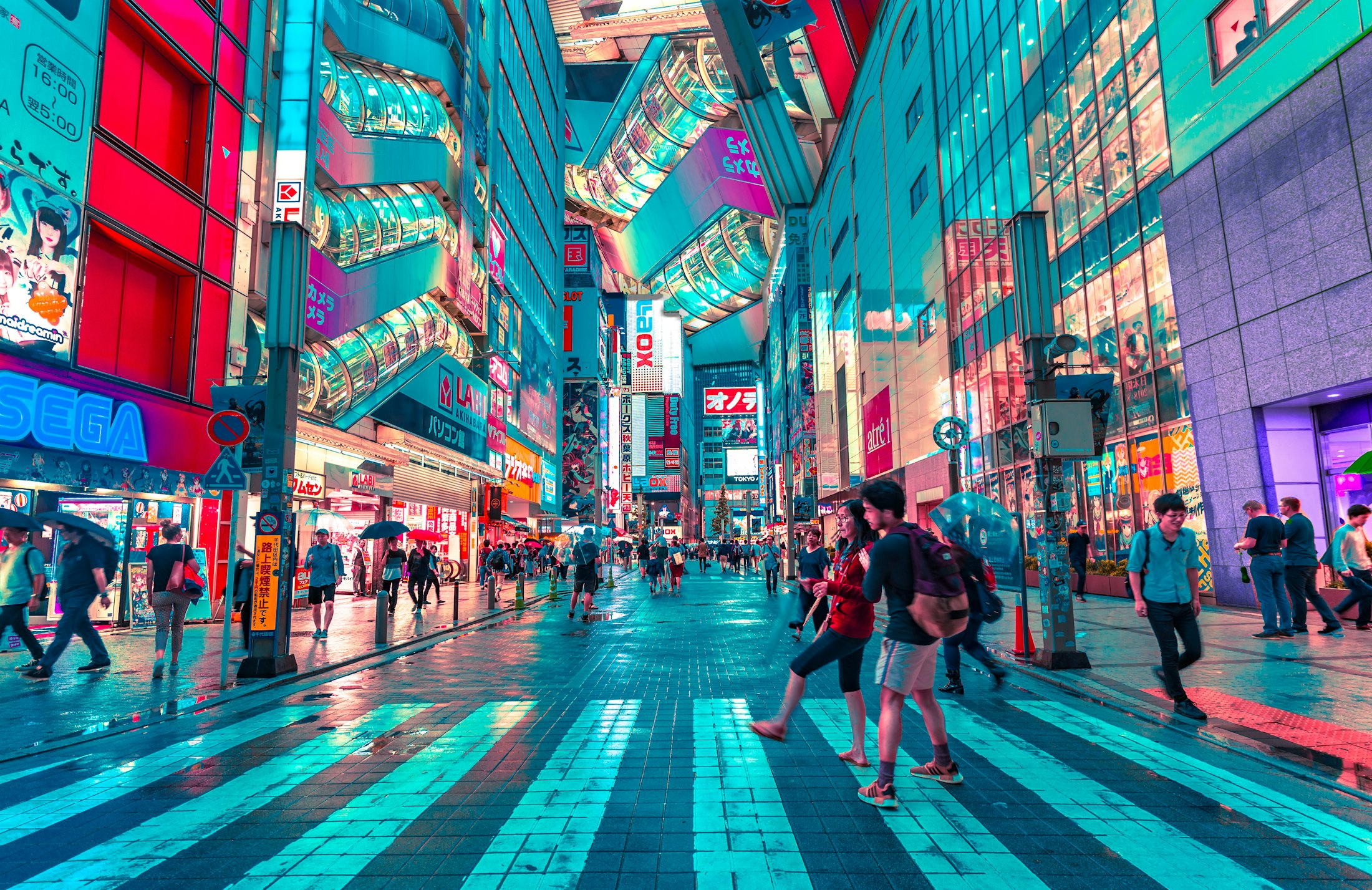
The rain started somewhere around Nippori Station and didn't stop for three days. That's tsuyu — the rainy season that sags over Tokyo from early June through mid-July — and most travel advice tells you to avoid it. I think that advice is wrong. Yanaka, the temple quarter wedged into Tokyo's northeastern hills, turns genuinely strange in the wet season. Hydrangeas erupt from every wall and cemetery plot in colors that look doctored but aren't. The tourist density drops. The old shotengai smells like wet stone and roasting senbei. You'll need an umbrella and shoes you don't care about. Bring both.
1. Start at Nippori, not Sendagi
Every guide routes you through Sendagi Station on the Chiyoda Line. Nippori is better. It's on the JR Yamanote Line, which means you're already on it, and the west exit drops you at the top of the hill rather than the bottom. Gravity does half the work.
From the west exit, cross the footbridge over the Yamanote tracks. The first thing you'll hit is the entrance to Yanaka Cemetery, which is where this walk actually begins. Don't skip the cemetery because it sounds grim — it's essentially a public park with 7,000 graves and a canopy of cherry trees that, in June, just drip.
Pro tip:Nippori's west exit has coin lockers (¥400-¥700) if you're dragging luggage between hotels. The large ones fill by noon on weekends.
2. Yanaka Cemetery in the rain is better than Yanaka Cemetery in the sun
I'll say it plainly: this is the best walk in the cemetery system of Tokyo, and in tsuyu it's not close. The main path — a wide, paved avenue called Sakura-dōri — runs north-south through the grounds, and in the rainy season the hydrangeas along the edges hit a particular shade of blue that only happens when the soil is acidic and waterlogged. You'll see clusters of ajisai (the Japanese word, and more accurate since these are mostly Hydrangea macrophylla) banking up against old Edo-period headstones. Nobody's posing for photos. Just you and a few people with clear umbrellas walking slowly.
Look for the grave of Tokugawa Yoshinobu, the last shogun. It's in the southwest corner, marked but not loudly. A five-sided stone tower behind a low fence.
Skip the "famous graves" map they sell at some Yanaka shops for ¥300. It's in Japanese only and the cemetery's own free signage is sufficient if you can read a map at all.
3. Kayaba Coffee and the kissaten question
Kayaba Coffee sits at the corner of Yanaka 6-chōme and Ueno-Sakuragi, in a two-story wooden building from 1938. It closed in 2006, reopened in 2009 after a neighborhood campaign, and now serves a decent egg sandwich (tamago sando, ¥600) and drip coffee for ¥500. The upstairs tatami room is worth the wait if there's a line — you sit on the floor and look out through rain-streaked windows at the rooftops.
I've seen Kayaba called the best kissaten in Tokyo. It isn't. It's a well-preserved one with good light and fair prices, which is enough. The coffee is fine. The experience is the room. If you want better coffee, go to Yanaka Coffee-ten on the shotengai (more on that below) and buy beans to brew at your rental.
Kayaba opens at 8:00 on weekdays. Get there at 8:00. By 10:00 on a Saturday, even in rain, there's a twenty-minute wait.
Pro tip:Order the tamago sando. The Russian toast (thick-cut French toast soaked in egg and pan-fried) gets all the attention online but it's aggressively sweet.
Stay in Tokyo
Top-rated hotels near Tokyo
Best locations · Verified reviews · Free cancellation
View deals
Expedia →4. Down the Yanaka Ginza steps into senbei smoke
From the cemetery's north end, the slope drops toward Yanaka Ginza, a 170-meter shotengai that functions as the neighborhood's main street. The stone staircase at the top — Yūyake Dandan, the "Sunset Steps" — is famous for sunset views, but in tsuyu the sun doesn't cooperate. Come anyway. The wet steps reflect the shop lights below in a way that compensates.
The shotengai itself is narrow, roofed in sections, and sells the things a neighborhood needs: fish, produce, senbei, croquettes. Yanaka Senbei (about halfway down on the left) hand-grills rice crackers over charcoal in the front of the shop; a bag of assorted runs ¥400-¥600. The smell is the real product.
There's a cat-themed souvenir shop near the bottom of the street. Walk past it. Overpriced, underimaginative.
Yanaka Coffee-ten, closer to the Sendagi end, roasts in-house and sells 100g bags from around ¥600 depending on origin. They'll grind to your spec. The line moves fast because nobody lingers — you buy beans and leave.
5. Tennō-ji and the wet bronze Buddha
Loop back uphill to Tennō-ji, a Nichiren-sect temple at Yanaka 7-15-14. It's quieter than Sensō-ji by a factor of about a thousand, and the seated bronze Buddha in the courtyard — cast in 1690 — sits in the open rain without a roof, which during tsuyu means water beads on the green patina and runs down the folded hands. I stood there last June with a ¥200 temple-vending-machine coffee getting cold in my hand, watching the rain hit the statue's shoulders, and had no desire to be anywhere else.
The temple grounds have hydrangeas too, though fewer than the cemetery. What they have is quiet. No tour groups. No PA system. Rain on stone.
Admission is free. The temple closes its gates around 16:30 but nobody's enforcing it aggressively.
Pro tip:The ¥200 coffee from the vending machine inside the temple gate is hot canned Boss Coffee. It's not good, but it's warm and you'll want it if you've been walking in rain for two hours.
Stay in Tokyo
Top-rated hotels near Tokyo
Best locations · Verified reviews · Free cancellation
View deals
Expedia →Essential tips
Buy a clear vinyl umbrella at any convenience store for about ¥600. The transparent dome style that every Japanese salaryman carries — it's cheap, it works, and it won't block your sightline on narrow lanes.
Yanaka's slopes are stone and uneven. Leather-soled shoes become ice skates in the wet. Wear rubber-soled sneakers you can sacrifice to puddles.
Tsuyu typically runs early June to mid-July, but the JMA (Japan Meteorological Agency) announces the official start and end dates each year. Check their English forecast page before booking — some years it shifts by two weeks.
A Suica or Pasmo IC card works on every train and bus you'll need for this walk. Charge it at any station kiosk in increments of ¥1,000. Don't waste money on a day pass unless you're also hitting Odaiba and Shinjuku.
Ready to visit Tokyo?
Book your hotel, flights, and activities through our Expedia-powered search.


