In This Guide
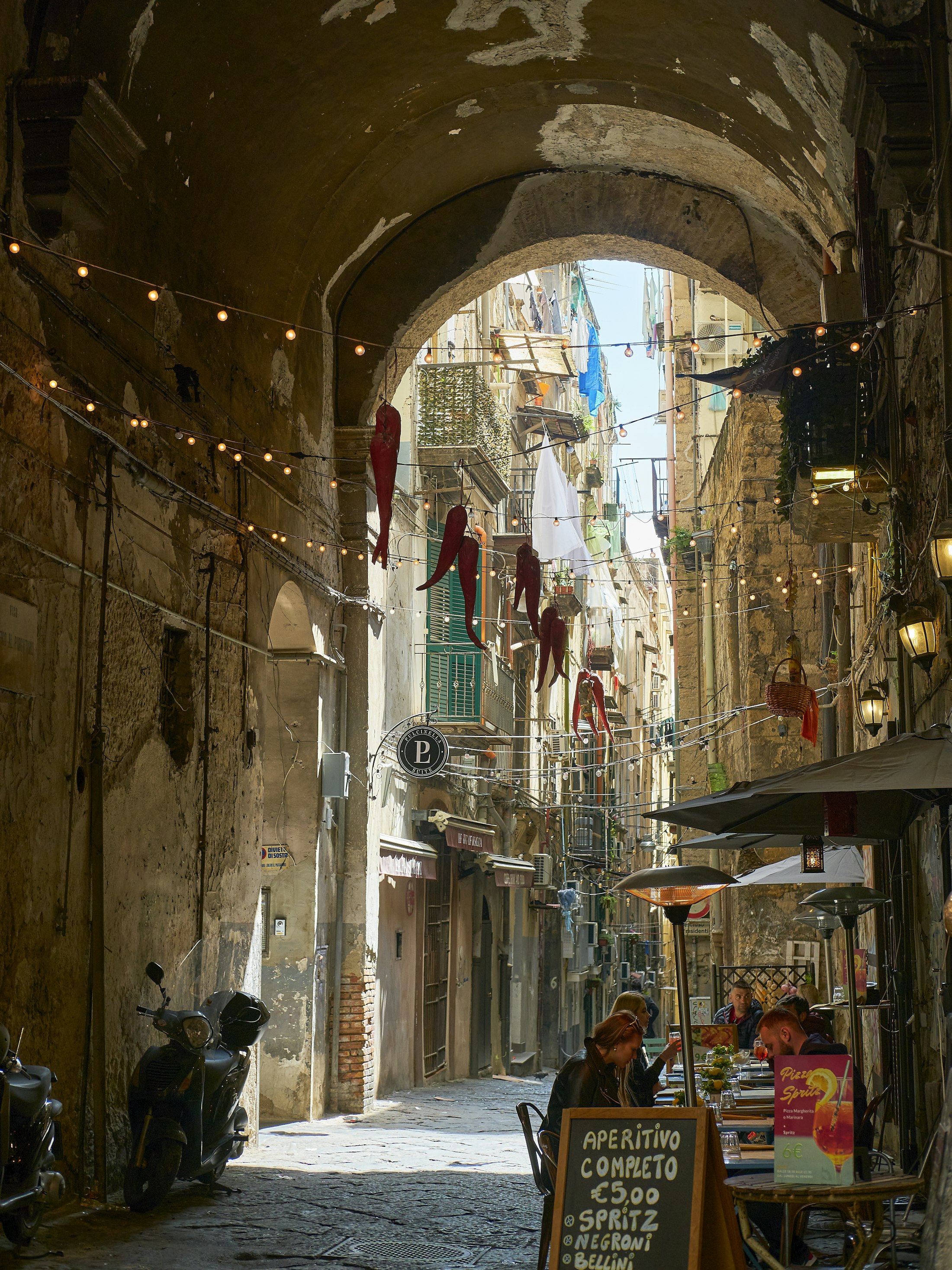
The Spanish Quarters start at Via Toledo and climb roughly 80 meters uphill in about 300 meters of horizontal distance — a grade steep enough that the tufo stone walls on either side act like a canyon, blocking direct sun for most of the day. In July, when the rest of Naples is pushing 34°C at street level, the narrowest vicoli here sit around 28°C by mid-afternoon. That thermal advantage is the whole reason I keep coming back in summer.
The grid layout dates to the 1530s, when Spanish viceroy Pedro de Toledo needed barracks for soldiers. What you get now is a neighborhood that runs on its own schedule: shutters open around 9:30, the fish vendor on Vico Lungo Gelso is packed by 11, and by 2 p.m. the streets go quiet until nearly 5. If you're here in early-to-mid July, before Ferragosto empties the city around August 15, the timing is right — shops are open, kitchens are cooking, and you won't be fighting other tourists for a seat.
1. The fried things at Friggitoria Vomero (yes, in the Quartieri, not Vomero)
The name confuses people. Friggitoria Vomero sits on Via Cimarosa in the Vomero hill district, but the location I'm talking about is their stall-style outpost at Via Toledo 282, right at the border of the Quartieri Spagnoli. You order at a window. There's no seating.
Get the pasta cresciuta — fried dough parcels studded with seaweed — for about €1.50 each. They come out of the oil so hot you'll burn the roof of your mouth if you don't wait ninety seconds, which nobody does. The crocchè di patate (potato croquettes, €1) are fine but unremarkable; every friggitoria in Naples does them. What separates this spot is the montanara: a small disc of pizza dough, deep-fried, then topped with tomato sauce and a scrap of fior di latte. €2. The ratio of crisp shell to soft interior is better here than at Di Matteo on Via dei Tribunali, which gets all the press.
Open daily, roughly 10 a.m. to 10 p.m., though they sometimes close earlier on Mondays.
Pro tip: Order at the window, then step across Via Toledo to eat on the stone benches near Galleria Umberto I. Eating while standing in the doorway blocks the line and the staff will tell you so.
2. Maradona lives on every wall, and the shrines are worth five minutes
The Maradona murals are everywhere — at least a dozen within a four-block radius. The big one is at Largo Maradona (formerly a nameless widening of Vico dei Quartieri), painted by Salvatore Iodice. It's fine as murals go. But the shrine I actually stop at is smaller: a ground-floor altar on Via Emanuele De Deo, maybe 50 meters uphill from Via Toledo, with candles, a framed jersey, and fresh flowers that someone replaces weekly.
Skip the organized Maradona walking tours that start at Piazza del Plebiscito. They charge €25-30, walk you past things you'd find in ten minutes on your own, and pad the route with stops that have nothing to do with the Quartieri. Just walk uphill from Via Toledo on any cross street. You'll find them.
3. Trattoria da Nennella is loud, cheap, and actually good
I'll say something unpopular: most of the restaurants tourists seek out in central Naples — Sorbillo, Da Michele — are trading on reputation more than on the current plate. Nennella, at Vico Lungo Teatro Nuovo 103-105, is trading on chaos, and the food is better for it.
Lunch only, roughly noon to 3 p.m., closed Sundays. No reservations. You line up on the vicolo, they seat you communal-style at long tables, and a waiter shouts the day's menu at you. In July, expect pasta e patate (pasta with potatoes, provola, and a slick of pork fat), salsiccia e friarielli, or whatever came in that morning. A primo, secondo, side, water, and a quarter-liter of house wine runs about €12-15 per person. They throw bread rolls at you. Literally — across the room.
The acoustics are brutal. Tufo walls, tile floor, no soft surfaces. But last July I ate a plate of genovese — the Neapolitan onion ragù, not the Ligurian pesto — that had cooked for at least six hours. The onions had dissolved entirely into the sauce. €8.
Pro tip: Arrive by 12:15 or after 2 p.m. The 1 p.m. rush can mean a 40-minute wait in direct sun at the top of the alley.
Stay in Naples
Top-rated hotels near Naples
Best locations · Verified reviews · Free cancellation
View deals
Expedia →4. The churches nobody enters (and one you should)
There are something like 16 churches inside the Quartieri Spagnoli grid. Most are locked. A few open for an hour on Sunday mornings. Don't plan your day around trying to get into all of them.
The one worth seeking out is Santa Maria della Mercede a Montecalvario, on Vico Montecalvario near Piazzetta Montecalvario. Usually open mornings, roughly 9 to 12:30. Single nave, Baroque stucco, a ceiling fresco that's been restored with mixed results. But the floor tiles are original majolica from the 18th century, still intact, cracked in places, and you can stand directly on them. No ropes, no glass barriers. The cool air inside drops maybe 5-6°C below the street temperature, which in July is reason enough to step in for ten minutes.
I made the mistake of trying to visit Santa Maria Francesca delle Cinque Piaghe on a Wednesday afternoon. Locked. A neighbor leaning out a window told me it opens reliably only on Friday mornings.
Pro tip: The churches with active parish schedules post hours on a paper sheet taped inside the door glass. Check before you climb a hill.
Stay in Naples
Top-rated hotels near Naples
Best locations · Verified reviews · Free cancellation
View deals
Expedia →5. Getting in and getting vertical
The Quartieri sit between two Funicolare stations. At the bottom, you enter from Via Toledo — use the Toledo Metro station (Linea 1), which deposits you at the eastern edge of the neighborhood at roughly 17 meters above sea level. At the top, the Funicolare di Montesanto runs from Piazzetta Montesanto up to Via Morghen in Vomero, a 4-minute ride covering about 170 meters of elevation. A single ride is €1.30 with a standard TIC Unico Napoli ticket.
The smarter move in July: enter from the top. Take the funicolare up first thing, then walk downhill through the Quartieri. Gravity helps. Sun exposure is lower in the morning on the west-facing streets. By the time you reach Via Toledo at the bottom, you're at sea level and 200 meters from a granita.
An afternoon structure that works: funicolare up at 9:30, walk down through the vicoli, hit Nennella by 12:15, eat fried things at the Via Toledo window on your way out, then disappear into the air-conditioned Toledo Metro station by 2 p.m. before the heat peaks. Four hours, all downhill.
Essential tips
Wear shoes with grip. The basalt paving stones on the steeper vicoli get slick from condensation dripping off air-conditioning units — a genuine ankle hazard, especially on Vico Lungo Gelso.
Fill water bottles at the nasone (cast-iron public fountain) at the corner of Via Toledo and Vico d'Afflitto. The water is the same Serino aqueduct supply as bottled Neapolitan brands.
Carry cash in small bills. Most friggitorie and the smaller alimentari don't take cards, or set a €10 minimum. ATMs inside the Toledo Metro station dispense €10 and €20 notes.
Cell signal drops in the narrowest alleys — the tufo walls block it. Download offline maps before entering the grid. Google Maps works; Citymapper does not cover Naples.
Ready to visit Naples?
Book your hotel, flights, and activities through our Expedia-powered search.


