In This Guide
- 1.Lampredotto, standing up, no fork
- 2.Santo Spirito after dark
- 3.The workshops on Via Maggio (or what's left of them)
- 4.Skip the Boboli Gardens at midday
- 5.Where to eat dinner without a reservation (and where you'll need one)
- 6.Gelato opinions (I have them)
- 7.San Frediano: the quieter side of Oltrarno
- 8.Piazzale Michelangelo at sunset (and why you might not bother)
- 9.The walk home across the Arno at 11 p.m.
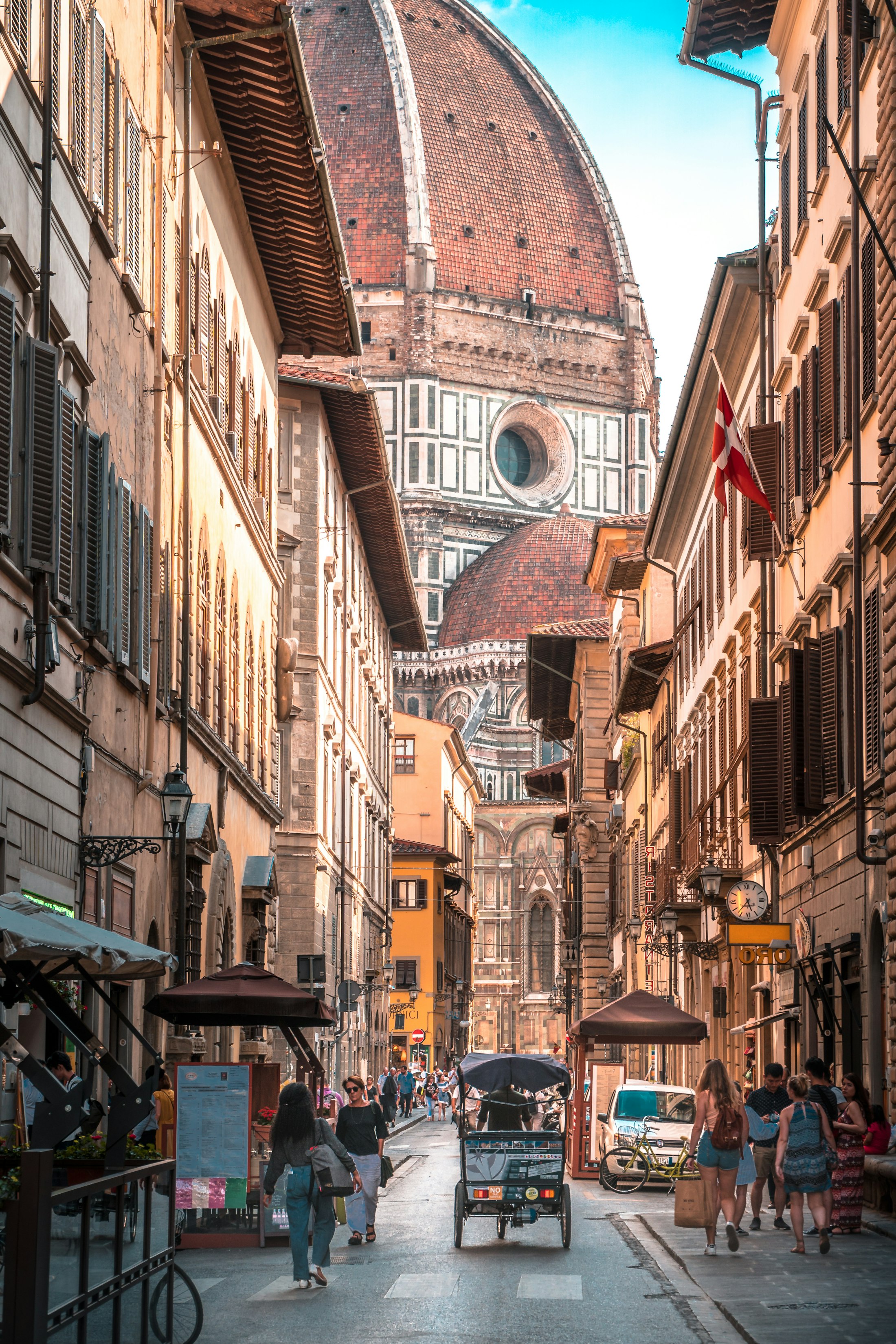
The heat in Florence in late July is not the polite kind. It is the kind that pools in the stone streets and radiates upward through your sandals, the kind that empties Piazza Santo Spirito by two in the afternoon and leaves only pigeons and a few German backpackers who haven't yet learned to surrender. I crossed the Ponte Vecchio on a Thursday at four o'clock — the goldsmiths' windows throwing painful light — and walked south into Oltrarno, where the air smelled like hot plaster and, faintly, tripe.
Oltrarno is the part of Florence that doesn't perform for you. The churches are locked more often than they're open, the artisan workshops keep hours that seem to be governed by mood rather than signage, and the best food is served from metal carts by men who will not smile at you until your third visit. I have been four times now, in different seasons, and the brutal heat version is my favorite — because the tourists thin out and the neighborhood stops pretending to be anything other than a residential quarter where people eat well and keep their shutters closed until evening.
1. Lampredotto, standing up, no fork
Start here. Not at a museum, not at a church — at a lampredotto cart. Lampredotto is the fourth stomach of a cow, slow-simmered and served on a bread roll that's been dipped in the cooking broth, topped with salsa verde and, if you want it, a spicy red sauce. It sounds worse than it tastes, and it tastes extraordinary: rich, soft, faintly mineral, the bread disintegrating in your hands.
The cart I keep going back to is L'Antico Trippaio on Piazza dei Nerli, run by a guy who will ask you if you want piccante and then give you piccante regardless of your answer. A panino costs around €4.50. You eat it standing at the metal counter bolted to the side of the cart, elbow to elbow with construction workers on break and older men in linen shirts who have been eating here since before you were born.
I have seen travel influencers describe lampredotto as "Florence's street food secret," which is absurd — it's sold on practically every major corner, and Florentines eat it the way New Yorkers eat pizza. The secret is that most tourists walk past the carts because the word "tripe" makes them nervous. Their loss.
Pro tip: Order the panino bagnato (wet sandwich) — the bread soaked in broth is the whole point. Dry bread is technically available, but requesting it is like ordering a martini without gin.
2. Santo Spirito after dark
Piazza Santo Spirito is the real center of Oltrarno, not Piazza Pitti, regardless of what the guidebooks suggest. During the day it hosts a small market — produce, leather goods, some forgettable souvenirs — but by evening it becomes the neighborhood's living room. Families spread out on the church steps, teenagers skateboard badly across the flagstones, and the restaurants lining the square drag their tables farther and farther onto the pavement as the light drops.
The church itself, designed by Brunelleschi, has one of the plainest facades in Florence — bare rough stone, unfinished, like someone ran out of money and then everyone forgot about it for five centuries. More affecting than the Duomo's candy-colored marble. Inside, if you catch it open (mornings, roughly 9:30 to 12:30, and then again around 4), there are Filippino Lippi paintings in the Cappella Strozzi and a crucifix attributed to Michelangelo.
But honestly, I come for the piazza at 9 p.m., when it's still 28°C and the stone is finally giving up its stored heat and there's a glass of Vernaccia in front of me at Caffè Ricchi.
3. The workshops on Via Maggio (or what's left of them)
Via Maggio was once dense with artisans — gilders, frame restorers, furniture makers — and some are still hanging on, though the economics of Florentine rent are not kind. You can walk in and watch people work, if the door is open and you don't touch anything. The ones that survive tend to be second- or third-generation operations making things for the Italian market, not souvenirs.
I made the mistake of wandering down Via Maggio at 2 p.m. in August once. Every single workshop was shuttered, the metal grates pulled down, the street silent except for my own footsteps. This is not a complaint — it's a recommendation. Come back at 10 in the morning or around 5 in the afternoon, and you'll find doors propped open with wooden wedges and the smell of varnish drifting into the street.
Bartolozzi e Maioli, at Via Maggio 13r, is an antiques restoration shop that has been in the same family since 1887. They will talk to you about wood if you are genuinely interested and ignore you completely if you're not. Fair terms.
Pro tip: Most workshops close entirely in August — the two weeks around Ferragosto (August 15) are especially dead. Late June or September is better if artisan culture is your reason for coming.
Stay in Florence
Top-rated hotels near Florence
Best locations · Verified reviews · Free cancellation
View deals
Expedia →4. Skip the Boboli Gardens at midday
I know. Everyone says go to Boboli. And you should — but not between 11 a.m. and 4 p.m. in summer, when the gravel paths throw heat back at you and there is functionally no shade along the main axis. The last time I went at noon in July I watched a woman in wedge heels sit down on the ground near the amphitheater and refuse to continue. I understood her completely.
Go at 8:15 a.m. when the gates open (check seasonal hours — they shift). The entry fee is €10 for the combined Boboli-Palazzo Pitti ticket, and at that hour you'll share the Viottolone cypress avenue with joggers and one very dedicated watercolorist who seems to live there. By 9:30 you're done, and you've earned your cornetto.
Pro tip:The Porcelain Museum at the top of the gardens is small, air-conditioned, and usually empty. It's included in your ticket. Go there to cool down before you descend.
5. Where to eat dinner without a reservation (and where you'll need one)
Trattoria Sabatino, on Via Pisana 2r, is the meal I think about most often when I'm not in Florence. It's a workers' lunch spot that also does dinner — paper tablecloths, no menu in English, handwritten specials on a board. A primo, a secondo, a quarter liter of house red, and you're out for around €15. The ribollita here is dense and serious. The roast chicken is better than it has any right to be.
Sabatino doesn't take reservations. Show up at 7:15 for dinner, because by 7:45 every seat is gone.
Il Latini, over on Via dei Palchetti, gets recommended constantly and I think it's overrated — loud, chaotic in a performative way, and the food is fine but not better than what you'd get at any neighborhood trattoria for half the price. People go for the atmosphere, which tells you everything.
For something more deliberate, Essenziale on Piazza di Cestello does a tasting menu that takes Tuscan ingredients apart and puts them back together in ways I didn't expect. You'll need a reservation, and you'll spend €70-90 per person before wine. Worth it once.
Pro tip:At Sabatino, order whatever the secondo of the day is. Don't overthink it. They've been cooking the same rotation since the 1950s and they're better at choosing than you are.
Stay in Florence
Top-rated hotels near Florence
Best locations · Verified reviews · Free cancellation
View deals
Expedia →6. Gelato opinions (I have them)
There is too much bad gelato in Florence, and most of it is neon-colored and piled into theatrical mountains in stainless steel trays. If the pistachio is bright green, walk away.
Gelateria della Passera, on Via Toscanella near Piazza della Passera, makes a ricotta and fig flavor in season that stopped me on the sidewalk. A small cup is €2.50. They rotate flavors, and the rotation is the point — if you're there in June, the apricot is the one. In September, the grape.
I'll also defend Sbrino, on Via dei Serragli 78r, which does a thing they call "crema di Sbrino" — essentially a frozen custard with olive oil and salt. It shouldn't work. It does.
7. San Frediano: the quieter side of Oltrarno
Walk west along the river from Ponte alla Carraia and you'll hit San Frediano, which even in Florence's busiest season operates at a lower frequency. The Porta San Frediano gate — 14th century, massive — sits at the end of Borgo San Frediano like a period at the end of a sentence.
The bars here cater to residents. Locals drink at Il Santino (Via di Santo Spirito 60r), a wine bar barely wide enough for two people to pass each other, where the taglieri of cured meats and pecorino are arranged with more care than some restaurants give their main courses. A glass of Chianti Classico runs €5-7, and the staff will steer you toward small producers if you ask.
At aperitivo hour, between 6 and 8, this stretch is at its best. Warm stone, Negronis, swallows overhead. Late at night it gets rowdy — students from the art institutes, mostly — and not in a way I find worth staying for.
Pro tip:Borgo San Frediano has a few good vintage clothing shops — Desii, near the gate, carries well-curated secondhand pieces that are actually from Italy, not fast-fashion castoffs labeled "vintage."
8. Piazzale Michelangelo at sunset (and why you might not bother)
Piazzale Michelangelo is the most overrated viewpoint in Florence. The view is magnificent — I won't pretend otherwise — but the experience of being there at sunset involves a parking lot, a souvenir stand selling David magnets, and approximately four hundred other people holding their phones above their heads. Skip it.
If you want the same view without the crowd, walk another ten minutes uphill to San Miniato al Monte, the Romanesque church above the piazzale. The monks there sometimes sing vespers in Gregorian chant. The marble facade — green and white geometric patterns against the sky — is worth the climb on its own. And the terrace in front of the church offers the same panorama with maybe fifteen people sharing it.
Free to enter. Open daily until 7 p.m. in summer.
Pro tip: The climb from Oltrarno to San Miniato takes about 25 minutes on foot via the stone staircase off Via del Monte alle Croci. Bring water. In July the stairs feel endless.
9. The walk home across the Arno at 11 p.m.
Here is the thing about Oltrarno in summer that no one puts in the guidebook: the best part is crossing back over the river late at night, when the bridges are nearly empty and the Arno is flat and dark and reflects the ochre buildings on both banks in long, unsteady lines.
Ponte Santa Trinita is the one. Not the Ponte Vecchio — too narrow, too many padlocks, and it smells like the jewelry shops' security systems overheating. Santa Trinita is wide, open, and from the middle of it you can see upstream to the weir where the water drops and makes a low roaring sound you can hear only when the city is quiet.
Last July I stood there for ten minutes at 11:15 p.m. and counted exactly three other people on the bridge. A couple kissing and a man walking a small dog. The air had finally cooled to something bearable. I could smell the river.
Essential tips
Carry a refillable water bottle — Florence has public drinking fountains (nasoni) scattered through Oltrarno, including one on Piazza Santo Spirito near the church steps. The water is cold and clean.
Shops and workshops in Oltrarno typically close from 1 p.m. to 3:30 or 4 p.m. Plan your browsing for mornings or late afternoons. Showing up at 2 p.m. means staring at metal shutters.
Many of the smaller trattorie and all of the lampredotto carts are cash-only or cash-preferred. Have at least €30 in small bills on you. ATMs on Via dei Serragli and Via Maggio charge lower fees than the ones near Ponte Vecchio.
Bus 11 runs from the train station (Santa Maria Novella) across the river into San Frediano. A single ATAF ticket is €1.50 and valid for 90 minutes. Buy it at a tabaccheria before you board — the machines on the bus are unreliable.
Ready to visit Florence?
Book your hotel, flights, and activities through our Expedia-powered search.


