In This Guide
A cow walked into the street and nobody flinched. It was papier-mâché, roughly the size of a Labrador, carried by a woman in a white sari who had lost her mother six weeks earlier. Behind her, a man in drag lip-synced to a Bollywood track while teenagers in skeleton face paint handed out political pamphlets. This was Gaijatra in Patan — the Festival of Cows, the Nepali answer to Día de los Muertos, except louder, wetter, and served with rice crêpes.
I showed up in August 2023 expecting solemnity. What I got was a procession that toggled between grief and slapstick every thirty seconds, all of it moving through medieval streets in a warm drizzle that never quite committed to being rain.
1. What Gaijatra actually is (and isn't)
Gaijatra falls in the Nepali month of Bhadra — late August or early September — on the day after the full moon. Every family that lost someone in the previous year sends a cow, or a cow effigy, or a child dressed as a cow, through the streets. The idea is that the cow will guide the dead through the afterlife. King Pratap Malla supposedly invented the comedy element in the 17th century to make his grieving queen laugh, and the festival has kept the mandate ever since: you mourn, and then you make jokes about the government.
No ticket booths, no VIP viewing platforms, no official program you can download. The procession route through Patan Durbar Square shifts slightly each year depending on construction and local politics. You just show up and walk with everyone else.
Pro tip: The procession typically starts around 10 a.m. near Patan Dhoka, but the satirical performances and street theater peak between noon and 2 p.m. along Mangal Bazaar. Get there by 11.
2. The procession is the point
Families walk in loose clusters. Some carry framed photographs of the dead. Some push elaborate floats made of bamboo and cloth. A group of old men in matching topis shuffled past me carrying a banner that translated, roughly, to "Even death can't fix the roads." Political satire is not optional at Gaijatra — it's structural.
The cow effigies range from devotional to absurd. One made entirely of marigolds. Another with sunglasses and a cigarette taped to its mouth. Nobody polices tone here, which is what makes it work. Grief and comedy aren't separated into tidy acts.
Skip the rooftop restaurants around Durbar Square that charge Rs 500 for a "festival view" seat with overpriced masala tea. You'll see less from up there than you will standing at street level near the Bhimsen Temple, where the procession bottlenecks and slows down enough to actually look at the floats.
3. Chatamari and other reasons to eat in the rain
Chatamari is a Newari rice crêpe — thin, crispy, topped with minced buffalo meat, egg, and sometimes chopped greens. During Gaijatra, street vendors set up along the procession route selling them for Rs 80-150 depending on toppings. The best one I had came from a woman cooking on a clay stove near Swotha Square, no sign, no name I could read. She cracked the egg directly onto the batter with one hand while holding an umbrella with the other.
You'll also find yomari (steamed rice-flour dumplings), sel roti (ring-shaped fried bread), and enough dal bhat to keep you upright through the afternoon. The festival food is better than most of what the tourist restaurants around Thamel serve, which I realize is a low bar, but still.
Pro tip: Bring cash. Nothing under Rs 500 notes gets you change easily from street vendors. Have a stack of Rs 50s and Rs 100s ready.
4. Patan Durbar Square during the festival
On a normal day, Patan Durbar Square charges foreign visitors Rs 1,000 entry (roughly $7.50 USD). During Gaijatra, the square is absorbed into the procession route, and the entry checkpoint situation gets ambiguous. I walked in from the south side without being stopped, though I've heard others were asked to pay at the main gate on the north.
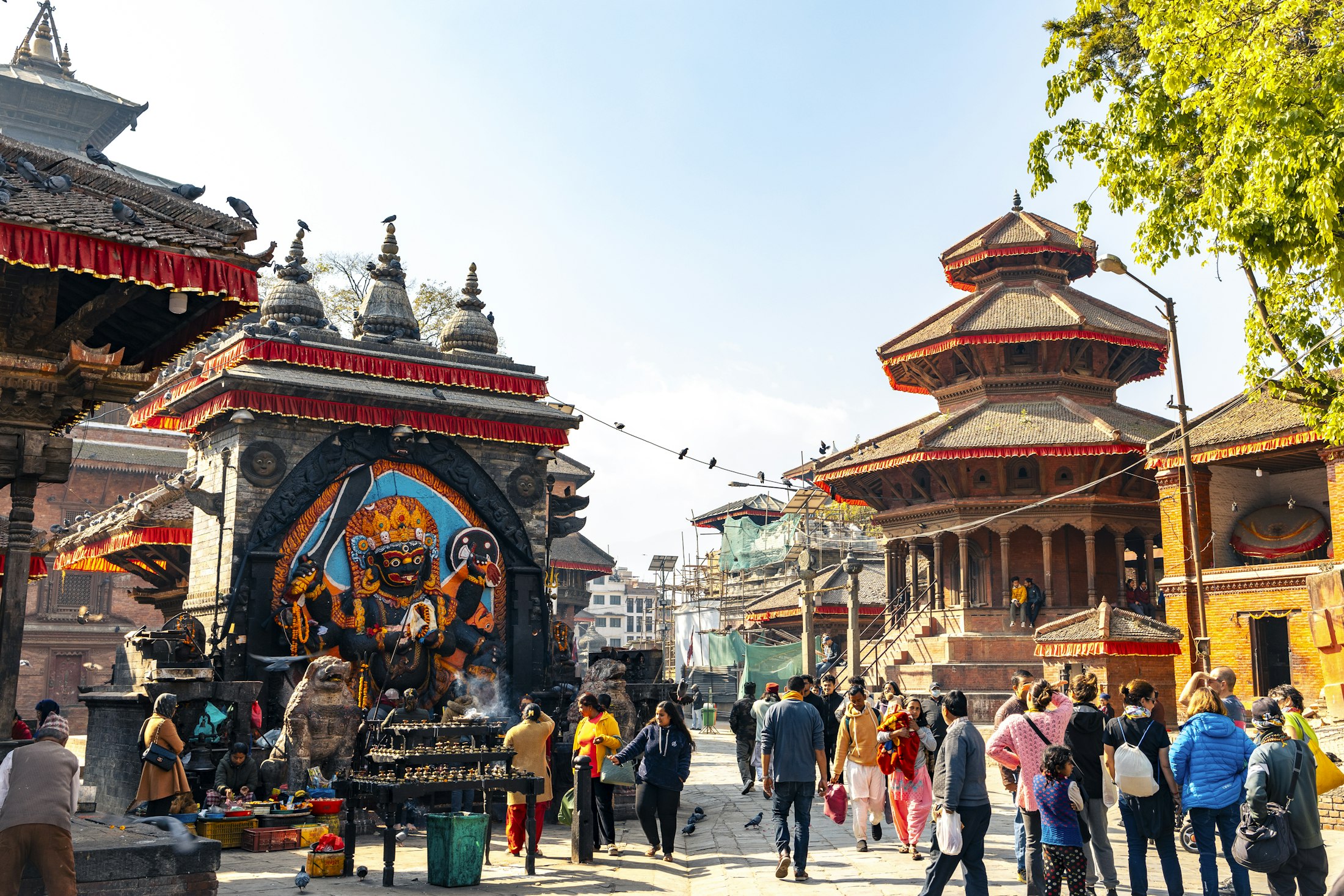
The square is worth the fee on any day. The stone temples took serious damage in the 2015 earthquake and several are still under scaffolding, which somehow makes the ones still standing feel more present. The Krishna Mandir, with its rows of carved stone columns, becomes a natural grandstand during the procession. People sit on every available ledge.
Durbar Square during Gaijatra versus Durbar Square on a Tuesday: noise. Drumming circles form spontaneously. Satirical theater groups perform on the temple platforms. A man in a suit and tie delivered a ten-minute monologue I couldn't understand, but the crowd was howling.
Pro tip:The Patan Museum inside the square closes at 4:30 p.m. If you want to duck in during festival chaos, go before 2 p.m. when it's relatively quiet inside.

Stay in Kathmandu
Top-rated hotels near Kathmandu
Best locations · Verified reviews · Free cancellation
View deals
Expedia →5. The satire is sharp and you won't get most of it
Not understanding Nepali doesn't ruin Gaijatra, it just changes what you receive. Guidebooks tell you to find an English-speaking local to "translate the humor." I disagree. Half the power of the festival is visual — the costumes, the signs, the physicality of the performances. A man dressed as a pregnant politician needs no subtitle.
The other half, yes, you'll miss. The wordplay, the specific political references, the songs rewritten with new lyrics about corruption. That's fine. You're a guest at someone else's grief-comedy, not the target audience. Sit with that.
The newspaper Kantipur and online outlet Setopati usually publish photo essays and satire roundups in the days after. Worth reading after you get home, even through Google Translate.
6. Getting to Patan and getting around
Patan is technically Lalitpur, a separate municipality across the Bagmati River from Kathmandu, though the two cities bleed together in practice. From Thamel, a taxi to Patan Durbar Square costs Rs 400-600, but I took the local bus from Ratna Park for Rs 30 and it took about 40 minutes with traffic. The bus drops you at Lagankhel, a 10-minute walk south of Durbar Square.
During Gaijatra, vehicle traffic around the procession route shuts down. Plan to walk. The streets are narrow, uneven, and slippery when wet, which during monsoon season means always.
Flights into Kathmandu's Tribhuvan International Airport from Delhi start around $120 one-way on Buddha Air or Nepal Airlines. From Bangkok, expect $200-250. The airport is about 8 km from Patan.
Pro tip:If you're staying in Patan rather than Thamel — and you should, Thamel is a souvenir corridor with a nightlife problem — look for guesthouses near Swotha or Mangal Bazaar. Quieter, closer to everything that matters.
Stay in Kathmandu
Top-rated hotels near Kathmandu
Best locations · Verified reviews · Free cancellation
View deals
Expedia →7. After the procession ends
By late afternoon, the formal procession dissolves. The satirical shows continue in pockets. Families head home. The crêpe vendors start packing up.
I walked south to the Golden Temple (Kwa Bahal) around 4 p.m. and had the courtyard almost to myself. A monk was sweeping. The gilt roofline caught the last grey light before another downpour rolled in. Entry is free but they ask you to leave leather items — belts, wallets, shoes — at the door.
Then I sat in a second-floor café on Mangal Bazaar whose name I've lost, drank black tea for Rs 40, and watched the street cleaners sweep marigold petals and papier-mâché fragments into piles. The festival doesn't end with a finale. It just thins out until you realize you're the last person still watching.
Essential tips
Gaijatra falls during monsoon season. Bring a lightweight rain jacket, not an umbrella — you'll need both hands free in the crowd. Ponchos from street vendors near Lagankhel cost Rs 100-150.
People are generally fine with photos during the procession, but ask before photographing grieving families carrying portraits of the dead. Read the moment.
Local buses from Ratna Park (Kathmandu) to Lagankhel (Patan) run every 10-15 minutes and cost Rs 30. Look for the bus with 'Lagankhel' written in both Nepali and English on the front placard.
The exact date shifts yearly based on the lunar calendar. Check the Nepali Patro (nepali-patro.com) or ask any hotel in Kathmandu — they'll know the date months in advance.
The brick-paved streets around Durbar Square are uneven and drain poorly. Sandals are a mistake. Wear closed-toe shoes with grip and accept they'll get muddy.
Ready to visit Kathmandu?
Book your hotel, flights, and activities through our Expedia-powered search.


