In This Guide
- 1.The Rod Nam Dam Hua Ceremony at Wat Chedi Luang
- 2.The Phra Buddha Sihing Procession Through the Old City
- 3.Sand Chedi Building at Wat Phan Tao
- 4.The Alms Offering Procession on Doi Suthep
- 5.The Pha Wet Storytelling Tradition at Wat Umong
- 6.Preparing Nam Ob Scented Water with Lanna Elders
- 7.The Khan Tok Dinner and Blessing at Khum Khantoke
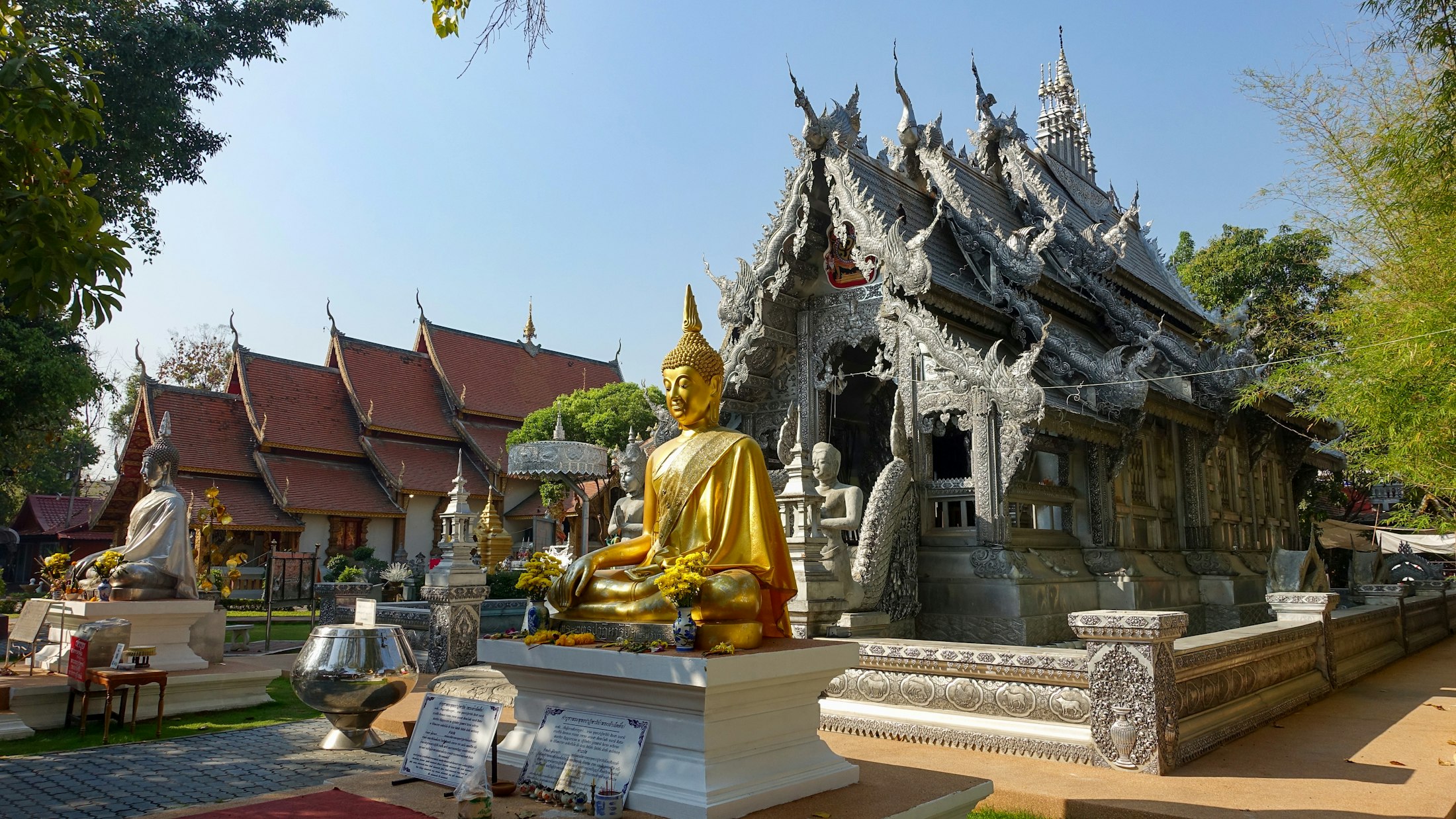
The morning air at Wat Phra Singh smells of jasmine garlands and sandalwood as a line of elderly women in pastel silk blouses slowly pour scented water over a centuries-old Buddha image. Outside the temple walls, Chiang Mai's moat road erupts in the world's most famous water fight — but in here, time folds inward. This is Songkran as northern Thais have observed it for over seven hundred years, and it bears almost no resemblance to the soaking-wet street party most visitors come expecting.
1. The Rod Nam Dam Hua Ceremony at Wat Chedi Luang
Begin your sacred Songkran journey at Wat Chedi Luang on Phra Pokklao Road in the Old City, where the Rod Nam Dam Hua ceremony unfolds each morning of April 13th. This ritual of pouring scented water over the hands of elders is the spiritual backbone of Songkran — a gesture of respect, gratitude, and the asking of blessings for the Thai New Year. You will see families arriving in their finest clothing.
The ceremony typically starts around 9 AM in the viharn hall. Arrive by 8:30 to secure a respectful viewing spot near the side columns. Monks chant Pali blessings while families kneel before grandparents, gently pouring water infused with turmeric and flower petals over their outstretched palms. The emotional weight of this moment is palpable — tissues appear frequently.
What makes Chedi Luang's ceremony distinctive is the presence of the Inthakin city pillar, Chiang Mai's spiritual axis. Devotees believe performing Rod Nam Dam Hua in proximity to this pillar amplifies the merit gained. You will notice locals circling the pillar three times before entering the main hall.
Afterward, walk to the temple's northern courtyard where volunteer groups prepare nam som poi — traditional Songkran water made from soaking dried bark of the som poi tree. This mildly fragrant, golden liquid is the authentic Songkran water, worlds apart from the ice-cold hose blasts on Tha Phae Gate road.
Pro tip:Bring a small silver bowl from your guesthouse or purchase one at Warorot Market's third floor for around 80 baht — locals deeply appreciate when foreigners participate in Rod Nam Dam Hua with the proper vessel rather than plastic bottles.
2. The Phra Buddha Sihing Procession Through the Old City
On the morning of April 13th, Chiang Mai's most sacred Buddha image — the Phra Buddha Sihing — is carried from Wat Phra Singh on Samlarn Road through the Old City streets in a grand procession. This is the Lanna kingdom's most important annual ritual, and witnessing it transforms your understanding of what Songkran actually commemorates: purification, renewal, and communal devotion rather than revelry.
The procession route typically moves east along Ratchadamnoen Road toward the Three Kings Monument, then loops back. Hundreds of residents line the streets to gently sprinkle lustral water on the image as it passes on an ornately decorated float. The mood is joyous but deeply reverential — you will see people pressing their palms together in prayer as tears stream down their faces.
Position yourself near the Three Kings Monument plaza by 8 AM for the best vantage point. Local officials and Lanna cultural preservation groups in traditional northern Thai dress lead the procession, followed by traditional long drums and musicians playing the distinctive Lanna salo fiddle. The soundscape alone is worth the early wake-up call.
After the procession, the image is installed in an open pavilion at Wat Phra Singh where the public can perform song nam phra — the ritual bathing of the Buddha. Join the respectful queue, purchase a small garland of white jasmine from the vendors at the temple entrance for twenty baht, and take your turn pouring scented water over the image's shoulders.
Pro tip: Wear white or cream-colored clothing to the procession — this signals mourning for the passing year and respect for renewal. Locals will treat you with notably warmer recognition when you observe this unwritten Lanna dress code.
Stay in Chiang Mai
Top-rated hotels near Chiang Mai
Best locations · Verified reviews · Free cancellation
View deals
Expedia →3. Sand Chedi Building at Wat Phan Tao
Directly adjacent to Wat Chedi Luang sits the exquisite teak temple of Wat Phan Tao, where one of Songkran's most meditative traditions takes place: the building of sand chedis. Throughout April 14th and 15th, families gather in the temple grounds to construct small sand stupas decorated with colorful paper flags, flowers, and incense. The practice symbolically returns sand carried on your feet from the temple grounds throughout the previous year.
You participate by purchasing a small bucket of fine white sand from temple vendors for thirty baht. Kneel on the woven mats provided and shape your chedi by hand — there is no mold, no instruction sheet. Watch how Thai families craft theirs: a firm base, tapering walls, and a pointed top mimicking the great Lanna stupas. Children often help, and your neighboring family will almost certainly assist you.
Wat Phan Tao's atmospheric advantage is its stunning all-teak viharn, one of the last surviving wooden temple halls in Chiang Mai. The building's dark interior, illuminated by hundreds of candles during evening prayers on April 14th, creates a setting of extraordinary beauty. The candlelight ceremony called Yi Peng Songkran begins around 7 PM and is far less crowded than the November Yi Peng festival.
For sustenance between ceremonies, step out the temple's rear gate onto Phra Pokklao Soi 6, where Khao Soi Mae Sai operates a small shophouse stall. Their northern-style curry noodles with pickled mustard greens are among the Old City's most honest bowls — order the khao soi gai with extra crispy noodles on top.
Pro tip: The evening candlelight ceremony at Wat Phan Tao on April 14th requires you to sit cross-legged on the ground for roughly ninety minutes. Bring a thin cushion or sarong to fold beneath you — the gravel courtyard becomes uncomfortable quickly.
4. The Alms Offering Procession on Doi Suthep
On the morning of April 15th — Wan Payawan, the final day of traditional Songkran — a special alms offering procession winds up the three-hundred-step naga staircase of Wat Phra That Doi Suthep, Chiang Mai's hilltop guardian temple. Devotees line every step, placing sticky rice, dried provisions, and hand-sewn robes into monks' alms bowls as they ascend. You will want to arrive before 6:30 AM to secure a place on the staircase.
The atmosphere at this altitude is markedly cooler and quieter than the city below. Mist clings to the mountainside, monks move in barefoot silence, and the only sounds are birdsong and the soft rustle of saffron robes. This is a Songkran experience that requires effort — the drive up the winding mountain road takes forty minutes, and songthaew shared trucks depart from Chang Phueak Gate starting at 5 AM.
Once the procession concludes, circumambulate the golden chedi three times clockwise, as tradition dictates. The upper terrace offers panoramic views of Chiang Mai awakening below — on clear mornings you can trace the perfect square of the Old City moat. Temple volunteers distribute a traditional breakfast of khao tom — rice porridge with ginger and pork — to all attendees free of charge.
Before descending, visit the small museum room behind the main viharn where a permanent exhibition explains the Lanna calendar system and the astronomical calculations that determine Songkran's exact timing each year. Most visitors walk past this room entirely, but it provides crucial context for understanding why these dates are sacred rather than arbitrary.
Pro tip: Negotiate your songthaew return fare before ascending — drivers at Doi Suthep triple their prices after 9 AM when tourist demand peaks. The standard local fare from the temple back to the Old City is 60 baht per person, not the 150 baht often quoted.
5. The Pha Wet Storytelling Tradition at Wat Umong
Tucked into a forested hillside west of the Old City, the tunnel temple of Wat Umong on Suthep Road hosts one of Songkran's most intellectually rewarding traditions: the Pha Wet sermon, a marathon recitation of the Vessantara Jataka — the story of the Buddha's penultimate life. This oral tradition stretches across an entire day, with monks and laypeople taking turns narrating thirteen chapters in the melodic Lanna dialect.
The recitation takes place in the open-air sala surrounded by Wat Umong's distinctive ancient tunnels and moss-covered chedi ruins. You are not expected to stay for all thirteen chapters — locals drift in and out throughout the day, sitting on reed mats, eating packed lunches, nursing babies, and listening with comfortable familiarity to stories they have heard since childhood.
Chapter Nine, called the Maharat, is considered the most meritorious to hear. It typically falls in the early afternoon around 1 PM — time your visit accordingly. The Lanna-dialect narration is beautifully musical even without comprehension, and bilingual attendees occasionally provide whispered summaries to interested foreigners. The monks genuinely welcome outside observers who show respectful interest.
After the sermon, explore Wat Umong's talking trees — large painted signs affixed to tree trunks bearing Buddhist aphorisms in Thai and English. The temple's fasting Buddha statue and small lake populated by catfish and turtles create a contemplative atmosphere ideal for processing the sensory richness of your Songkran experience. The adjacent Umong Vegetarian Restaurant serves excellent pad pak ruam — stir-fried mixed vegetables with oyster mushrooms.
Pro tip:Wat Umong's tunnel complex beneath the main chedi is open during Songkran and contains faded 14th-century murals rarely seen by visitors. Bring your phone flashlight — the tunnels are intentionally unlit to preserve the fragile paintings.
Stay in Chiang Mai
Top-rated hotels near Chiang Mai
Best locations · Verified reviews · Free cancellation
View deals
Expedia →6. Preparing Nam Ob Scented Water with Lanna Elders
The most intimate sacred Songkran experience available to visitors is learning to prepare nam ob — the traditional perfumed water used in all blessing ceremonies. The Lanna Folklife Museum on Phra Pokklao Road, inside the Old City, hosts a participatory workshop on April 12th each year where Lanna cultural practitioners teach the preparation techniques passed through generations of northern Thai women.
You will learn to combine dried jasmine, ylang-ylang petals, camphor shavings, and som poi bark in specific proportions, steeping them in clay vessels overnight. The instructors, typically women in their seventies and eighties, explain through translators how each ingredient carries symbolic meaning — jasmine for purity, camphor for clarity, turmeric root for protection. The workshop costs 200 baht and runs from 10 AM to noon.
The museum building itself — a beautifully restored 1930s Lanna-colonial courthouse — provides historical context through permanent exhibitions on northern Thai ceremonial traditions. The second-floor gallery devoted to Lanna textile arts is particularly relevant during Songkran, as it displays the ceremonial sinh skirts women traditionally wear during New Year observances.
Take your prepared nam ob with you to subsequent temple visits. When you pour water you personally made over a Buddha image or elder's hands, the gesture carries an authenticity that transforms you from observer to participant. Purchase a small ceramic vessel from the museum gift shop to transport your water — the hand-thrown pots made by Baan Tawai artisans are beautiful keepsakes in themselves.
Pro tip: Register for the nam ob workshop by calling the Lanna Folklife Museum directly at least three days in advance — the session accommodates only twenty participants and fills quickly with local university students studying cultural preservation.
7. The Khan Tok Dinner and Blessing at Khum Khantoke
Conclude your sacred Songkran immersion with a Khan Tok dinner at Khum Khantoke on the Mae Rim-Samoeng Road, about fifteen minutes north of the Old City. During Songkran, this cultural performance venue adds a special New Year blessing ceremony before its nightly dinner service, where a respected senior monk offers individual blessings and ties white sai sin cotton threads around each guest's wrist.
The Khan Tok itself — a circular raised tray holding multiple small dishes — represents the traditional Lanna communal meal. You sit on floor cushions in an open-air pavilion while receiving a rotating selection of northern specialties: nam prik ong tomato-pork relish, gaeng hang lay Burmese-influenced pork curry, sai oua herbal sausage, and sticky rice served in woven bamboo baskets. The Songkran-specific addition is khanom jeen nam ngiao — rice noodles in a rich tomato-pork rib broth.
The accompanying cultural performance during Songkran features the fon tian candle dance, performed exclusively during New Year celebrations. Female dancers in full Lanna court dress balance lit candles on their fingertips while executing hypnotically slow movements. This dance form was nearly extinct by the 1980s and has been deliberately revived by Chiang Mai's cultural conservators.
Dinner service begins at 7 PM and the blessing ceremony at 6:30 PM — arrive early to participate. Reservations are essential during Songkran week. The sai sin thread tied around your wrist should be worn for at least three days to retain its protective blessing. When you remove it, tradition dictates tying it to a tree branch rather than discarding it.
Pro tip: Request seating in the northern pavilion closest to the performance stage — the acoustics of the live pin pia harp and salo fiddle are significantly clearer there, and you avoid the amplified speaker distortion affecting the rear sections.
Essential tips
Cover your shoulders and knees at every temple visit. Carry a lightweight cotton sarong in your daypack — Chiang Mai temples enforce dress codes more strictly during Songkran than at other times of year because sacred ceremonies are actively underway.
Silence your phone completely inside temple halls during ceremonies. Even vibration mode disrupts the meditative atmosphere. Photography is generally permitted but never use flash near Buddha images, and ask before photographing monks or elders during blessing rituals.
Chiang Mai's Old City streets are closed to most vehicle traffic April 13th through 15th. Walk or rent a bicycle from Spicycle on Rachamankha Road — it is the only reliable way to move between temple sites during the festival's peak days.
Carry a waterproof dry bag for electronics when moving between sacred sites. Even on routes to temples, you will encounter enthusiastic water throwers. A ten-liter roll-top bag from any Night Bazaar vendor costs around 150 baht and saves your camera.
Book accommodation at least six weeks in advance for Songkran week. Chiang Mai reaches full capacity by late March. Stay inside the Old City moat to minimize transit time between temple ceremonies that start as early as 6 AM.
Ready to visit Chiang Mai?
Book your hotel, flights, and activities through our Expedia-powered search.