In This Guide
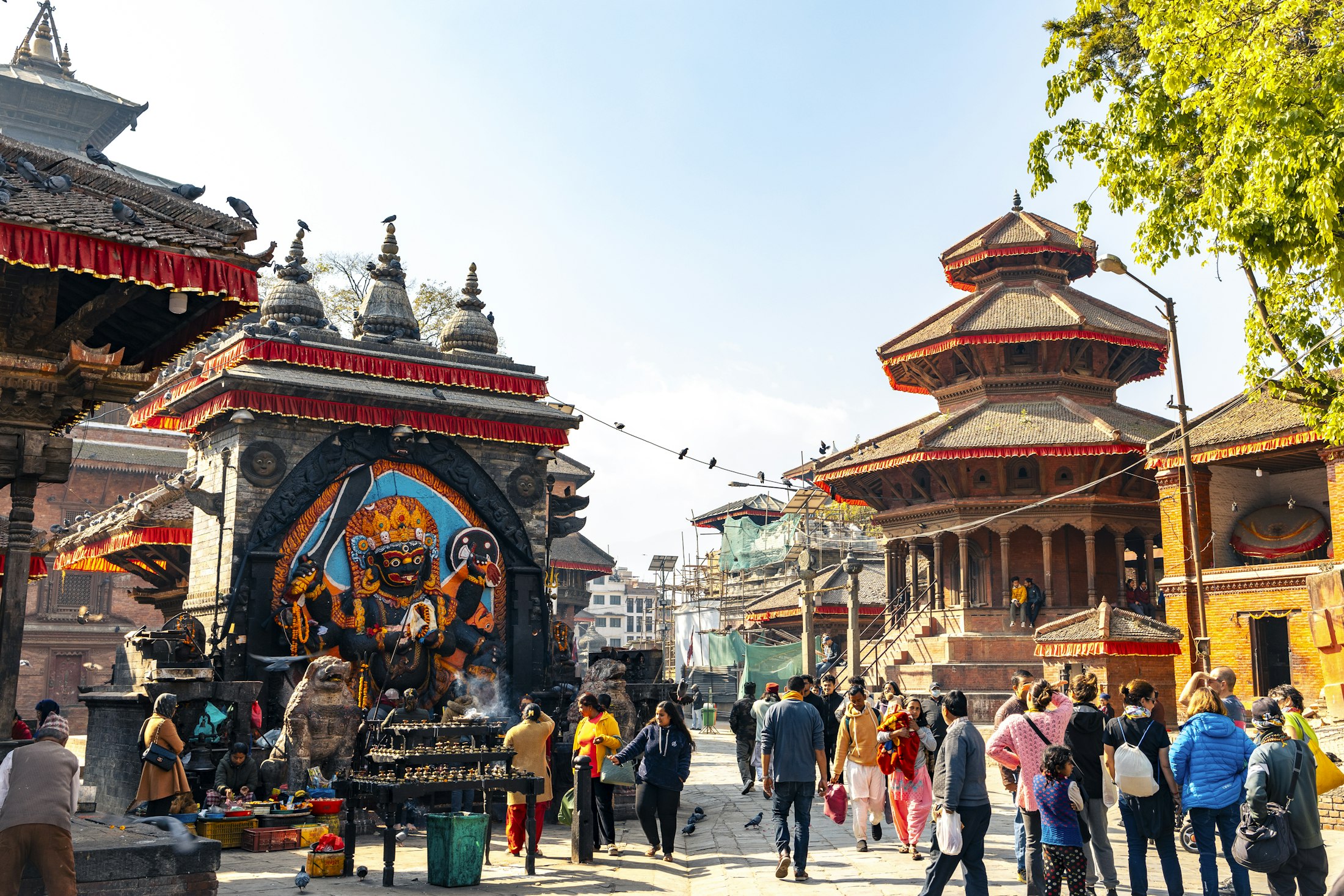
On the full moon of Vaishakh, the medieval courtyard of Patan's Kwa Bahal — the Golden Temple — transforms into an open-air banqueting hall where Newar Buddhist families serve ritual feasts to hundreds of devotees. Butter lamps flicker against twelfth-century gilt-copper facades, monks chant Prajñāpāramitā verses, and the scent of cumin-tempered black lentils drifts over flagstones worn smooth by nine centuries of barefoot worship. It is one of the Kathmandu Valley's most intimate yet overlooked cultural spectacles.
This guide walks you through every layer of the Buddha Jayanti courtyard feasts at the Golden Temple — from the ceremonial food preparations that begin days in advance to the exact dishes you'll taste, the rituals you should understand before attending, and the Patan neighbourhoods worth exploring once the lamps burn low. Whether you're a cultural traveller timing a Kathmandu visit around the May full moon or an armchair devotee of Newari heritage, these details will deepen your encounter with a living tradition that most guidebooks reduce to a single paragraph.
1. Understanding Buddha Jayanti at Kwa Bahal
Buddha Jayanti — celebrating Siddhartha Gautama's birth, enlightenment, and death — falls on the Vaishakh full moon, typically in May. At Kwa Bahal (Golden Temple), located on the narrow lane off Kwa Bahal Tole in central Patan Durbar Square's northern fringe, the celebration is distinctly Newar Buddhist. It merges Vajrayana ritual with communal feasting in a way you won't find at Boudhanath or Swayambhunath.
The temple's rotating priesthood, drawn from the Shakya and Bajracharya clans, organises the event months ahead. Each family in the sangha contributes rice, ghee, or labor. You'll notice that the courtyard is swept, then decorated with marigold garlands and toranas the day before — arrive on the eve to watch preparations unfold in relaxed, welcoming chaos.
The main puja begins at dawn. A gilt statue of the infant Buddha is bathed in saffron water while devotees queue to pour small ladles over the figure. By mid-morning the courtyard shifts from temple to kitchen, and the feast — called a bhoj or nakhtya in Newari — is laid out on low wooden platforms. You eat seated on straw mats, cross-legged, elbow to elbow with strangers.
What makes this particular feast singular is its context: a twelfth-century monastery courtyard barely thirty metres square, enclosed by three-tiered gilded pagoda architecture. No ticketed event, no roped-off VIP area. You simply remove your shoes, leave leather goods outside, and join.
Pro tip: Arrive by 6:30 a.m. to witness the infant Buddha bathing ritual before the crowds swell; position yourself near the southeastern corner of the courtyard for the best sightline to the main shrine.
2. The Ritual Feast Menu: Every Dish Decoded
The courtyard bhoj follows a strict Newari Buddhist sequence. You begin with chiura — beaten rice flattened that morning — mounded on a leaf plate. Beside it sits wo, a pan-fried black lentil cake seasoned with ginger, cumin, and jimbu (Himalayan allium). The wo is ceremonial: it symbolises offering to the Buddha before you eat it yourself.
Next comes kwāti, a sprouted-bean soup made from nine different legumes slow-simmered with turmeric and timur (Sichuan pepper). It's hearty, slightly sour, and uniquely Newari. You'll also receive alu tama — a potato and fermented bamboo shoot curry — alongside chhoyela, spiced buffalo meat charred over straw and tossed with mustard oil, chillies, and fresh ginger.
Vegetarian versions substitute chhoyela with paneer or mushroom preparations. The sweet course is juju dhau, the legendary king curd of Bhaktapur, served in small clay pots. Its caramelised cream top shatters under your spoon. Don't skip it for politeness — finishing your juju dhau signals appreciation to the host family.
Drinks are simple: brass tumblers of chilled water or aaila, a traditional rice spirit offered to adults. Accept at least a symbolic sip if poured for you; declining outright can read as a minor social slight in Newar feasting etiquette.
Pro tip:If you're vegetarian, tell the server 'masu chāhidaina' (I don't need meat) early; they'll redirect you to the vegetarian line without fuss.
Stay in Kathmandu
Top-rated hotels near Kathmandu
Best locations · Verified reviews · Free cancellation
View deals
Expedia →3. Inside the Kitchen: Where the Feast Is Prepared
The cooking happens in a semi-open annexe behind the temple's northern wall, accessible through a low wooden doorway on the lane leading toward Hakha Bahal. Volunteers — mostly Shakya-clan women — begin at 3 a.m., boiling enormous brass degchis of kwāti over firewood stoves. You can politely ask to observe; a small nod from the eldest woman present is your permission.
Watch for the wo station: two or three women shape lentil batter by hand on oiled stone slabs, then slide the discs into mustard-oil-filled karahis. The sizzle and aroma are extraordinary. Each batch produces around forty cakes, and they'll make several hundred before sunrise. If you offer to help carry leaf plates, you'll likely be welcomed and remembered.
Spice grinding happens on a stone mortar called a silauto. The masala for chhoyela — a pounded paste of fenugreek, timur, jimbu, and dried chillies — fills the annex with an eye-watering, deeply savoury perfume. This hand-ground blend tastes nothing like commercial spice mixes; it's rougher, more aromatic, and alive.
The logistical scale is impressive yet entirely community-run. No caterers, no hired staff. Brass vessels are borrowed from neighbourhood guthi (community trusts), cleaned after the feast, and returned. You're witnessing mutual aid at work, not a performance for tourists.
Pro tip:Bring a small cash donation (500–1000 NPR) in an envelope to hand to the kitchen organiser; this is the customary way outsiders contribute to the feast's cost.
4. Puja Rituals You Should Not Miss
After the bathing ceremony, monks perform a Pañcadāna offering — five gifts of cloth, food, medicine, light, and incense — at the main shrine. You'll hear conch shells and cymbals echoing off the gilt walls. Stand quietly along the western cloister; this vantage gives you a direct view of the head priest's ritual gestures without obstructing devotees.
By late morning, a procession of young boys dressed as Prince Siddhartha circles the courtyard three times. They wear gold-painted cardboard crowns and satin robes. Their families walk behind, scattering flower petals. Photograph respectfully — no flash — and ask before capturing close-ups of children. Most parents will beam and wave you closer.
Around noon, a dharmadeshana (teaching) is delivered in Nepal Bhasa by a senior Bajracharya priest. Even without understanding the language, sitting quietly through the fifteen-minute discourse shows respect. You'll notice devotees touching their foreheads after each passage — a gesture acknowledging dharma received.
The closing ritual involves lighting 108 butter lamps arranged in concentric circles on the courtyard floor. As daylight fades to blue dusk and the flames multiply against the golden metalwork, the visual effect is genuinely transcendent. This is the single most photographed moment of the day, and deservedly so.
Pro tip:Carry a small LED-free headlamp for navigating the dim cloister corridors after dark; the courtyard's only electric light comes from a single bulb near the entrance.
5. Exploring Patan's Buddhist Bahals Afterward
Kwa Bahal is just one node in Patan's dense network of 150-plus bahals — monastery courtyards. After the feast, walk five minutes south to Uku Bahal on Mangal Bazaar Road, where a quieter Buddha Jayanti celebration features traditional Newar masked dances. The contrast in scale is striking: fewer than thirty families participate, and the atmosphere is almost domestic.
Continue to Rudra Varna Mahavihar, a fourteenth-century monastery near the southern end of Patan Durbar Square. Its courtyard holds an astonishing collection of bronze statuary and a living display of Newar metalcraft. On Buddha Jayanti, artisan families sometimes open their workshops along the lane; you can watch repoussé copper being hammered into devotional forms.
For a restorative pause, stop at Café de Patan on Mangal Bazaar, directly overlooking the Durbar Square temples. Order their masala chai and a plate of sel roti — ring-shaped rice-flour doughnuts — while you decompress from the sensory density of the morning. The rooftop seats fill quickly after 10 a.m., so time it before or after the feast.
If your stamina holds, hire a local guide through Heritage Walk Nepal (based in Jhamsikhel, southern Patan) for a two-hour afternoon tour of the lesser-known bahals. Their guide Rajan Shakya grew up in the Golden Temple community and can decode iconography most visitors walk past unknowingly.
Pro tip:Download the 'Patan Heritage Walk' map from the Patan Museum website in advance — mobile data can be unreliable inside the narrow bahal lanes.
Stay in Kathmandu
Top-rated hotels near Kathmandu
Best locations · Verified reviews · Free cancellation
View deals
Expedia →6. What to Wear, Bring, and Leave Behind
The Golden Temple enforces a strict no-leather policy. Leather belts, watch straps, bags, and shoes must be left at the entrance with a volunteer guard. Wear slip-on shoes you can remove quickly, cotton or synthetic belts, and carry a fabric tote. This rule applies to all visitors year-round, but on Buddha Jayanti, the volume of people makes fumbling with buckles conspicuous.
Dress modestly — shoulders and knees covered — in light, breathable fabrics. May temperatures in Patan hover around 27°C with high humidity. A cotton scarf doubles as sun protection, a seat mat during the feast, and a respectful head covering if you enter the inner sanctum. Avoid black clothing; Newar Buddhist ceremonies associate it with mourning.
Bring a refillable water bottle, sunscreen, and a zip-lock bag for your phone during the bathing ritual, where saffron water splashes freely. A small daypack with a rain shell is wise; May afternoons frequently deliver short, fierce downpours. Leave drone cameras behind entirely — Patan's Durbar Square heritage zone prohibits them, and enforcement has tightened since 2023.
Carry Nepali rupees in small denominations. Vendors along the lane sell marigold garlands (50–100 NPR), incense bundles, and butter-lamp wicks. Purchasing these to offer at the shrine is a graceful way to participate rather than merely spectate.
Pro tip: Swap your leather watch strap for a nylon NATO strap before the trip — it avoids the awkward moment of being turned away at the courtyard gate.
7. Timing Your Visit and Getting There
Buddha Jayanti follows the lunar calendar, so confirm the exact date each year — typically falling between early and late May. Nepal's tourism board publishes the official date by February. Book flights and accommodation at least three months ahead; the Kathmandu Valley fills with domestic pilgrims during this period, and Patan's boutique guesthouses sell out fast.
From Kathmandu's Thamel district, Patan is a thirty-minute taxi ride across the Bagmati River via the Patan bridge. Agree on a fare of 600–800 NPR before departure or use the Pathao ride-hailing app for transparent pricing. If you're staying in Patan itself — recommended — the Golden Temple is a seven-minute walk from the Patan Durbar Square bus park.
The feast typically runs from around 9 a.m. to 1 p.m., but the full day of rituals stretches from dawn puja to the evening lamp lighting at approximately 7 p.m. Plan to stay the entire arc if your schedule allows; the mood shifts dramatically from reverential silence at dawn to communal joy by afternoon to meditative calm at dusk.
Avoid visiting on the day after Buddha Jayanti. The courtyard is closed for cleanup and repurification rites. If you arrive a day early, however, you'll catch the decoration preparations and possibly be roped into garland-stringing — a genuine, unscripted cultural exchange.
Pro tip:Set a Google Calendar alert for 'Vaishakh Purnima Nepal' each January so you can lock in flights before prices surge.
Essential tips
Wear slip-on shoes and avoid all leather items — belts, bags, and straps are prohibited inside Kwa Bahal's courtyard, and the rule is strictly enforced on Buddha Jayanti.
Carry small-denomination Nepali rupees (50s and 100s) for marigold garlands, butter-lamp offerings, and tipping the shoe-minder. ATMs near Patan Durbar Square occasionally run dry on festival days.
Photography is allowed in the courtyard but flash is frowned upon. Ask before photographing children or monks during rituals. Drone use is banned throughout the Patan heritage zone.
May brings pre-monsoon showers most afternoons. Pack a compact rain shell and a zip-lock bag for electronics — the courtyard offers little shelter once the downpour starts.
Eat with your right hand as per Newar etiquette. If offered aaila (rice spirit), take at least a symbolic sip to honour the host family's generosity before politely declining more.
Ready to visit Kathmandu?
Book your hotel, flights, and activities through our Expedia-powered search.


