In This Guide
- 1.How Bulaq became Cairo's lantern district (and why it's shrinking)
- 2.The workshops worth your time — and the one tourist trap to skip
- 3.Ful at the water's edge
- 4.What happened to Bulaq's waterfront
- 5.Where to eat beyond the ful carts
- 6.The souk that isn't in any guidebook
- 7.Getting in and getting around
- 8.Who this neighbourhood is for
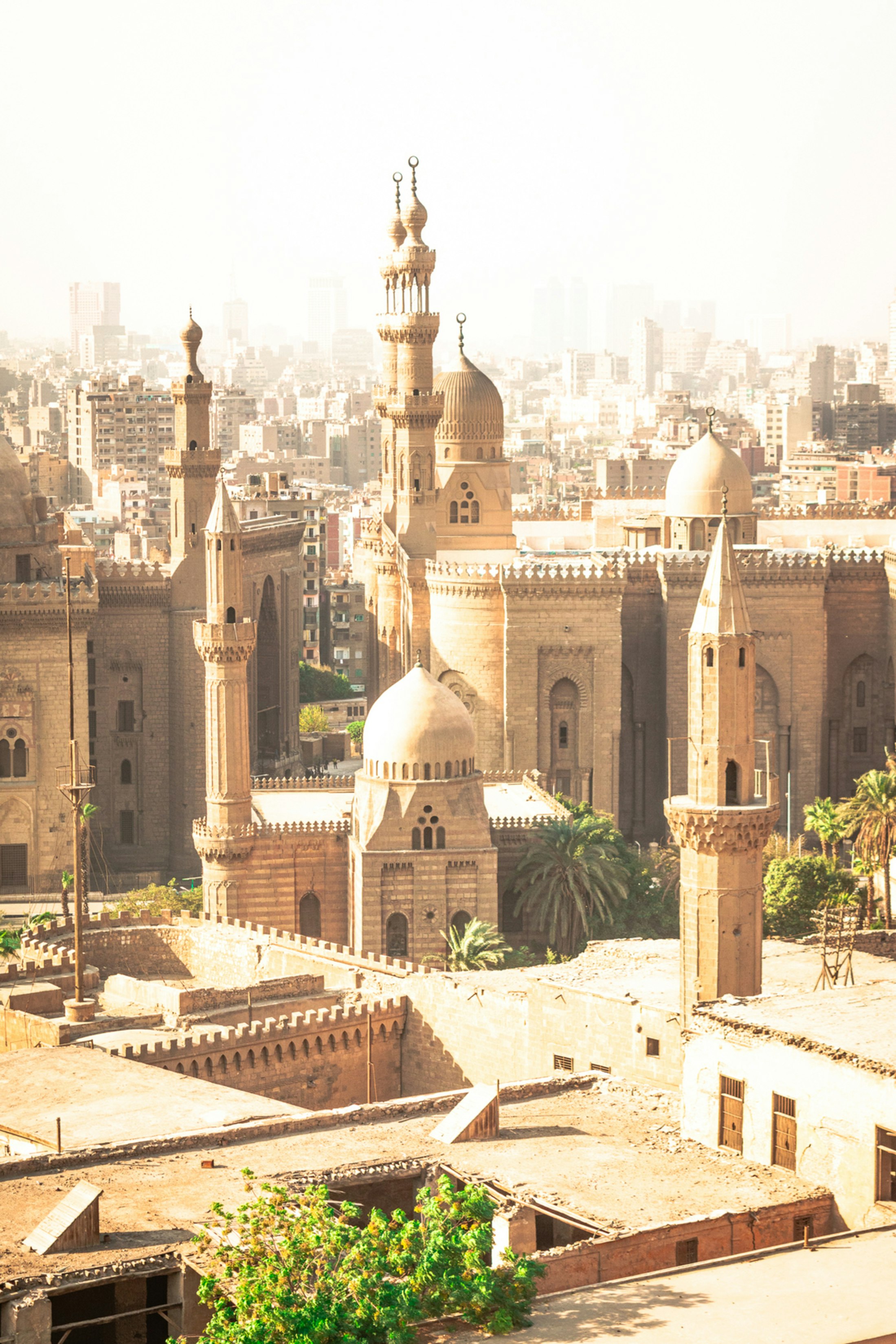
The first time I walked into Bulaq from the Corniche side, a man was hammering tin into a crescent moon on the pavement while a ful cart behind him sent up smoke so thick it looked deliberate, like a stage effect. Bulaq sits on the Nile's eastern bank in central Cairo, wedged between the river and 26th of July Street, and it has been there since the Ottoman period — first as a port, then as a manufacturing district, now as a neighbourhood that most Cairenes drive past on their way to Zamalek. The fanous workshops that still operate here every Ramadan are not a revival project or a heritage tourism stunt. They are the tail end of an industry that once supplied lanterns to half the country, run by families who will tell you, with some irritation, that they don't need rediscovering.
1. How Bulaq became Cairo's lantern district (and why it's shrinking)
Bulaq's lantern trade isn't ancient. It consolidated here in the mid-twentieth century, when tinsmiths who had been scattered across downtown Cairo got pushed to cheaper rents along the district's narrow commercial streets. By the 1970s, workshops on and around Sharia Bulaq al-Gadida were producing the fanous Ramadan — the coloured-glass lanterns that hang from balconies and shopfronts during the holy month — in volumes that supplied Upper Egypt, the Delta, and export markets in the Gulf.
Today, maybe a dozen workshops remain. Chinese-made LED lanterns flooded the market in the 2000s, and they sell for a fraction of the handmade price. A small tin-and-glass fanous from a Bulaq workshop runs 150–400 LE depending on size and complexity; a plastic Chinese one costs 30 LE at any street stall. The economics are brutal, and the craftsmen know it.
What keeps the remaining workshops open is a combination of Ramadan nostalgia and a small but loyal clientele — families who want an actual metal lantern with hand-cut coloured glass, not a battery-operated thing that plays a nasheed. If you go during Sha'ban (the month before Ramadan), you'll find workshops in full production, lanterns drying in rows on the street, the smell of solder in the air.
Pro tip:Visit during the last two weeks of Sha'ban for peak production. By mid-Ramadan, most stock is sold and workshops wind down.
2. The workshops worth your time — and the one tourist trap to skip
The workshop I return to is run by a man named Amm Sayyid on a lane off Sharia Bulaq al-Gadida, recognisable by the tower of finished lanterns stacked outside his door in tissue paper. He works with his two sons and doesn't have a sign. Ask anyone in the street for the fanous maker near the old bakery; they'll point you there. His large lanterns — about 60 cm tall, with red, green, and amber glass panels — go for around 350 LE. He doesn't negotiate much, and honestly, at that price, don't try.
Skip the so-called "Fanous Street" pop-up market that appears closer to 26th of July Street during Ramadan. It's almost entirely resold Chinese product with a markup, and the vendors are not the craftsmen. A photo op dressed as authenticity.
There's another family workshop two blocks south, closer to the Nile, where they specialise in miniature lanterns — palm-sized, sold in sets of six for about 200 LE. These make better gifts than any papyrus scroll from Khan el-Khalili, and they actually fit in a suitcase.
Stay in Cairo
Top-rated hotels near Cairo
Best locations · Verified reviews · Free cancellation
View deals
Expedia →3. Ful at the water's edge
Bulaq's Nile frontage has been half-demolished, half-developed, and mostly ignored for decades. The Corniche here isn't the manicured promenade you get in Garden City or Maadi. It's a strip of cracked pavement, parked microbuses, and — in the early morning — ful carts.
Ful medames is Cairo's foundational breakfast, and the carts that set up along the Corniche near Bulaq between roughly 5:30 and 9:00 a.m. serve some of the most unshowy versions in the city — and the best. The standard order is a sandwich: ful ladled into aish baladi, topped with tahina, a squeeze of lemon, and cumin. It costs 10–15 LE. One cart, parked near the entrance to the old Bulaq souk on most mornings, adds a scoop of oil-fried ta'ameya (falafel, but made with fava beans here, not chickpeas) without being asked. That cart has no name. It has a blue awning.
I'll say something that might get me in trouble with the Felfela loyalists: the Corniche ful carts in Bulaq are better than most sit-down fuul restaurants in downtown Cairo. The beans are cooked slower, the bread is fresher because the bakeries are fifty metres away, and the tahina hasn't been sitting in a plastic jug since yesterday.
Pro tip:Bring your own bottled water. The carts don't sell drinks, and the nearest kiosk opens later than you'd expect.
4. What happened to Bulaq's waterfront
For most of its history, Bulaq was a port. Goods from Upper Egypt arrived here by river. The neighbourhood's street grid still follows the logic of warehouses and loading docks, even though the water trade died in the early twentieth century. What replaced it was light industry — tin workshops, textile sweatshops, car repair garages — and informal housing that crept right up to the Corniche.
In the 2000s and 2010s, the government began clearing parts of Bulaq Abul Ela, the sub-district closest to the river, for redevelopment projects linked to the Nile Towers and luxury hotel zone on the opposite bank. Families were relocated. Entire blocks were flattened. The result is a strange patchwork: a nineteenth-century street might dead-end into a construction fence, and behind that fence, nothing.
This is why Bulaq feels provisional, like a neighbourhood waiting for a verdict. The people who remain are not performing heritage for tourists. They are working.
5. Where to eat beyond the ful carts
There's a koshary place on the eastern stretch of Sharia Bulaq al-Gadida, about a ten-minute walk from the Corniche, that serves a sharp, vinegar-heavy tomato sauce I haven't found replicated elsewhere. A medium bowl costs 25 LE. The shop has green tiles on the front and no English sign, but the queue at lunchtime is its own signage.
For something more substantial, the grilled-meat shops along the same street do credible kofta and kebab plates for 80–120 LE with rice and salad. Nothing revelatory, but solid, and the portions assume you've been working all morning.
Don't bother walking to the Zamalek bridge end for food. The cafés there cater to a different economy, and you'll pay five times as much for worse tahina.
Pro tip: Koshary shops in this part of Cairo typically peak between 1:00 and 2:30 p.m. Arrive at 12:30 to avoid standing in the street.
Stay in Cairo
Top-rated hotels near Cairo
Best locations · Verified reviews · Free cancellation
View deals
Expedia →6. The souk that isn't in any guidebook
Bulaq's old commercial souk — not a tourist market, a functioning one — sells household goods, cheap textiles, and school supplies from narrow permanent stalls that line a covered alley running roughly parallel to Sharia Bulaq al-Gadida. Plastic buckets. Bolts of polyester. Notebooks by the kilo. It is not atmospheric in the way Khan el-Khalili is atmospheric, and that is precisely the point.
Last time I was there in November, a stall was selling hand-stitched galabiyyas for 180 LE — cotton, not the synthetic ones you get at the tourist souks for twice the price. The stall owner told me business had been flat since the currency devaluation. He wasn't complaining, exactly. Just stating a fact.
If you want to understand what daily commerce looks like in a working-class Cairo neighbourhood, spend thirty minutes here. If you want spices in photogenic burlap sacks, go somewhere else.
7. Getting in and getting around
Bulaq is walkable from the Cairo Opera House metro station (line 1 or 2, depending on direction) in about fifteen minutes, though the walk along the Corniche is not shaded and in summer will remind you of that. A taxi from Tahrir Square should cost 40–60 LE on the meter; use Uber or Careem if you don't want to negotiate.
Inside the neighbourhood, you walk. Streets are tight, mostly one-way or effectively pedestrianised by parked cars. Friday mornings are quieter. Weekday mornings are when the workshops and carts are busiest.
One navigational note: Google Maps is unreliable for Bulaq's internal streets. Several lanes have been renamed, blocked, or demolished since the last satellite pass. Use the Corniche and 26th of July Street as your anchoring axes and orient from there.
Pro tip:If arriving by Uber, set the pin to the 26th of July Street side, not the Corniche. Drivers know the former; they'll circle aimlessly looking for the latter.
8. Who this neighbourhood is for
Bulaq is not going to make your Instagram grid pop. There's no restored Ottoman mansion with a courtyard café, no street art trail, no third-wave coffee roaster doing a Cairo-meets-Melbourne thing. What it offers is the chance to see a neighbourhood that has been making things — lanterns, bread, tin goods — for generations, under increasing economic pressure, without turning itself into a performance for outsiders.
That appeals to a specific kind of traveller. The kind who reads contextual plaques, carries cash in small denominations, and doesn't flinch at a street without English signage.
Essential tips
Carry small bills — 10, 20, and 50 LE notes. Ful carts, souk stalls, and workshop owners rarely break 200 LE.
Best window for lantern workshops is 10:00 a.m.–1:00 p.m. on weekdays during Sha'ban. Afternoons they often close or switch to delivery work.
Wear closed shoes. Bulaq's streets have metal shavings, loose gravel, and workshop runoff. Sandals are a mistake I made once.
Download offline maps before going. Mobile data coverage is patchy in the interior streets, and GPS drifts between the tight buildings.
Ready to visit Cairo?
Book your hotel, flights, and activities through our Expedia-powered search.


