In This Guide
- 1.El Abd Patisserie: The Anchor of Talaat Harb
- 2.Mandarine Koueider: Pistachio Excess on Qasr El Nil
- 3.Abu Tarek's Neighbour: The Unnamed Kunafa Cart on Champollion Street
- 4.La Poire: Where Konafa Meets French Technique
- 5.Café Riche Rooftop: Konafa With a Skyline
- 6.Eish and Konafa: The Sandwich Experiment on Mohamed Farid Street
- 7.Closing the Loop: Groppi and a Nightcap at Talaat Harb Square
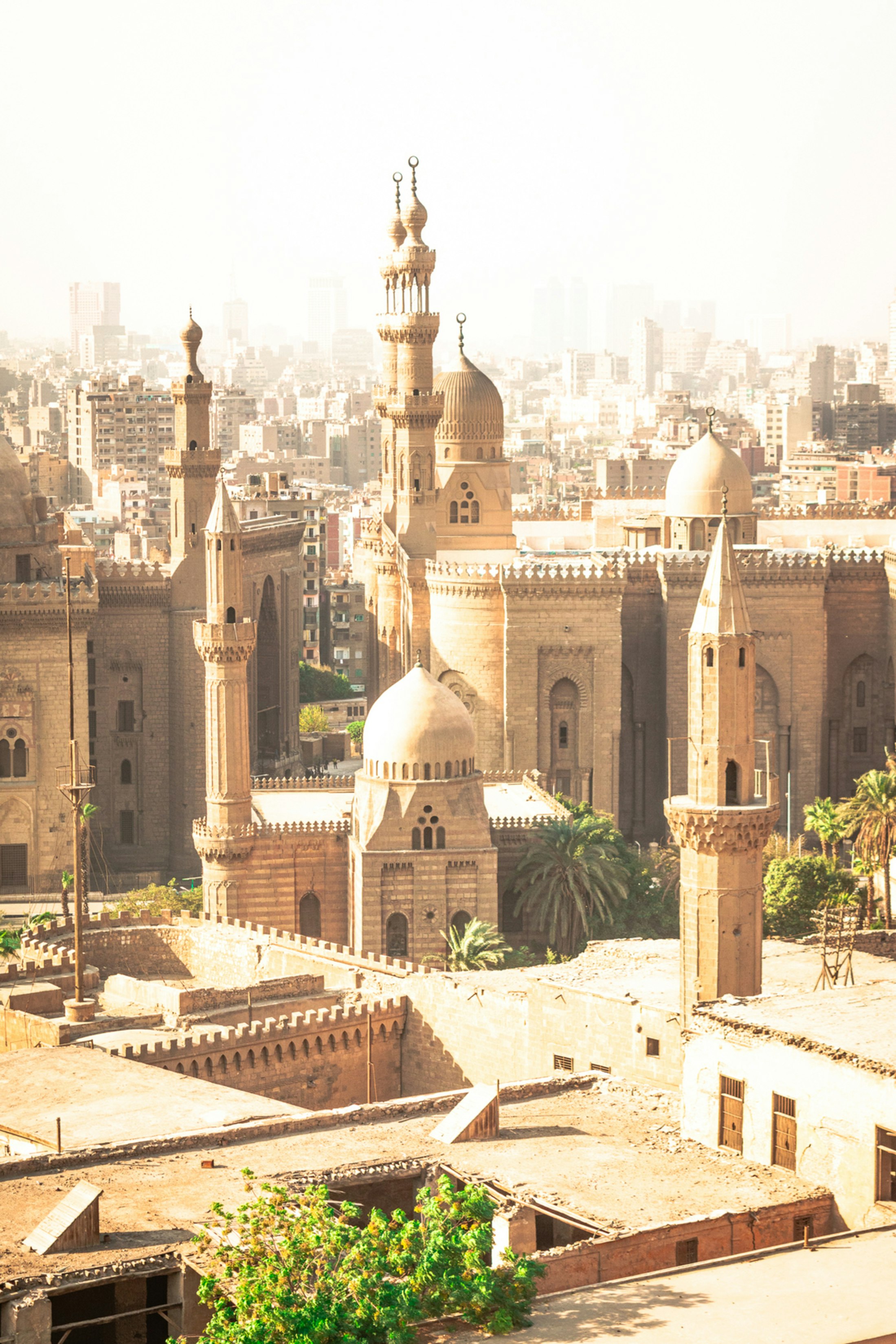
The cannon fires from the Citadel and Cairo exhales. Within minutes, downtown's Art Deco corridors — those Italianate arcades and Beaux-Arts façades that line Talaat Harb and Qasr El Nil — transform into an open-air theatre of sugar, syrup, and stretchy cheese. Neon signs flicker above pastry counters older than the republic itself, and the scent of ghee-soaked semolina drifts from doorways propped open with wooden crates. This is Ramadan Cairo at its most electric.
This guide maps a walking konafa crawl through downtown Cairo's most rewarding after-iftar stops, moving roughly south to north between Tahrir Square and 26th of July Street. You'll hit legendary patisseries, hole-in-the-wall kunafa specialists, and one rooftop where the phyllo is almost secondary to the view. Whether you're chasing the definitive nabulsiyya or the new-wave Nutella-pistachio hybrid, this route earns its calories — and reveals an architectural heritage most visitors walk right past.
1. El Abd Patisserie: The Anchor of Talaat Harb
Start where every Cairene sugar pilgrimage eventually leads. El Abd, at 25 Talaat Harb Street, has occupied its corner since 1969, and during Ramadan the queue spills onto the pavement before the adhan even finishes. The glass counter displays konafa in five or six variations, but the classic kunafa nabulsiyya — crisp vermicelli shell, molten akkawi cheese, orange-blossom syrup — is the benchmark against which every other stop tonight will be measured.
Order a small box to share, not a full kilo. Portions are generous and you have six more stops ahead. The cheese should stretch when you pull a piece apart; if it doesn't, something's gone wrong — but at El Abd, it rarely does. Pair it with a cup of sahlab from the drinks counter; the thick, orchid-root warmth offsets the sweetness beautifully.
Before you leave, look up. The building's curved balconies and geometric ironwork are textbook 1930s Art Deco, designed during Cairo's ambitious Khedival-era urban expansion. Most customers never notice. You should stand across the street for ten seconds and take it in — the patisserie's green neon glow against that façade is one of downtown's best unintentional compositions.
El Abd also sells a rough-cut basbousa that regulars swear by, but resist the temptation to over-order this early. Save stomach real estate for what's ahead. Grab napkins — you'll need a stash for the rest of the crawl.
Pro tip:Skip the main counter during peak post-iftar rush (roughly 7:15–8:00 PM). Walk to El Abd's smaller takeaway window on the side street — same products, a fraction of the wait, and the staff are chattier.
2. Mandarine Koueider: Pistachio Excess on Qasr El Nil
Walk southeast toward Qasr El Nil Street and find Mandarine Koueider at number 17, identifiable by its ornate green-and-gold shopfront and the permanent crowd around its dessert vitrine. This Lebanese-Egyptian chain elevates konafa into something approaching fine pastry, with prices to match, but Ramadan specials make it worthwhile. Their signature is a konafa bil ashta — clotted cream layered between shredded phyllo — crowned with an almost absurd pile of ground Aleppo pistachio.
The interior is air-conditioned and calm, a welcome contrast to the pavement energy outside. Sit at one of the marble-topped tables if you can, and order the konafa platter for two, which arrives with three varieties: ashta, cheese, and a seasonal mango iteration that divides opinion sharply. Your move is to start with the cheese, then the ashta, then decide if mango konafa deserves to exist.
Mandarine Koueider's Qasr El Nil branch sits inside a building with one of downtown's finest Beaux-Arts entryways — fluted columns framing a mosaic tile floor that continues up a wide marble staircase. Peek into the lobby if the bawab allows it. Most evenings during Ramadan he's in a generous mood.
The shop also sells boxed assortments designed for gifting, which Cairenes buy in bulk during the last ten days of Ramadan. If you want to bring something home, the pistachio-crusted fingers travel well and hold their crunch for about 48 hours if sealed tightly.
Pro tip:Ask specifically for the Ramadan-only konafa bil loz — an almond-paste filling that doesn't appear on the regular menu. It's listed on a small Arabic-only board behind the register.
Stay in Cairo
Top-rated hotels near Cairo
Best locations · Verified reviews · Free cancellation
View deals
Expedia →3. Abu Tarek's Neighbour: The Unnamed Kunafa Cart on Champollion Street
Every Cairene knows Abu Tarek for its koshary, but fewer know the unmarked kunafa cart that sets up nightly during Ramadan about fifteen metres south of Abu Tarek's entrance on Champollion Street. There's no sign, no branding — just a gas burner, a rotating copper tray, and a man named Sayyid who has been doing this for over twenty years. His kunafa is rough, rustic, and extraordinary.
Sayyid uses a single-origin nabulsi cheese he sources from a supplier in Faisal. The syrup is lighter than most — barely tinted, with a floral note that suggests rosewater rather than orange blossom. He serves it on a square of wax paper, nothing else. You eat standing up, elbow to elbow with university students and off-duty taxi drivers. It costs around 30 Egyptian pounds for a generous slab.
The setting matters here. Champollion Street was named for the French Egyptologist, and its apartment blocks are a catalogue of early-twentieth-century eclecticism — Art Nouveau ironwork, Moorish arched windows, Italianate cornices. At night, with the streetlamps and the glow from Sayyid's burner, the visual atmosphere is thick and cinematic.
Arrive between 8:30 and 9:30 PM. Earlier and he's still heating the first tray. Later and he's sold out. There are no second batches.
Pro tip:Bring your own water — there's no drinks vendor within immediate reach, and Sayyid's konafa, while lightly syruped, still demands hydration. The nearest bottled-water kiosk is at the Champollion-Tahrir intersection.
4. La Poire: Where Konafa Meets French Technique
Head north along Talaat Harb until you reach La Poire, the Egyptian-French patisserie chain with a flagship at 20 Talaat Harb Street. This is the polished, air-conditioned counterpoint to Sayyid's cart — linen napkins, branded boxes, and a pastry case that could pass for a Parisian vitrine. During Ramadan, La Poire releases a limited konafa crème brûlée that fuses French custard technique with Egyptian shredded pastry.
The konafa crème brûlée is served in a ceramic ramekin: a torched sugar crust over vanilla custard, sitting atop a base of buttery, syrup-soaked kunafa threads. It shouldn't work, but it does — the textural contrast between brittle caramel, cool custard, and chewy pastry is genuinely clever. Order it with a Turkish coffee, not tea; the bitterness anchors the dish.
La Poire's downtown branch retains its original 1970s wood-panelled interior, which gives it the feel of an old Heliopolis salon. Regulars occupy the same tables nightly during Ramadan, treating the space as a de facto living room. Don't rush. Sit, people-watch, and absorb the rhythm of a city that is fully nocturnal for thirty nights a year.
If the crème brûlée is sold out — it often is by 10 PM — pivot to their mango konafa cup, a layered parfait-style dessert served cold. It's less architecturally impressive but the flavour ratio is impeccable.
Pro tip: La Poire accepts card payments, unlike most stops on this crawl. Use it strategically if your cash is running low — the ATM inside Banque Misr on the same block charges steep foreign-card fees.
5. Café Riche Rooftop: Konafa With a Skyline
Duck into the historic passage at 17 Talaat Harb Street and climb the stairs to the upper floor of Café Riche, Cairo's most storied literary café. During Ramadan, the space extends to a rooftop terrace that offers a rare elevated view of downtown's Art Deco skyline — water tanks and satellite dishes included, but also minarets, cupolas, and the distant outline of the Cairo Tower lit in green. They serve a house konafa that is good, not great, but the setting is unmatchable.
The konafa here is a straightforward cheese version, ordered from a Ramadan-only dessert menu alongside qatayef and mahalabia. It arrives on a proper plate with a drizzle of syrup and a scattering of crushed pistachios. The cheese-to-pastry ratio leans generous, which compensates for a crust that could be crisper. Order it anyway — you're here for the totality of the experience.
Café Riche has hosted Naguib Mahfouz, Umm Kulthum, and half a century of Egyptian intellectuals. The walls downstairs are lined with black-and-white photographs documenting this history. Spend ten minutes inside before heading up; the context deepens the rooftop view considerably.
The terrace fills quickly after 9 PM. Aim to arrive by 8:45 and secure a table along the railing. A mint tea here, with the call to taraweeh prayer drifting across the rooftops, is one of Ramadan Cairo's most transportive moments.
Pro tip:Tell the waiter you want to sit on the roof — locals call it 'el sateh' — as the default seating is the ground-floor interior. Be polite but specific; rooftop access during Ramadan is informal and sometimes requires a gentle ask.
Stay in Cairo
Top-rated hotels near Cairo
Best locations · Verified reviews · Free cancellation
View deals
Expedia →6. Eish and Konafa: The Sandwich Experiment on Mohamed Farid Street
This stop is polarising, and that's precisely why it belongs on the crawl. On Mohamed Farid Street, roughly opposite the old stock exchange building, a small sandwich shop called Makarona — yes, named after pasta — has been stuffing warm kunafa inside baladi bread during Ramadan for at least a decade. It's carb-on-carb madness, and it has a cult following among downtown's night-shift workers.
The sandwich is exactly what it sounds like: a split round of aish baladi filled with a thick slab of freshly cut kunafa, pressed lightly on a flat grill until the bread crisps and the cheese inside goes molten. A final drizzle of cold syrup over the top creates a temperature contrast that elevates what should be absurd into something genuinely compelling.
Makarona's shopfront is barely two metres wide, wedged between a print shop and a mobile repair stall. There are no seats. You eat on the pavement or perch on a concrete bollard across the street, watching late-night Cairo traffic negotiate the roundabout. The sandwich costs about 25 pounds and is large enough to split.
Not everyone will love this — the textural homogeneity can feel heavy after a night of sweets. But as a cultural artefact of Cairo's relentless appetite for reinvention, it's essential. Think of it as your palate's final exam.
Pro tip:Ask for extra syrup on the side — they'll give you a small plastic cup. Dipping the sandwich rather than having it pre-drizzled gives you control over sweetness levels, which matters this far into a sugar-intensive evening.
7. Closing the Loop: Groppi and a Nightcap at Talaat Harb Square
End where downtown's golden age began. Groppi, the once-legendary Swiss-Egyptian tearoom on Talaat Harb Square, has seen better decades, but its Ramadan konafa — served from a dedicated counter near the entrance — remains surprisingly competent. More importantly, the square at midnight during Ramadan is a spectacle unto itself: families promenading, children chasing balloons, konafa crumbs on every surface.
Groppi's interior still carries traces of its Art Deco heyday — geometric floor tiles, curved display cases, faded murals. The current iteration is a shadow of its 1940s glamour, but there is beauty in the patina. Order a small konafa and a glass of tamarind juice (their homemade hindi is tart and excellent) and sit near the window facing the square.
Reflect on what you've eaten. Over the course of roughly three hours and two kilometres of walking, you've consumed six variations on a single dessert — each reflecting a different philosophy of sugar, cheese, and heat. You've also walked past some of the finest early-twentieth-century architecture in the Middle East, most of it unprotected and slowly crumbling. The konafa crawl is, in its own sticky way, an act of architectural appreciation.
Before you leave, buy a box of Groppi's chocolate-coated konafa balls — a recent addition, clearly aimed at tourists, but genuinely tasty. They'll survive the journey home better than any memory of what the syrup tasted like at 11 PM on Champollion Street.
Pro tip:Groppi closes earlier than you'd expect — usually by 12:30 AM even during Ramadan. Plan to arrive no later than midnight to guarantee both seating and stock. The tamarind juice often runs out before the konafa does.
Essential tips
Carry small bills — 10, 20, and 50 Egyptian pound notes. Most stops on this crawl are cash-only, and street vendors rarely break anything larger than 100 pounds. ATMs are plentiful on Talaat Harb but charge variable foreign-card fees.
Time your start for 30–45 minutes after iftar, usually around 7:30–8:00 PM. The initial post-iftar rush will have subsided, queues shorten, and the streets hit their most photogenic stride as neon signs compete with streetlamps.
Wear comfortable, closed-toe shoes. Downtown Cairo's pavements are uneven, often broken, and occasionally wet from street-washing. The total walking distance is roughly two kilometres, but you'll double back and linger, so expect to be on your feet for three hours.
Download an offline map of downtown Cairo before you go — Google Maps works but mobile data can be patchy inside the older arcade passages. Screenshot the addresses in Arabic script to show taxi or tuk-tuk drivers if needed.
Pace your sugar intake with savoury or sour breaks. Buy a cup of sobia (coconut milk drink) or tamr hindi (tamarind juice) from any street vendor — they're everywhere during Ramadan, cost 5–10 pounds, and reset your palate between konafa stops.
Ready to visit Cairo?
Book your hotel, flights, and activities through our Expedia-powered search.


