In This Guide
- 1.The fish market you should mostly ignore
- 2.Enhjørningen, upstairs on the wharf
- 3.Colonialen and the bread situation
- 4.What 'salted cod on the wharf at midnight' actually means
- 5.Pingvinen and the brown cheese question
- 6.Lysverket, or how Bergen does fine dining now
- 7.The coffee is better than the beer
- 8.Eating at Cornelius, if you want to take a boat to dinner
- 9.What to bring home
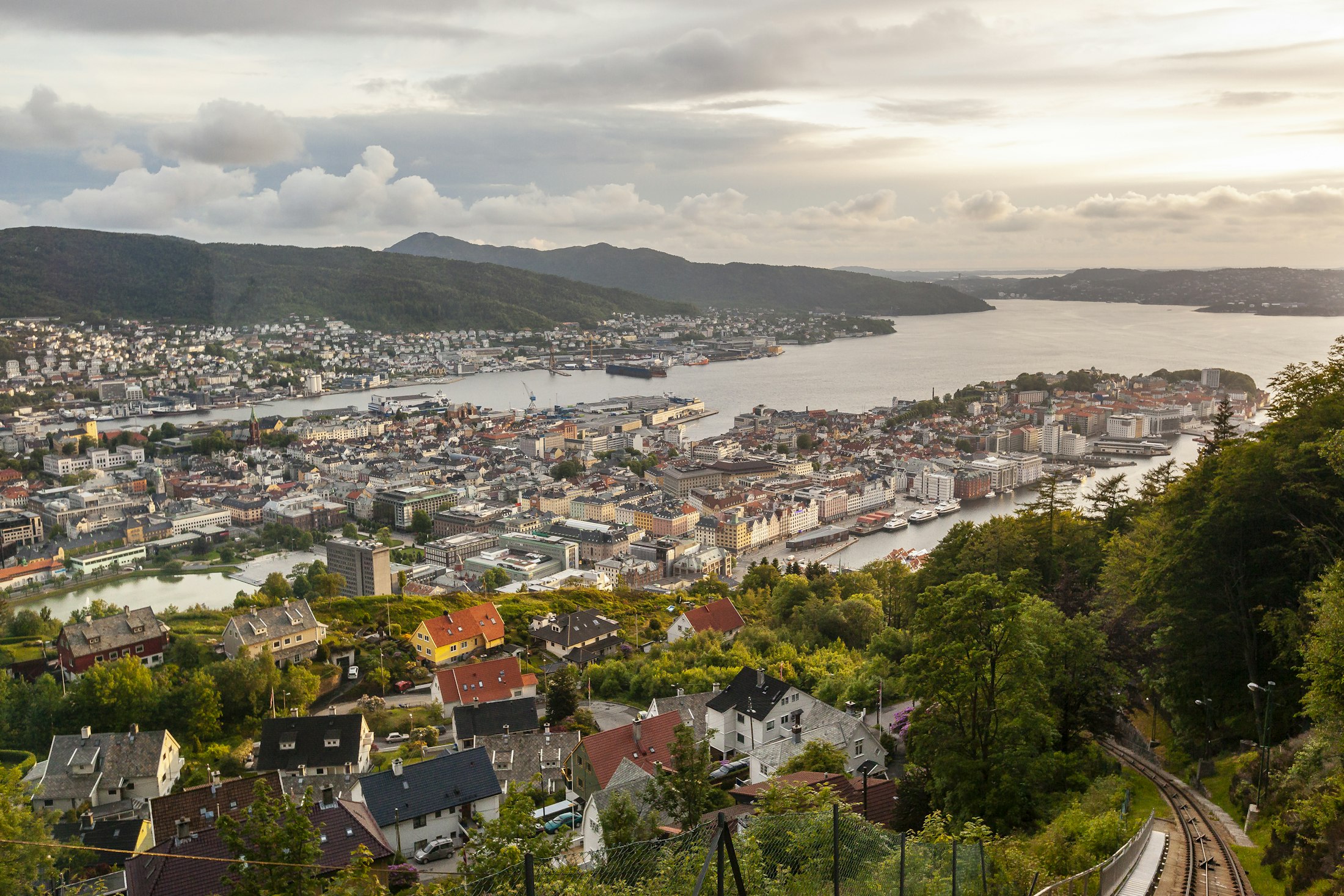
The rain started at four in the afternoon and hadn't stopped by midnight, which in Bergen is less a weather event than a personality trait. I was standing on Bryggen wharf eating bacalao from a paper tray, the salt cod so thick with tomato and cumin it felt like a meal designed for exactly this kind of cold. Water ran off the eaves of the old timber buildings and into my collar. I didn't move.
Bergen eats the way it rains — steadily, without apology, and often in the dark. The city's relationship with food has shifted in the last decade, but not in the way the travel supplements describe. There hasn't been a revolution. What's happened is slower: a generation of cooks who grew up gutting fish on these docks decided they didn't need to leave for Oslo to take the work seriously.
1. The fish market you should mostly ignore
Fisketorget, the fish market on the harbor, is where most visitors eat their first meal in Bergen. Skip the indoor hall. The prices are marked up for cruise passengers, and the sushi platters sitting under heat lamps have a resigned quality, like they know what they've become.
The outdoor stalls, when they're running in summer, are a different situation. A paper cone of fresh shrimp — peeled, cold, briny, nothing else — costs around 80–100 NOK and is worth eating on a bench facing the water. The king crab legs are fine but overpriced at 250+ NOK for a portion. If you want crab in Bergen, you're better served at Enhjørningen or even the cafeteria at the university.
Pro tip: The outdoor stalls typically operate from May through September. Go before 11 a.m. if you want to talk to the fishmongers without being pressed from behind by a tour group.
2. Enhjørningen, upstairs on the wharf
Enhjørningen sits on the second floor of one of the Bryggen timber buildings, the ones that lean into each other like old friends holding each other upright. The staircase is narrow. The ceiling is low. The stockfish has been on the menu in some form since the restaurant opened in 1979, and the preparation hasn't drifted far from what it should be: rehydrated, slow-cooked, served with root vegetables and a mustard sauce that's barely there.
I've seen this place described as touristy, and I think that's wrong. It's expensive — a main course runs 350–500 NOK — but the kitchen doesn't cut corners on the fish. The klippfisk gratin alone is worth a reservation. What's touristy is the ground-floor souvenir shop next door selling troll figurines.
Pro tip: Reservations are essential on weekends from June through August. Walk-ins are possible on weekday evenings in shoulder season.
3. Colonialen and the bread situation
Colonialen operates several venues around Bergen. The one that matters most for a weekday lunch is Colonialen Litteraturhuset on Østre Skostredet, where the open-faced sandwiches are built on bread that's dense and sour in a way that feels earned. A smørbrød with smoked salmon, pickled red onion, and horseradish cream costs about 135 NOK.
The bread. I need to talk about the bread. Norwegian bakeries in general lean toward soft, sweet loaves — the kind you find plastic-wrapped at Rema 1000. Colonialen's sourdough is the counter-argument: dark crust, tight crumb, a sourness that sits at the back of your throat. They bake it at their production kitchen and distribute it across their spots. It's the best bread I've had in western Norway, and I realize that sounds like faint praise, but it isn't.
Their grocery shop on Kong Oscars gate stocks Norwegian cheeses, tinned fish, and a small wine selection. Good place to assemble a hotel-room dinner when you don't feel like spending 600 NOK on a main.
4. What 'salted cod on the wharf at midnight' actually means
In June and July, Bergen doesn't get dark. The light at midnight is the color of a bruise — grey-blue, diffuse, sourceless. People eat late because the body doesn't register that it should stop.
The bacalao I ate came from a takeaway window at Bryggen Tracteursted. Salt cod braised in tomato with potatoes and olives, served in a foil-lined tray. Nothing refined about it. The dish exists because of centuries of trade between Bergen and Portugal and Spain, stockfish heading south, recipes drifting north. That history is in the cumin.
I sat on a bollard and ate it with a plastic fork while a busker played something unidentifiable on an accordion. The rain had thinned to mist. A couple walked past sharing a bag of raspberries.
5. Pingvinen and the brown cheese question
Pingvinen, on Vaskerelven 14, is the bar-restaurant that locals actually recommend to each other. The menu reads like a Norwegian grandmother's weekly rotation: kjøttkaker (meatballs in brown gravy), raspeballer (potato dumplings), fårikål (lamb and cabbage stew). A main plate runs 200–280 NOK, which by Bergen standards qualifies as moderate.
The brown cheese — brunost — appears on the dessert menu with waffles. Visitors tend to find brunost confusing. It tastes like caramel crossed with something faintly goat-like, and the texture is dense, almost fudge-adjacent. I've watched people take a bite, pause, and set it down. My advice: give it three tries across three days. It recruits you slowly.
Pingvinen doesn't take reservations. The wait on a Friday night can stretch past an hour. Go on a Tuesday.
Pro tip:Order the raspeballer if they have them. They're traditionally a Thursday dish, and Pingvinen sometimes follows that schedule.
6. Lysverket, or how Bergen does fine dining now
Lysverket moved from its original location inside the KODE art museum to a new spot, and the shift reoriented the menu slightly. Christopher Haatuft's cooking has always leaned on fermentation and Nordic coastal ingredients that sound like a checklist until you taste them prepared with actual restraint. Sea urchin. Dried kelp. Aged fish sauces.
What separates Lysverket from the Copenhagen-influenced tasting menus that have spread across Scandinavia is tempo. Courses arrive without theatrical pauses. The room doesn't hush when a plate lands. The servers explain what you're eating without performing reverence. A tasting menu runs in the range of 1200–1500 NOK before wine pairings.
I've eaten at Lysverket twice. The dish I think about is a broth made from smoked cod heads, served in a shallow bowl with nothing but a slick of brown butter on the surface. It tasted like the ocean floor after a fire.
Pro tip:Book at least two weeks in advance. The wine pairing leans natural and Norwegian — worth it if you're curious about the country's small-production wines.
Stay in Bergen
Top-rated hotels near Bergen
Best locations · Verified reviews · Free cancellation
View deals
Expedia →7. The coffee is better than the beer
Bergen's specialty coffee is genuinely good. Det Lille Kaffekompaniet, a small roastery-café near the Fløibanen funicular station, pulls espresso from single-origin beans they roast in-house. A flat white costs around 55 NOK. The space seats maybe fifteen people and smells like it should.
The craft beer scene, by contrast, has plateaued. Bergen has several brewpubs — Henrik Øl & Vinstove, 7 Fjell Brewery's taproom — and the beers are competent but rarely worth remembering. I've had more interesting IPAs in Stavanger. If you want a drink that reflects Bergen specifically, order aquavit. Lysholmer Linie, the one that crosses the equator in oak barrels on ships, is widely available and costs 90–120 NOK for a pour.
8. Eating at Cornelius, if you want to take a boat to dinner
Cornelius Sjømatrestaurant sits on a small island called Holmen, about a twenty-minute boat ride from the city center. The restaurant sends a boat from Zachariasbryggen. The meal is built around a seafood platter — shellfish, smoked fish, cured fish — served outdoors on the rocks if weather allows.
The food is straightforward. The setting does the work. On a clear evening, the light on the water around the island is the reason you came. On a rainy evening, you're eating in a small dining room that smells like diesel and brine, and that has its own appeal. Expect to pay 800–1200 NOK per person for the full spread including the boat transfer.
Last time I was there in August, the langoustines had been pulled from the water that morning. You could tell because they resisted the shell — the flesh clung, didn't slide.
Pro tip: Cornelius operates seasonally, roughly May through September. Check their website for boat departure times; the last return is usually around 22:00.
9. What to bring home
Tinned fish. Norway's tinned sardines, mackerel, and cod liver are better than most of what you'll find in specialty shops elsewhere, and they cost a fraction of the price at any Bergen grocery store. A tin of King Oscar sardines in olive oil runs about 25–35 NOK at Meny or Rema 1000.
Brunost travels well. Buy a block of Ski Queen (Gudbrandsdalsost) at any supermarket — around 60 NOK — and it'll survive a suitcase journey without complaint.
Tubes of kaviar, the sweet cod roe paste that Norwegians squeeze onto bread like toothpaste, are another option if you don't mind baffling your friends at home. Dried stockfish, if you can find it at the fish market or a specialty shop near Bryggen — a whole dried cod looks like a piece of driftwood and smells like concentrated ocean. It keeps for months. Rehydrating it takes days. The commitment is the point.
Pro tip: Pack tinned fish in checked luggage. Norwegian customs has no export restrictions on these items, but your seatmate will appreciate not smelling sardines at 30,000 feet.
Stay in Bergen
Top-rated hotels near Bergen
Best locations · Verified reviews · Free cancellation
View deals
Expedia →Essential tips
Bergen averages over 200 rain days per year. Carry a compact umbrella at all times, but know that locals consider rain jackets superior — wind renders umbrellas useless on the wharf.
Cash is nearly extinct in Bergen. Some market stalls and every restaurant accept card or Vipps (Norway's mobile payment app). Don't bother exchanging currency at the airport.
Dinner service in Bergen restaurants starts early — most kitchens open at 17:00 and stop seating by 21:30, even in summer. Book your 19:00 slot or risk eating bar snacks.
If you see 'today's catch' (dagens fangst) on a menu, order it. Bergen kitchens that run a daily fish special are usually sourcing from that morning's boats at Bontelabo or Sandviken.
Ready to visit Bergen?
Book your hotel, flights, and activities through our Expedia-powered search.