In This Guide
- 1.The foraging suppers aren't restaurants — stop looking for a reservation
- 2.Smalhans at midnight (yes, they're still seating)
- 3.Where to drink wine on the rocks at 2 a.m.
- 4.The ramsons window is three weeks long
- 5.Tim Wendelboe's espresso bar at the edge of the district
- 6.Mathallen — useful in daytime, irrelevant at 2 a.m.
- 7.Walking home at 4 a.m. with the light already hard
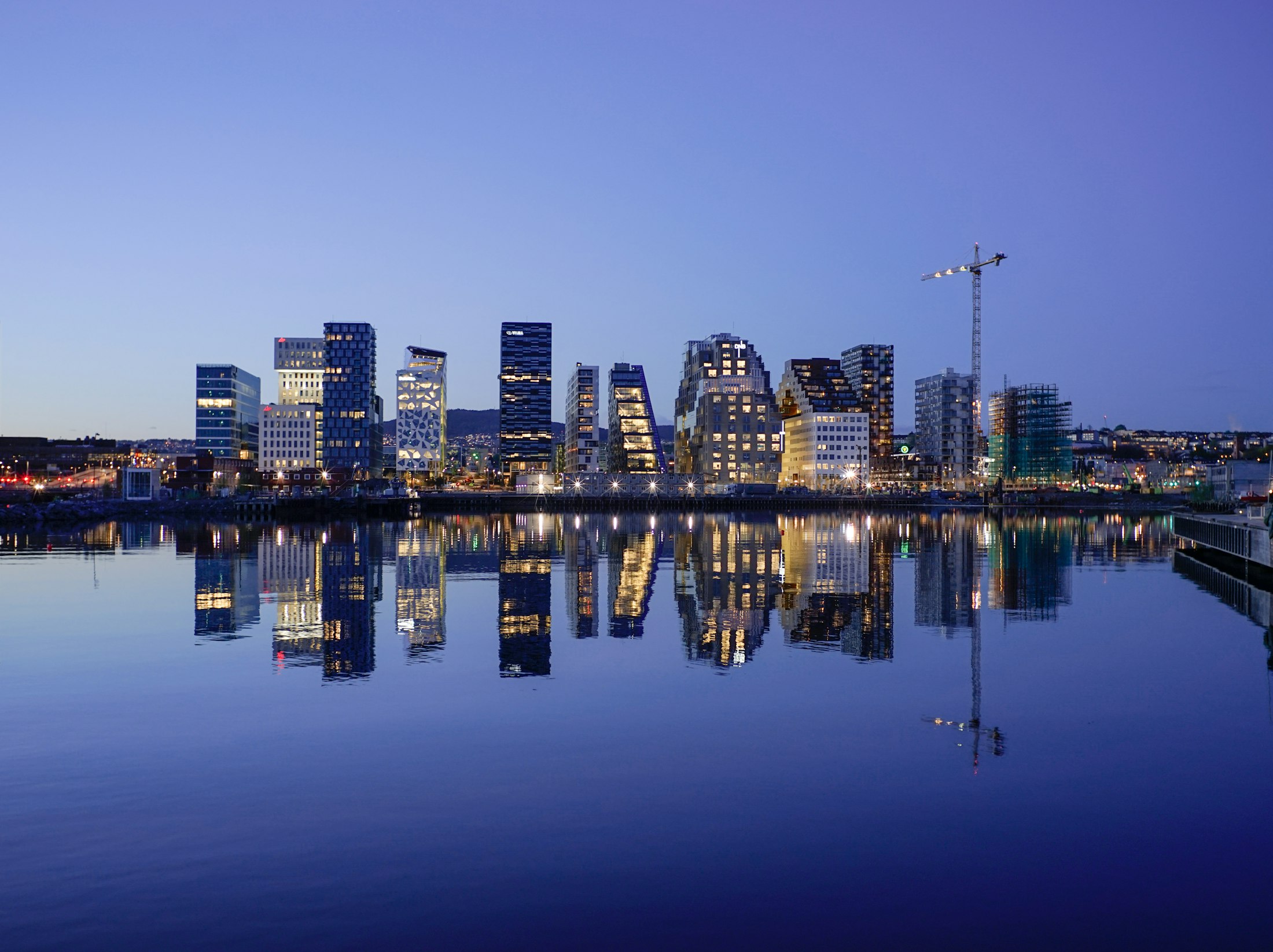
At 1:47 a.m. on a Thursday in late June, the sun was sitting about 7 degrees below the horizon over Oslo, which means it wasn't really below anything at all — the sky was the color of a peach left on a windowsill, and I was eating wood sorrel off a paper plate beside the Akerselva river. The chef, whose name I didn't catch but whose forearm tattoo of a chanterelle I remember clearly, had just pulled a cast-iron pan off a portable gas burner balanced on a rock. Butter, brown trout, sorrel. That was the whole dish.
Grünerløkka in the white-night weeks — roughly June 10 through July 2 — becomes a district that doesn't bother closing. The Akerselva, which drops 149 meters over its 8.2 kilometers from Maridalsvannet to the Oslofjord, threads through it like a spine, and along its banks a specific food culture surfaces after midnight: pop-up foraging suppers, unlicensed wine on the rocks, someone with a headlamp pulling ramsons out of the mud. This is a guide to eating along that river when the rest of the city is technically asleep.
1. The foraging suppers aren't restaurants — stop looking for a reservation
Here's the thing nobody tells you about the Akerselva pop-ups: there's no website. No Resy link. The foraging suppers that appear on the riverbanks between Hønse-Lovisas Hus and the Beierbrua footbridge operate through Instagram stories and word-of-mouth at bars earlier in the evening. Follow @villmarkskjokken and @oslosanking — they post locations 2-4 hours before service, usually with a pin drop and a suggested donation range of 150-300 NOK.
The format is almost always the same. A cook — sometimes credentialed, sometimes a line cook with a day off and a mission — sets up on the east bank with foraged ingredients collected that morning or the day before. You sit on the ground or on the concrete steps near Nybrua. Plates are paper or tin. Portions are small. I've had smoked river crayfish, pickled spruce tips on flatbread, and once a nettle soup that tasted like the forest floor in the best possible way.
Skip the ones that set up south of Grünerbrua, closer to Vaterland. They tend to be more performative than good — Instagram content masquerading as cooking. The real meals happen upstream, between Papirhuset and the old Seilduksfabrikken buildings around Brenneriveien 9.
Pro tip:Bring your own cup or bowl. Most of these cooks don't carry enough serviceware, and showing up with a tin camping mug signals you've done this before.
2. Smalhans at midnight (yes, they're still seating)
Smalhans at Ullevålsveien 43 runs a late-night menu on Fridays and Saturdays in June that most tourists don't know about because it isn't on their English-language site. Kitchen stays open until 1:00 a.m. The late menu is shorter — usually three dishes — and skews toward whatever head chef David Sanchez couldn't move during dinner service, which sounds like leftovers but is actually where the interesting cooking happens. Last time I sat down at 12:20 a.m., they served a pork neck with fermented plum and a raw kohlrabi salad that had more acid than anything I'd eaten all week.
The bill for two with a natural wine each came to about 1,400 NOK. Not cheap, but this is Oslo, where a kebab and a beer can run you 250.
3. Where to drink wine on the rocks at 2 a.m.
Norway's alcohol laws are famously strict — Vinmonopolet closes at 6 p.m. on weekdays, 3 p.m. on Saturdays — so the white-night river drinking works on a BYOB-before-sunset model. Buy your bottles by Friday afternoon. Non-negotiable.
The spot is the flat rocks below Ankerbrua, on the west bank. You can reach them by walking down from Thorvald Meyers gate 15 and cutting through the park. At 2 a.m. in late June you'll find 20 to 40 people spread across the rocks, most with wine, some with thermoses of coffee. It's not a party. The mood is closer to a library reading room that happens to be outdoors and involves Gamay.
The east bank, which everyone on Reddit recommends, is worse. It's narrower, muddier, and catches less of the low-angle light. The west bank faces northeast, which means during white nights the peach-colored glow hits you directly. The east bank is in shadow by 1:30 a.m. People parrot the east-bank advice because someone wrote it on a travel forum in 2019 and no one has bothered to walk over and check.
Pro tip:Vinmonopolet at Olaf Ryes Plass 2 has the best natural wine selection in Grünerløkka. Grab something from Fruktstereo or Fjordfolk — Norwegian producers that you can't find outside Scandinavia.
Stay in Oslo
Top-rated hotels near Oslo
Best locations · Verified reviews · Free cancellation
View deals
Expedia →4. The ramsons window is three weeks long
Ramsons — wild garlic — define the flavor of Akerselva foraging suppers more than any other ingredient. They grow along the riverbanks in damp shade, and you can smell them before you see them. The season runs roughly from late May through mid-June, and by the solstice they've already bolted and gone bitter.
If you're visiting between June 15 and July 2 for the white nights, you've likely missed peak ramsons. What you'll get instead is wood sorrel, yarrow, and sometimes wild chervil. I'd argue the post-ramsons menu is more interesting because the cooks have to work harder. A ramsons butter is easy. A yarrow-and-brown-butter emulsion on cured char requires actual thought.
5. Tim Wendelboe's espresso bar at the edge of the district
Not a foraging supper, obviously. But if you've been eating foraged greens on rocks since midnight, you'll want coffee by 3 a.m., and Tim Wendelboe at Grüners gate 1 opens at 8:30 a.m. on weekdays. That means you have a gap. Fill it.
Here's what I actually do: I walk upstream along the Akerselva trail from Grünerbrua toward Lilleborg, which is about 1.4 kilometers and takes 18 minutes at a slow pace. The trail is paved and lit — not that you need lighting in June. At Lilleborg there's a bench overlooking the small waterfall where the river drops about 3 meters over a rock ledge. Sit there. Wait. Walk back to Tim Wendelboe for opening.
The espresso costs 49 NOK. The Aeropress is 69 NOK. Order the Aeropress. The beans rotate, but they're almost always a washed Ethiopian or Kenyan single-origin roasted lighter than most people outside Scandinavia are comfortable with. This is correct.
Pro tip: Wendelboe sells 250g bags starting at 175 NOK. If you want to bring home one actual good souvenir from Oslo instead of a troll figurine, this is it.
6. Mathallen — useful in daytime, irrelevant at 2 a.m.
I'm including Mathallen Oslo at Vulkan 5 because every other article about food in Grünerløkka does, and because it's genuinely useful for provisioning. It opens at 10 a.m. Tuesday through Saturday. The fishmonger, Vulkanfisk, sells brown trout and Arctic char good enough to cure yourself if you've got salt and a hotel fridge.
At 2 a.m.? Closed and dead. The outdoor area near Mathallen faces the river and looks like it should be a natural gathering point during white nights, but the Vulkan complex has private security that discourages loitering after hours. I made the mistake of setting up with a bottle of Riesling there in 2022 and got politely moved along within 15 minutes. Head north to Ankerbrua instead.
One stall worth seeking out during the day: Hitchhiker Brewing's taproom inside Mathallen pours 0.4L of their house saison for around 110 NOK. The saison has a dry, peppery finish that pairs well with the cured meats from Gutta på Haugen across the hall.
Stay in Oslo
Top-rated hotels near Oslo
Best locations · Verified reviews · Free cancellation
View deals
Expedia →7. Walking home at 4 a.m. with the light already hard
By 4 a.m. in late June, Oslo's civil twilight has crossed back into something closer to morning. The light goes from peach to pale yellow. The Akerselva sounds louder because the city is still quiet — you can hear the rapids at Hønse-Lovisas from 200 meters away.
The walk from the foraging spots back to central Grünerløkka takes about 12 minutes if you follow the west bank path south to Thorvald Meyers gate. Trams on line 11 and 12 start running again at 5:00 a.m. from Olaf Ryes Plass. A taxi from Grünerløkka to Oslo S costs roughly 150-200 NOK at that hour.
Eat before you sleep. The kebab shop at Thorvald Meyers gate 30B — Grünerløkka Kebab — is open until 4 a.m. on weekends. The falafel wrap is 139 NOK. It's not elegant. It doesn't need to be.
Pro tip:If you're walking the river trail at 3-4 a.m., you'll pass nesting ducks near the Lilleborg waterfall. Stay on the path and keep your voice down — the park rangers take the nesting season seriously, and the fines are real.
Essential tips
Vinmonopolet closes at 6 p.m. weekdays, 3 p.m. Saturdays, and is closed Sundays. Buy all your wine and beer before then — there are no exceptions and no workarounds.
White nights in Oslo run roughly June 10 to July 2. The sun dips to about 6-7 degrees below the horizon but never fully sets. Bring sunglasses even for late-night walks — the low-angle light off the water is harsh.
Riverside temperatures at 2 a.m. in late June hover around 10-13°C. Bring a wool layer. Cotton hoodies soak up river mist and become useless within an hour.
Oslo is functionally cashless. The foraging pop-ups accept Vipps (Norway's mobile payment app) — download it and link a card before you arrive. Some cooks also take cash, but don't count on it.
Ready to visit Oslo?
Book your hotel, flights, and activities through our Expedia-powered search.
