In This Guide
- 1.Schmalznudel — Café Frischhut, and why you go at 7 a.m.
- 2.The Theresienwiese when it's just grass
- 3.Schwanthalerstraße and the market halls that replaced the factories
- 4.Where to eat lunch without being surrounded by tourists
- 5.The Bavariaring loop — an afternoon walk nobody recommends
- 6.Beer, and where to drink it after 5 p.m.
- 7.Westpark — the one with the pagoda and the Biergarten nobody fights over
- 8.Getting here, getting around, and the one thing you shouldn't bother with
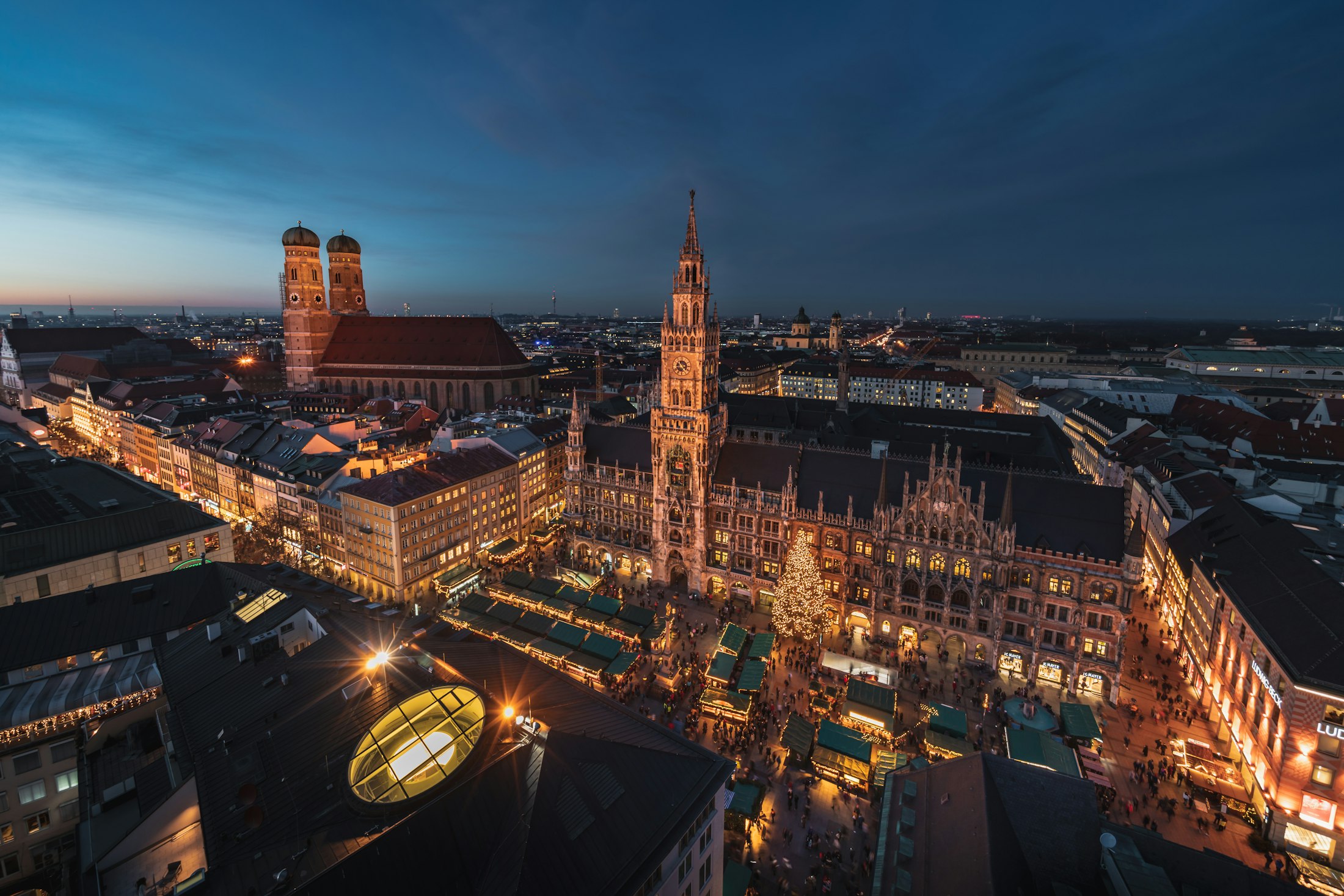
The 6 a.m. U-Bahn ride to Schwanthalerhöhe smells like nothing, which is exactly how you know Munich is still asleep. By the time you surface at the Theresienwiese stop and walk out onto that enormous, eerie flatness — the same field that in September will hold six million beer-soaked humans — you'll have it almost entirely to yourself, just joggers, a few dog walkers, and the Bavaria statue staring at nobody. I came here last July on a morning so still I could hear my own sandals on the gravel, and I thought: this is the neighborhood people only know as "where Oktoberfest happens," which is a waste.
Schwanthalerhöhe deserves a full day, not a seasonal cameo. Its bakeries open early, its beer halls are less performative than the ones in the Altstadt, and it has the kind of residential calm that lets you eat slowly and think about what you actually want to do next instead of being herded toward the next landmark.
1. Schmalznudel — Café Frischhut, and why you go at 7 a.m.
Café Frischhut is not in Schwanthalerhöhe — it's on Prälat-Zistl-Straße 8, technically in the Altstadt — but I'm starting here because the Schmalznudel is the reason I wake up early in Munich, and once you have one you'll want to walk it off on the Theresienwiese, which makes the neighborhood the logical second act. The Schmalznudel is a slab of fried dough dusted in sugar, served on a paper plate, and it costs around €2.50. It's not complicated. It doesn't need to be.
The place opens at 8 a.m. on weekdays, earlier on market days, and by 9 the line is real. Go when the door opens, order at the counter, stand at one of the tall tables, and eat it while the sugar's still warm. The coffee is unremarkable but fine.
Skip the Auszogene unless you're genuinely hungry — it's bigger but blander, a pulled-apart cousin that tourists order because it looks impressive on camera. The Schmalznudel is the thing.
Pro tip:Café Frischhut is cash only. There's no ATM inside and the nearest one is a two-minute walk on Viktualienmarkt — plan accordingly.
2. The Theresienwiese when it's just grass
Most travel advice about the Theresienwiese assumes Oktoberfest, which means most travel advice is irrelevant eleven months of the year. In July the field is 42 hectares of flat, mowed grass with a slight slope toward the Bavaria statue on the western edge. No tents, no rides, no puddles of spilled Helles.
I genuinely prefer it empty. You can see the proportions of the thing, how absurdly large it is, and there's something pleasantly melancholy about standing where the Augustiner-Festhalle will be and seeing only dandelions. Locals jog here, cycle across it, let their dogs off-leash in the early hours. Bring a coffee from somewhere — don't expect vendors.
The Ruhmeshalle colonnade behind the Bavaria statue is worth climbing to. Free to enter. The statue itself costs €3.50 to go inside and climb the spiral staircase to a viewing platform behind her head, which gives you a panoramic view of the field and the Alps on a clear day. Open April through October, 9 a.m. to 6 p.m.
Pro tip:The staircase inside the Bavaria statue is narrow and hot in July — there's no ventilation. Go early morning or skip it if you're claustrophobic.
3. Schwanthalerstraße and the market halls that replaced the factories
Schwanthalerhöhe used to be industrial. You can still see it in the building bones — wide streets scaled for trucks, brick facades with arched loading bays converted into apartment windows. The neighborhood gentrified slowly compared to Haidhausen or Glockenbachviertel, which is part of why it still feels like it belongs to the people who actually live there.
The old Verkehrszentrum — the transport museum branch of the Deutsches Museum on Am Bavariapark 5 — occupies three historic trade-fair halls. If you have any interest in trains or early automobiles, this is better than the main Deutsches Museum campus, which is mid-renovation and frustrating. Adults pay €7. The collection of historic bicycles alone is worth forty-five minutes.
Along Schwanthalerstraße itself you'll find Turkish grocers, a couple of no-nonsense Imbiss counters, and a general absence of souvenir shops. Good.
4. Where to eat lunch without being surrounded by tourists
Gasthaus Westpark on Hansastraße won't win any design awards. The menu is Bavarian, the Schnitzel is thick and properly pounded, and the Kartoffelsalat has vinegar instead of mayonnaise, which — I'll die on this hill — is the only correct version. A main with a beer runs about €14-18.
For something faster, Günes Döner at Schwanthalerstraße 64 does a solid Dürüm that'll cost you under €7. The bread is grilled to order and the chili sauce has actual heat, which is not always a given in Munich.
Skip Augustiner-Keller for lunch if you're already in Schwanthalerhöhe. I know, I know — everyone says it's essential. It's fine, but it's a fifteen-minute walk north toward Arnulfstraße, the food is canteen-level at best, and you're paying for the beer garden's atmosphere, which in the midday July sun without shade is just sweat. Go in the evening or not at all.
Pro tip: Gasthaus Westpark gets full by 12:15 on weekdays. Arrive at noon or expect to wait at the bar, which is not the worst thing if you like Augustiner Edelstoff on tap.
5. The Bavariaring loop — an afternoon walk nobody recommends
The best walk in this neighborhood isn't to the Theresienwiese or through the Westpark, it's the Bavariaring, the curved residential street that wraps around the southern edge of the festival grounds. Nobody recommends it because there's nothing famous on it. That's the point.
The buildings along Bavariaring are late-19th-century apartment blocks with heavy stone facades and wrought-iron balconies, many of them well maintained, some with Art Nouveau tilework in the entryways you can glimpse through open doors. The street bends gently, lined with mature linden trees that in July are in full leaf and throwing deep shade. Walk it slowly. It takes about twenty minutes from one end to the other.
At the southern terminus you'll hit Poccistraße, where there are a couple of Italian places and a late-afternoon Eisdiele that does pistachio properly — dense and not neon green.
Stay in Munich
Top-rated hotels near Munich
Best locations · Verified reviews · Free cancellation
View deals
Expedia →6. Beer, and where to drink it after 5 p.m.
Augustiner Bräustuben at Landsberger Straße 19 is the locals' Augustiner spot in this neighborhood, and it's where I'd send anyone who wants the beer-hall experience without the Hofbräuhaus circus. The Helles comes directly from wooden barrels — Holzfässer — tapped in the back, and it tastes different from the bottled version. Better. A Maß costs around €9.
The interior is wood-paneled and loud by 7 p.m. The food is secondary — order the Obatzda and a Breze and don't overthink the rest. If you want a proper dinner, eat elsewhere first and come here to drink.
In summer, the tables spill outside onto the sidewalk, and the light at that hour on Landsberger Straße, angled between the buildings, makes everything look briefly golden before the shadows take over.
Pro tip:Augustiner Bräustuben closes at 11 p.m. most nights. Don't arrive at 10:30 expecting a full evening — the kitchen closes earlier, around 9:30.
7. Westpark — the one with the pagoda and the Biergarten nobody fights over
Westpark is technically one U-Bahn stop further out, but it belongs to the Schwanthalerhöhe orbit and in July it's one of the few Munich parks where you can reliably find shade and space. The park was built for the 1983 International Garden Show and still has the slightly eccentric landscaping to prove it — a Japanese garden, a Thai pagoda, an amphitheater that hosts free open-air cinema screenings on summer nights.
The Biergarten am Rosengarten, in the park's eastern half, is small, shaded, and unbothered. A Helles and a Halbes Hendl will run you about €16 total. No reservations, no fuss, no stag parties.
I made the mistake of skipping Westpark my first two trips to Munich because I assumed city parks were filler. Wrong. The Thai sala on the lake — an ornamental pavilion shipped from Thailand and reassembled here, gilded roof and all, reflecting off still water while kids threw bread at ducks behind me.
Pro tip: The open-air cinema screenings at the Westpark amphitheater (Kino am Olympiasee series — check München.de for the July schedule) usually start at sundown, around 9:15-9:30 p.m. Bring a blanket and buy beer at the kiosk.
Stay in Munich
Top-rated hotels near Munich
Best locations · Verified reviews · Free cancellation
View deals
Expedia →8. Getting here, getting around, and the one thing you shouldn't bother with
Schwanthalerhöhe station is on the U4/U5 line. From Marienplatz, it's two stops on the U4 westbound. The Theresienwiese U-Bahn stop (U4/U5) also serves the eastern edge of the neighborhood.
The whole area is flat and walkable. You don't need a bike rental, a scooter, or a taxi. Fifteen minutes on foot covers the core.
Don't bother with the Bavaria Filmstadt tour that some guides lump into this neighborhood — it's actually out in Grünwald, a separate trip entirely, and unless you have deep feelings about the sets of Das Boot, it's a waste of a July afternoon you could spend in Westpark with a cold beer and a book.
Pro tip:The U4/U5 runs every 5-10 minutes during July daytime hours. Buy a Tageskarte Innenraum (day pass, inner zone) for €8.80 if you're making more than two trips — it pays for itself fast.
Essential tips
Many smaller restaurants and all Imbiss counters in Schwanthalerhöhe still prefer cash. Cards work at Augustiner Bräustuben and the Verkehrszentrum, but carry at least €30 in small bills.
July daylight in Munich lasts until nearly 9:30 p.m. — plan your Theresienwiese walk for early morning or golden hour (after 7 p.m.) to avoid the flat, shadeless midday heat.
The U4/U5 toward Laimer Platz is the line you want from the city center. Don't accidentally board the U3 at Poccistraße thinking it's the same corridor — it heads south toward Obersendling.
Ask for 'ein Helles vom Holzfass' at Augustiner Bräustuben to get the gravity-tapped wooden-barrel version. If you just say 'ein Helles' they may pour from the regular tap, which is still good but not the same.
Ready to visit Munich?
Book your hotel, flights, and activities through our Expedia-powered search.

