In This Guide
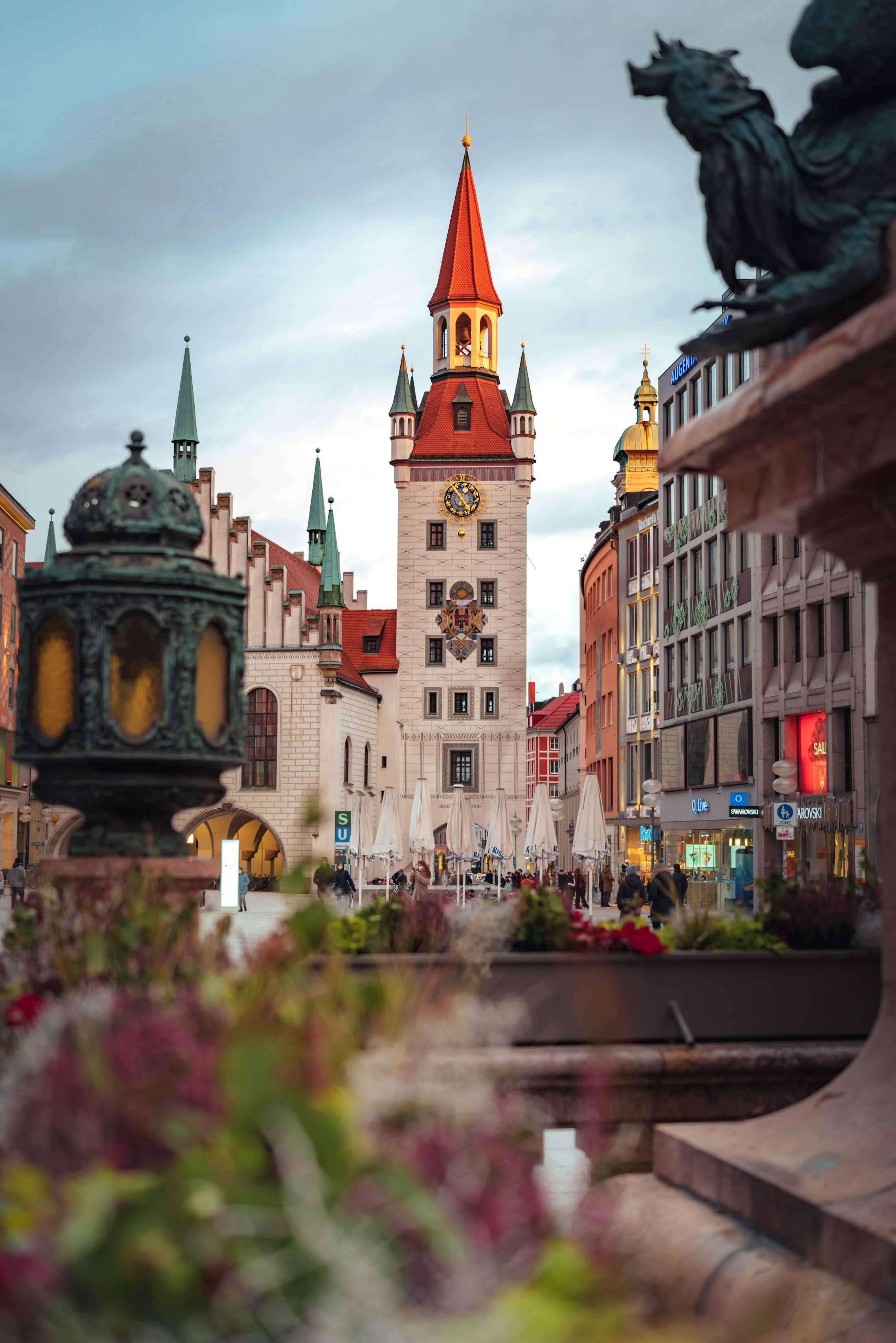
The S-Bahn doors opened at Rosenheimer Platz and I could already smell frying Schmalzgebäck drifting uphill from Mariahilfplatz. It was the first Saturday of the Auer Dult, Munich's thrice-yearly market fair, and the square was loud with accordion music and the clatter of stoneware being haggled over by retirees who've been coming since reunification. Au-Haidhausen sits on the east bank of the Isar, maybe twelve meters above the river at its highest point, and it operates on a different clock than the Altstadt tourist circuit across the water. No one here is queueing for the Glockenspiel.
This is a neighborhood that rewards a slow weekend — a Friday arrival, two full days, departure Sunday evening. The Auer Dult anchors it, but the real draw is the strange, semi-wild stretch of Isar between Reichenbachbrücke and Wittelsbacherbrücke where gravel bars appear in low water and half of Munich strips down to swim. June is the month for it: water temperature finally cracks 16°C, the Dult is running, and the beer gardens stay lit past 22:00.
1. Auer Dult: the market that isn't a Christmas market
The Maidult runs for nine days in late April or early May, the Jakobidult in late July, and the Kirchweihdult in mid-October. But the one worth building a trip around is the Jakobidult — or more precisely, the Kirchweihdult if you care about antiques, the Maidult if you care about rides. I got this wrong my first year and showed up to the Maidult expecting old porcelain. What I found was a Kinderkarussell and a lot of cotton candy.
All three Dults occupy Mariahilfplatz, a sloped square anchored by the Mariahilfkirche at its south end. The market sprawls across roughly 300 stalls selling everything from handmade brooms to Hummel figurines to copper Bundt cake molds that weigh more than your carry-on. The crockery section alone — rows of seconds and discontinued patterns from Bavarian potteries — is worth an hour if you have any interest in stoneware.
Hours are typically 10:00–20:00 daily, with some stalls packing up earlier on the final Saturday. Entry is free. The food stalls cluster near the church, and the one move here is a Dampfnudel from the stand closest to the Kirchentreppe — a steamed dumpling the size of a softball, split open and filled with vanilla sauce, €4.50 last I checked.
Pro tip:Arrive before 10:30 on a weekday if you're shopping for antiques. The serious dealers and collectors sweep the stalls early. By noon, the best pieces are gone and what's left is priced for tourists.
2. The gravel bars below Wittelsbacherbrücke
Most Munich swimming guides point you to the Eisbach or the Flaucher. Skip the Eisbach for swimming — it's a spectacle, not a swimming hole, and the current will slam you into the concrete channel walls if you don't know what you're doing. The Flaucher is fine but overcrowded by 14:00 on any sunny Saturday.
Instead, walk south along the east bank from Reichenbachbrücke toward Wittelsbacherbrücke, a stretch of maybe 800 meters. When the Isar is running below normal flow — common in June before alpine snowmelt peaks — gravel bars surface midstream, some large enough to lay a towel on. You wade out in knee-deep water, 14–17°C depending on the week, and suddenly you're on a spit of river gravel with the city skyline behind you and nobody asking for a €6 Radler.
The water is clean. Munich spent over €1 billion on the Isar renaturalization project completed in 2011, ripping out concrete banks and restoring the riverbed. The result is a braided, gravel-bottomed river running through the fourth-largest city in Germany. I've swum in Alpine lakes that felt less clear.
Pro tip: Bring neoprene water shoes or old sneakers. The gravel is coarse and uneven, and there are submerged branches near the banks. Bare feet are a mistake I made exactly once.
3. Friday evening: Paulaner am Nockherberg
Start here. Hochstraße 77, about a ten-minute walk uphill from Rosenheimer Platz. The beer garden seats 2,400 and sits at roughly 530 meters elevation — high enough above the Isar to catch a breeze that the riverside gardens don't get.
The consensus pick is the Schweinshaxe. I think the Obatzda is better — the version here is peppery, loose, almost spreadable, served with a pretzel that hasn't been sitting under a heat lamp. A Maß of Paulaner Helles runs €11.90 as of summer 2024. The beer garden is self-service; the indoor restaurant is table-service and roughly 20% more expensive for the same food.
Kitchen closes at 22:30 most nights.
4. Where to stay in Au-Haidhausen (and where not to)
The big hotel clusters are near Hauptbahnhof, twenty minutes west by S-Bahn, and they're mostly forgettable business towers. Stay in the neighborhood instead.
Hotel Mirabell on Lilienstraße is a straightforward family-run place, doubles from around €120/night in June, five minutes on foot from Rosenheimer Platz. Nothing fancy — clean rooms, decent breakfast, quiet street. That's all you need for a weekend where you'll be outside most of the time.
If budget matters less, the München Marriott Hotel Haidhausen on Weißenburger Straße puts you within a ten-minute walk of both the Dult and the river. Rooms start higher, around €180–220 in summer, but the location is hard to argue with.
Avoid anything marketed as "near the Deutsches Museum" that's actually on the Museumsinsel itself — the island floods the sidewalks with school groups by 09:00, and the restaurant options within walking distance are overpriced and mediocre.
Pro tip: Book river-facing rooms if available. The east-bank hotels that look toward the Isar and the old town get morning light and, more importantly, you can hear the river at night with the window cracked.
Stay in Munich
Top-rated hotels near Munich
Best locations · Verified reviews · Free cancellation
View deals
Expedia →5. Saturday morning: Wiener Platz market, then the river
Wiener Platz is a permanent daily market — not a flea market, not a weekend pop-up, but a proper Viktualienmarkt-style collection of stalls selling produce, flowers, cheese, and prepared food. It's 400 meters from Ostbahnhof and roughly a quarter the size of the Viktualienmarkt, which is exactly why it works. No tour groups. No one selling novelty lederhosen.
Get a coffee and a Butterbreze from Café Wiener Platz on the east side of the square. Sit outside.
From Wiener Platz, walk south on Steinstraße to Bordeauxplatz — a small rectangular park with gravel paths and plane trees — then continue downhill to the Isar. Total distance: about 1.2 kilometers, mostly flat with one short descent through the Maximiliansanlagen park. You'll hit the river just north of the Ludwigsbrücke.
Pro tip:The cheese stall at Wiener Platz sells a smoked Bergkäse that travels well if you're driving home. Ask for it vacuum-sealed.
Stay in Munich
Top-rated hotels near Munich
Best locations · Verified reviews · Free cancellation
View deals
Expedia →6. Sunday wind-down: Müller'sches Volksbad
Before you leave, swim indoors. The Müller'sches Volksbad on Rosenheimer Straße 1 is an Art Nouveau public bathhouse opened in 1901, still operating as a public pool. The main hall has a 30-meter pool under a barrel-vaulted ceiling with brass fixtures and painted tile. Entry is €5.60 for a single swim as of early 2024.
Sunday mornings are quiet — I've had lanes nearly to myself before 09:00. The sauna area costs extra (around €20 for a day pass) and is textile-free, which surprises some visitors. It shouldn't; this is Munich.
The building sits maybe 200 meters from the Ludwigsbrücke on the west bank, technically just outside Au-Haidhausen, but close enough. Dry off, walk back across the bridge, and catch the S-Bahn from Isartor. Done by noon.
Essential tips
Rosenheimer Platz (S-Bahn lines S1–S8) is the hub for Au-Haidhausen. A single Innenraum ticket costs €3.70; buy a Tageskarte (day pass) for €8.80 if you'll make more than two trips.
Isar water temperature in June ranges from 14–18°C depending on snowmelt. Bring a towel — there are no rental facilities at the river. A dry bag for your phone costs €8 at any Sport Schuster in town.
Beer garden etiquette: at self-service gardens (Paulaner am Nockherberg, Augustiner Keller), you may bring your own food but not your own drinks. Return your Maß glass to the counter or you'll lose the €2 Pfand deposit.
Check exact Auer Dult dates each year at muenchen.de — they shift. The 2024 Jakobidult runs July 20–28. Arriving on the opening Saturday means full stalls but larger crowds; Tuesday or Wednesday mornings are emptiest.
Ready to visit Munich?
Book your hotel, flights, and activities through our Expedia-powered search.