In This Guide
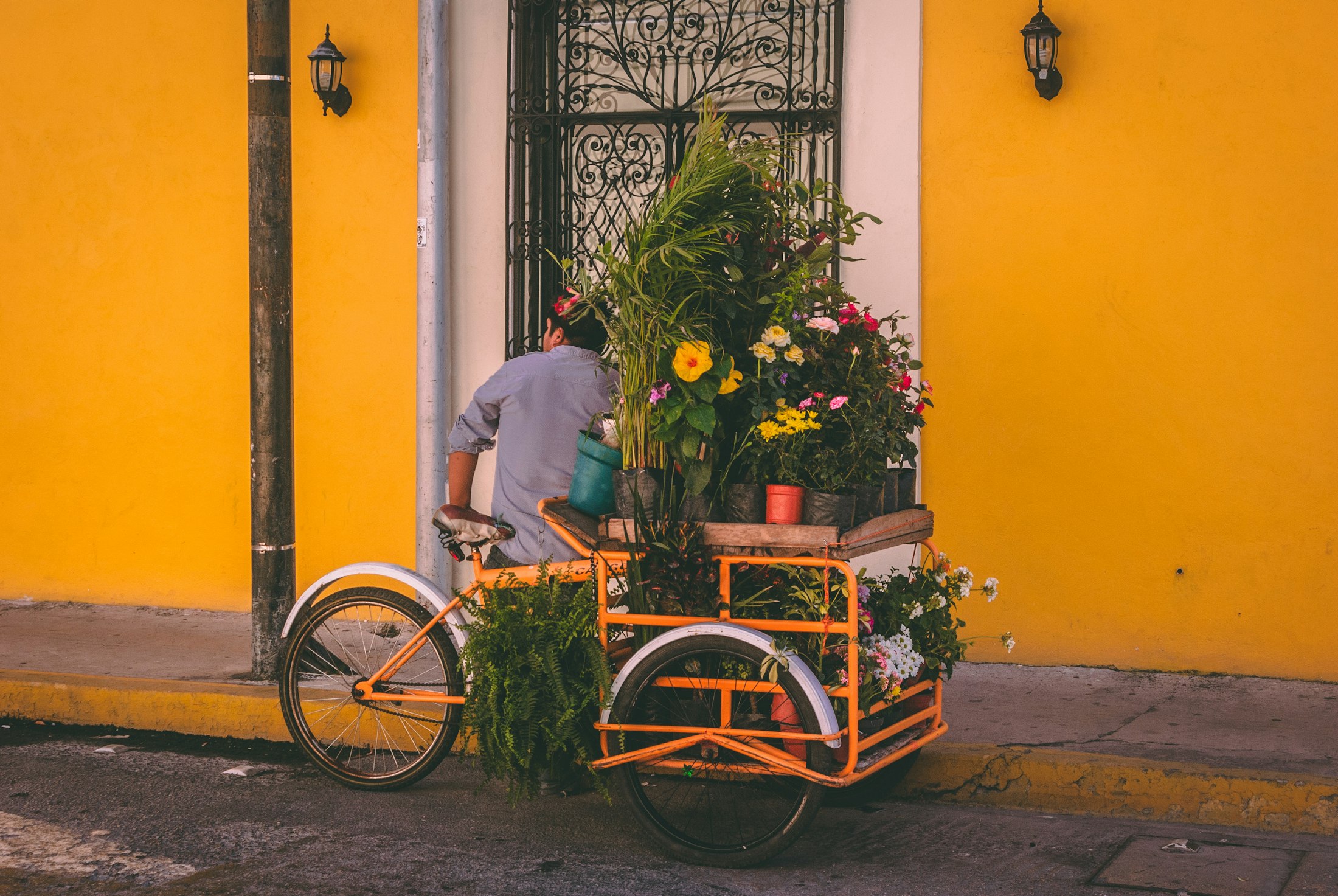
The sorbetero was already packing up when I found him on Calle 65, just east of the mercado. A styrofoam cooler strapped to the back of his tricycle, a hand-painted sign listing three flavors — guanábana, coco, limón — and a price that hadn't changed since last year: 15 pesos. He shaved the ice by hand, from a block he'd picked up that morning at the hielo depot on Calle 56. No machine. No Instagram handle.
Mérida's sorbeteros are not a trend. They're the opposite of a trend. They're old men (almost always men, almost always old) pushing carts through the centro during the months when the heat makes the limestone buildings radiate like ovens. And every year, there are fewer of them. Hurricane season sends tourists home, the rain makes the routes impassable in places, and sons who might have inherited the carts take jobs at the malls on Prolongación Montejo instead.
I spent a week in August trying to find the ones who remain.
1. The economics of a 15-peso cone
Here's what nobody talks about: a sorbetero's margins are brutal. The ice block costs around 30 pesos from the depots near Santiago market. Fruit syrup — if they're making it themselves from actual fruit, which the good ones do — runs another 40-60 pesos depending on the season. Cups, spoons, napkins. Fuel for the tricycle if it's motorized (rare in the centro). A strong day might net 300 pesos profit after six hours in 40-degree heat.
That's roughly $17 USD.
So no, this is not a quaint lifestyle choice. It's labor. The kind that wrecks your knees and sunburns the same strip of neck every single day. Don Ernesto, who parks near the corner of Calle 60 and 55 most weekday mornings, told me he's been doing this for 31 years. His hands look like it.
Pro tip:If you see a sorbetero with hand-lettered signs (as opposed to branded Nestlé or Holanda umbrellas), that's almost always the real thing — homemade syrups, hand-shaved ice. The branded carts sell factory popsicles.
2. Guanábana or nothing
Most sorbeteros offer three to five flavors. Limón is standard. Coco is common. Grosella (a tart currant syrup) shows up on the better carts. But guanábana is the one.
I'll die on this hill: guanábana shaved ice from a cart in the Yucatán is more satisfying than any $180 tasting menu I've sat through in Mexico City. The fruit is sour and custardy at the same time. The ice is rough — not the powdery snow-cone texture Americans expect, but jagged shards that melt unevenly, so you get pockets of intense flavor between mouthfuls of cold nothing. It's imperfect. That's the whole point.
Skip the flavored-ice stands inside Mercado Lucas de Gálvez. They cater to the lunch crowd and use premixed syrups from jugs. The texture is closer to a slushie. You want the carts outside, specifically the stretch of Calle 67 between 56 and 54, where two or three sorbeteros tend to cluster in the mornings before the heat peaks.
3. Hurricane season empties the streets
August and September are when Mérida gets quiet in a way that feels eerie if you're used to the dry-season version. The parque principal still has its Sunday concerts, the cathedral still anchors the south end of the plaza, but the foot traffic drops hard. And with it, the sorbeteros disappear.
Don Ernesto stops working when the rains come in earnest, usually mid-September. "No hay gente," he told me. No people. He picks up odd construction work until November. Another sorbetero I met near Parque de Santa Lucía — he wouldn't give me his name, just waved me off — said he switches to selling tamales from the same cart during the wet months.
The practical effect for travelers: if you want to find the sorbeteros, come between March and early August. By late August, you'll catch one or two diehards near the mercado, but the golden window is April through June, before the worst humidity sets in but after the winter tourists have left.
Pro tip:Mornings between 9 and 11 a.m. are your best window. By 1 p.m. in summer, even the sorbeteros take shelter. Most of them won't be out past noon in July or August.

Stay in Mérida
Top-rated hotels near Mérida
Best locations · Verified reviews · Free cancellation
View deals
Expedia →4. The carts themselves are worth looking at
Steel frames, hand-welded. Bicycle wheels from the 1990s. Coolers held together with bungee cords. Some of them have hand-painted lettering that looks like it was done by a sign painter who also does funerary work — same careful serifs, same gold-on-black palette. I've seen carts near Parque Hidalgo with decorative scalloping cut into the metal canopy, purely ornamental, purely unnecessary, and therefore the best part.
Working equipment that happens to look like folk art because the people who built them cared about things looking right.
5. What the centro restaurants get wrong about raspados
A handful of sit-down spots in the centro now sell "artisanal raspados" — shaved ice with organic syrups, condensed milk, chamoy drizzle, the works. Prices in the 65-90 peso range. Some of them are genuinely good (Helados Colón on Calle 62 between 59 and 61, open daily, does a solid tamarind version). But calling them raspados and calling the street version raspados is like calling a Negroni and a rum-and-Coke the same drink because they're both served in a glass.
The street sorbetero's product is simpler. Icier. Rougher. It's not trying to balance four flavor profiles. It's one flavor, maximum sweetness, eaten standing up on a curb while sweat runs down your back. That context is half the recipe.
I made the mistake of ordering a 75-peso "gourmet raspado" at a café near Santa Lucía my first day — pretty presentation, edible flowers, tasted like a smoothie someone forgot to blend all the way. Went back to the carts after that.
Pro tip:Helados Colón is worth a stop if the carts aren't running. Their nance flavor — made from the tiny yellow fruit native to the Yucatán — is unusual and good. 45 pesos for a single scoop.
Stay in Mérida
Top-rated hotels near Mérida
Best locations · Verified reviews · Free cancellation
View deals
Expedia →6. Why they're vanishing (and why the usual explanations are wrong)
The easy story is "modernization killed them." Chain convenience stores on every block, OXXO selling frozen treats for 12 pesos, young people who'd rather work indoors. That's part of it. But the bigger factor — the one I kept hearing from the sorbeteros themselves — is licensing.
Mérida's municipal government has tightened regulations on street vendors in the centro over the past decade. Permits are harder to get, more expensive to maintain, and enforcement has gotten less predictable. One sorbetero told me he was fined 500 pesos last year for parking his cart "too close" to a restaurant terrace on Calle 60. That's nearly two days of profit, gone.
The consensus take is that street food culture in Mérida is thriving. I disagree. What's thriving is the curated, tourist-friendly version — the marquesitas stands with QR-code menus, the cochinita joints with English-language signage. The unglamorous stuff, the sorbeteros and the women selling chaya tamales from plastic buckets at 6 a.m., is getting squeezed out quietly. Nobody writes about it because it doesn't photograph well.
7. Finding them before they're gone
No map for this. Seriously. The whole point is that they move.
But patterns exist. Weekday mornings, the blocks around Mercado Lucas de Gálvez (entrances on Calle 56 and 67) almost always have at least one sorbetero parked nearby. The stretch of Calle 60 between the plaza grande and Parque de Santa Lucía gets cart traffic midmorning on weekdays, less reliably on weekends when the pedestrian zones fill up with other vendors. Parque de San Juan, on Calle 64 and 69, is another reliable spot — quieter, fewer tourists, and I found a sorbetero there three days out of five.
Bring coins. Most sorbeteros don't carry much change, and absolutely none of them take cards. A 20-peso bill for a 15-peso cone is fine. A 200-peso bill is not.
Don't haggle. Fifteen pesos is already an absurd price for something made by hand from real fruit by a man who's been doing this longer than you've been alive.
Pro tip:If you're staying in the centro and hear the distinctive squeaky wheel of a tricycle cart early in the morning, go outside. That sound is the sorbetero equivalent of an ice cream truck jingle, minus the jingle.
Essential tips
Carry coins and small bills (20-peso notes max). Sorbeteros can't break large bills and none accept digital payment.
Best window is 9–11 a.m. on weekdays, March through early August. By September the carts mostly vanish until the rains stop.
Look for hand-shaved ice (rough, uneven shards) over machine-shaved (fine, powdery). The texture difference is the whole game.
Skip the raspado stands inside Mercado Lucas de Gálvez — premixed syrups, slushie texture. The carts parked outside on Calle 67 are better in every way.
Ready to visit Mérida?
Book your hotel, flights, and activities through our Expedia-powered search.


