In This Guide
- 1.Comuna 13 before the graffiti-tour crowd arrives
- 2.Skip the Graffitour franchise — hire a local painter instead
- 3.Painting workshops where you actually paint
- 4.The food that keeps painters vertical
- 5.Museo de Antioquia and the Botero question
- 6.Barrio Prado's crumbling Art Deco and the murals nobody photographs
- 7.What Buenos Aires taught me that Medellín undid
- 8.How to watch a mural being made (and not be in the way)
- 9.The rain, again
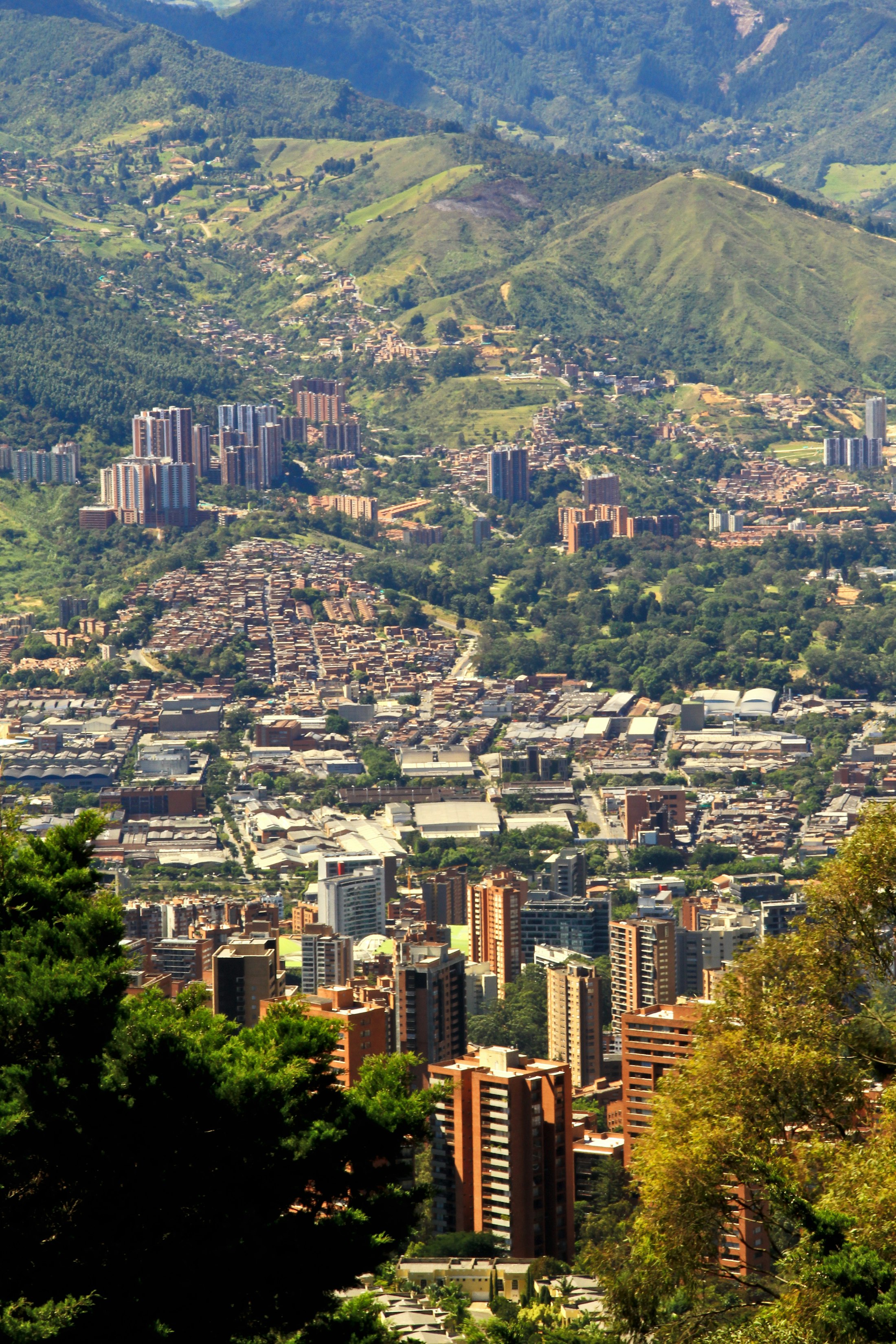
The rain came sideways on my first morning in Comuna 13, hard enough to blur the sixty-foot portrait of a woman holding marigolds that covers a wall on Calle 29B. I ducked under a corrugated tin awning with three other people — a woman selling empanadas de pipián, a teenager scrolling TikTok, and a muralist named Diego who was waiting to finish a half-painted hummingbird before his acrylics bled into the gutter. July in Medellín means afternoon downpours that last forty minutes to an hour, and the city's outdoor mural culture has evolved around them: painters start at dawn, tourists show up at ten, and by two o'clock everyone is sheltering somewhere eating something fried.
That rhythm suited me fine. I'd come from Buenos Aires, where the street-art circuit has calcified into a gallery-adjacent industry, and I wanted to see a city where the murals still smell like wet paint.
1. Comuna 13 before the graffiti-tour crowd arrives
Get there by 7:30 a.m. I'm serious. The electric escalators that climb the hillside open at 6 a.m., and before nine o'clock you can actually stand in front of a mural long enough to notice the details — the way Chota's portraits use tire rubber mixed into black paint, or how Jeihhco's older pieces near the top of the escalator system have faded into colors the artist never intended, an accidental beauty that nobody planned.
By 10:30 the tour groups arrive in waves, each led by a guide with a portable speaker, and the narrow alleys become a single-file procession where you can't stop walking without blocking traffic. I watched a guide recite the neighborhood's history of violence and displacement in ninety practiced seconds while his group held phones overhead like periscopes. It felt less like witnessing art and more like being on a conveyor belt.
The empanadas at the top of the escalators cost 3,000 COP each. They're adequate. Better ones exist further into the neighborhood — there's a woman on Carrera 109 near the basketball court who fries hers to order in a blackened wok, and hers are 2,500 COP, crunchier, stuffed with potato and hogao that actually tastes like something.
Pro tip:Take the first escalator up before 8 a.m., then walk downhill through the alleys instead of following the standard uphill tour route. You'll see murals the guided groups skip entirely, and you move with gravity instead of against it.
2. Skip the Graffitour franchise — hire a local painter instead
I know this is a contrarian position and I'm comfortable with it. The Graffitour brand has become the default recommendation in every guidebook and hostel lobby in Medellín, and while the original community-based tours were meaningful, the operation has scaled to the point where you're one of twenty-five people shuffling past walls while someone recites a script. The neighborhood's own artists offer smaller, slower walks — Diego, the muralist I met under that tin awning, does informal tours for 60,000 COP per person when he's not painting, and he'll take you inside active studios where you can watch work in progress.
Ask at Casa Kolacho on Calle 29B #99-78 about which artists are currently offering walks. The roster changes. That's the point.
3. Painting workshops where you actually paint
Most "mural workshops" in tourist neighborhoods hand you a stencil, a roller, and a pre-outlined section of wall, then photograph you pretending to be an artist for your Instagram. That's not painting. That's content creation.
Taller Mural Lab in Barrio Prado (Carrera 51 #56-42) does something different. Sessions run Saturday mornings from 9 a.m. to 1 p.m., cost 120,000 COP including materials, and the instructor — a woman named Valentina who trained at the Universidad Nacional — spends the first hour teaching you how to mix exterior-grade acrylics with latex binder so the color survives Medellín's rain. You paint on a practice wall in the courtyard, not on the street. Nobody takes your photo unless you ask. The last hour involves sketching a design proposal that, if the group likes it, might end up on an exterior wall the following month.
I left with paint in my hair and under my fingernails and a genuine understanding of why these murals fade — the UV exposure at 1,500 meters of elevation is relentless, and cheap paint doesn't stand a chance.
Pro tip:Bring clothes you don't care about. The latex binder doesn't wash out of cotton.
4. The food that keeps painters vertical
Bandeja paisa gets all the attention, and honestly it deserves some — a plate of beans, rice, chicharrón, chorizo, fried egg, avocado, arepa, and sweet plantain is an engineering marvel of caloric density. But the meal I kept returning to was the calentado at Restaurante Doña Gaby in Laureles, on Circular 73A near Carrera 76. It's yesterday's beans and rice fried together with hogao until the bottom layer goes crispy, served with a fried egg on top and an arepa on the side, and it costs 12,000 COP. Breakfast of muralists, taxi drivers, and one Argentine food writer who couldn't stop ordering it.
For lunch, the set menu at comedores inside the comunas runs 10,000 to 14,000 COP — soup, main plate, juice, and sometimes a small dessert. The soup course is where the cooking actually happens. I had a sopa de guineo verde at a nameless comedor near the top of the Comuna 13 escalators that was thick with unripe plantain, cilantro, and pork rib, and it was better than anything I ate in El Poblado during the entire trip.
Skip El Poblado for food entirely. Restaurants there charge 65,000 COP for mediocre ceviche and call it "fusion."
Pro tip:Comedores don't have signs or Google listings. Look for a doorway with plastic chairs and a handwritten menu on a whiteboard. If there are five taxi drivers eating inside, sit down.
5. Museo de Antioquia and the Botero question
Fernando Botero's work is everywhere in Medellín — the sculptures in Plaza Botero, the dedicated gallery inside the Museo de Antioquia — and the consensus is that you must spend an afternoon there. I'll push back: if you already know Botero's style, the museum's permanent collection tells you little that the plaza doesn't. The round figures, the satire, the palette — you get it in thirty minutes.
What's actually worth your time on the second and third floors is the rotating contemporary collection, which during my July visit included an installation by a Medellín-born artist named Nohemí Pérez — enormous canvases of coca fields rendered in greens so saturated they vibrated. Nobody was looking at them. Everyone was in the Botero room.
Museo de Antioquia, Carrera 52 #52-43. Tuesday through Saturday 10 a.m. to 5:30 p.m., Sunday 10 a.m. to 4:30 p.m. Entry is 18,000 COP for foreign adults.
6. Barrio Prado's crumbling Art Deco and the murals nobody photographs
Everyone goes to Comuna 13. Almost nobody walks Barrio Prado, a fifteen-minute cab ride north of the city center with a completely different relationship to its walls. The neighborhood was wealthy in the 1930s and '40s — the houses are Art Deco and Republican-style, with ornamental facades softened by decades of tropical moisture — and in the last five years, local artists have started painting murals directly onto the decaying plaster of abandoned mansions.
The effect is eerie in a way that the bright, Instagram-friendly walls of Comuna 13 are not. A mural of a jaguar dissolving into jungle on Calle 56 between Carreras 50A and 51 uses the crumbling surface of the wall as part of the composition, so the animal appears to be disintegrating along with the building. I stood in front of it for twenty minutes on a Wednesday afternoon and not a single other person stopped.
Prado is walkable in about two hours. Safe during the day — I asked three different taxi drivers and got the same answer — but empty after dark, so go in the morning.
Pro tip: Start at the Iglesia del Sagrado Corazón on Carrera 50A and walk east. The best murals are concentrated in the four blocks between Calles 55 and 59.
Stay in Medellín
Top-rated hotels near Medellín
Best locations · Verified reviews · Free cancellation
View deals
Expedia →7. What Buenos Aires taught me that Medellín undid
I've written about Palermo's street art three times for various outlets, and each time I described it as curated, established — the kind of words you use when a scene has been professionalized into predictability. Buenos Aires commissions murals through formal programs. Property owners negotiate fees. Artists have agents. None of that is bad, exactly, but it means the walls feel finished.
Medellín's mural culture is still arguing with itself. In Comuna 13, there's tension between artists who see the murals as memory work — honoring people killed during Operación Orión in 2002 — and the tourism economy that wants the walls bright, photogenic, and cheerful. I watched two painters have this exact argument outside a tienda on Calle 29B, one of them gesturing at a newly painted rainbow-colored mural that had replaced an older piece depicting a displaced family. The older painter was furious. The younger one shrugged.
That friction is what makes this city's walls worth crossing a continent to see.
8. How to watch a mural being made (and not be in the way)
July is prime painting season, counterintuitively. The rains force artists to work in concentrated morning bursts, and because fewer tourists visit during the wet months, painters are more relaxed about having observers. I found active mural projects on four separate mornings just by walking slowly through Comuna 13 and Barrio Prado before 10 a.m.
Basic etiquette that should be obvious but apparently isn't: don't stand in front of the wall, don't touch wet paint, don't ask the artist to pose with you, and don't film them without asking. If you want to talk, wait until they put the brush down. Most of the artists I met were happy to explain what they were doing — paint brands, color theory, how long a piece takes — once they realized I wasn't going to shove a phone in their face.
Bring coffee. Not as a bribe, just as a human gesture. A tinto from any corner tienda costs 1,500 COP, and showing up with two cups signals that you're a person, not a content machine.
Pro tip: If an artist is working from a scaffold or ladder, stay at least three meters back. Paint cans fall. I watched one topple off a second-story platform on Carrera 109 and explode yellow across the sidewalk like a crime scene.
Stay in Medellín
Top-rated hotels near Medellín
Best locations · Verified reviews · Free cancellation
View deals
Expedia →9. The rain, again
By my fourth afternoon in Medellín, I'd stopped checking the weather app and started reading the sky. A dark band over the western ridge of the Aburrá Valley means rain in forty-five minutes. A white haze means it already rained on the other side and you might be spared. The locals don't carry umbrellas — they carry patience and an assumption that they'll be under a roof somewhere eating something when the water arrives.
I got caught once without cover on the outdoor escalators of Comuna 13. Full tropical downpour, warm rain, the murals streaming with water, colors running in thin rivulets down concrete walls like the paintings were weeping. Nobody was around except me and a stray dog who seemed unbothered.
Best forty minutes of the trip.
Essential tips
July averages 18-20 rainy days. Mornings are usually dry until 1 or 2 p.m. Schedule outdoor mural walks before noon and save museums for the afternoon downpour window.
Carry cash in small denominations — 2,000 and 5,000 COP bills. Street food vendors and comedor kitchens don't take cards, and many won't break a 50,000 note. ATMs at Bancolombia dispense 20,000s if you request a non-round amount.
The Metro plus the integrated cable car (Metrocable) will get you to the base of the Comuna 13 escalators via San Javier station for 2,950 COP. Taxis from El Poblado charge 15,000 to 20,000 COP and take longer during morning traffic.
Wear shoes with actual tread. The steep alleys of Comuna 13 are tiled, and after rain they're slick enough that I watched two people sit down involuntarily on the same staircase within ten minutes.
Ready to visit Medellín?
Book your hotel, flights, and activities through our Expedia-powered search.