In This Guide
- 1.Why District 4, and why Mid-Autumn specifically
- 2.Bánh dẻo and the case against expensive mooncakes
- 3.Lantern boats on the river
- 4.The lion dance troupes that start in the alleys
- 5.Where to eat during the festival (and what to ignore)
- 6.The children's procession through Hẻm 95
- 7.A brief history of Trung Thu (and who it's actually for)
- 8.Getting there and getting out
The moon was fat and low over District 4 when I first watched a lantern boat slide past the Khánh Hội docks — a small wooden frame wrapped in cellophane and lit from within, bobbing south toward the Saigon River's wider channel. That was 2019. I'd come for bánh trung thu, the dense mooncakes that take over every bakery and sidewalk stall in Ho Chi Minh City each autumn, and instead found myself standing on a concrete embankment watching children launch homemade boats into water the color of black tea.
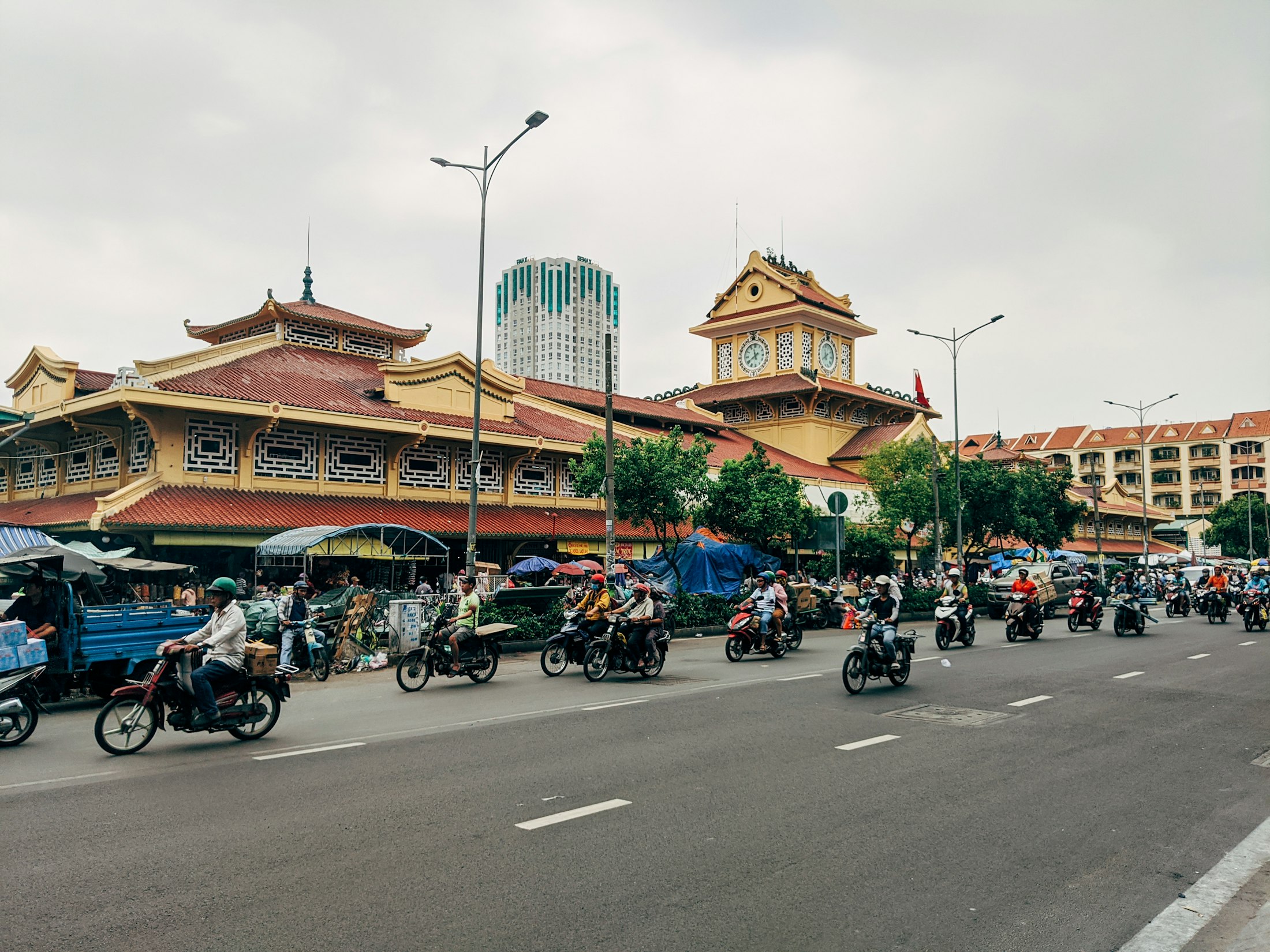
Mid-Autumn Festival (Tết Trung Thu) officially celebrates children, not the moon. The distinction matters. In District 4 — a tight grid of alleys wedged between Bến Vân Đồn and the river — the holiday plays out at ankle height: kids with lanterns, sticky hands, cardboard lion heads bobbing through hẻm so narrow two motorbikes can't pass. The neighborhood's celebration is smaller and less produced than what you'll find in District 5's Chinatown, and that's precisely the point.
1. Why District 4, and why Mid-Autumn specifically
District 4 has a reputation. For years it was the part of Saigon people told you not to walk through after dark — working-class, densely packed, built on reclaimed swampland during the French colonial period to house dockworkers and their families. That history still shows in the narrow lot sizes and the way houses lean against each other like commuters on a rush-hour bus.
The district's Mid-Autumn traditions run through those same alleys. Families set up folding tables outside their front doors, stack mooncakes and fruit into pyramids, and wait for neighborhood kids to come by in processions. It's collective in a way that planned festival events in Nguyễn Huệ Walking Street simply aren't. No stage, no MC, no sponsored backdrops.
The festival falls on the 15th day of the eighth lunar month — in 2025, that's October 6. Alley celebrations start picking up roughly a week before, peaking the night of the full moon.
Pro tip: Grab a xe ôm or use the Grab app to get dropped at the corner of Tôn Đản and Nguyễn Tất Thành. From there, walk into the smaller hẻm heading east toward the river. Trying to navigate District 4 by car during festival nights is a bad idea — the alleys close to vehicle traffic informally.
2. Bánh dẻo and the case against expensive mooncakes
Here's my contrarian take: the luxury mooncake boxes that fill every Marriott lobby and corporate gift table in September are, almost without exception, not worth eating. They're packaging exercises. A 700,000 VND box from a hotel bakery will contain mooncakes that taste nearly identical to what you'll get for 25,000–40,000 VND apiece from a street seller in District 4.
What you actually want is bánh dẻo — the sticky rice wrapper variety, white and yielding, stuffed with mung bean paste, lotus seed, or sometimes a single salted egg yolk at the center. The dough is made from roasted glutinous rice flour kneaded with sugar water and a little cooking oil, then pressed into wooden molds carved with chrysanthemum or carp designs. In District 4, look for the women selling them from glass-fronted carts along Hoàng Diệu, particularly in the block between Đoàn Văn Bơ and Tôn Đản.
Bánh nướng — the baked mooncake, darker and denser, with a lacquered crust — gets all the photographic attention. Bánh dẻo is the better eat. It's lighter, it pairs with tea instead of competing with it, and you can actually finish one without feeling like you swallowed a doorstop.
Pro tip:If you want to watch mooncakes being made, Bà Tiến's small operation on Hẻm 76 Tôn Đản was active as recently as last year. She starts pressing molds around 4 a.m. and is usually done by 9 a.m. No sign — look for the flour-dusted doorstep.
Stay in Ho Chi Minh City
Top-rated hotels near Ho Chi Minh City
Best locations · Verified reviews · Free cancellation
View deals
Expedia →3. Lantern boats on the river
The lantern boats are the thing I keep coming back for. You'll see them launched from banks all along the Saigon River during Trung Thu, but the embankment behind Bến Vân Đồn park is where the practice feels least performative. Families build them from bamboo sticks and colored cellophane, set a candle or a small LED inside, and push them off the concrete lip into the current.
The boats represent wishes. A child's good health, a student's exam results, safe passage for the dead. Some float for thirty seconds before tipping. Others catch the current and drift far enough to become indistinguishable from the lights of cargo ships anchored downstream.
I watched one family last time I was there — three generations, the grandmother supervising the construction, the father waterproofing the base with packing tape, the daughter choosing which colored cellophane panel went where. Nobody spoke much. The boat lasted maybe two minutes before a wave from a passing ferry swamped it, and the girl laughed instead of cried.
Peak launching hours: 7 p.m. to about 9:30 p.m. on the night of the full moon.
4. The lion dance troupes that start in the alleys
Multiple lion dance (múa lân) troupes operate out of District 4. They rehearse for weeks before Mid-Autumn, and if you're in the area in the evenings leading up to the festival, you'll hear them — the drum-and-cymbal pattern echoing off concrete walls in alleys barely wide enough for the lion frame.
Troupes visit businesses and homes, performing in exchange for red envelopes of cash. The lion "eats" a head of lettuce hung above a doorway — the higher the lettuce, the more impressive the acrobatics required, the larger the expected envelope. It's entertainment and commerce and religious ritual, all tangled together in a way that resists tidy explanation.
Skip the organized lion dance performances at Đầm Sen Park. Overpriced entry (around 150,000 VND on festival nights), packed crowds, and a sanitized version of something that works better at street scale. The alley troupes are louder and more interesting.
Pro tip:Stand at an intersection rather than mid-alley. The troupes pause at crossroads to perform their most elaborate sequences, and you won't get pinned against a wall by the trailing crowd.
5. Where to eat during the festival (and what to ignore)
Festival nights in District 4 mean sidewalk food stalls multiply. The reliable ones cluster near the intersection of Vĩnh Khánh and Tôn Đản — a stretch already known as a late-night seafood corridor on ordinary evenings.
Order chè trôi nước, the glutinous rice balls in ginger syrup specifically associated with Trung Thu. Three or four to a bowl, filled with mung bean paste, floating in a clear ginger broth sweet enough to make your molars ache. A bowl runs about 15,000–20,000 VND. Pair it with trà đá (iced tea) from any adjacent stall for 5,000 VND.
Ignore the festival-specific "combo" trays some stalls assemble for tourists — mooncake, fruit, tea, lantern, all shrink-wrapped on a plastic tray for 120,000 VND. The Vietnamese equivalent of a Times Square prix fixe.
For a sit-down meal before the evening festivities, Quán Ốc Đào at 212 Nguyễn Trãi in District 1 is a 10-minute taxi ride away and does excellent snail dishes. But if you'd rather stay in D4, the ốc (snail) carts along Vĩnh Khánh are the move. Ốc hương (sweet snails) grilled with salt and chili: about 80,000 VND per plate.
Pro tip:Vĩnh Khánh seafood stalls don't always list prices. Ask before ordering shellfish — crab and mantis shrimp are sold by weight and the bill can jump fast.
Stay in Ho Chi Minh City
Top-rated hotels near Ho Chi Minh City
Best locations · Verified reviews · Free cancellation
View deals
Expedia →6. The children's procession through Hẻm 95
Hẻm 95 off Tôn Đản is one of the alleys where a neighborhood-organized children's procession forms on the night of the full moon. Kids carry star-shaped lanterns made from cellophane and bamboo — the traditional đèn ông sao — and walk in a loose column through the hẻm while adults clap and hand out candy from doorways.
Not choreographed. Not on any tourism board's itinerary. A four-year-old wandered out of line to show me his lantern last October, which had a lopsided fifth point and a Batman sticker on one panel. His mother waved from a plastic chair ten meters back, unbothered.
The procession usually starts around 7:30 p.m. and lasts maybe forty minutes before dissolving into general snacking and socializing. Bring nothing except a phone with the flash turned off.
7. A brief history of Trung Thu (and who it's actually for)
Trung Thu has roots in Chinese harvest celebrations, but in Vietnam it evolved into something distinct centuries ago. The Lý dynasty (1009–1225) is often credited with formalizing the festival as a children's holiday, tying it to the legend of Chú Cuội — a man who clung to a magical banyan tree as it floated up to the moon. You can see his silhouette in the dark patches of the full moon's face, if you squint and someone's told you where to look.
The festival's modern form — mooncakes, lanterns, lion dances — solidified in the early 20th century. During the war years, Trung Thu celebrations continued in both the North and the South, though the iconography diverged. Northern mooncakes tend to be sweeter; southern ones incorporate more savory fillings like lap xưởng (Chinese sausage) and dried shrimp.
What hasn't changed is the audience. This is a holiday built around kids under twelve. Adults participate as organizers, bakers, builders. The emotional center is a seven-year-old holding a lantern.
8. Getting there and getting out
District 4 sits directly south of District 1, across the Kênh Tẻ canal. A taxi or Grab ride from Bến Thành Market takes about ten minutes without traffic, fifteen with it. The Nguyễn Tất Thành bridge is the main vehicular artery in.
On festival night, motorbike traffic in the internal alleys becomes foot traffic by default — there are simply too many people. Accept this. Walk.
Getting out after 10 p.m. can be slow. Grab surge pricing kicks in as the crowds disperse. My solution last time: walk back across the bridge into District 1 and hail a ride from the other side. Added maybe 800 meters to my journey, subtracted 40,000 VND from the fare.
District 4 floods during heavy rain. If Trung Thu coincides with a downpour — it happens — the lower alleys near the river will have ankle-deep water within thirty minutes. Wear shoes you can sacrifice.
Pro tip:Save your District 1 hotel address in Vietnamese on your phone's lock screen. Showing it to a xe ôm driver is faster than trying to pronounce it at 11 p.m. after three bowls of chè.
Essential tips
Check the weather forecast the day of. District 4's low-lying alleys near the river flood fast in heavy rain — if storms are predicted, bring waterproof sandals and a dry bag for your phone.
Bring cash in small denominations (10,000–50,000 VND notes). Street mooncake vendors, chè stalls, and lantern sellers almost never accept card or mobile payment.
Buy a đèn ông sao (star lantern) from vendors along Hoàng Diệu for 20,000–35,000 VND. Carrying one makes you less conspicuous during the children's processions and more likely to be welcomed into alley celebrations.
Download the Grab app before you go and load a Vietnamese SIM card. Cell signal in the dense alleys of D4 can be patchy — pre-book your return ride or be prepared to walk to a main road for pickup.
Arrive by 6:30 p.m. on the night of the full moon. By 7:30 p.m., the alleys are at capacity and you'll spend your first hour navigating crowds instead of watching anything.
Ready to visit Ho Chi Minh City?
Book your hotel, flights, and activities through our Expedia-powered search.