In This Guide
- 1.The chicha cellars are not bars
- 2.Plazoleta de San Blas at low tide
- 3.Why everyone is wrong about the best ceviche in San Blas
- 4.Inca walls you can touch without a ticket
- 5.September rites you won't read about in the standard itinerary
- 6.Where to sleep without wrecking your budget
- 7.The ceramics workshops that actually make things
- 8.Getting up, getting around, getting winded
- 9.What to eat after dark when the temperature drops
The cobblestones in San Blas hit different in September. The tourist crush between June and August has thinned out, the dry season still has a couple of weeks left in it, and the neighborhood smells like fermenting corn. That last part matters more than you'd think — September is when families across the barrio crack open their chicha cellars to prepare for the approaching festival season, and if you time it right, you can drink straight from clay urns that haven't moved since your grandmother was alive.
I walked into San Blas on a Wednesday morning last September expecting empty plazas and closed shops. What I got instead was a neighborhood running at about forty percent capacity, which turns out to be exactly the right speed for a place built on streets too narrow for two people to pass without turning sideways. Afternoon temps hovered around 18°C, dropping to 4°C after dark. Bring a proper layer — not a windbreaker, a real jacket. And know that the drive from Cusco's Alejandro Velasco Astete airport takes about twenty minutes if you're not arriving during school pickup, which backs traffic up along Avenida El Sol from roughly 1 to 2 p.m.
1. The chicha cellars are not bars
Let me get this out of the way: a chichería is not a craft brewery with exposed brick and a flight menu. It's someone's house. You look for a red plastic bag or a bunch of flowers tied to a stick hanging above a doorway — that's the sign. Inside, you sit on a bench, you get handed a large glass of chicha de jora, and you drink it. There's no menu.
In September, several families along Cuesta de San Blas and the alleys branching off Plazoleta de San Blas open their doors because they're testing fresh batches. The fermentation cycle for chicha de jora runs about a week, and September is when households scale up production ahead of October and November festivals. A full glass costs around S/ 2 to S/ 3. You'll taste something sour, slightly thick, and barely alcoholic — maybe 3% — with a corn sweetness underneath that doesn't resemble anything you've had from a bottle.
The best one I found was up Tandapata street, about 150 meters past the San Blas church, on the left side. No name on the door. The woman running it told me her family had been making chicha in that room for four generations, and I believed her because the floor was packed earth and the urns were taller than my waist.
Pro tip: Go before noon. Most chicherías run out by early afternoon, and the ones that stay open later tend to be the tourist-oriented spots near the main plaza that charge S/ 8 and serve it in branded cups.
2. Plazoleta de San Blas at low tide
In July this plaza is standing-room-only with tour groups funneling toward the church. In September, you can actually sit on the stone steps and watch the neighborhood work. Vendors set up wool displays around 9 a.m. and start packing up by 4 p.m. The light is best between 7 and 8 a.m., when it rakes across the white walls at a low angle and the eucalyptus trees throw long shadows across the cobbles.
The Templo de San Blas is worth entering for exactly one thing: the carved wooden pulpit. It's a single piece of cedar, allegedly, and the detail work is obsessive. Entry costs S/ 15 with the Boleto Religioso, which also covers the Cathedral and Templo de la Merced. Buy it at the church door.
Skip the "artisan market" stalls that cluster on the east side of the plaza. It's the same mass-produced alpaca scarves you'll find on every block in central Cusco, marked up 30% because the zip code sounds romantic. Walk three blocks uphill instead and you'll find actual workshops.
3. Why everyone is wrong about the best ceviche in San Blas
I've read at least a dozen guides that send people to the ceviche spot on Carmen Bajo for "the freshest fish in Cusco." Here's the thing — Cusco is at 3,400 meters above sea level. The fish is trucked in from the coast or flown from Lima. None of it is "fresh" the way ceviche is fresh in Chorrillos. Expecting coastal-quality ceviche here is like expecting great barbecue in Anchorage.
What Cusco does well is trout. Trucha from the Sacred Valley rivers and Lake Titicaca shows up in San Blas restaurants within hours of being pulled from water, and in September the supply is steady because river levels are still manageable before the rains start in late October. Order trucha ceviche or trucha a la plancha instead of the mixed seafood, and you'll eat better than the people who followed the blog rankings.
Morález, on Cuesta de San Blas 572, does a trucha ceviche with canchita and ají limo that costs S/ 28. Open Tuesday through Sunday, noon to 8 p.m.
Pro tip:Ask for it "bien limón" — extra lime juice. The default preparation is milder than coastal versions, and the acid is what makes the dish work at altitude where your taste buds are already slightly dulled.
4. Inca walls you can touch without a ticket
Everyone queues for Sacsayhuamán. Fair enough. But some of the finest Inca stonework in Cusco is built directly into the foundations of San Blas houses, and nobody's charging admission.
Walk along Hatunrumiyoc street — yes, the famous twelve-angle stone is here, and it deserves the thirty seconds it takes to look at it. But keep going past the crowds taking selfies. Continue uphill on Choquechaka toward San Blas, and you'll pass wall after wall of original Inca masonry with Spanish colonial construction stacked on top. The joints are so tight you still can't fit a razor blade between them. Run your hand along the stones around 4 p.m. when the afternoon sun has warmed them — they radiate heat like a woodstove.
The stretch between Choquechaka 256 and the hairpin turn where it becomes Tandapata is the best. Maybe 200 meters total. No rope lines, no guards, no entry fee.
5. September rites you won't read about in the standard itinerary
Late September — usually the last week — some families in San Blas perform small offering ceremonies called pagos a la tierra before the planting season begins. These aren't staged for tourists. They involve coca leaves, chicha, llama fat, and prayers to Pachamama, conducted by a practitioner the family trusts. If you're invited to watch one, say yes and keep your phone in your pocket.
I made the mistake of asking to photograph a ceremony during my first trip to Cusco in 2019. The family was polite about it, but the energy in the room changed immediately, and I still feel like a jerk about it. These aren't performances.
Your best chance of encountering one is to spend time in the chicherías and small tiendas above the plaza. Talk to people. Mention you're interested in agricultural traditions, not "Inca rituals" — the framing matters. September is preparation month, and the ceremonies are practical, not theatrical.
Pro tip:If a local offers to arrange a "private Pachamama ceremony" for S/ 200+, that's a tourist product. The real ones aren't for sale.
6. Where to sleep without wrecking your budget
September rates in San Blas drop roughly 25-35% from peak season. Hostels that charge S/ 90 per night in July go for S/ 60. Small hotels with interior courtyards — the kind built around converted colonial houses — land around S/ 180 to S/ 280 for a double.
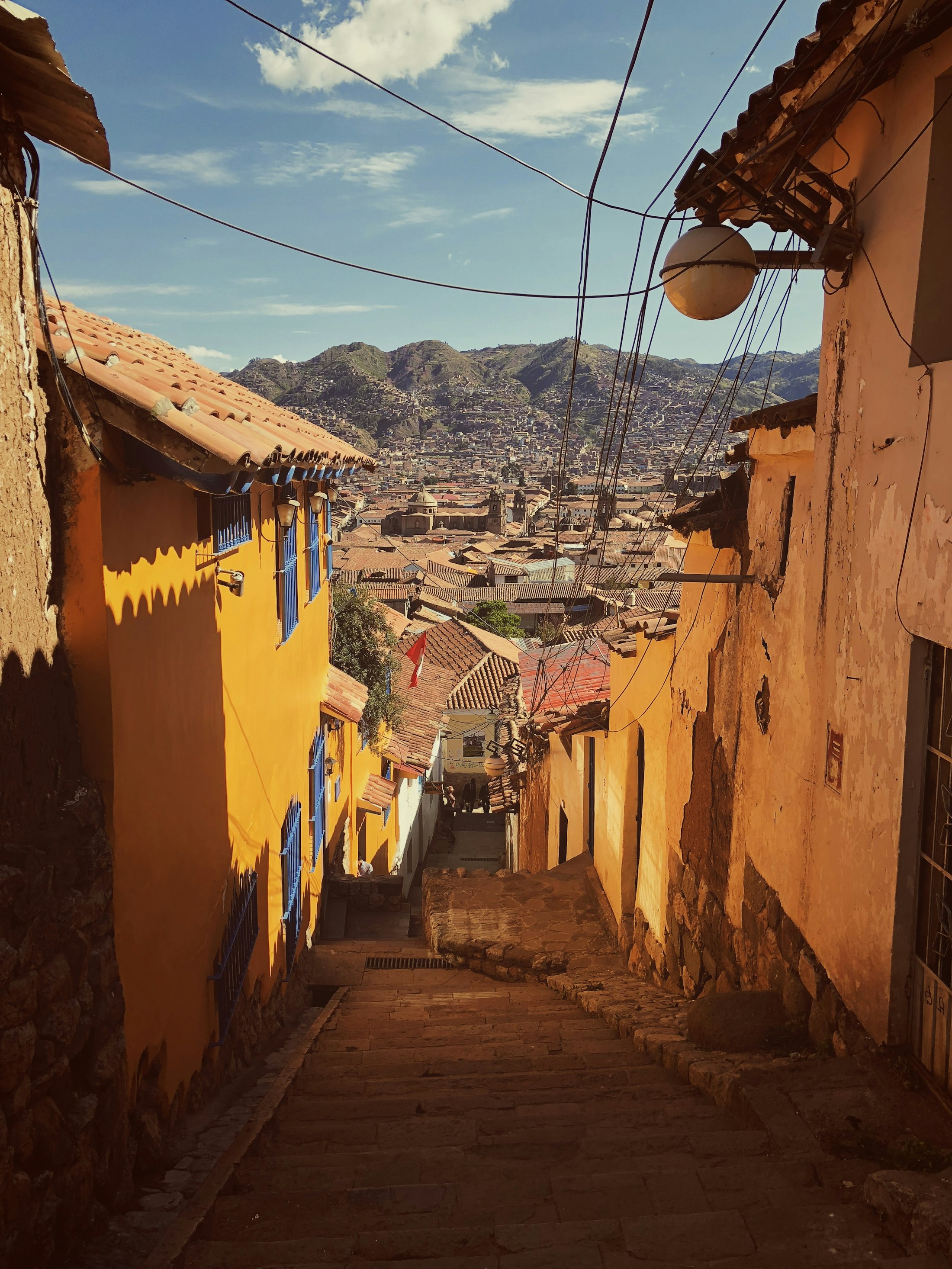
Stay above the plaza, not below it. Below the plaza puts you closer to central Cusco's noise — bar crawls, traffic, honking taxis at midnight. Above the plaza, the streets get quieter fast and the views open up across the red tile rooftops toward Sacsayhuamán. The tradeoff is more stairs, and at 3,400 meters, stairs feel like a personal insult for the first two days.
Hot water in San Blas is inconsistent in the cheaper places. Electric showerheads are common. They work, mostly, but the pressure varies. Ask before you book whether they have a tank system or an electric heater — tank systems are more reliable.
Pro tip:Book directly with the property via WhatsApp or email. Most small San Blas hotels list on booking platforms but prefer direct reservations because they avoid the 15-18% commission. You'll sometimes get a free airport pickup out of the deal.
Stay in Cusco
Top-rated hotels near Cusco
Best locations · Verified reviews · Free cancellation
View deals
Expedia →7. The ceramics workshops that actually make things
San Blas has called itself the artisan quarter of Cusco for decades. A lot of that branding has calcified into souvenir shops that sell factory ceramics with a handmade sticker. But a few workshops still operate the old way.
Taller Mérida on Tandapata does hand-painted pottery in the style that San Blas families have produced since at least the colonial period — earth tones, geometric patterns adapted from pre-Columbian designs, fired in small kilns behind the workshop. Pablo Seminario's studio on the same street is better known and more polished; his work is more contemporary and the prices reflect it. A medium Seminario vase runs S/ 350 to S/ 600. Mérida's equivalent is around S/ 120 to S/ 200.
In September, with fewer buyers cycling through, the artisans actually have time to talk. I spent forty-five minutes watching a woman at Taller Mérida hand-paint a plate and she explained every symbol — the serpent for water, the stepped pattern for terraces, the condor for the upper world. That conversation doesn't happen in July when there's a line out the door.
8. Getting up, getting around, getting winded
San Blas sits above Cusco's Plaza de Armas, and the walk up Cuesta de San Blas from the main square takes about ten minutes if you're acclimated. If you just flew in from Lima — which sits at sea level — it'll take twenty and you'll stop twice. That's normal. Don't be proud about it.
Taxis from the Plaza de Armas to Plazoleta de San Blas cost S/ 5 to S/ 8. Agree on the price before you get in. Uber works in Cusco but drivers sometimes cancel San Blas rides because the streets are too narrow to navigate comfortably.
Budget at least a full day to get used to the altitude before doing anything strenuous. Drink coca tea — it's served free at most hotels and it genuinely helps. Avoid alcohol the first night. I know that contradicts everything I said about chicha, but your first 24 hours at 3,400 meters is not the time to test your cardiovascular system. Save the chicherías for day two.
The walk from San Blas up to Sacsayhuamán takes about 35 minutes on foot. September mornings are clear and dry, but afternoon clouds roll in around 3 p.m. most days. Plan hikes for morning.
Pro tip:Carry small bills. S/ 5 and S/ 10 notes. Many San Blas shops and taxis can't break a S/ 100, and ATMs on the plaza sometimes dispense only large denominations.
Stay in Cusco
Top-rated hotels near Cusco
Best locations · Verified reviews · Free cancellation
View deals
Expedia →9. What to eat after dark when the temperature drops
Nights in San Blas in September get cold. That jacket I mentioned — you'll want it by 6 p.m.
The move is soup. Cusco does soups better than almost anywhere I've eaten in South America. At Jack's Café on Choquechaka 509, the sopa criolla — a thick noodle soup with beef, milk, and ají panca — costs around S/ 22 and functions as a full meal. They're open until 11 p.m. The upstairs seating has a window overlooking the street, which is mostly empty by 9 p.m. in September.
For something more local, look for restaurants advertising chairo — a freeze-dried potato soup with lamb, chuño, and wheat. It's a lunch dish traditionally, but a few spots on Tandapata serve it at dinner. Expect S/ 15 to S/ 20.
Green Organic on Tandapata gets recommended constantly. It's fine. The food is competent and the set lunch menu at S/ 28 is reasonable. But it's built for tourists — English menus, Instagram lighting, quinoa everything. If that's what you want, go. I'd rather eat chairo in a place with plastic chairs and a TV playing fútbol.
Essential tips
September nights in San Blas drop to 2-4°C. Pack a proper insulating layer — down or heavy fleece — not just a rain shell. The sun disappears behind the hills by 5:45 p.m. and the temperature falls fast.
Cusco sits at 3,400 meters. Spend your first 24 hours doing almost nothing. Coca tea (mate de coca) is available free at most hotels and helps with headaches. Diamox works too if you get a prescription before your trip.
Carry soles in small denominations — S/ 5 and S/ 10 notes. Most San Blas vendors, chicherías, and taxi drivers can't break S/ 50 or S/ 100 bills. The BCP and Interbank ATMs near Plaza de Armas are the most reliable.
September is the tail end of dry season, but expect occasional afternoon cloud cover and rare light showers starting mid-month. Mornings are almost always clear. Schedule outdoor plans before 2 p.m.
Ready to visit Cusco?
Book your hotel, flights, and activities through our Expedia-powered search.

