In This Guide
- 1.Why San Blas and not the Plaza
- 2.Finding the rehearsals (they won't find you)
- 3.Backstreet chicha and the women who brew it
- 4.The Templo de San Blas and its ceiling nobody looks at
- 5.What the ceramics shops won't tell you
- 6.Eating in San Blas without eating on the plaza
- 7.The sound map: what to listen for after dark
- 8.Timing your trip and what to leave at home
The first time I heard Inti Raymi rehearsals in San Blas, I thought a street fight had broken out. Drums, zampoñas, and a hundred voices ricocheting off colonial walls at seven in the morning — it was mid-May, weeks before the June 24 festival, and the neighborhood was already being rewired by sound. That's the San Blas most visitors never encounter. They show up in late June for the main event, shoulder-to-shoulder on the Plaza de Armas, craning over phone screens. But the weeks before — roughly May 15 through June 20 — are when the barrio actually lives the thing. Rehearsals spill out of courtyards. Chicha brewers ramp up production. The whole district smells like fermenting corn and wood smoke, and nobody is performing for you.
1. Why San Blas and not the Plaza
Most Inti Raymi coverage fixates on the Plaza de Armas ceremony or the Sacsayhuamán finale. Skip both unless you've bought reserved seating (around 150 USD through official municipal channels — the free-standing areas are a crush of elbows and blocked sightlines). The real texture is in San Blas, where comparsas — neighborhood dance troupes — have been rehearsing since at least March but hit full intensity by mid-May.
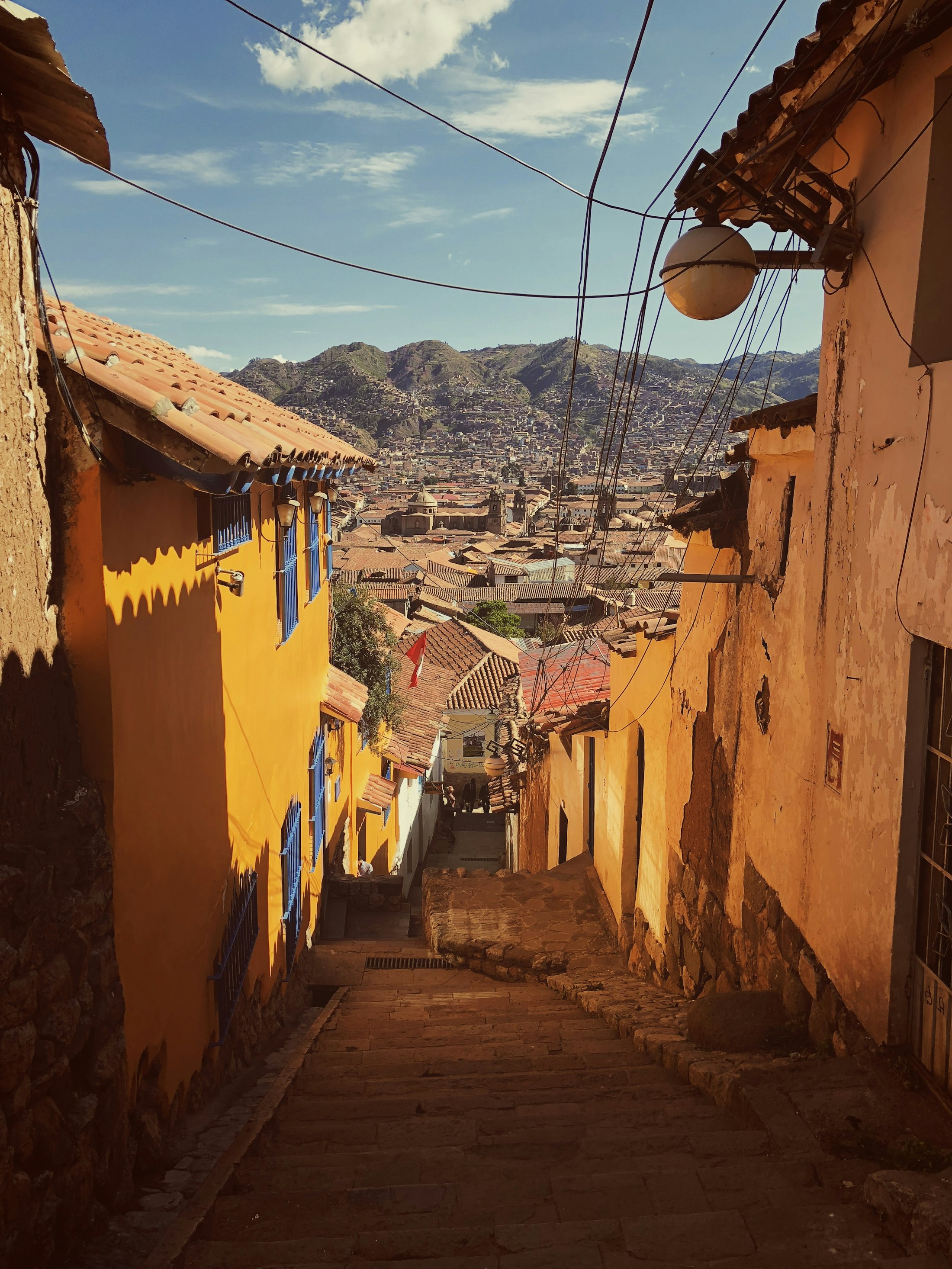
San Blas sits uphill from the Plaza de Armas, reachable by climbing Cuesta de San Blas or Tandapata. The altitude will remind you it's there: 3,400 meters. The tight streets trap sound in a way that makes thirty dancers feel like three hundred.
Pro tip:Arrive in Cusco at least two days before you plan to do anything strenuous. Altitude sickness doesn't care about your itinerary. Drink mate de coca, sold at practically every corner tienda for S/ 1–2 a cup.
2. Finding the rehearsals (they won't find you)
There's no published schedule. That's the point. Comparsas rehearse when their members — teachers, taxi drivers, market vendors — can gather after work, which typically means evenings between 6 and 9 p.m. on weekdays and mornings on weekends.
Walk Tandapata and Calle Carmen Bajo after 6 p.m. in late May or early June. Listen for drums. You'll find groups of twenty to sixty people in courtyards, schoolyards, or just blocking the street, running through choreography for dances like the Qhapaq Qolla or the Contradanza. Nobody will charge you to watch, but don't shove a camera in someone's face mid-step. Ask. A nod goes a long way.
The rehearsals have a roughness that the polished June 24 performance deliberately sands away — missed cues, arguments about footwork, a kid in a school uniform filling in for an absent dancer. That roughness is the whole appeal.
3. Backstreet chicha and the women who brew it
Chicha de jora — corn beer fermented in clay urns — has been brewed in the Cusco region for centuries, predating the Inca empire's standardization of the drink for state rituals. In San Blas, a handful of women still brew it at home for neighborhood sale, marked by a red or red-and-white flag (a "banderita") hung outside the door. No flag, no chicha.
I made the mistake of asking for chicha at a restaurant on Plazoleta San Blas the first time. What arrived was a sweetened, pasteurized version that tasted like watered-down apple juice. The real thing — thick, sour, slightly fizzy, served in a painted ceramic bowl — comes from the backstreet picanterías and private homes along Calle Suytuccatu and the alleys above Cuesta de San Blas. Expect to pay S/ 2–3 per bowl.
The brewing process takes about a week. Jora corn is malted, boiled for hours in massive pots, then transferred to clay vessels called raquis to ferment. The women who do this work don't generally advertise to tourists. If you find a banderita, enter, sit on whatever bench is available, and drink what's offered. You're in someone's living room. Act accordingly.
Pro tip: Chicha is mildly alcoholic — roughly 1–3%. But at 3,400 meters, even mild alcohol hits differently. Pace yourself.
4. The Templo de San Blas and its ceiling nobody looks at
Everyone photographs the carved pulpit inside the Templo de San Blas — attributed, probably apocryphally, to an Indigenous artisan named Juan Tomás Tuyru Túpac. Extraordinary cedar work, skulls and saints tangled in a single composition. But most visitors glance at the ceiling and move on. Don't.
The artesonado — a Mudéjar-influenced wooden ceiling — reflects a collision of Andalusian craft and Andean labor that defined colonial Cusco's architecture. The geometric patterning isn't Inca and it isn't purely Spanish; it's the hybrid that emerged when Iberian friars handed tools to Indigenous carpenters who'd been building with stone, not wood.
Entry is included in the Boleto Religioso (S/ 30), which also covers the Cathedral and several other churches. The templo is open Monday through Saturday, roughly 10 a.m. to 6 p.m., though hours shift without warning during festival season.
Pro tip: Buy the Boleto Religioso at the Cathedral ticket office on Plaza de Armas, not from touts outside San Blas. Same price, fewer headaches.
Stay in Cusco
Top-rated hotels near Cusco
Best locations · Verified reviews · Free cancellation
View deals
Expedia →5. What the ceramics shops won't tell you
San Blas is marketed as Cusco's "artisan quarter," and yes, there are ceramics workshops — the Mérida family and the Mendívil family have been producing here for generations. But half the shops along Cuesta de San Blas now sell factory-made work shipped up from Lima or Quinua and marked up for tourist pricing.
If you want actual San Blas ceramics, visit Taller Mérida on Plazoleta San Blas. Watch someone working at a wheel. Ask about firing techniques. The difference between a handmade piece and a factory reproduction is visible in the glaze irregularities and the weight of the clay. Budget S/ 80–250 for a small to mid-sized original piece.
Skip the dozens of identical shops selling "Inca-style" pottery with Machu Picchu silhouettes. Manufactured sentiment at a 400% markup.
6. Eating in San Blas without eating on the plaza
Plazoleta San Blas is fine for a coffee, but the restaurants facing the square charge plaza prices for average food. The better eating is one or two streets off.
Jack's Café on Calle Choquechaca has been a backpacker institution for years, and honestly, it deserves the reputation — solid breakfasts, strong coffee, portions scaled for altitude hunger. Huevos rancheros run around S/ 22. For something less gringo-oriented, Organika on Calle Tandapata does quinoa bowls and fresh juices with produce sourced from Sacred Valley farms; a lunch set menu costs around S/ 18–25.
For an evening meal, walk downhill to Calle Procuradores — locally called "Gringo Alley," which should tell you something — but instead of stopping there, keep going to the Mercado de San Pedro for chicharrón sandwiches or a bowl of sopa de chairo. The market closes by 6 p.m. most days, so this is a late-lunch move, not dinner.
Cuy (roasted guinea pig) is overrated. The meat is scarce, the preparation rarely transcends the novelty, and at S/ 65–80 a plate, you're paying for the Instagram story. Order a good lomo saltado instead.
Pro tip: If you eat at Mercado de San Pedro, the juice stands inside the main entrance are cheaper than the ones nearest the door — the first row marks up for foot traffic.
Stay in Cusco
Top-rated hotels near Cusco
Best locations · Verified reviews · Free cancellation
View deals
Expedia →7. The sound map: what to listen for after dark
San Blas after 8 p.m. in pre-Inti Raymi weeks becomes an unintentional sound installation. From one alley, drum patterns. From another, someone running scales on a quena. A dog barking counterpoint.
This isn't organized. There's no "nightlife scene" to speak of — the barrio is residential and mostly quiet by 10 p.m. But in that window between dusk and sleep, especially from late May onward, you can stand at the top of Cuesta de San Blas and hear the city preparing for something. It requires nothing of you except stillness.
8. Timing your trip and what to leave at home
The window is narrow: mid-May through the third week of June. Earlier than that and rehearsals are sparse. After June 24, the festival crowd dissipates and the barrio exhales but the pre-festival energy — the thing worth coming for — is gone.
Dry season in Cusco runs May through September, so rain is unlikely but nighttime temperatures drop to near freezing. Bring layers. Leave the rain jacket if you're coming in June.
San Blas is uphill from everything. The streets are cobblestone, uneven, and steep. Heeled shoes, rolling suitcases, any expectation of flat terrain — leave all of it. Wear broken-in boots with ankle support. Your knees will file a complaint by day three regardless.
Pro tip: Flights into Cusco (Alejandro Velasco Astete Airport) arrive at 3,400 meters with no acclimatization buffer. If budget allows, spend a night in Ollantaytambo (2,792 meters) first and take the train or colectivo up the next day.
Essential tips
Cusco sits at 3,400 meters. Spend your first 48 hours hydrating and walking slowly. Diamox (acetazolamide) helps but requires a prescription in many countries — arrange it before you fly.
ATMs on Plaza de Armas dispense soles and dollars but charge S/ 18–22 per withdrawal. BCP and Interbank ATMs tend to have lower fees than Globalnet machines.
Taxis in Cusco don't use meters. Agree on the fare before getting in. From Plaza de Armas to San Blas should cost S/ 5–7, though walking takes only 10–15 minutes.
Buy a local SIM (Claro or Movistar) at the airport or any pharmacy in the center for around S/ 20–30 with data. WhatsApp is the default communication tool for local contacts, tour operators, and restaurant reservations.
Casa Andina hotels in Cusco and around
Two properties in the historic centre, plus the Sacred Valley and Aguas Calientes stops most Cusco trips add on.
Casa Andina is Peru’s largest hotel chain. destination.com earns a commission on completed bookings; that commission never adds to your bill.
Ready to visit Cusco?
Book your hotel, flights, and activities through our Expedia-powered search.


