In This Guide
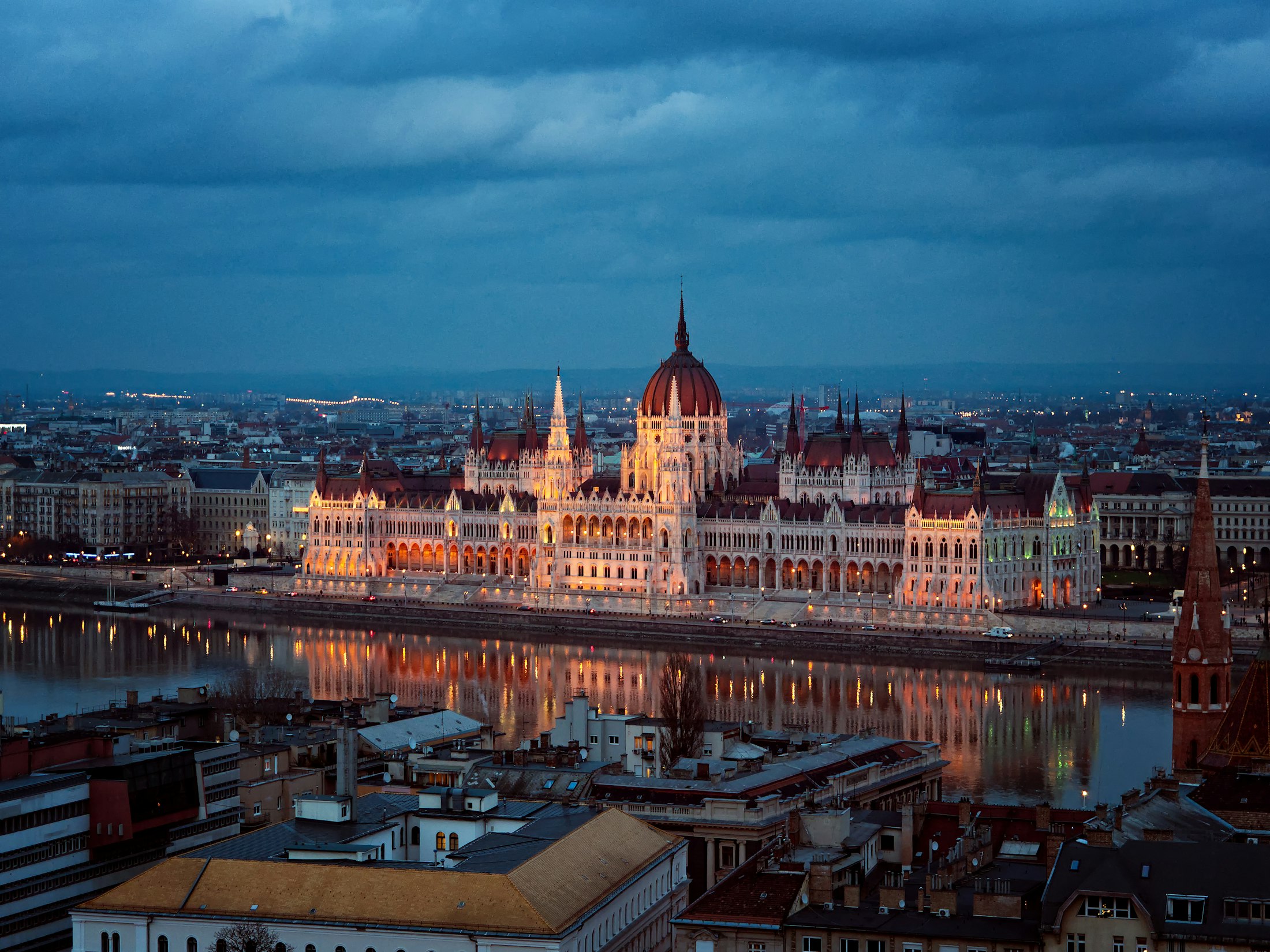
The HÉV suburban train drops you at Árpád híd at 9:47 p.m. and the platform empties fast. Everyone is heading south toward the ruin bars, the Danube promenade, the Pest side skyline. You go the other direction, north, into Óbuda — the oldest third of Budapest that most visitors never reach because it doesn't photograph well from a riverboat.
Óbuda is Roman foundations under Soviet housing blocks under satellite dishes. It has no coherent aesthetic and no interest in giving you one. What it has: a 2nd-century military amphitheater sitting in a traffic roundabout, wine bars where the owner pours and the bill rarely clears 5,000 HUF, and a stretch of Danube bank where locals swim after dark without a single rental-lounge operator in sight. I've spent more evenings here than anywhere else in Budapest, and I keep finding corners I missed.
1. The amphitheater at the roundabout
The Aquincum Military Amphitheater sits at the intersection of Nagyszombat utca and Pacsirtamező utca, surrounded on all sides by apartment blocks and moving traffic. It held roughly 13,000 spectators when it was the entertainment center of the Roman garrison town of Aquincum. Now it holds whoever wanders in after dinner.
There's no ticket booth, no rope line, no hours. You walk down a gravel slope into the arena floor, which is maybe 40 meters across, and stand where the sand was. At 10 p.m. on a Thursday the only company I had was two teenagers sharing a speaker and a guy walking a greyhound along the upper wall. The stones are floodlit until midnight, which means the arched entrance tunnels — the ones gladiators used — throw good shadows.
Skip the larger Aquincum civilian amphitheater and museum complex 2 km north unless you genuinely care about Roman plumbing infrastructure. The museum closes at 6 p.m. anyway, and the civilian ruins feel like an obligation. The military amphitheater is the one that earns the walk.
Pro tip:The amphitheater is fully open and unguarded after dark. Bring a flask and sit on the eastern wall — you'll face away from the Flórián tér traffic.
2. Fő tér after the tour groups leave
Óbuda's main square is Fő tér, and during the day it functions as a rest stop for bus tours hitting the nearby Vasarely Museum. By 7 p.m. the buses are gone.
What's left is a cobblestone square ringed by baroque townhouses painted in faded yellows and pinks, with a few restaurant terraces that don't try hard. Kehli Vendéglő, on Mókus utca 22 just off the square's northwest corner, has been serving bone marrow on toast and beef soup since 1899. The writer Gyula Krúdy reportedly ate here often enough that they named dishes after him. A main course runs 4,500–7,500 HUF. The portions are aggressive.
I ordered both the marrow toast and the Krúdy-style steak on my first visit and had to walk it off for an hour along the Danube.
On the square itself, the cluster of bronze umbrella sculptures by Imre Varga draws phone cameras during the day. At night they're just wet-looking metal figures standing in empty cobblestone, which is honestly when they work best.
Pro tip:Kehli doesn't take reservations for the terrace. Arrive by 7:30 p.m. on weekends or you'll sit inside.
Stay in Budapest
Top-rated hotels near Budapest
Best locations · Verified reviews · Free cancellation
View deals
Expedia →3. Swimming in the Danube at Római-part
North of central Óbuda, the Danube bank opens up into a long gravel-and-grass shore called Római-part (Roman bank). During the day it's a family scene — grills, kayak rentals, kids. After about 8 p.m. it turns into the best free riverfront in Budapest.
The water here moves slower than it does downtown because Szentendrei-sziget (Szentendre Island) splits the current. Locals swim from the rocky entry points between the old boat restaurants, roughly between Rozgonyi Piroska utca and Királyok útja. The depth drops off fast — a meter from shore you're already chest-deep. Water temperature in July and August hovers around 22–24°C. Nobody is supervising. You decide if you're comfortable with that.
The string of outdoor restaurants along here — Fellini Római Kultúrbisztró, Pontoon Római — serve cold Dreher and spritzers (fröccs) for 800–1,200 HUF until 11 p.m. or later on weekends. Most have river views from picnic tables.
4. Wine at Bortársaság and why you should ignore the ruin bars
Here's my contrarian position: Budapest's ruin bars peaked around 2015 and now operate primarily as queue-management systems for bachelor parties. Szimpla Kert charges 2,800 HUF for a spritzer you could get for 900 in Óbuda. The aesthetic is "decay as brand." It's exhausting.
Instead, take the HÉV one stop to Szentlélek tér and walk to Bortársaság Óbuda at Lajos utca 36. It's a wine shop that doubles as a bar, with a rotating selection of Hungarian bottles — Villány reds, Tokaji dry furmint, Somló juhfark — available by the glass from around 1,200 HUF. The staff will actually talk to you about what you're drinking without performing expertise.
The room fits maybe twenty people. Cement floor, wooden shelves, no music some nights. Last time I was there in October, the woman behind the counter opened a Heimann Portugieser that wasn't on the menu because she thought I'd like it. She was right. The bottle was 4,800 HUF and I bought a second one to take home.
Pro tip: Ask for their current Somló selection. Somló wines are volcanic-soil whites that most tourists never encounter, and Bortársaság usually stocks two or three producers.
Stay in Budapest
Top-rated hotels near Budapest
Best locations · Verified reviews · Free cancellation
View deals
Expedia →5. The Kiscelli Museum at dusk
Kiscelli Múzeum sits at the top of a steep hill at Kiscelli utca 108, inside a former Trinitarian monastery. The walk up from Óbuda's flat streets gains about 60 meters of elevation in ten minutes and will remind your calves that you exist.
The museum closes at 6 p.m. (4 p.m. November through March), admission is 2,200 HUF, and most of the permanent collection — Budapest history, printing presses, 19th-century pharmacy reconstructions — is skippable. What isn't skippable is the ruined church wing. A roofless nave used for contemporary art installations, with crumbling stone walls open to the sky. The scale shifts depending on what's hanging in it.
Time your visit so you're walking down the hill at sunset. The western face of Óbuda spreads out below you — prefab towers, church spires, the river — and you can see all the way to the Buda hills.
6. Late food that isn't tourist-menu goulash
Új Sipos Halászkert at Fő tér 6 does a credible halászlé (fisherman's soup) with carp and catfish, heavy on the paprika, served in a small kettle. A bowl runs about 3,800 HUF. They're open until 10 p.m. most nights.
For something faster: the lángos stands along Római-part serve fried dough with sour cream and cheese for 1,000–1,500 HUF. Not health food. Not trying to be.
If you're out past midnight and hungry, walk south to Flórián tér where the 24-hour CBA grocery store sells passable cold cuts and bread. Glamorous? No. But at 1 a.m. in Óbuda your options are this or nothing.
Pro tip: At Új Sipos, order the halászlé with a side of white bread, not the egg noodles. The bread handles the broth better.
7. Getting there and getting back
HÉV line H5 runs from Batthyány tér (M2 metro connection) to Szentlélek tér in about 8 minutes. A standard BKK single ticket (450 HUF) works for the journey within city limits. Trains run roughly every 10 minutes until 11:30 p.m., then every 20–30 minutes until the last departure around 12:15 a.m.
After the HÉV shuts down, night bus 923 covers the same route along Bécsi út. It runs hourly.
Trams 1 and 17 also reach Óbuda from the south along the Danube bank, which is a slower but better-looking ride if you're coming from the Chain Bridge area. Figure 25 minutes.
Pro tip:Buy a 24-hour BKK travel card (2,500 HUF) if you plan to HÉV out and tram back. Two round trips and it's already paid for itself.
Essential tips
The HÉV from Batthyány tér requires a separate ticket validation even if you have a metro pass — check that your pass explicitly covers the HÉV zone before boarding.
Római-part has no lifeguards and no designated swimming area. Current is manageable close to shore but strengthens past 15–20 meters out. Don't swim alone after dark.
Most Óbuda restaurants now take cards, but the Római-part lángos stands and smaller wine shops are often cash-only. ATMs cluster around Flórián tér.
Óbuda is flat and exposed — summer evenings stay above 25°C well past 9 p.m. The Kiscelli hill climb in August heat is genuinely unpleasant. Do it after 5 p.m.
Ready to visit Budapest?
Book your hotel, flights, and activities through our Expedia-powered search.