In This Guide
- 1.Aquincum Archaeological Park: A Roman City Before Coffee
- 2.Fő Tér and the Baroque Courtyards of Old Óbuda
- 3.The Hidden Wine Cellars of Kiscelli Slope
- 4.Lunch at Új Sipos Halászkert: Danube Fish Done Right
- 5.Hajógyári Island: Sunset Drinks and an Evening Walk
- 6.Római-Part: The Riverside Supper Strip Locals Protect
- 7.After Dark: Nightfall at the Military Amphitheatre
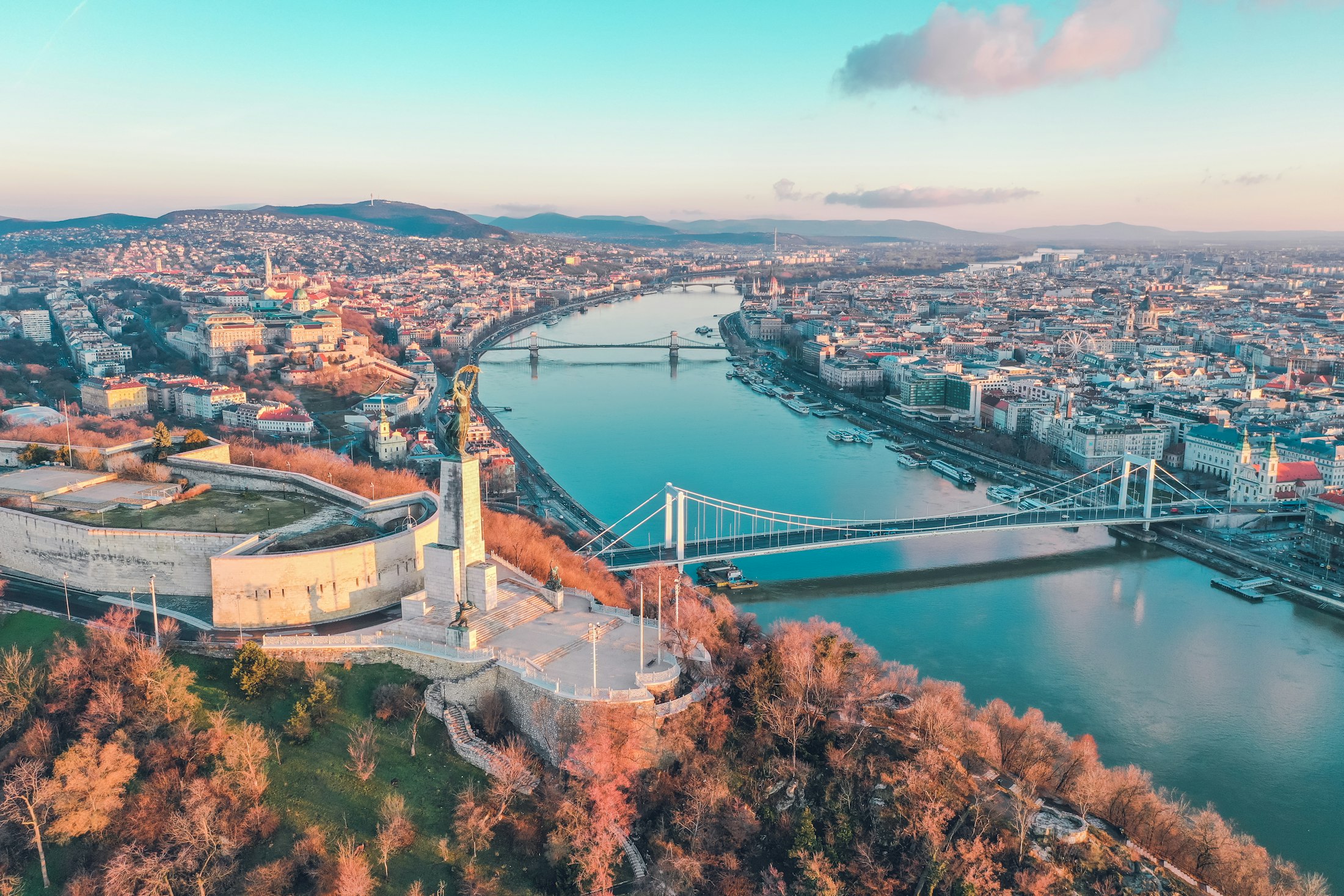
The May light hits Óbuda differently. While tourists crowd the Buda Castle ramparts and jostle for ruin-bar stools in the Jewish Quarter, this quietly magnificent northern district exhales Roman history through cracked mosaics, pours local Etyek whites in unmarked cellar doors, and sets long tables on a Danube island where chefs grill catfish over cherry wood. Óbuda is Budapest's most overlooked neighbourhood, and that is precisely what makes it extraordinary.
This guide maps a full day through Óbuda's layered identity — from a morning spent tracing second-century military baths to a late supper on Hajógyári Island as the river turns indigo. You will find specific addresses, dishes worth crossing the city for, and the kind of insider knowledge that transforms a neighbourhood walk into genuine discovery. May is the ideal month: the outdoor ruins are uncrowded, wisteria drapes the baroque courtyards, and terrace season has just begun.
1. Aquincum Archaeological Park: A Roman City Before Coffee
Start at Aquincum Museum and Archaeological Park on Szentendrei út 135, a fifteen-minute HÉV ride from Batthyány tér. This was the capital of the Roman province of Pannonia Inferior, and in May the excavated streets sit open under warm sun with barely a dozen visitors before ten o'clock. Walk the forum foundations, study the reconstructed painted walls, and find the portable water organ — the oldest of its kind in the world.
The museum's interior galleries were refreshed in 2023 with improved English-language displays and a tactile room where you can handle replica pottery. Do not skip the lapidarium tucked behind the main building: carved sarcophagi and altar stones line an open corridor that smells of cut grass and limestone.
Outside the ticketed area, the civilian amphitheatre sits across the road, free to enter and almost always empty. Its elliptical walls once held six thousand spectators. Stand at the centre, clap once, and the acoustic return is startling — a detail no guidebook mentions.
Budget roughly ninety minutes for the full site. Wear shoes with grip; the ancient stone paths grow slick after rain. Entry costs around 2,000 HUF, with a combined ticket available if you plan to visit the military amphitheatre ruins closer to Flórián tér later.
Pro tip: Arrive when the gates open at 10 AM on weekdays. By noon, school groups descend. Early birds get the forum entirely to themselves and the best low-angle photography light on the mosaic floors.
2. Fő Tér and the Baroque Courtyards of Old Óbuda
Óbuda's Fő tér is a pastel-walled square that feels more like a Moravian village than a Budapest address. The Zichy Mansion at number 1 houses the Vasarely Museum — a trippy, undervisited collection of the op-art master's geometric works, fitting for a man born in Pécs but embraced by Paris. Entry is barely 1,200 HUF and the upper gallery is reliably cool on warm May afternoons.
Step through the archway beside the mansion and you enter a chain of interconnected courtyards where wisteria and Virginia creeper climb ochre plaster walls. Local photographers call this stretch the best natural-light portrait location in the city. On weekday mornings you can walk through without encountering another soul.
Imre Varga's whimsical umbrella sculptures stand at the square's northern edge — four bronze women sheltering under brollies, perpetually caught mid-conversation. They have become Óbuda's unofficial emblem. Behind them, Varga's personal collection occupies a small museum at Laktanya utca 7 that is genuinely moving and takes only thirty minutes.
Grab a flat white at Levendula Kávézó on Fő tér's eastern side. The barista pulls shots from a Hungarian-roasted Casino Mocca blend, and the poppy-seed strudel here is exceptional — flaky, not too sweet, and made that morning.
Pro tip: The Zichy courtyard hosts free open-air jazz concerts on select Friday evenings in May. Check the Óbudai Társaskör cultural centre website for exact dates — they rarely appear in English-language listings.
Stay in Budapest
Top-rated hotels near Budapest
Best locations · Verified reviews · Free cancellation
View deals
Expedia →3. The Hidden Wine Cellars of Kiscelli Slope
Walk uphill from Fő tér toward the Kiscelli Museum and you enter a quiet residential zone where eighteenth-century cellar doors hide behind iron gates. The neighbourhood once supplied Buda's wine merchants; a handful of these pincesorok — cellar rows — survive. Most are private, but Kiscelli Söröző at Kiscelli utca 108 opens its vaulted stone basement for tastings of Etyek-Budai whites on weekends.
Order a glass of the Etyek Sauvignon Blanc or the Irsai Olivér, a floral Hungarian grape you rarely find outside the Carpathian Basin. Pair it with zsíros kenyér — lard-spread bread topped with raw onion and paprika. It sounds austere; it is, in fact, perfect with cold wine in a cellar at fourteen degrees Celsius.
The Kiscelli Museum itself, a former Trinitarian monastery, rewards the climb. Its contemporary-art wing occupies a roofless Gothic church nave, and the permanent collection of Budapest photography from the 1890s to 1945 is one of the city's best-kept secrets. Allow an hour and seek out the room dedicated to fin-de-siècle shopfront signage.
As you descend, take Meggyfa utca instead of retracing your steps. This narrow lane tunnels through linden trees and drops you behind the Flórián tér underpass, saving ten minutes and offering a view across Óbuda's red-tile roofscape that most visitors never see.
Pro tip:Ask the Kiscelli Söröző bartender for the 'házi furmint' — a small-batch Furmint from a Somló producer that never appears on the printed menu but is always available by the glass.
4. Lunch at Új Sipos Halászkert: Danube Fish Done Right
Új Sipos Halászkert at Fő tér 6 has occupied the same riverside-adjacent spot since 1934 and remains Óbuda's definitive fish restaurant. The white-tablecloth terrace fills quickly in May, so book for 12:30 and request a garden table. This is not a tourist trap — local politicians, architects and old Óbuda families fill the room at midday.
Order the halászlé, the paprika-scarlet river fish soup that is Hungary's most important culinary statement. Here it is made with carp and catfish, slow-simmered and fiercely spiced, served in a small kettle with white bread. Follow it with the roston sült harcsa — grilled catfish fillet with a parsley-butter sauce and cucumber salad.
The wine list leans Danube-region: Neszmély Olaszrizling and Szekszárd reds dominate. Skip the international bottles. A half-litre of the house Olaszrizling is crisp, affordable, and correctly paired with everything on the fish menu.
Service is old-school Hungarian — formal but warm. Tip fifteen percent in cash. A two-course lunch with wine will cost roughly 9,000-12,000 HUF per person, which, for this quality in this setting, represents remarkable value against anything on the Pest embankment.
Pro tip: If halászlé feels too heavy for a warm May day, order the hideg harcsatekercs — a cold catfish roulade appetiser that appears only on the seasonal spring menu and pairs beautifully with a dry rosé.
5. Hajógyári Island: Sunset Drinks and an Evening Walk
Hajógyári-sziget — Shipyard Island — sits in the Danube just off Óbuda's western bank, connected by a short bridge from Záhony utca. Outside festival season the island is blissfully calm: joggers circle its perimeter, rowing clubs launch sculls, and a cluster of open-air bars set up each May along the southern tip.
Head to Fellini Római Kultúrbisztró on the mainland side at Ksenón köz 2, technically at Római-part just north of the island, for the best pre-sunset aperitivo position. Order a fröccs — the Hungarian white-wine spritzer — and watch scullers cut silver lines across the current. The light between seven and eight o'clock in May is reliably golden.
The island's northern shore is wilder and less maintained, with overgrown paths and crumbling former shipyard infrastructure. Walk it slowly. The industrial ruins are photogenic and atmospheric, and you will likely have the path to yourself. Wildflowers — poppies, chamomile, yarrow — bloom along the concrete edges in late May.
If the evening cools, Fellini has wool blankets stacked by the bar and a short menu of grilled items. The mangalica kolbász with mustard and pickled peppers is the right call — smoky, fatty, satisfying. Pair it with a glass of Villányi Franc and stay until the Árpád Bridge lights reflect off the water.
Pro tip: Bring mosquito repellent if you plan to stay on or near the island past dusk. The Danube riverbank breeds them aggressively in May, and the bars do not always stock spray.
Stay in Budapest
Top-rated hotels near Budapest
Best locations · Verified reviews · Free cancellation
View deals
Expedia →6. Római-Part: The Riverside Supper Strip Locals Protect
Római-part — the Roman riverbank — is a two-kilometre stretch north of Hajógyári Island where converted boathouses and timber-deck restaurants face the Danube. In May the strip wakes from winter hibernation and locals arrive by bicycle to claim their favourite tables. This is where Budapest eats outdoors without pretension or tourist markup.
Kehli Vendéglő at Mókus utca 22, a five-minute walk inland from the bank, has served traditional Óbuda food since 1899 and was beloved by the writer Gyula Krúdy. Order the velős pirítós — bone marrow on toast with raw onion rings — followed by the roast duck leg with red cabbage. These are not reinvented heritage dishes; they are the originals, executed without compromise.
Back on the riverbank, the row of seasonal lángos stands offers Hungary's iconic fried dough at its most democratic. Queue at whichever stall has the longest local line — a reliable quality signal. Order yours with tejföl and sajt — sour cream and cheese — and eat it standing, watching kayakers navigate the shallow channel between the bank and Szentendrei Island.
By late May the Római-part outdoor swimming spots informally open — locals wade in from concrete platforms despite the absence of official sanction. You are welcome to join, but the current is deceptive. Stick to ankle depth and treat it as a foot-cooling exercise rather than a swim.
Pro tip: Cycle Római-part rather than walking. MOL Bubi bike-share docks at Szentlélek tér in Óbuda centre and at several points along the bank — a single thirty-minute ride costs 500 HUF with the app.
7. After Dark: Nightfall at the Military Amphitheatre
The military amphitheatre at Nagyszombat utca, wedged between apartment blocks near Flórián tér, is larger than the Colosseum in footprint and was built to entertain the Roman garrison of Aquincum. During the day it reads as an odd urban park. At night, when the floodlights click on around nine o'clock, the elliptical walls glow against the dark sky and the scale finally registers.
There are no fences and no entry fee. You can walk directly onto the arena floor, sit on the ancient stone tiers, and experience a silence that feels implausible for a spot three hundred metres from a tram stop. In May the air carries linden blossom and the distant bass of a Danube barge horn.
Bring a bottle of Hungarian pezsgő — sparkling wine — from the Budai borkereskedés shop near Kolosy tér. A Kreinbacher Brut from the Somló region costs around 4,500 HUF and drinks beautifully at ambient temperature. Sit on the western tier where the stone retains the day's warmth.
This is not a sanctioned nightlife recommendation — it is simply what Óbuda residents do on warm May evenings. Respect the site, take your glass home, and leave no trace. You will remember this hour long after the ruin bars blur together.
Pro tip: The amphitheatre is an active archaeological site with ongoing EU-funded conservation. Stay off roped-off sections and avoid climbing the upper walls — both for preservation and because the stone crumbles unpredictably.
Essential tips
Take the HÉV suburban train from Batthyány tér (H5 line) to reach Aquincum and Római-part. A standard BKK transfer ticket or monthly pass covers it within city limits — no separate ticket needed if you stay within Budapest's administrative boundary.
Óbuda's terrain mixes cobblestones, unpaved hillside paths, and uneven Roman-era stone. Wear comfortable walking shoes with grip, not sandals. The Kiscelli slope alone involves a ten-minute uphill climb on broken pavement.
Many Óbuda restaurants and cellar bars remain cash-preferred despite card terminals. Carry at least 10,000 HUF in small notes. The OTP ATM inside the Flórián tér shopping passage charges no foreign-card withdrawal fee.
May in Budapest averages 20°C but afternoon thunderstorms roll in fast. Pack a light rain shell. The Kiscelli Museum and Vasarely Museum both make excellent fifteen-minute shelter stops with genuine cultural payoff.
Avoid the final weekend of May if you want Hajógyári Island to yourself — festival setup for summer season often begins then, closing sections of the island and bringing construction noise. Mid-May weekdays are the sweet spot.
Ready to visit Budapest?
Book your hotel, flights, and activities through our Expedia-powered search.


