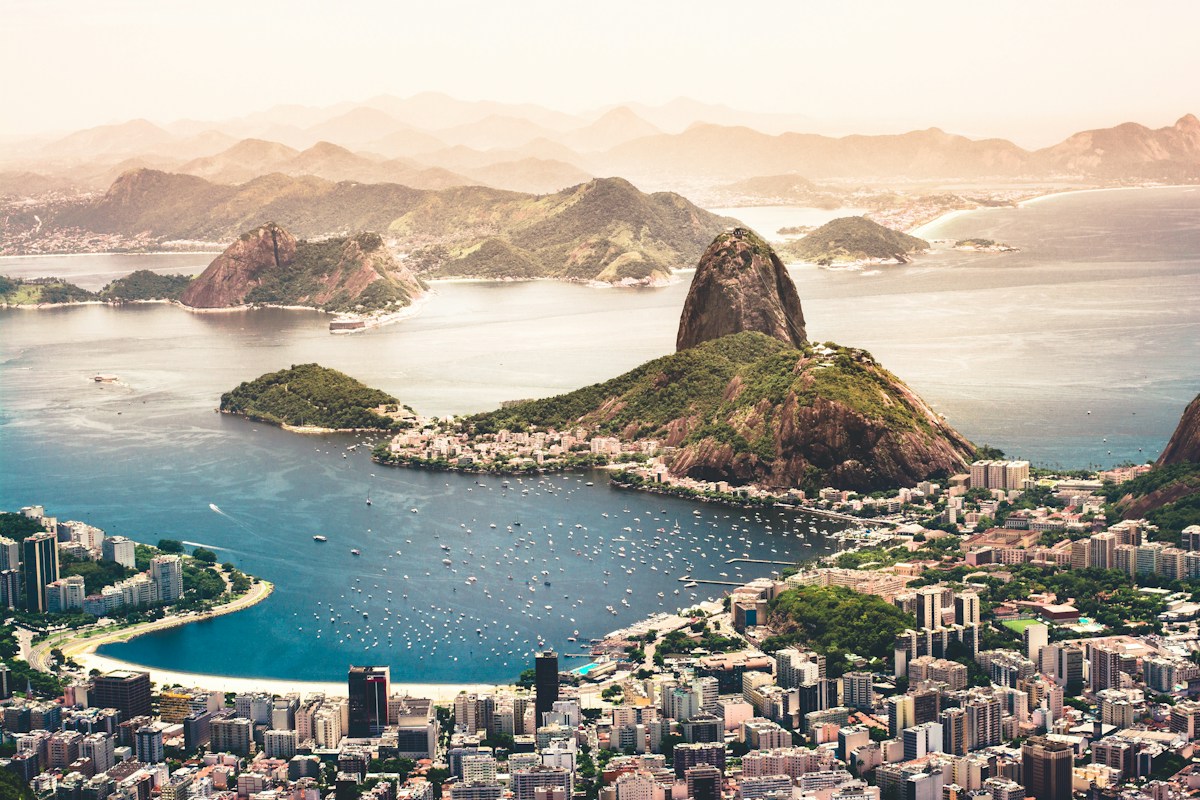
Rio de Janeiro does not perform for you
The city's famous beauty is real, but what stays with you is how little it cares whether you notice.
Advertisement
The mountain interrupts the grid
Urban planners elsewhere spend careers hiding their city's seams; Rio just lets Pedra da Gávea sit there, mid-sentence, breaking up the Zona Sul skyline like a boulder dropped into a sentence. We noticed it first from a plastic table outside a boteco in Leblon, where the waiter set down a chopp so cold it fogged the glass before he'd finished pouring, and nobody at the surrounding tables looked up at the rock at all. That's the local relationship to grandeur here: it's furniture.
Copacabana at 6 a.m. belongs to no one in particular
Before the beach becomes a postcard, it's a shift-change. Fishermen haul nets in near the Forte, older men do calisthenics on the rusted bars by Posto 3, and the kiosks are still stacked with yesterday's chairs. We walked the length of the promenade's black-and-white wave-pattern stones, laid by Burle Marx decades before anyone said the word 'Instagrammable,' and the only sound competing with the surf was a single boombox playing pagode too early for anyone to complain about it.
Lunch has a time, and it is not negotiable
At Aprazível, up in Santa Teresa, the kitchen opens onto the hillside and the canopy of the forest, and at 1 p.m. on a Tuesday every table fills within eleven minutes, as if a bell had rung somewhere out of earshot. We ordered moqueca and it arrived still murmuring in its clay pot, dendê oil slicking the rim orange. Cariocas treat the midday meal the way other cities treat a meeting they can't reschedule — not rushed, but absolutely on time, and absolutely two hours long.
Cariocas treat the midday meal the way other cities treat a meeting they can't reschedule.
The samba schools rehearse for people who already know the words
In October and November, long before Carnival proper, the bigger escolas de samba open their rehearsals to anyone willing to show up, and at Salgueiro's quadra in Tijuca we stood packed against people who'd been coming every Saturday since childhood. The bateria doesn't warm up gently; it just starts, all two hundred drums at once, and the floor under our shoes actually moved. Nobody was performing for visitors. We were, generously, allowed to watch something that exists whether or not we're in the room.
Ipanema sunset is a civic appointment
At Arpoador, the rock that separates Ipanema from Copacabana, people clap when the sun actually drops below the horizon — a ritual so consistent that missing it feels like skipping a shift. We sat among surfers still in wetsuits, a woman selling queijo coalho off a portable grill, and a man playing cavaquinho badly but with total confidence, and when the light went orange then pink then gone, the applause was unhurried, almost obligatory, like a city thanking itself for showing up again.
Advertisement