New Flight Restriction Bans Drones Along US-Mexico Border
The FAA, Pentagon and Homeland Security have imposed a temporary flight restriction barring unauthorized drone flights within one nautical mile of the southern border, citing cartel threats to border operations.
Written by
destination.com editorialPublished
October 16, 2026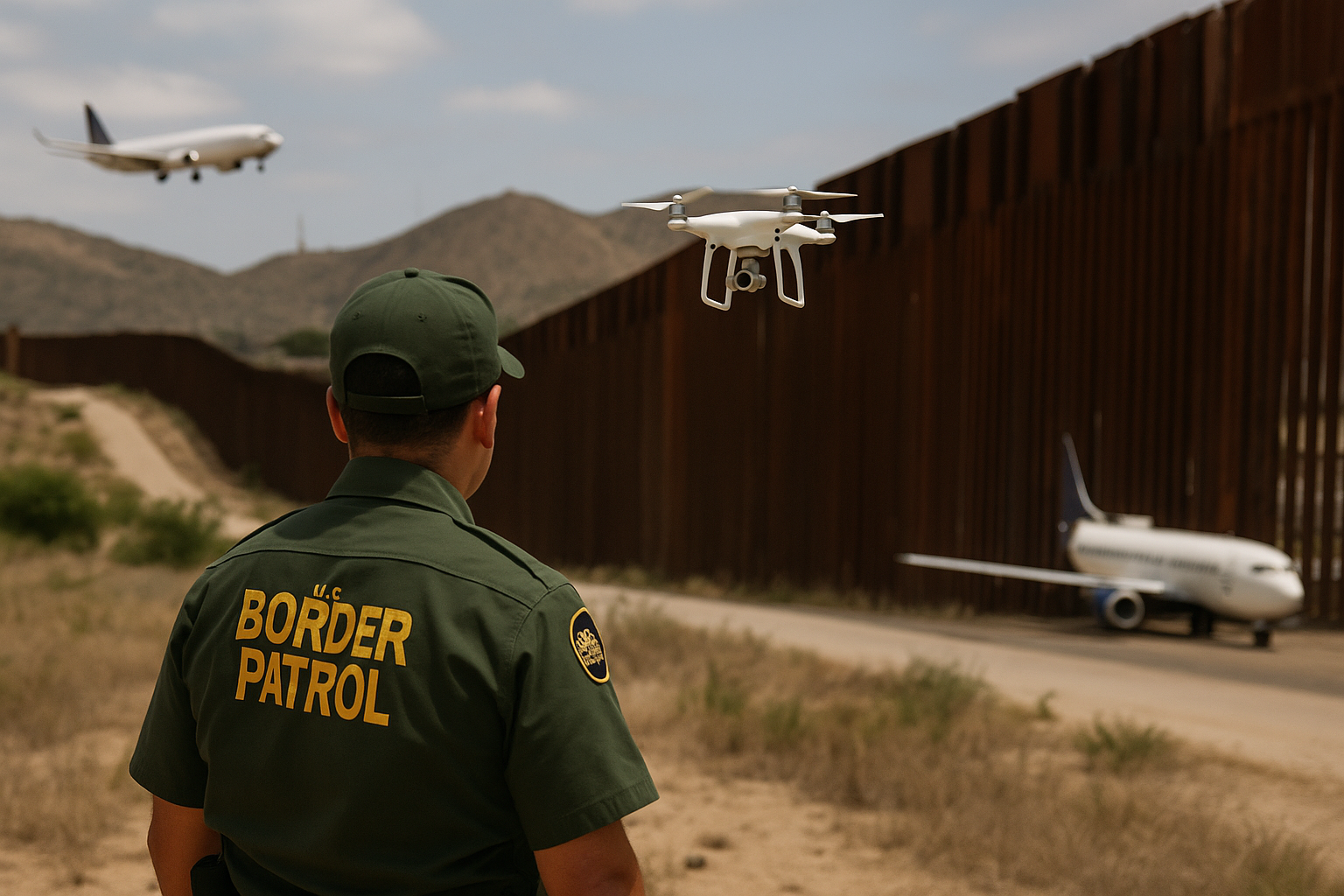
<div class="key-facts"><h2>What travelers need to know</h2><ul>
<li><strong>What happened:</strong> The Department of Transportation, Department of War and Department of Homeland Security jointly imposed a temporary flight restriction (TFR) banning unauthorized drone operations along the U.S.-Mexico border.</li>
<li><strong>Who's affected:</strong> Drone operators, including hobbyists and commercial UAS pilots flying near the border; the restriction does not apply to piloted aircraft.</li>
<li><strong>Where:</strong> A corridor extending one nautical mile north of the U.S.-Mexico border, from the surface up to 400 feet above ground level.</li>
<li><strong>When:</strong> Effective <time datetime="2026-10-16">October 16, 2026</time>.</li>
<li><strong>What to do:</strong> Drone operators must check the FAA's NOTAM, the Domestic Notice and the UAS Data Delivery System before flying anywhere near the border.</li>
</ul></div>
<p>The Federal Aviation Administration has activated a temporary flight restriction that prohibits unauthorized drone flights within one nautical mile of the U.S.-Mexico border, from ground level up to 400 feet. The FAA said the restriction, which took effect <time datetime="2026-10-16">October 16, 2026</time>, was coordinated jointly with the Department of War and the Department of Homeland Security as part of a broader push to lock down airspace security along the southern border.</p>
<p>Officials framed the move as a direct response to drone use by drug cartels, which they say has exploited gaps in border surveillance and enforcement. Transportation Secretary Sean P. Duffy said the restriction extends the administration's earlier border security efforts into the skies. "President Trump promised to secure the Southern Border, and he did. Now we're doubling down on that promise by protecting our skies from cartel drone threats and other illicit activities," Duffy said, crediting what he called close coordination between DOT, DHS and the Department of War.</p>
<h2>Military says new rule sharpens response options against cartel drones</h2>
<p>Secretary of War Pete Hegseth said the restriction is meant to give military commanders more latitude to act against drone incursions, framing it as part of a wider claim of full operational control over the border on land, air and sea. He said personnel will be equipped with advanced countermeasures, including directed energy weapons, to down cartel drones that cross into restricted airspace. Homeland Security Secretary Markwayne Mullin echoed that message, saying the restriction builds on existing border security gains and is designed to protect federal personnel and facilities from drone-enabled threats while reinforcing the partnership between the three departments.</p>
<p>The TFR applies specifically to unauthorized drone operations and does not extend new restrictions to commercial airliners or general aviation traffic over the border region. But it does create a hard enforcement line for any UAS operator, recreational or commercial, flying near that stretch of the border. The FAA said it will publish a NOTAM detailing the restriction, with links to a Domestic Notice and the agency's UAS Data Delivery System, where operators can check current airspace rules before any flight.</p>
<h2>Operators bear responsibility for compliance checks
Advertisement
Plan this trip
Here's what it costs.
This story was written and edited by the destination.com newsroom. See our editorial standards including sourcing, AI-use disclosure, and correction policy.
Advertisement