CDC Flags 15 Countries in Updated Global Dengue Notice
The CDC's updated Level 1 travel health notice lists Bangladesh, Colombia, Vietnam and 12 other destinations reporting higher-than-usual dengue case counts, urging travelers to take standard mosquito-bite precautions.
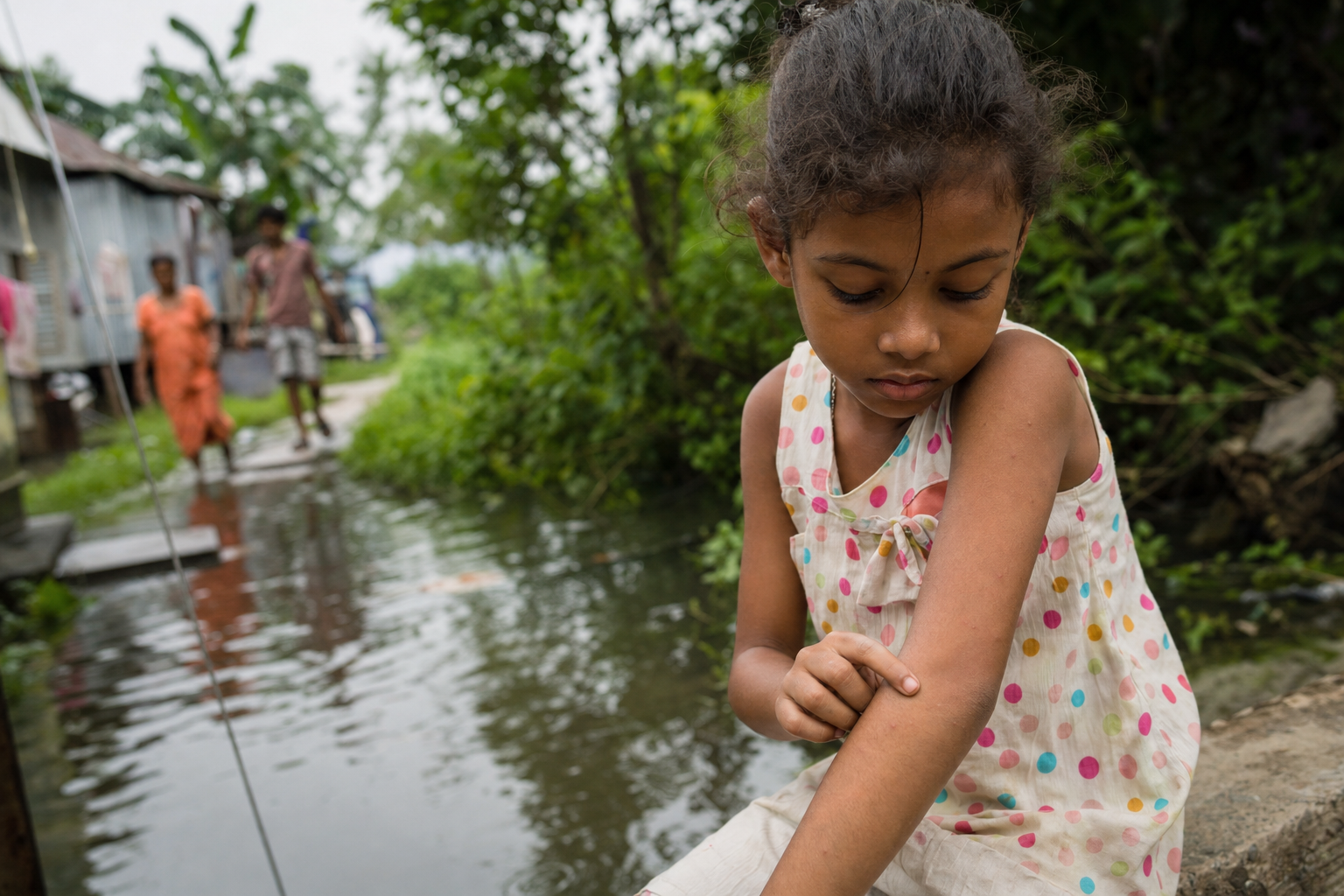
What travelers need to know
- What happened: The CDC updated its global dengue travel health notice, keeping it at Level 1 ("Practice Usual Precautions") while naming 15 countries currently seeing higher-than-expected dengue case numbers.
- Who's affected: Travelers heading to Bangladesh, Bolivia, Cambodia, Chad, Colombia, Cuba, Ecuador, Kenya, Malaysia, the Marshall Islands, Panama, Peru, Vanuatu, Vietnam, and Wallis and Futuna.
- Where: The 15 listed countries, though the CDC notes dengue risk exists year-round across many more regions not on the list.
- When: The notice was originally posted and is updated regularly as new case data comes in.
- What to do: Use EPA-registered insect repellent, wear long sleeves and pants outdoors, and sleep in air-conditioned rooms or rooms with window screens.
The Centers for Disease Control and Prevention has refreshed its standing global dengue travel notice, keeping the alert at the lowest tier — Level 1 — but naming 15 countries where case counts are running above what historical patterns would predict. The CDC says the list draws on its ArboNET surveillance system, which models expected dengue cases among travelers returning from each country based on data stretching back to 2010, flagging a country when actual case numbers exceed that baseline by a wide margin.
The countries currently flagged are Bangladesh, Bolivia, Cambodia, Chad, Colombia, Cuba, Ecuador, Kenya, Malaysia, the Marshall Islands, Panama, Peru, Vanuatu, Vietnam, and the Pacific territory of Wallis and Futuna. The CDC stresses this list isn't exhaustive — dengue transmission occurs in many more countries that simply haven't shown a statistically unusual spike, and the agency says travelers should take precautions anywhere dengue is known to circulate, not just in the named locations.
Advertisement
A mosquito-borne illness that can turn severe fast
Dengue spreads through mosquito bites and can take up to two weeks to show symptoms, according to the CDC, with illness typically lasting under a week. Common symptoms include fever, headache, nausea, vomiting, rash, and joint or muscle pain, along with minor bleeding in some cases. The bigger worry is that dengue can escalate quickly — the CDC warns severe dengue is a medical emergency that usually requires hospitalization and can lead to hemorrhage, dangerously low blood pressure, organ failure, or death.
The agency notes dengue outbreaks tend to cycle every two to five years in many parts of the world, making it a persistent rather than one-off risk for international travelers. Because the disease has no widely available treatment beyond supportive care, the CDC's guidance leans entirely on prevention at the source: stopping mosquito bites before they happen.
What the CDC recommends travelers actually do
The prevention steps are straightforward and apply regardless of destination:
- Apply an EPA-registered insect repellent on exposed skin
- Wear long-sleeved shirts and long pants, especially outdoors during daylight hours when the mosquitoes that carry dengue are most active
- Sleep in air-conditioned rooms or spaces with intact window screens to limit indoor exposure
Because the list is tied to an automated statistical model rather than a fixed roster, countries can be added or removed as new case data comes in — the CDC says it updates the notice regularly. Travelers with upcoming trips to any of the 15 listed countries, or to other dengue-endemic regions generally, should check the CDC's dengue pages closer to departure and pack repellent and protective clothing as standard travel gear, the same way they would plan for any other destination-specific health risk.
Advertisement
Planning this trip

Plan this trip
Here's what it costs.