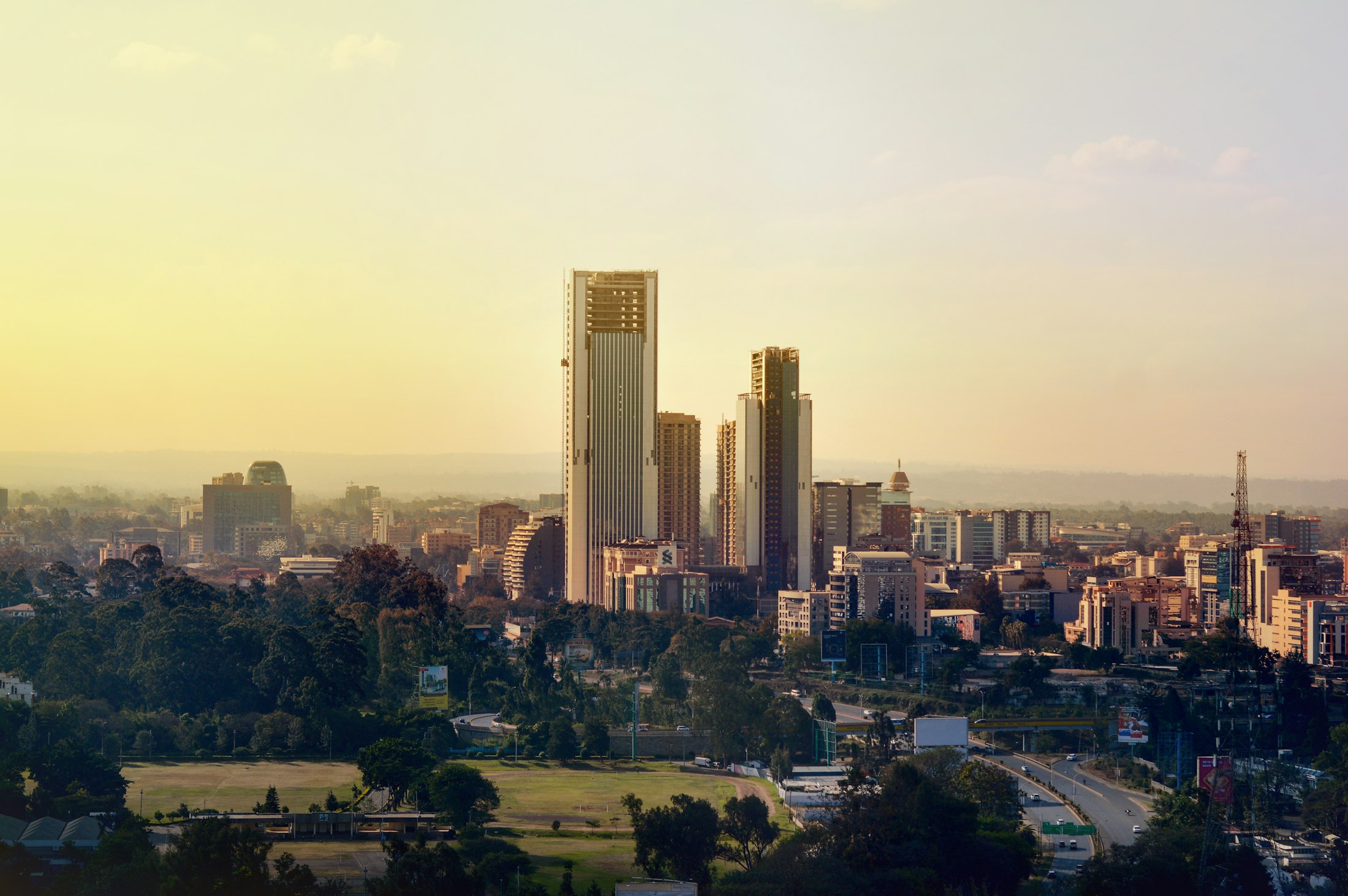
In This Guide
- 1.The nyama choma economy, explained
- 2.Rooftop sessions aren't a trend here — they're geometry
- 3.Skip the poverty tourism circuits
- 4.What to drink, and where the chang'aa line is
- 5.The railway line and what it divides
- 6.Timing your visit around the rains
- 7.Getting in, getting out, eating one more thing on the way
The smoke finds you before you find the meat. That's how it works in Kibera around late September, when the air is still dry enough to carry the scent of nyama choma across corrugated rooftops and down the narrow pathways locals call "streets" mostly out of habit. The short rains — masika ndogo, though in Nairobi people just say "the rains" — usually arrive mid-October, and the weeks before them have a specific quality: the sky goes copper at dusk, the red earth stays loose underfoot, and everyone seems to eat outside because they know what's coming.
I first came to Kibera in 2019, during this exact window, following a photographer friend who'd been documenting rooftop social life for a series that never got published. What I remember most isn't the scale of the settlement — though it is enormous, roughly 250,000 people packed into an area smaller than New York's Central Park — but the noise of evening. Generators, gospel music from a church two alleys over, the hiss of fat hitting charcoal. The rains would drown all of that out within weeks.
1. The nyama choma economy, explained
Nyama choma — roasted meat, almost always goat — isn't street food in the Western sense. You don't grab it and walk. You sit, you wait, you drink something while the butcher-turned-cook works a grill made from a halved oil drum. In Kibera, the transaction is social infrastructure as much as commerce.
The concentration of nyama choma spots along the Olympic Estate boundary, particularly on the stretch locals call "Toi Market side," is where most visitors end up, and honestly, the quality is consistent enough that overthinking your choice is pointless. A quarter kilo of goat with ugali and kachumbari runs about KSh 250–350 depending on the cut. You'll pay more for ribs. The meat arrives on a wooden board with a knife stuck in it, no plate.
What separates Kibera's nyama choma from the tourist-facing joints in Westlands or along Langata Road is time. The meat here is cooked slower, over lower heat, because propane costs money and charcoal doesn't — at least not comparably. The result is drier on the surface but more tender inside. I've had people argue the opposite, that the high-heat places produce better results. They're wrong.
Pro tip:Order your meat "na supu" — with soup. Most stalls will give you a small cup of the broth from boiled bones at no extra charge, but only if you ask.
2. Rooftop sessions aren't a trend here — they're geometry
When your living space is eight feet by ten, the roof becomes the second room. Before the short rains arrive, Kibera's flat rooftops turn into gathering spots after about 5 p.m., once the iron sheets cool enough to sit on. People play cards, braid hair, charge phones off shared solar setups, argue about football.
This isn't something you can book or be guided to, and I'd be suspicious of anyone offering that as a tour product. But if you're spending time in Kibera with someone who lives there — and you should be; don't just wander in with a camera — you'll likely end up on a rooftop at dusk. The view isn't scenic in any postcard sense. It's density: satellite dishes, water tanks, laundry lines, smoke columns from a hundred grills. The Ngong Hills sit on the horizon if the air is clear enough.
3. Skip the poverty tourism circuits
I'll say it plainly: several of the organized "slum tours" operating out of Nairobi CBD treat Kibera as a spectacle. The ones that bus in groups of fifteen, walk them through for ninety minutes, and deposit them back at their hotel by lunch are not doing anyone a service. The money rarely stays in the community in any meaningful proportion, and the dynamic — camera-holding tourists moving single-file past people's homes — is uncomfortable for reasons that should be obvious.
If you want to visit with some integrity, connect with community-based organizations that actually operate inside Kibera. Kibera Creative Arts runs programs out of a space near the railway line and welcomes visitors who book directly through them. SHOFCO, founded by Kennedy Odede, has a visible presence and can arrange visits that center residents rather than visitors. Both will ask you to leave a contribution, which is fair.
A local guide from the community will tell you where not to photograph. A tour operator from Westlands won't.
Pro tip: Contact Kibera Creative Arts via their social media pages at least a week before your visit. Walk-ins are possible but unreliable, especially on Mondays.
4. What to drink, and where the chang'aa line is
Tusker is the default beer, available warm or cold depending on whether the particular duka has a working fridge that day. A 500ml bottle costs about KSh 200 inside Kibera, which is cheaper than any bar in Kilimani.
Chang'aa is the local spirit — distilled from millet or maize, unregulated, and potent enough to restructure your evening. It's illegal in theory, tolerated in practice, and sold from homes rather than stalls. I'm not recommending you seek it out, but I'm also not pretending it doesn't exist the way most guidebooks do. If someone offers you a taste, know that quality varies enormously and the wrong batch can be genuinely dangerous. Stick to a sip if curiosity wins.
Fresh sugarcane juice is the smarter move. Vendors with hand-crank presses set up near Toi Market in the late afternoon. KSh 30 a glass. Cold, sweet, slightly grassy.
5. The railway line and what it divides
The old Uganda Railway cuts through Kibera on a low embankment, and the tracks are still active — freight trains pass a few times a day, slow enough that people step aside rather than scramble. The Nubian soldiers granted informal permission to settle on Crown land nearby after serving in the King's African Rifles in the 1920s shaped everything that followed. Kibera's identity is Nubian before it is anything else, even as migration from western Kenya and other regions transformed its demographics over the following decades.
Walking along the tracks in the pre-rain weeks is one of the better ways to understand the settlement's internal geography. South of the line skews more commercial; north of it is denser residential. The light at around 6 p.m., when the sun drops toward Ngong, turns everything amber.
The trains don't honk.
Pro tip:Stay off the tracks themselves. Walk alongside them on the packed-earth paths that run parallel. Locals will correct you if you don't.
Stay in Nairobi
Top-rated hotels near Nairobi
Best locations · Verified reviews · Free cancellation
View deals
Expedia →6. Timing your visit around the rains
The short rains typically begin in mid-to-late October and run through December. Once they start, Kibera's unpaved paths turn to mud — not the photogenic kind, but ankle-deep brown water carrying sewage and waste. Drainage infrastructure is minimal. The difference between visiting in late September and late October is the difference between a functional neighborhood and a place in crisis mode.
This isn't atmosphere. It's logistics. If you visit during the rains, you will need rubber boots, and you will not enjoy yourself, and the people who live there will not be in a position to host you because they'll be managing flooding in their homes.
Come before the rains. Late September through the first week of October is the window.
7. Getting in, getting out, eating one more thing on the way
Matatus along Kibera Drive will drop you at the main entry points — ask for "Toi" or "Makina" depending on which side you're heading to. The fare from Nairobi CBD is about KSh 50–70 depending on the time of day. Boda-bodas (motorcycle taxis) operate inside the settlement and charge KSh 50–100 for short hops, but the paths are narrow enough that walking is often faster.
On your way out, particularly if you exit toward Ngong Road, stop at any of the mandazi vendors near the Olympic Estate junction. Mandazi — pillowy fried dough, somewhere between a doughnut and a beignet — cost KSh 10 each and taste best when they're still hot and faintly cardamom-scented. Buy four. You'll eat them all before your next matatu arrives.
Kibera is not a monument or a lesson. People live here. They're not waiting for you to notice them. Come correct, spend money at local businesses, and don't take photographs of children without talking to their parents first.
Pro tip:If you're heading back toward the CBD after dark, use a ride-hailing app (Bolt tends to be cheaper than Uber in Nairobi) from the Ngong Road side rather than flagging a matatu. The wait is usually under ten minutes.
Stay in Nairobi
Top-rated hotels near Nairobi
Best locations · Verified reviews · Free cancellation
View deals
Expedia →Essential tips
Wear closed-toe shoes with grip. The paths are uneven, often sloped, and scattered with gravel and debris — sandals are a fast way to twist an ankle.
Carry small denominations of Kenyan shillings. Most transactions in Kibera are cash, and vendors rarely have change for a KSh 1,000 note. M-Pesa works at some stalls but not all.
Keep your phone in a front pocket or zipped bag. Petty theft happens, same as it does in any dense urban area worldwide. Don't be paranoid, but don't be careless.
Arrive by 4 p.m. if you want to catch the late-afternoon energy and stay through dusk. Before 3 p.m., many stalls are still setting up and the social rhythm hasn't kicked in yet.
Ready to visit Nairobi?
Book your hotel, flights, and activities through our Expedia-powered search.