In This Guide
- 1.What hanal pixán actually is (and isn't)
- 2.Mucbipollo: the dish that anchors the dead
- 3.Inside the Lucas de Gálvez market, late October
- 4.The altar builders who do this for hire
- 5.The cemetery nights no one tells you to attend
- 6.Where to eat the other altar foods
- 7.Timing your visit around the rituals
- 8.What the altar asks of you
By the third week of October, the smell of pib — the Yucatecan pit-roasted tamale — has already started seeping from courtyards across Mérida's centro histórico. Día de Muertos is still days away, but the altar builders aren't waiting. They're sourcing hanal pixán ingredients, negotiating bulk marigold prices at the Lucas de Gálvez market, and slow-cooking the relleno negro that will sit on ofrendas beside photographs of the dead.
I first walked into this overlap of grief and grocery shopping four years ago, when a woman on Calle 56 handed me a piece of mucbipollo wrapped in banana leaf and told me her mother had died in March. The tamale, she said, was how her mother came home. That sentence stayed with me longer than any cathedral or cenote.
1. What hanal pixán actually is (and isn't)
Most English-language coverage treats hanal pixán as "the Yucatán's version of Día de Muertos." That framing misses the point. Hanal pixán — Maya for "food of the souls" — is older than the Aztec-inflected celebration most foreigners picture, and its rituals are organized around cooking, not costume. The altar isn't decoration. It's a table set for someone who can't sit down anymore.
The three-day structure matters. October 31 is for dead children (hanal pixán u hanal palal), November 1 for dead adults, November 2 for all souls. Each day has its own protocol for what goes on the altar: smaller tamales for the children, stronger drinks for the adults. The food isn't symbolic. Families believe the spirits consume its essence.
You'll hear people in Mexico City talk about Día de Muertos as if one version covers the whole country. It doesn't.
Pro tip: If someone invites you to see their altar, remove your hat and ask before photographing. This is not a gallery opening.
2. Mucbipollo: the dish that anchors the dead
Mucbipollo — also called pib — is the gravitational center of hanal pixán. Think of it as a massive tamale, maybe 40 centimeters across, filled with chicken or pork in a recado (spice paste) of achiote, tomato, and epazote, wrapped in banana leaves, and buried in an earth pit lined with hot stones. The pit cooking can take two to three hours.
The texture is nothing like a streetside tamal. The masa absorbs the meat juices and develops a dense, almost savory-cake quality at its edges while staying softer toward the center. Families make them at home, but if you don't have an invitation, Doña Lupita's stall inside Mercado Lucas de Gálvez sells individual portions for around 80–120 MXN during the last week of October. Get there before 11 a.m.; by noon the day's batch is gone.
Skip the mucbipollo at the upscale restaurants along Paseo de Montejo. They charge 350 MXN and up for a plated version that looks like fine dining but tastes like an apology. The dish belongs in banana leaf, eaten standing up.
3. Inside the Lucas de Gálvez market, late October
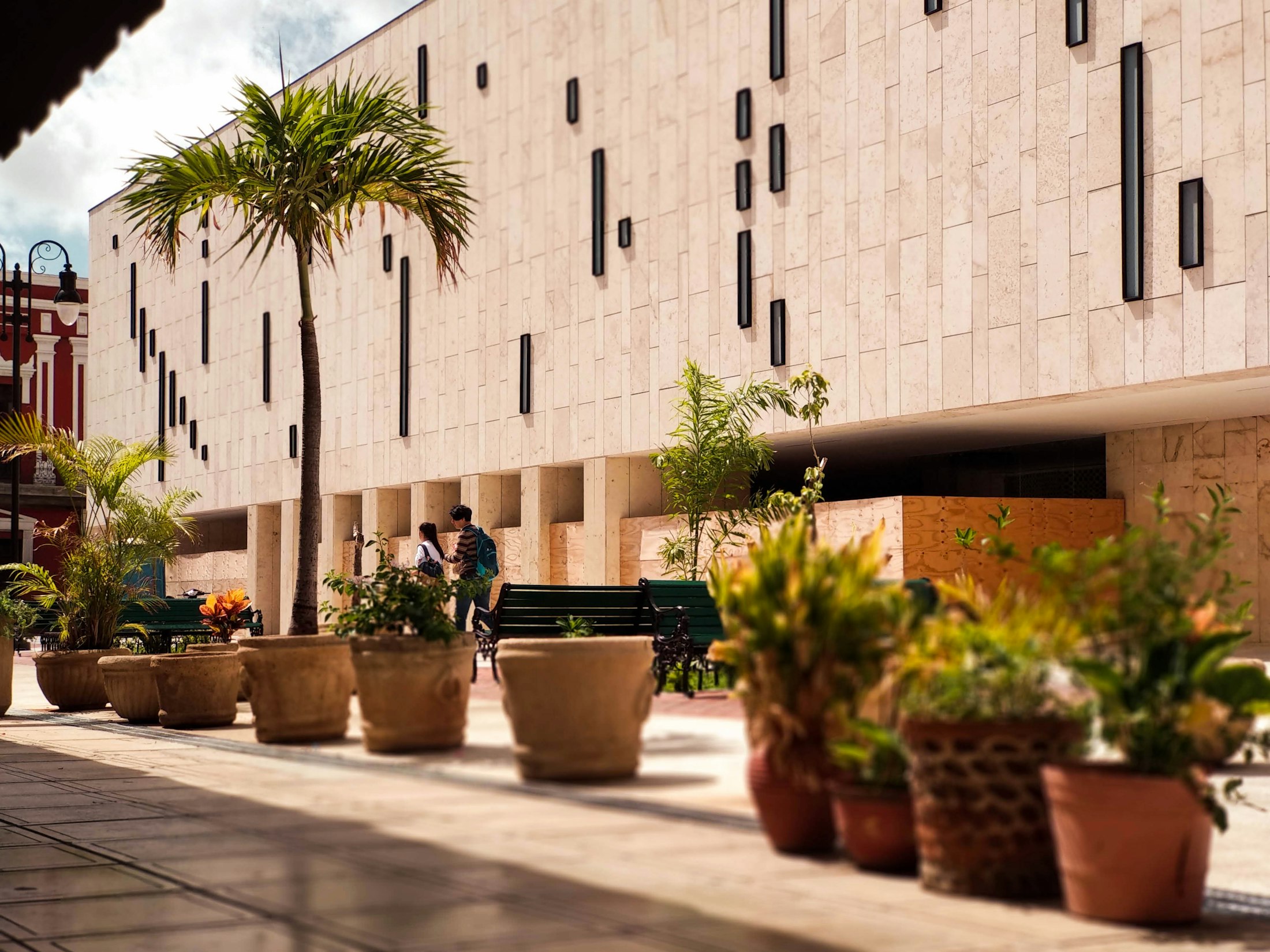
Mercado Lucas de Gálvez, on Calle 56A between 67 and 69, is where the logistics of death become visible. In the final ten days of October, the flower vendors near the east entrance triple their marigold inventory. Whole aisles smell of cempasúchil and xpujuk — the local wild marigold, smaller and more pungent than the cultivated variety.
Deeper inside, the spice sellers stack bricks of recado negro and recado rojo. One vendor I spoke to last year, Doña Carmela at stall 287, told me she moves more recado in the two weeks before hanal pixán than in the previous two months combined. She sells half-kilo blocks of recado negro for around 45 MXN.
The market is loud, not air-conditioned, and smells like someone's grandmother is cooking behind every stall. Good.
Pro tip:Bring a reusable bag. The market's plastic-bag supply is unreliable, and you'll want to carry things.
4. The altar builders who do this for hire
Not every family builds their own altar. In Mérida, a small economy of professional altar builders — montadores de altar — works through October taking commissions from households, restaurants, and municipal offices. Part florist, part liturgical consultant, part carpenter.
I met one, Jorge Canul, through a friend's recommendation in 2022. He works out of a workshop near the corner of Calle 50 and 65 and charges between 2,500 and 8,000 MXN depending on size and materials. His altars use three tiers — earth, the human world, and the heavens — and he insists on real beeswax candles rather than paraffin. "Paraffin is petroleum," he told me. "You don't welcome the dead with petroleum."
The municipal government also commissions large public altars in the Plaza Grande and along Paseo de Montejo, typically installed by October 28. These are worth seeing for scale, but they lack the raggedness of the home altars — the half-empty bottle of Montejo beer, the specific brand of cigarette the dead person smoked.
5. The cemetery nights no one tells you to attend
On the night of November 1, families in Mérida's outlying towns — Hocabá, Tekit, Homún — go to the municipal cemetery and stay. They bring food, candles, and sometimes hammocks. The graves are cleaned, repainted, and laid with offerings. It is quiet in a way that surprises people expecting a party.
Mérida's own Cementerio General, on Calle 66 near the Arco de Dragones, holds a smaller version of this vigil. Arrive around 8 p.m. on November 1. There's no admission fee, no program. People just come and sit with their dead.
The tourist-oriented "Paseo de las Ánimas" parade along Paseo de Montejo, usually held the last Saturday of October, is fine if you want spectacle. But the cemetery visits are where hanal pixán actually lives. The parade is for the living. The cemetery is for the relationship between both.
Pro tip:Wear closed-toe shoes. Cemetery paths are uneven stone and dirt, and it's dark.
6. Where to eat the other altar foods
Mucbipollo gets the attention, but the altars hold more than one dish. Atole nuevo — a thick corn drink made from freshly harvested maize — appears on nearly every offering table. Balché, a fermented honey drink with bark from the balché tree, shows up on altars in more traditional households, though it's harder to find commercially.
For xec, the jícama-and-mandarin salad dressed with sour orange and chile, try the prepared-foods section of Mercado de Santa Ana on Calle 60. Vendors there sell small bags for 25–35 MXN during the last days of October. The relleno negro — a turkey stew darkened with charred chiles — is available year-round at restaurants like La Chaya Maya on Calle 62 No. 481, where a plate runs about 195 MXN, but it takes on a different weight when you know it was cooked for someone who's gone.
TanChucuá, a chocolate-based atole, rounds out the altar drinks. Thick enough to stand a spoon in.
Pro tip: Ask for your atole nuevo without sugar first. The corn sweetness is enough, and you can always add more.
Stay in Mérida
Top-rated hotels near Mérida
Best locations · Verified reviews · Free cancellation
View deals
Expedia →7. Timing your visit around the rituals
The window that matters most runs from roughly October 28 to November 2. Before that, you'll see preparations — marigold arrivals, altar construction — but the altars won't be fully dressed.
October 31 is the day for children's souls, and some families light their altars as early as noon. Walk through the residential blocks between Calles 47 and 55, east of the centro, and you'll see front doors left open so you can glimpse the offerings inside. November 1 brings the adult vigil and the cemetery visits. November 2, the final day, sees the closing prayers and the biix — a communal sharing of leftover altar food among neighbors.
If you can only come for one day, make it November 1. The overlap of cemetery vigils, loaded altars, and market activity is at its densest.
Mérida's November heat is still serious — expect highs around 33°C. Hydrate like you mean it.
Stay in Mérida
Top-rated hotels near Mérida
Best locations · Verified reviews · Free cancellation
View deals
Expedia →8. What the altar asks of you
There's a tendency among visitors to treat hanal pixán as content — a photo set, a reel, a story about "how Mexico celebrates death." I'd push back on that. The altar is not an installation. It is a meal someone cooked for a person they lost.
If you're invited to see one, bring something. A candle, a small bag of fruit, flowers. Doña Carmela at the market can point you to the right marigolds. If you're not invited, the public altars in Plaza Grande and the market give you access without intrusion.
The best thing I took away from Mérida during hanal pixán wasn't a photograph. It was the understanding that feeding the dead is not metaphor here. The broth is real. The fire is real. The absence at the table is real.
Essential tips
Late October in Mérida still hits 33°C with high humidity. Carry water, wear linen or cotton, and plan indoor breaks between 1 and 4 p.m.
Most market vendors and small stalls deal in cash only. ATMs inside Mercado Lucas de Gálvez charge high fees — withdraw from Banorte or HSBC branches on Calle 60 or 65 instead.
To visit cemeteries in outlying towns like Hocabá or Homún on November 1, hire a driver or rent a car. Colectivos stop running early, and you'll want to stay past dark.
Beeswax candles for altar offerings are sold at the Mercado de Santa Ana and by street vendors near Parque de la Mejorada. Expect to pay 15–30 MXN per candle depending on size.
Ready to visit Mérida?
Book your hotel, flights, and activities through our Expedia-powered search.


