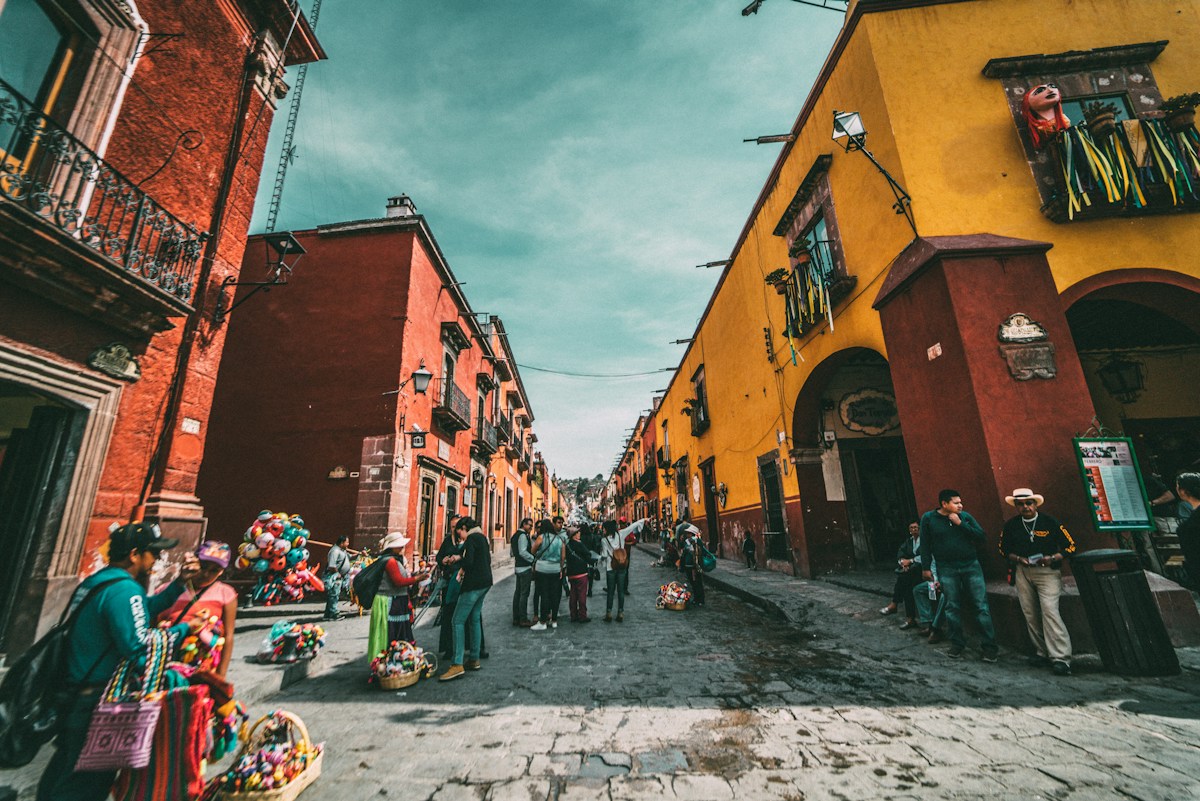
Mexico City rewards the traveler who slows down
A city of nine million people asks you to stop rushing, and the reward is everything you almost missed.
Advertisement
The traffic teaches patience first
We learned to stop checking the time somewhere on Avenida Insurgentes, stuck in a sesero taxi while a man sold tamales oaxaqueños between lanes of unmoving cars, his insulated cart exhaling steam into the exhaust fumes. Mexico City does not apologize for its size. The metropolitan area stretches wider than greater London, and getting anywhere by car during peak hours is an exercise in surrender. The locals have made peace with this; they read, they nap, they argue on the phone. We started doing the same, and the city opened up precisely when we stopped trying to outrun it.
Breakfast matters more than dinner
At Fonda Margarita, a cinderblock room in Narvarte with no sign and a line that forms before seven in the morning, the chicharrón en salsa verde arrives in a clay bowl still crackling faintly from the heat, the pork rind softening into the tomatillo sauce as you eat. There is no menu. You take what is in the pots that day, ladled out by women who have been doing this for decades, and you eat standing at a shared table with strangers who clearly know the routine better than you do. Mexico City's reputation runs on mezcal bars and tasting menus, but the city actually wakes up over clay bowls like this one, where breakfast is the meal people take seriously and dinner is an afterthought eaten late and light.
The murals argue with each other
Inside the Palacio de Bellas Artes, Diego Rivera's Man, Controller of the Universe covers an entire wall with gears, microscopes, and a looming portrait of Lenin that got the original version torn down at Rockefeller Center in 1934 before Rivera repainted it here out of spite. Stand close enough and you can see the brushstrokes thicken where he worked fast, trying to finish before the light changed in the hall's high windows. Walk two blocks to the Zócalo and the Templo Mayor ruins sit excavated below street level, Aztec stonework visible beneath a colonial cathedral that was built directly on top of it. The city does not hide its arguments with its own history. It stacks them, visibly, and leaves you to notice the seams.
The city does not hide its arguments with its own history. It stacks them, visibly, and leaves you to notice the seams.
Xochimilco is not what the photos suggest
The trajineras are real, brightly painted, and full of tourists drinking beer at ten in the morning, but the canals themselves run quiet for long stretches between the party boats, past chinampas where farmers still grow lettuce and marigolds on floating plots their families have worked since before the Spanish arrived. We hired a boat at the Cuemanco embarcadero specifically to avoid the main channel, and our poler, a man named Efrén, cut the motadministered route to paddle us past egrets standing still in the reeds. The water smelled of algae and diesel in equal measure. It was not picturesque in the way the postcards promise. It was working agricultural land that happened to be five thousand years old, and that felt like the more honest version.
Roma and Condesa have already changed again
Walk Calle Colima on a Tuesday afternoon and you will hear more English than Spanish in some stretches, a shift that happened fast enough to unsettle residents who watched rents double after 2020. We sat at a sidewalk table outside a bakery that didn't exist three years ago, eating conchas next to a couple discussing their visa renewal in flat Californian vowels. This is not a complaint so much as an observation: the city absorbs people the way it absorbs everything else, folding new arrivals into its own rhythm rather than the other way around. Whether that holds for another decade is an open question. For now, walk a few blocks further into Doctores or Obrera, where the city still sounds entirely like itself.
Leaving is the hardest part to plan
By the time we reached Benito Juárez International, we understood why people who move to Mexico City rarely leave for good. It is not an easy place to love correctly on a short visit. It asks for time, for wrong turns, for meals eaten alone at counters. But get that right, even once, and the rest of the itinerary stops mattering.
Advertisement