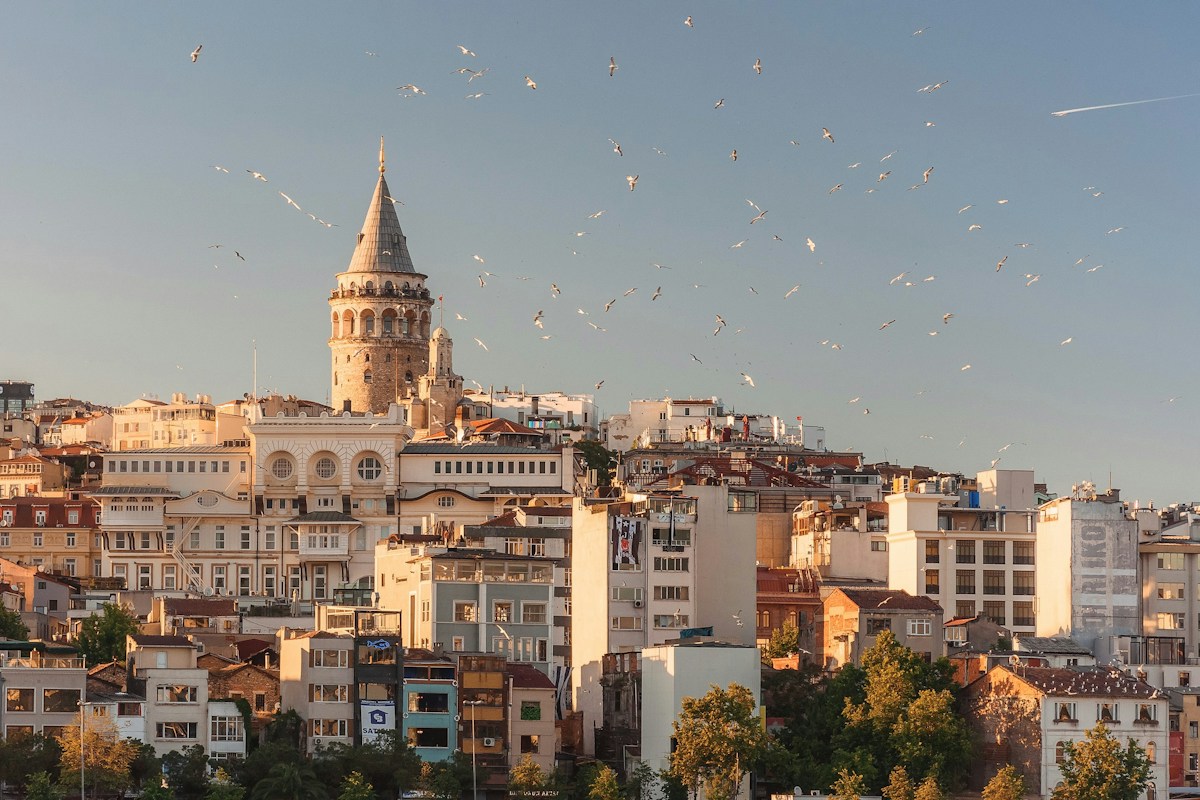
Istanbul holds two worlds, and refuses to choose
The city that straddles Europe and Asia isn't confused about its identity — it's simply done explaining itself to you.
Advertisement
The Bosphorus does not care about your itinerary
We arrived by ferry from Kadıköy on a Thursday morning in late October, when the light over the strait has that particular grey-gold quality that makes everything look slightly mythologized. The water was the color of old pewter, and the engines of a container ship heading toward the Black Sea drowned out all conversation for a full minute. Istanbul does this constantly — interrupts you, reasserts itself, reminds you that it has been a working city for three thousand years and will continue being one long after your return flight. The Bosphorus is not scenery. It is infrastructure, thoroughfare, border, and mirror all at once. Standing at the rail of that ferry, breathing diesel and salt air, we understood something that no guidebook had prepared us for: this city is not performing for tourists. It is simply going about its business, and it has graciously allowed us to stand nearby.
What the Grand Bazaar actually teaches you
The Kapalıçarşı — the Grand Bazaar — has a reputation that precedes it badly. Most first-timers walk in braced for chaos and come out feeling vaguely conned, having bought a scarf they didn't want. We suggest going back on a Tuesday at eleven in the morning, when the coach groups haven't arrived and the light through the painted vaults falls in long dusty columns onto the cobblestones. Watch the traders drink tea, argue, and largely ignore you. The bazaar has been continuously operating since 1461, and it has developed its own internal weather system — cooler than the streets outside, acoustically strange, smelling of leather and rosewater and something metallic that we could never identify. The lesson it teaches, if you let it, is that commerce and community are not opposites. This place was a neighborhood before it was an attraction.
The mosques reward patience over piety
We are not a religious organization, and we are not suggesting you pretend to be. But the Süleymaniye Mosque, completed in 1558 under the architect Mimar Sinan, offers something that has nothing to do with faith: a lesson in the relationship between geometry and silence. The interior is vast without feeling cold. The pencil-thin minarets outside give no hint of the warmth inside, where hundreds of small windows diffuse the light so evenly that the space seems to generate its own. Visit at midday on a weekday, remove your shoes, sit on the carpet near the back, and wait. After perhaps ten minutes, the hum of the city simply recedes. You can hear your own breathing. In a city this loud, that is not a minor thing.
Istanbul is not performing for tourists — it is simply going about its business, and has graciously allowed us to stand nearby.
Beyoğlu after dark belongs to nobody and everybody
The neighborhood of Beyoğlu on the European side has been called decadent, cosmopolitan, and dangerous at various points in its history, often simultaneously. Today it is all of those things in a minor key. Walking up İstiklal Caddesi at ten in the evening, we passed a wedding party spilling out of a meyhane, three different men arguing over a backgammon board outside a tea house, and a teenager in a Metallica shirt eating a simit alone on a curb. The street smells of grilled meat, exhaust, and that particular sweetness of roasting chestnuts that seems to belong to no specific century. Beyoğlu does not have a defining character so much as it has an ongoing argument about what it wants to be — and watching that argument in real time is more interesting than any curated experience we could recommend.
The food asks for your full attention
At Çiya Sofrası in Kadıköy market, chef Musa Dağdeviren has spent decades reconstructing Ottoman and Anatolian dishes that were quietly disappearing from collective memory — sour pomegranate stews, lamb braised with dried mulberries, vegetables preserved in ways that taste ancient because they are. We ordered something we couldn't read, pointed at a tray, and received a small bowl of green lentils cooked with sour grape molasses that stopped our conversation entirely. That's the benchmark Istanbul sets for eating: not novelty, not theater, but a dish that makes you put down your fork for a moment and reconsider what you thought you knew about flavor. The city does this across registers, in every neighborhood, at nearly every hour.
Why we keep coming back
Istanbul is the only city we know that makes you feel both enormous and irrelevant at the same time. It has absorbed Byzantines and Ottomans and modernists and tourists, and it wears all of those layers without apology or nostalgia. The best thing we can tell you is this: resist the urge to summarize it. The city will outlast any conclusion you draw about it, usually before you've even left.
Advertisement