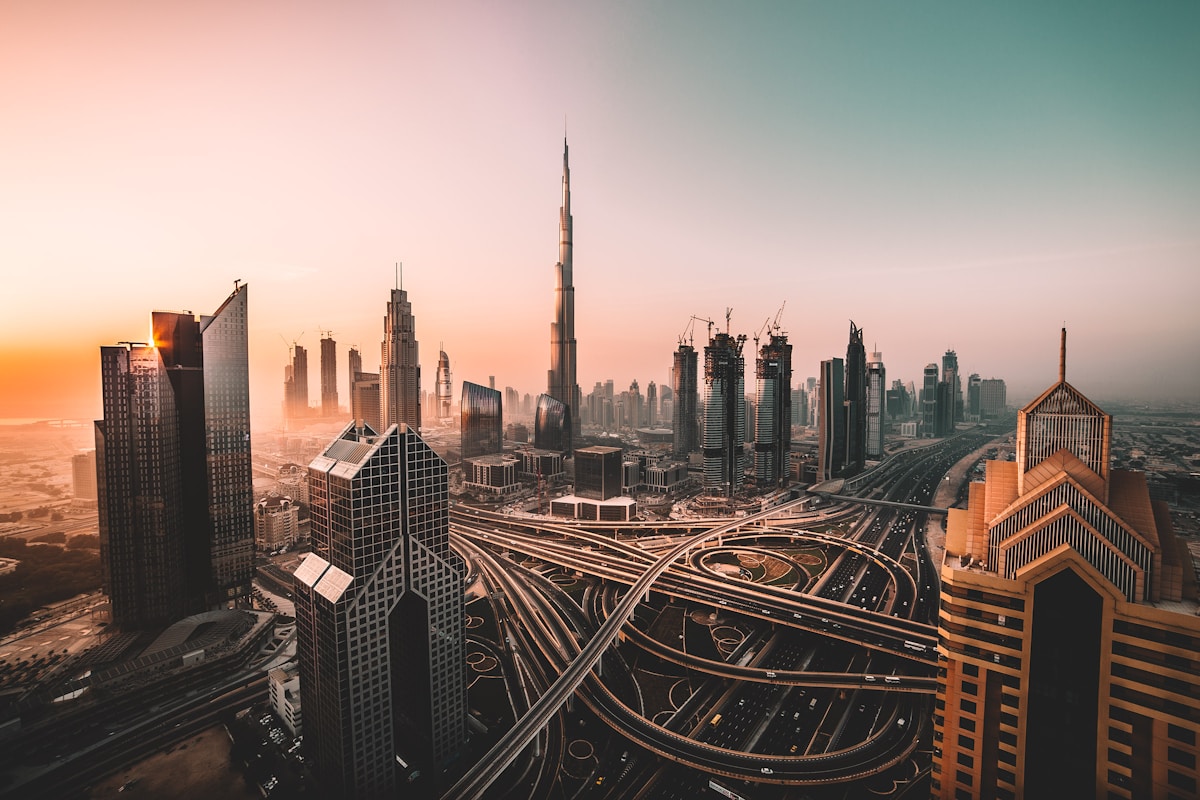
Dubai keeps rebuilding itself, and that's the point
A city that treats permanence as optional has quietly become one of the most coherent places on earth to think about the future.
Advertisement
The desert never actually left
We forget this standing in the Dubai Mall's refrigerated hush, but the sand is still doing its work underneath everything. Drive twenty minutes past the last cluster of towers in Dubai South and the asphalt simply gives up, dissolving into dunes the color of raw sugar. At the Al Marmoom Desert Conservation Reserve, just after sunrise, the quiet has a texture to it — no hum of air conditioning, no construction cranes, just wind moving sand against sand in a sound like someone shuffling dry paper. The city's engineers like to talk about Dubai as a feat of will against nature. Out here you understand it's closer to a negotiation, one the desert could reclaim within a generation if everyone simply stopped paying attention.
Old Dubai is a working neighborhood, not a museum
Across the creek from the glass towers, the Deira spice souk still functions as a wholesale market first and a photo opportunity second. Burlap sacks of sumac and dried lime sit open to the air, and the smell — cardamom mostly, sharp and a little medicinal — clings to your clothes for the rest of the day. Men haul pallets of saffron tins on hand trucks past tourists taking pictures of the saffron tins. Nobody performs for the cameras because nobody needs to; the abra boats crossing to Bur Dubai cost one dirham and carry commuters, not sightseers. This is the part of the city that complicates the skyline narrative: Dubai didn't erase its past so much as it kept the past employed.
Scale here is a design philosophy, not an accident
Standing at the base of the Burj Khalifa at dusk, we're less struck by its height than by how deliberately the whole Downtown district was built to make you feel small in a specific, curated way. The fountain show on the lake below runs on a schedule as precise as a transit timetable, water jets syncing to Andrea Bocelli with an exactness that feels almost aggressive. It's easy to be cynical about this kind of engineered awe until you notice the Emirati families picnicking on the lawn nearby, completely unbothered by the spectacle, treating the world's tallest building the way other cities treat a decent park. Scale, in Dubai, is infrastructure. It's meant to be lived with, not just photographed.
The desert could reclaim this place within a generation if everyone simply stopped paying attention.
The food scene reveals who actually lives here
Ravi Restaurant in Satwa has been serving the same Pakistani karahi since 1978, on plastic tables under fluorescent light, to a clientele of taxi drivers, construction supervisors, and the occasional hedge fund analyst who heard about it from a driver. The butter chicken arrives too hot to eat for the first five minutes, and that's correct. Dubai's restaurant press obsesses over tasting menus in the Design District, and those kitchens are genuinely good, but Ravi tells you more about the city's actual population — eighty-five percent foreign-born, a labor force from Kerala and Lahore and Manila that built the towers and now feeds everyone inside them. You learn more about Dubai's social architecture from a four-dollar plate of daal than from any skyline tour.
Advertisement