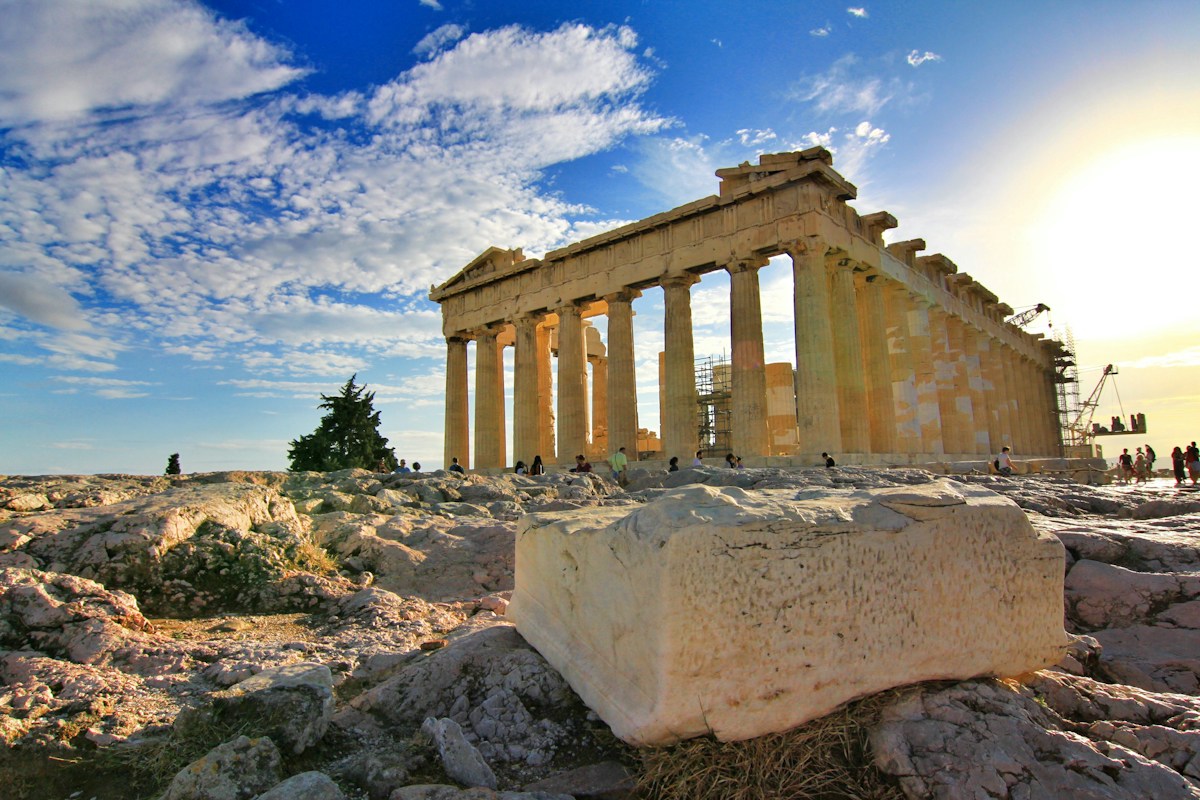
Athens is not a city you visit — it's one you revise
Every return trip to the Greek capital dismantles whatever you thought you understood about the last one.
Advertisement
The city refuses a single reading
Most capitals have a logic you can crack on a first visit. Athens declines to cooperate. We arrived expecting marble and myth and found instead a city that holds antiquity and disorder in the same hand without apology. The Acropolis is, of course, always there — visible from rooftops, from taxi windows, from the middle of arguments about where to eat — but its presence does something stranger than inspire. Standing on the Areopagus rock at dusk, when the limestone turns the precise amber of old bone, we felt less like tourists and more like late arrivals to a conversation that had been going on for two and a half millennia without us.
Marble fatigue is real, and the answer is marble
There is a moment that happens to almost every visitor, usually around day two, when the density of antiquity becomes genuinely overwhelming. Our cure for it — counterintuitively — was the National Archaeological Museum on Patission Street. Not because it simplified anything, but because it forced a slower gear. The Antikythera mechanism sits in a glass case looking less like a 2,000-year-old analogue computer than a salt-crusted chunk of corroded bronze. Knowing what it is and seeing what it looks like creates a productive dissonance. The room around it is never as crowded as it should be, which is its own kind of gift.
The neighbourhood that changed our itinerary
We had planned to spend one afternoon in Metaxourgeio, the former garment district west of Omonia, and ended up returning three times. It is not a pretty neighbourhood in the way that Plaka is pretty. The streets smell of exhaust and, faintly, of the jasmine someone has trained up a crumbling neoclassical facade. What kept drawing us back was the gallery density — serious contemporary work in spaces that haven't been polished into submission — and the particular quality of the light at four in the afternoon, when the low sun makes even peeling paint look considered. Athens does not curate itself for your comfort, and Metaxourgeio is the most honest expression of that fact.
Athens does not curate itself for your comfort, and Metaxourgeio is the most honest expression of that fact.
Eating here is an argument, not a transaction
The food culture in Athens runs on disagreement. Every Greek we met had a firm position on where to eat magiritsa, on whether a specific taverna in Pangrati had declined since the ownership changed, on the precise ratio of lemon to egg in a proper avgolemono. We ate at Seychelles, a restaurant in Keramikos where the menu reads like a provocation — recognisable ingredients, unrecognisable combinations — and found ourselves in a conversation with the table next to us before the second course arrived. The wine was a Assyrtiko from Santorini, cold enough that condensation ran down the glass and pooled on the tablecloth. The argument, pleasantly, resolved nothing.
What the heat actually does to you
August in Athens is not an accident. We went knowing it would be brutal and found that the heat does something useful: it enforces a rhythm. The hours between two and five in the afternoon belong to the city, not to visitors. We learned to stop fighting this and instead retreated to the reading room of the Gennadius Library on the American School campus in Kolonaki, where the air conditioning is aggressive and the shelves hold one of the finest collections of Hellenica in the world. Outside, the city shimmered. Inside, we read about Lord Elgin with the particular pleasure of reading about a controversy while sitting close to its source.
What we take home isn't souvenir-shaped
Athens does not send you home with a clean story. We left with the smell of dried oregano from the central market still somehow in a jacket pocket, with opinions we hadn't arrived with, and with a nagging sense that the city had revealed approximately one-fifth of itself. That ratio feels correct. The places that give you everything on the first visit tend to have nothing left on the second. Athens is precisely the opposite — a city that gets more specific, more contradictory, and more necessary each time you consent to be confused by it.
Advertisement