US Navy Selected CMV-22B Osprey Over Greyhound Despite Lower Payload
The Navy's decision to replace the C-2A Greyhound with the tilt-rotor Osprey prioritized operational flexibility and F-35C engine transport capability over raw cargo capacity.
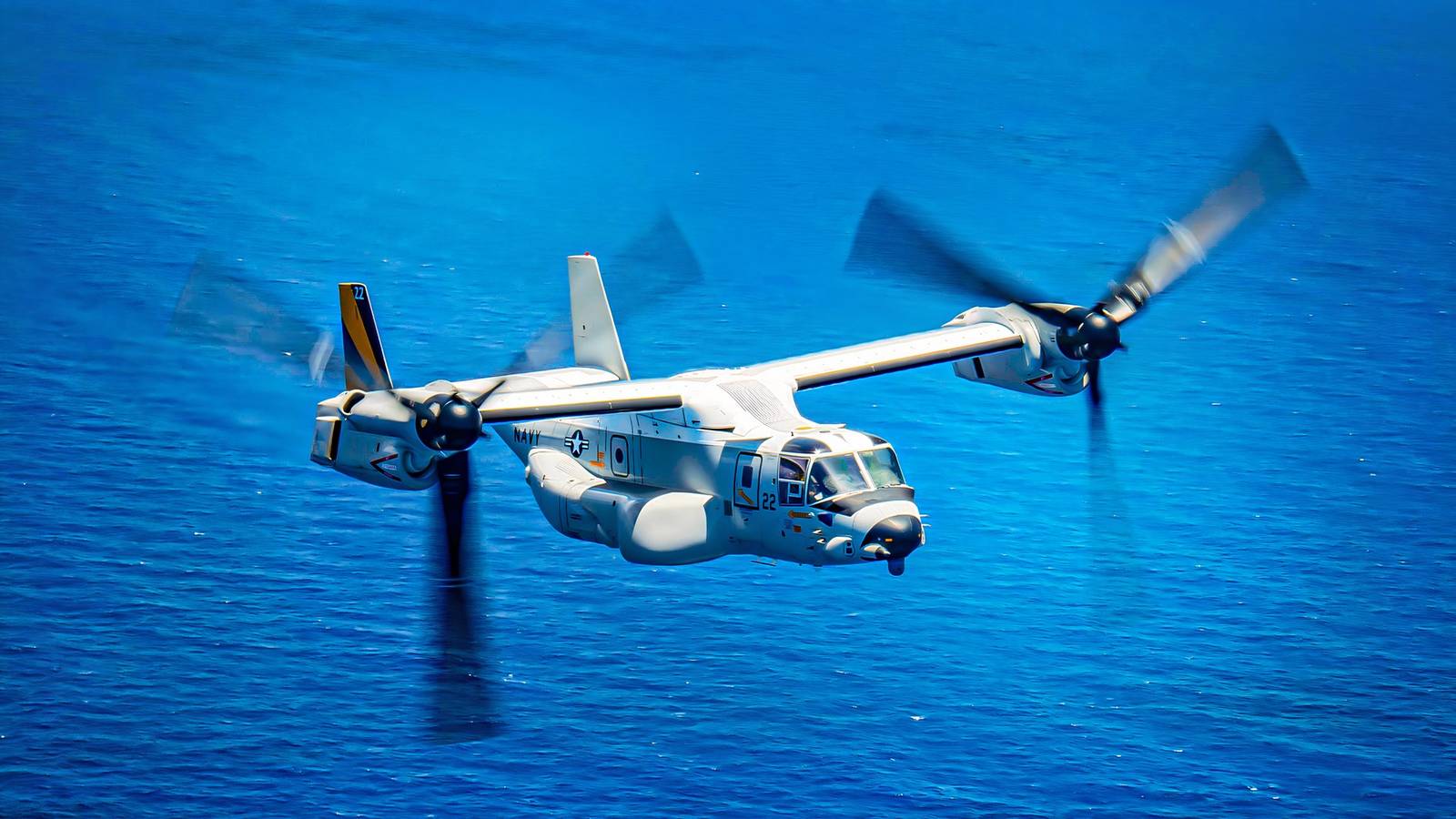
The US Navy has officially transitioned to the CMV-22B Osprey as its primary carrier onboard delivery aircraft, concluding a replacement search that spanned more than four decades. The tilt-rotor platform, jointly produced by Bell Textron and Boeing, achieved initial operating capability in December 2021, marking the end of the road for the Northrop Grumman C-2A Greyhound.
The Navy's pursuit of a Greyhound successor dates to the early 1980s, when concerns about the turboprop hauler's aging airframe prompted the service to launch the Multi-Mission Tactical Support/Carrier-based Experimental Aircraft competition. By that point, the Greyhound had already logged two decades of fleet service, with initial airframes undergoing overhauls as early as 1973.
Despite carrying approximately 4,000 pounds less cargo than the Greyhound—which boasts a maximum gross takeoff weight of 57,500 pounds—the Osprey variant emerged as the preferred choice. The selection hinged largely on the aircraft's ability to transport the F135 power module for the Lockheed Martin F-35C Lightning II without disassembly, a capability critical to maintaining carrier air wing readiness during extended deployments.
The CMV-22B is derived from the Marine Corps' MV-22 platform and represents a medium-sized tilt-rotor design capable of vertical takeoff and landing. This operational flexibility allows the aircraft to operate from a wider range of platforms and in more challenging maritime conditions than its fixed-wing predecessor, which relied on conventional catapult launches and arrested landings.
The Greyhound's twin Allison T56-A-425 turboprop engines provided a cruise speed of roughly 260 knots and a service ceiling of 30,000 feet during its decades-long tenure. While those specifications proved adequate for routine logistics missions, the arrival of fifth-generation carrier aviation and the corresponding need for intact engine transport ultimately rendered the venerable hauler obsolete. The Navy has valued enhanced versatility over raw payload capacity in its modernized carrier supply chain.
Planning United States



Plan this trip
You've read what changed in United States. Here's what it costs.