How Widebody Jets Land Safely In Near-Zero Visibility
Commercial aircraft can touch down even when pilots cannot see the runway, thanks to a sophisticated combination of radio signals, automation, and crew monitoring known as autoland.
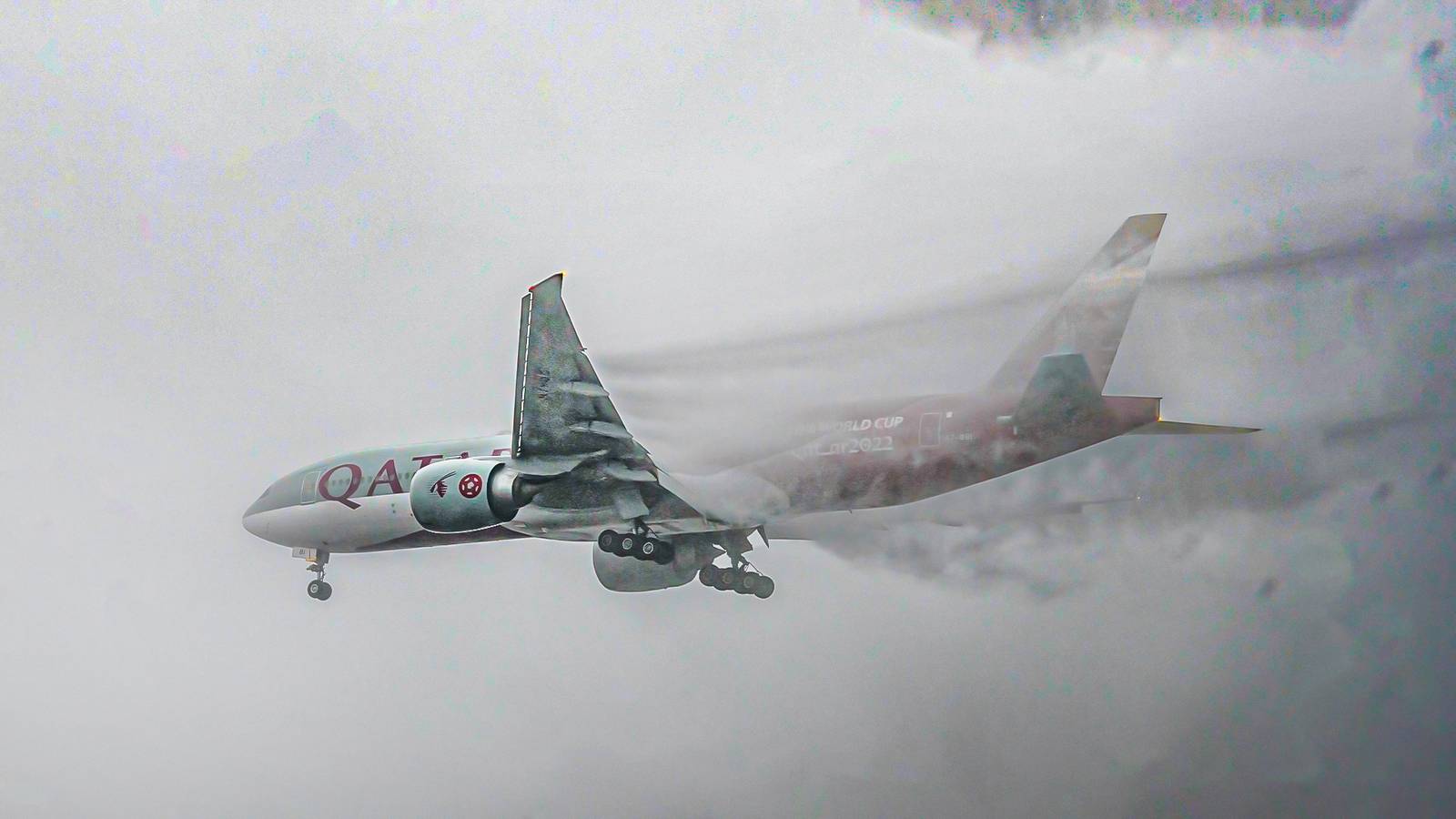
When dense fog blankets an airport, reducing visibility to almost nothing, commercial widebody aircraft can still complete landings through one of aviation's most technically demanding procedures. The autoland system enables jets to touch down safely during Category III instrument approaches, even when the runway remains invisible until after the wheels make contact with pavement.
Contrary to popular belief, autoland does not operate as a hands-off system that removes pilots from the landing equation. Instead, the technology functions as a monitored partnership between certified aircraft, specially equipped airports, advanced automation systems, and trained flight crews who remain fully engaged throughout the approach. Pilots continuously verify aircraft performance, confirm flight modes, and stand ready to intervene immediately should any parameter deviate from expected values.
The foundation for every autoland procedure is the Instrument Landing System, which has remained the international standard for precision approaches in very low visibility conditions despite advances in satellite navigation. The ILS transmits two primary radio beams from ground equipment positioned alongside the runway: a localizer signal that projects from the runway centerline to provide lateral guidance, and a second component that delivers vertical path information.
During the approach phase, multiple autopilot computers process these radio navigation signals alongside inputs from radio altimeters and redundant flight control systems. This coordinated network guides the widebody airliner from several thousand feet above the ground down to the runway centerline with extraordinary precision, following what amounts to an invisible highway through the fog.
The capability allows airports to maintain operations during weather conditions that would otherwise force closures and widespread delays. However, successful autoland procedures require all elements of the system—aircraft certification, ground equipment, airport infrastructure, and crew qualifications—to meet stringent regulatory standards before operations can proceed in near-zero visibility conditions.