Delta-Aeromexico Joint Venture Survives DOT Challenge After Appeals Court Ruling
The Eleventh Circuit Court of Appeals overturned a Department of Transportation order that would have dissolved the carriers' antitrust-immunized partnership, citing inconsistent regulatory standards.
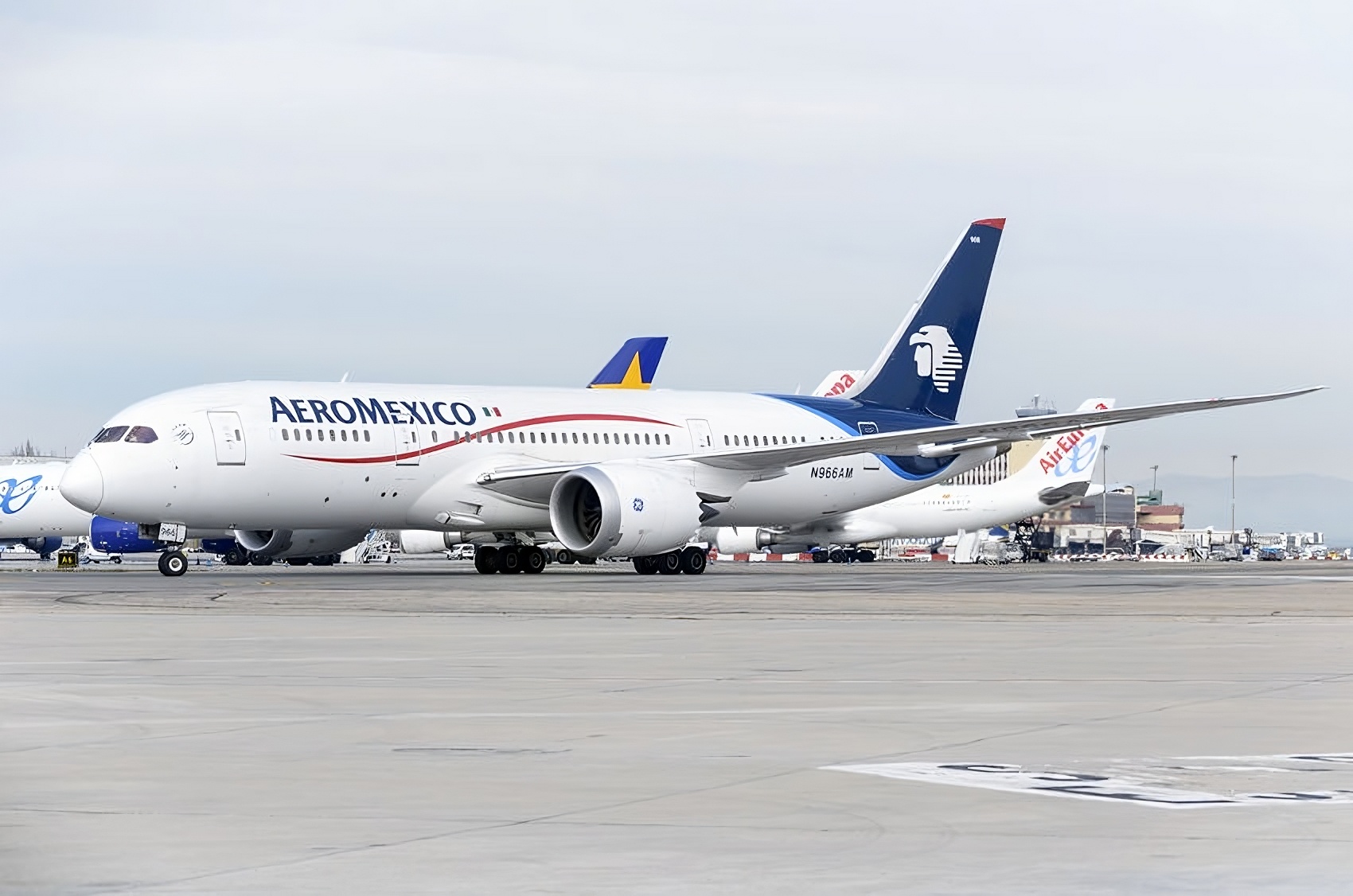
Delta Air Lines and Aeromexico have secured a legal victory allowing them to maintain their revenue-sharing partnership after an appeals court vacated a Department of Transportation directive that sought to dismantle the arrangement. The Eleventh Circuit Court of Appeals determined that federal regulators failed to provide adequate justification for breaking up the antitrust-immunized joint venture, which permits the carriers to coordinate flight schedules, capacity planning, and ticket pricing across U.S.-Mexico routes.
The partnership received initial government authorization in 2016 with conditions requiring the airlines to relinquish 24 slot pairs at Mexico City's primary airport and four at New York's JFK. That approval carried a five-year term that was subsequently extended during the pandemic while transportation officials conducted a fresh evaluation of the arrangement.
Federal regulators eventually moved to withdraw approval, arguing that competitive conditions in Mexico had deteriorated significantly. The DOT pointed to Mexican aviation authorities' withdrawal of airport slots from American carriers at Mexico City, an opaque slot allocation process, and the forced relocation of dedicated cargo operations to a newer facility. Transportation officials also expressed concern about market concentration, noting the partnership controlled nearly 60 percent of passenger traffic and 73 percent of cargo volume between Mexico City and United States destinations.
The appeals panel found fault with the government's analytical approach, however. According to the court, when regulators initially approved the partnership, they evaluated competition across 1,687 city pairs between the two countries. The subsequent review focused primarily on Mexico City routes, which represented just 21 percent of total flights, without sufficiently explaining the shift in methodology.
Perhaps most damaging to the government's position was the court's observation of what it characterized as a double standard. The DOT permits American Airlines and United Airlines to operate similar immunized partnerships with Japanese carriers despite Tokyo's Haneda Airport remaining partially restricted to U.S. carriers—who hold only 18 daily slot pairs—and lacking fully implemented Open Skies compliance. Regulators argued Japanese authorities demonstrated greater cooperation than their Mexican counterparts, but the court found this reasoning failed to establish a clear threshold for determining which markets qualify as sufficiently open for joint venture approval.
The partnership will continue operating under its current structure, allowing both carriers to function as a single entity on transborder routes while maintaining separate corporate identities.