Boeing Phases Out Engine Chevrons as 777X Adopts Quieter Tech
The planemaker is moving beyond the sawtooth-edged engine nozzles that debuted on the 787 Dreamliner, signaling a shift in noise-reduction strategy as newer designs render the NASA-developed technology less necessary.
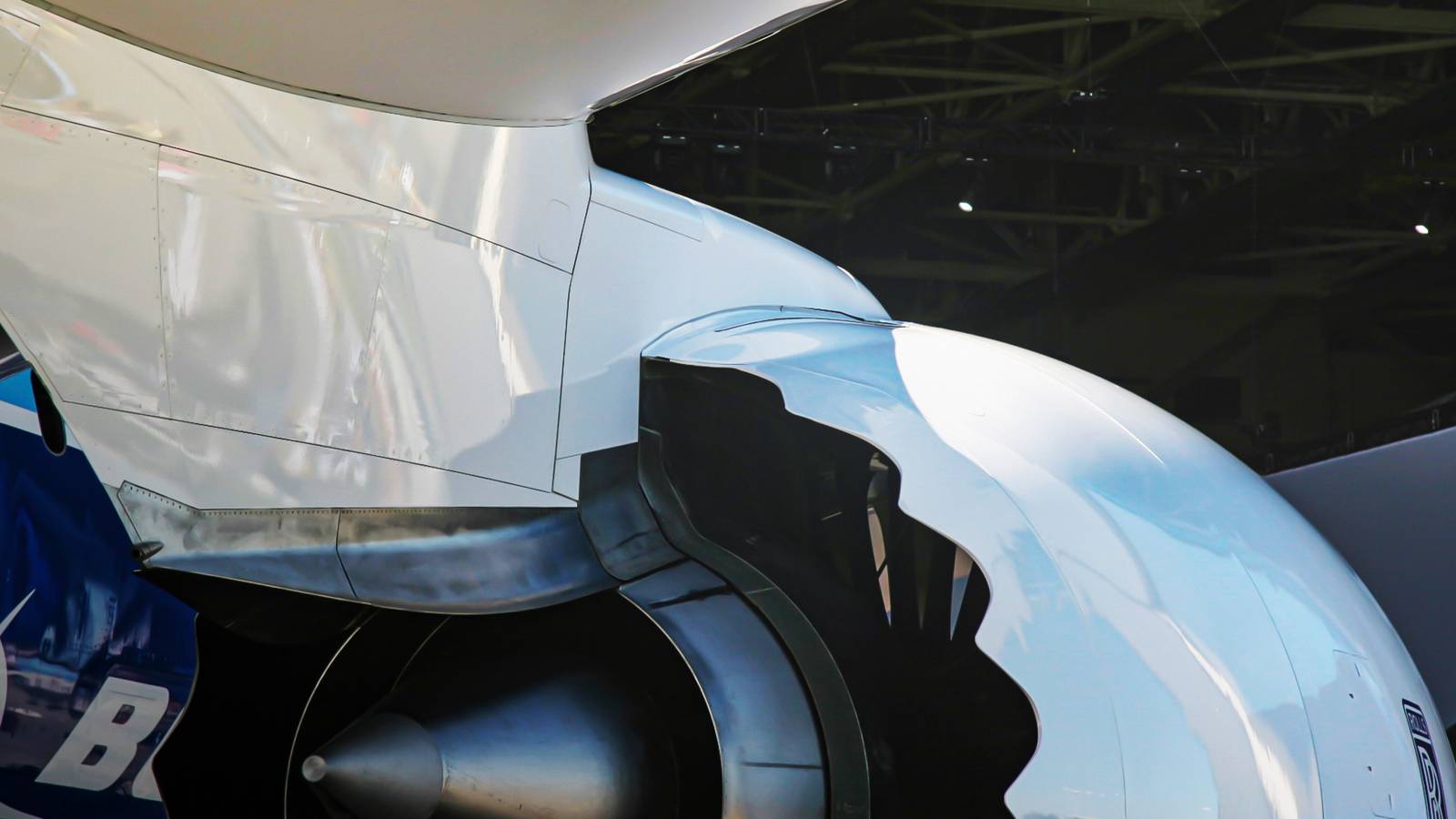
Boeing is stepping away from engine chevrons—the distinctive sawtooth-edged nozzles introduced on the 787 Dreamliner—as it prepares the 777X for service, marking the end of a transitional noise-reduction technology that Airbus never adopted for its commercial fleet.
The chevron design emerged from research conducted by NASA, which began flight testing jagged-edged engine nozzles in 2001 using a modified Learjet 25. NASA researchers discovered that serrated patterns originally used on military jets to mask infrared signatures could also reduce engine noise by improving the mixing of hot exhaust with cooler bypass air. Early tests showed the chevron nozzle achieved meaningful noise reduction with only a negligible 0.25 percent thrust penalty—a tradeoff NASA likened to the difference between running two lawnmowers versus one.
Boeing embraced the technology for its cleansheet 787 program and subsequently applied variants to the 747-8, 737 MAX, and initially planned them for other models. The GEnx engine powering the 747-8 incorporated chevron elements derived from Dreamliner development, enabling an affordable upgrade path from the 747-400. The manufacturer deployed the noise-cutting feature across multiple programs as regulators and airport communities pressed for quieter operations.
Despite widespread use on Boeing's recent aircraft, the upcoming 777X will not feature chevrons. While the widebody incorporates numerous 787 innovations including expanded composite materials and electrochromic windows, its engines represent a technological leap beyond what chevrons were designed to address. Advances in engine architecture and materials have rendered the sawtooth edges less necessary for achieving noise targets, according to published reports.
Airbus never incorporated chevrons into its commercial aircraft designs, opting instead for alternative noise-reduction strategies on models including the A350 and A380. The divergent approaches highlight how manufacturers can meet identical regulatory requirements through different engineering paths—and how interim solutions sometimes give way to more integrated designs as core technologies evolve.
Plan this trip
Here's what it costs.