In This Guide
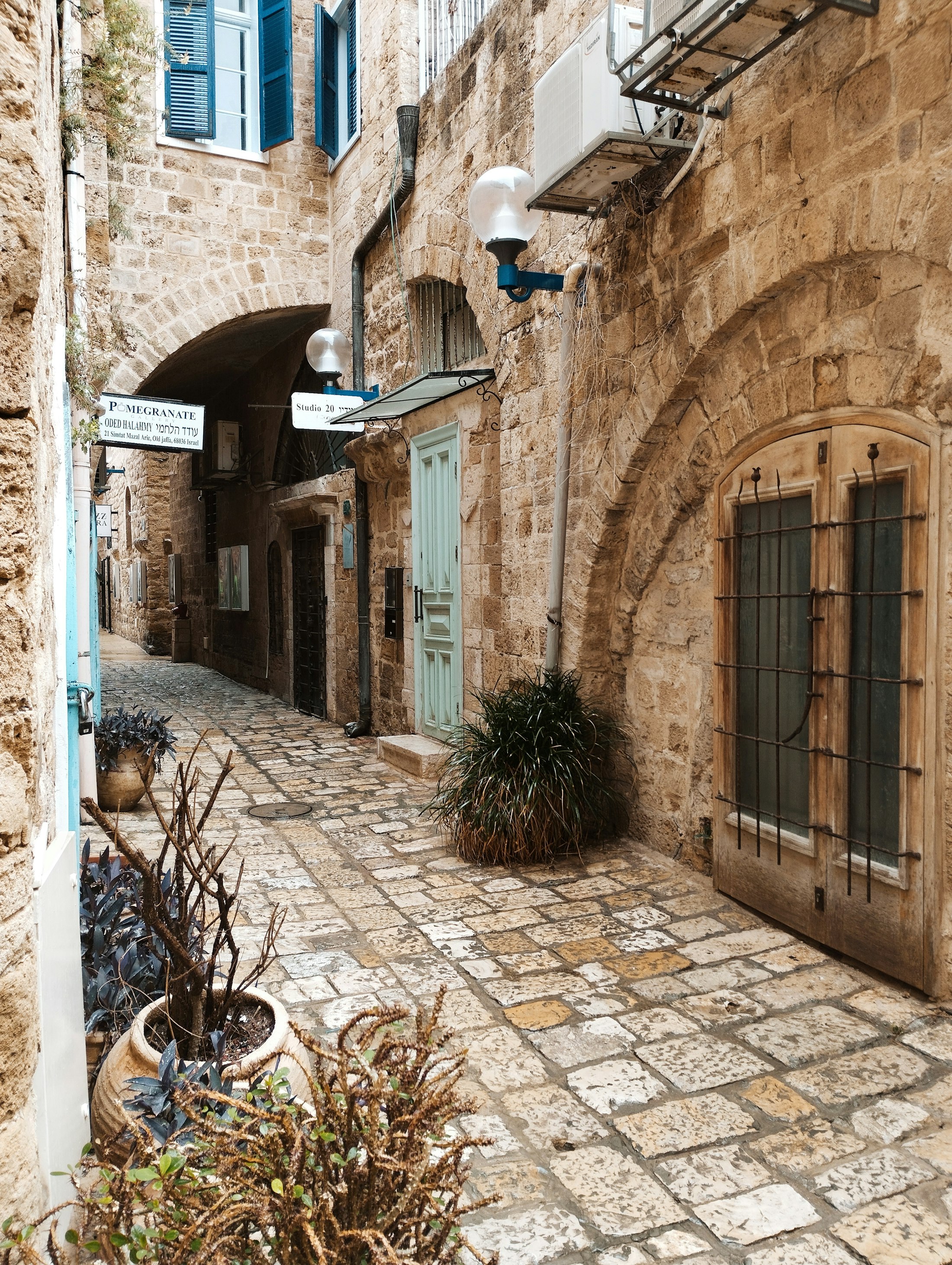
By ten on a Friday morning, the air on Rehov HaAliya is already thick with the smell of roasting peppers. Women carry plastic bags heavy with tomatoes. Men argue over the quality of hawaij at spice stalls that have been run by the same families since the 1930s. This is Kerem HaTeimanim — Tel Aviv's Yemenite Quarter — and the weekly countdown to Shabbat is the closest thing the neighborhood has to a public performance.
The ritual centers on matbucha, the slow-cooked tomato-and-pepper condiment that Yemenite, Moroccan, and Libyan families all claim as their own. Every household has a version. Every version is the correct one. By Friday afternoon the pots are off the flame, the bread is covered, and the argument is tabled until next week.
1. Why Friday, and why this neighborhood
Kerem HaTeimanim was established in 1904 by Jewish immigrants from Yemen, decades before Tel Aviv formally existed as a city. The families who settled here brought a food culture built around communal Shabbat meals — slow-braised meats, kubaneh bread baked overnight, raw zhug ground by hand. Matbucha wasn't originally part of that canon; it drifted in with North African families who moved into the quarter's edges in the 1950s. The dish stuck because it solved a practical problem: cooked salads keep well without refrigeration through a long Shabbat.
Friday is the only day the full cycle is visible in public. Vendors at the Kerem's open-air stalls start unloading crates of Roma tomatoes by 7 a.m. By midmorning, the home cooks are already at their stovetops. Walk through the residential streets between Rehov Yavne and Rehov HaKishon around 11 a.m. and you can smell garlic hitting hot oil from open kitchen windows.
Pro tip:The neighborhood is small — roughly six blocks by four. You don't need a map. Use HaAliya Street as your spine and wander from there.
2. The spice stalls on HaAliya: where the prep starts
Three spice vendors anchor the commercial stretch of Rehov HaAliya. The one most worth your time is Pereg, at the corner near the Kerem synagogue, where the hawaij blends — one for coffee, one for soup — are ground fresh and sold in unmarked plastic bags for around ₪15-25 depending on weight. The coffee hawaij has ginger and cardamom. The soup version adds cumin and turmeric. Both end up in Friday cooking.
I made the mistake of buying hawaij from a tourist-oriented shop on Carmel Market last year. Stale, overpriced, packaged with English labels. The Pereg stall doesn't have English labels. It doesn't need them.
For the matbucha itself, the key purchase is dried sweet peppers — not fresh bells. The better cooks in the quarter char dried peppers over an open flame, then rehydrate them in the tomato base. You'll see bundles of these hanging at stalls along HaAliya, usually ₪10-12 per bundle.
Stay in Tel Aviv
Top-rated hotels near Tel Aviv
Best locations · Verified reviews · Free cancellation
View deals
Expedia →3. Matbucha is not salsa
This needs saying because I've read too many English-language food blogs calling matbucha "Israeli salsa" or "Middle Eastern bruschetta topping." It is neither. Salsa is raw. Matbucha is cooked for at least an hour, sometimes two, until the tomatoes collapse into something dense and almost jammy. The texture should coat the back of a spoon. If it's watery, it's not done.
The defining move is patience. Tomatoes go into a heavy pot with olive oil and garlic. The roasted peppers are added once the tomatoes break down. Then the heat drops to barely a simmer. Some cooks add a single dried chile; others insist on paprika only. Nobody adds sugar — or if they do, they don't admit it.
Pro tip:If a restaurant serves matbucha that's bright red and chunky, it was made in a rush or from a jar. The real thing is dark, almost brick-colored.
4. Where to eat someone else's version
Skip Shuka HaCarmel for matbucha. The prepared-food stalls there cater to tourists and the markup reflects it.
Ha'achim (Rehov HaKishon 3) is a no-frills grill joint where the salatim — the spread of small dishes that arrives before your kebab — include a matbucha that's been on the stove since morning. It's dark, oily in the right way, served with a torn lahuh flatbread. A full meal with skewers runs about ₪70-90. They close early on Fridays, usually by 2 p.m.
Shmuel's, a few doors down, gets more foot traffic and more online recommendations. I think the matbucha there is thinner and less interesting than Ha'achim's, but the kubaneh bread is exceptional — pulled apart in layers, served with grated tomato and hard-boiled egg. Worth going for the bread alone.
Pro tip:Ha'achim doesn't take reservations. Arrive by noon on Friday if you want a table.
Stay in Tel Aviv
Top-rated hotels near Tel Aviv
Best locations · Verified reviews · Free cancellation
View deals
Expedia →5. The synagogue detour you didn't plan on
Beit Knesset Sha'arei Tziyon on Rehov Pines is one of the oldest Yemenite synagogues in Tel Aviv. On Friday afternoons it fills with men chanting liturgical poetry in a melodic tradition that sounds nothing like the Ashkenazi services most visitors have encountered. The singing is nasal, ornamented, and follows scales closer to Arabic maqam than to European cantorial music.
You can stand at the doorway and listen. Nobody will chase you off, but dress modestly — long pants, covered shoulders.
6. What's happening to the quarter
Kerem HaTeimanim sits on some of the most expensive real estate in the Middle East. The Carmel Market borders it to the east. The beach is a ten-minute walk west. Developers have been circling for years, and you can see the results: new-build luxury apartments with floor-to-ceiling glass rising above one-story houses with corrugated roofs.
The demographic math is blunt. Younger Yemenite families move to Bat Yam or Holon where rent is a third of what landlords here demand. The spice sellers and the home cooks skew older. I don't know how many more decades the Friday ritual survives in its current form.
That's not a reason to romanticize the neighborhood as frozen in amber. It's a reason to pay attention now.
7. Zhug, the other Friday essential
Matbucha gets the attention, but zhug is the condiment that actually defines Yemenite cooking. It's a raw chile paste — green or red, heavy on cilantro and garlic — pounded in a mortar. The green version is incendiary. A tablespoon will reshape your afternoon.
At the Pereg stall on HaAliya you can buy freshly ground zhug for about ₪12 in a small container. They'll ask if you want it mild or hot. "Mild" still has genuine heat. The stuff is meant to accompany kubaneh and jachnun, the slow-baked Shabbat morning breads, but people put it on everything — eggs, grilled meat, hummus.
Pro tip:Zhug oxidizes fast. Buy it Friday, use it by Sunday. It won't taste right by Tuesday.
8. Timing your Friday in the Kerem
Arrive by 10 a.m. The stalls are stocked, the cooks are shopping, and the light on the limestone buildings is good if you care about photographs. By noon the market stalls start packing up. By 2 p.m. most restaurants have closed or are serving their last orders. By 3:30 in winter and 5 p.m. in summer the streets are quiet — Shabbat has started or is about to.
Don't come on Saturday morning expecting the same energy. Saturday in the Kerem is residential silence and closed shutters. The jachnun comes out of private ovens, not restaurant kitchens.
Friday between ten and one. Three hours. That's the window.
Essential tips
The Kerem is a 5-minute walk south from Carmel Market's main entrance on Rehov HaCarmel. Enter via Rehov HaAliya — it dead-ends into the neighborhood.
Bring cash in small bills. Most spice vendors and some restaurants in the quarter don't take cards, or add a surcharge if they do.
Shabbat times shift significantly by season — candle-lighting can be as early as 4:10 p.m. in December or as late as 7:45 p.m. in June. Check times before your Friday visit so you're not caught out by early closures.
If you plan to look into any of the synagogues, cover your shoulders and knees. Men should have a head covering — a baseball cap works.
Ready to visit Tel Aviv?
Book your hotel, flights, and activities through our Expedia-powered search.