In This Guide
- 1.The rotisseries on Rue du Faubourg du Temple
- 2.Parc de Belleville at golden hour
- 3.Where to eat couscous (and where not to)
- 4.The cherry situation, explained
- 5.Pétanque until the streetlights come on
- 6.The wine bars that don't try too hard
- 7.Breakfast is not Belleville's strength
- 8.The walk down through the passage at dusk
The cherries arrive in Belleville before summer does. By the first week of June, they're piled in plastic crates outside every grocer on rue de Belleville — dark, almost black Burlat cherries from the south, sold by the kilo for 4–6€ depending on who you ask and whether you look like you know the difference. You eat them walking uphill, spitting pits into the gutter like everyone else, and by the time you reach the top of the Parc de Belleville the sun is doing that thing where it turns the whole of western Paris into copper.
I came back this June specifically for the cherries, which is maybe an absurd reason to book a flight, but I've built trips around less. What I found was a neighborhood deep in its best season — Tunisian rotisseries running at full blast, pétanque courts occupied until 10 p.m., and a pace that made the Marais feel like an airport terminal.
1. The rotisseries on Rue du Faubourg du Temple
Start at the bottom of the hill. The stretch of rue du Faubourg du Temple between Goncourt and Belleville métro stations has a density of Tunisian rotisseries that I think is unmatched anywhere else in Paris, and I will argue about this. The protocol is simple: you order a half chicken (un demi-poulet, around 6–7€), they pull it off the vertical spit, hack it with a cleaver, and hand it to you in foil with a disc of flatbread and a plastic tub of harissa that will rearrange your afternoon.
Le Président, at 120 rue du Faubourg du Temple, is the one that gets mentioned online. It's fine. But I prefer the smaller place three doors down — no real signage, just chickens turning in the window and a guy who doesn't smile until you've been twice. The spice rub there is heavier on cumin, and the bread is slightly charred, which makes it better.
Don't order the merguez unless you're eating in. Merguez wrapped in foil for a walk is a grease disaster.
Pro tip:Go between 12:30 and 1 p.m. when the spits are fullest and the turnover is fastest. By 2:30 you're getting the dry ones.
2. Parc de Belleville at golden hour
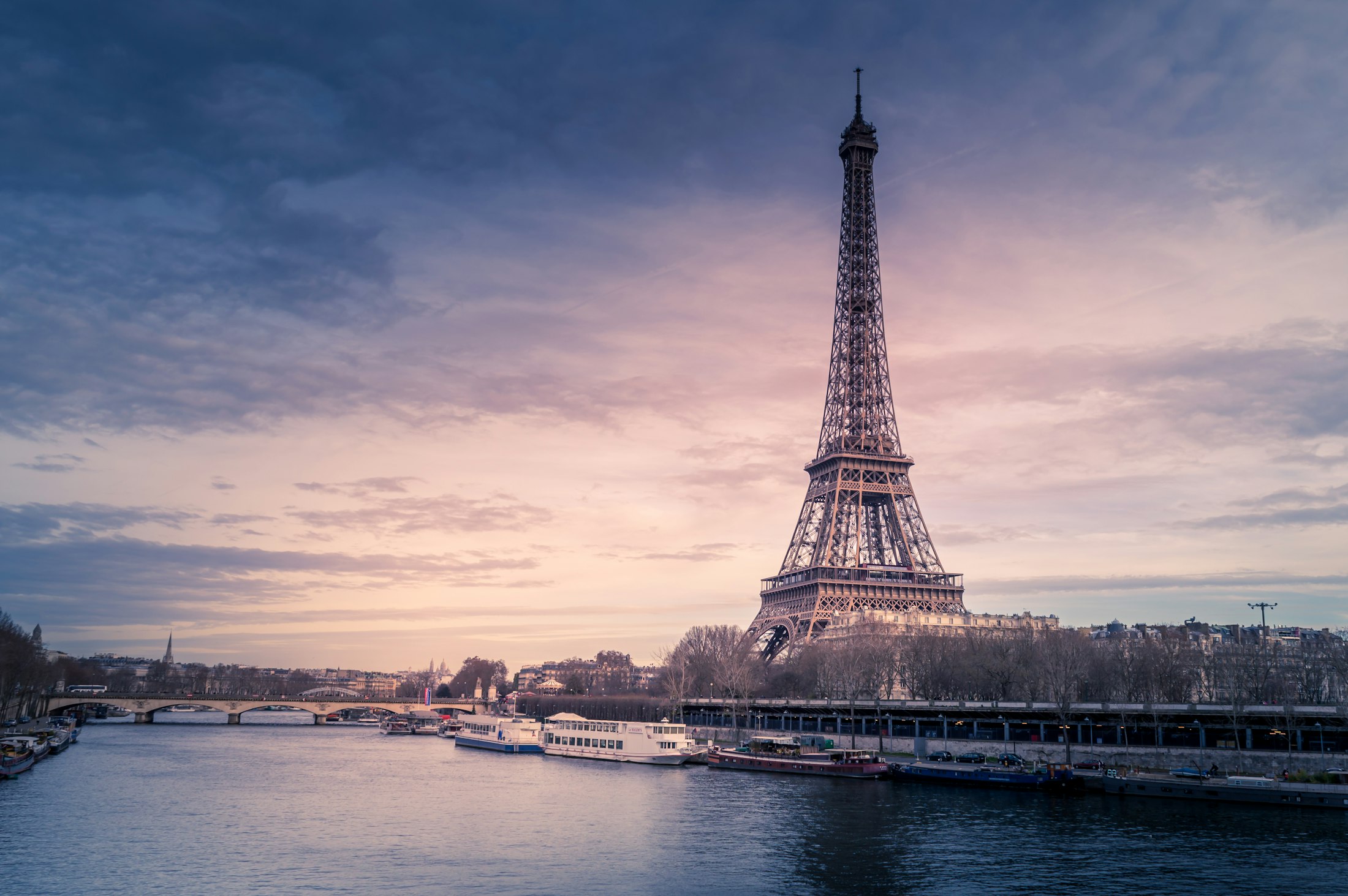
The park sits at the top of the hill, and the view from the upper terrace is the best free panorama in Paris. I know people will say Sacré-Cœur, and those people are wrong — Sacré-Cœur gives you a view clogged with tourists holding selfie sticks and a long walk through bracelet scammers to get there. Belleville gives you the Eiffel Tower, Montparnasse, the full skyline, and almost nobody trying to sell you anything.
In June the light doesn't go gold until about 9 p.m. Bring the cherries. Bring a bottle of rosé if you want, though technically you're not supposed to. The grass terraces fill up with families, couples, clusters of teenagers playing music from a phone. It empties by 10:30.
3. Where to eat couscous (and where not to)
Belleville is the neighborhood where couscous still matters, where it's a Friday staple rather than a novelty, and where a generous portion with lamb and merguez costs 14–18€ instead of the 25€ you'd spend in the 5th. The best I've had this trip was at Le Zerda, 15 rue René Boulanger (technically just outside Belleville proper, near République, but spiritually part of the same orbit). The royal couscous there is 19€ and worth the extra euro — the broth is cinnamon-heavy, the vegetables are cooked just past tender, and the lamb shank falls when you look at it.
Skip Le 404 in the Marais. I know it's famous. I know it has the courtyard. The couscous is adequate and the prices are designed for people who think eating North African food is an event rather than a Tuesday. It's 28€ for a tagine. Come on.
Smaller spots along rue de Belleville itself do a workmanlike couscous for 12–14€. You won't write home about them, but you'll be full and happy, and the mint tea at the end is usually free.
Pro tip:Le Zerda doesn't take reservations for groups under four on weekends. Go Thursday.
Stay in Paris
Top-rated hotels near Paris
Best locations · Verified reviews · Free cancellation
View deals
Expedia →4. The cherry situation, explained
June is the Burlat window — maybe three weeks, four if the weather cooperates. These are the first cherries of the season: fat, soft, almost wine-dark. They bruise if you breathe on them, which is why you'll never see them at Monoprix. You buy them from the guys with folding tables on boulevard de Belleville, especially on Tuesday and Friday mornings when the open market runs from Belleville métro to Couronnes.
Prices fluctuate. Early June I was paying 5.50€/kg; by mid-June it had dropped to 4€ because the glut was on and everyone had more than they could sell. One vendor near the Couronnes end was doing 3.50€ for slightly soft fruit — perfect if you're making clafoutis, which I was, in a friend's kitchen in the 20th, with a recipe that calls for leaving the pits in. (The pits give off a faint almond flavor. Trust the French grandmothers on this.)
By July the Burlats are gone and the Napoleons arrive — yellow, firmer, less interesting. Don't bother.
Pro tip: The Tuesday market is less picked-over than Friday. Arrive by 9 a.m. for the best fruit; by 11 the good vendors are packing up.
5. Pétanque until the streetlights come on
There's a pétanque terrain in the lower section of Parc de Belleville, and in June the games run late. The regulars are mostly men over 60 who've been playing here for decades, and they are not performing for tourists — this is competitive, quiet except for the clack of steel on steel and the occasional argument about a measurement.
You can watch. You can ask to join if you speak some French and don't mind losing. I watched for forty minutes one Wednesday evening and nobody acknowledged me, which I took as acceptance.
The light at 9:15 p.m. in June — long shadows, warm air, the whole city stretched out below. Someone had a portable speaker playing Oum Kalthoum. I stayed until my rosé was warm.
6. The wine bars that don't try too hard
Belleville's natural wine scene is real but mercifully less performative than what you'll find in the 11th. Le Barbouquin, at 3 rue Jouye-Rouve, is half bookshop, half wine bar, and the glasses start at 5€. They stock mostly small French producers and the guy behind the bar will tell you what's good without making you feel stupid, which is more than I can say for certain caves in Oberkampf.
La Cave de Belleville, 51 rue de Belleville, is the other one I keep going back to. It functions as a bottle shop during the day and a bar at night — you can buy a bottle at retail price and drink it there for a 7€ corkage fee, which is the most civilized arrangement in Paris. The terrace is small, maybe eight tables, and it faces east, so you lose the sun early. Go inside.
Aux Folies, on the same stretch at number 8, is not a wine bar — it's a café-tabac with cheap beer (3.20€ for a demi) and a sidewalk crowd that spills into the street. I'm including it because it's the place where Belleville feels most like itself: loud, mixed, no concept of a closing time.
Pro tip:La Cave de Belleville's corkage deal applies to any bottle in the shop. Grab a 9€ Gamay and pay 16€ total for a very good evening.
Stay in Paris
Top-rated hotels near Paris
Best locations · Verified reviews · Free cancellation
View deals
Expedia →7. Breakfast is not Belleville's strength
I'll say it: the neighborhood does not do mornings well. The trendy brunch spots that have cropped up along rue Sainte-Marthe are overpriced and slow — 14€ for avocado toast in a neighborhood where you can eat a full couscous lunch for the same price is a kind of insult.
Your best move is a coffee and a msemen (flaky Moroccan flatbread) from one of the patisseries along boulevard de Belleville. It'll cost you 1.50€ total. Eat it standing up. Move on with your day.
8. The walk down through the passage at dusk
After everything — the chicken, the cherries, the pétanque, the wine — walk down through Passage Plantin. A set of stone stairs cutting between buildings from rue du Transvaal down to rue des Couronnes, narrow enough that you could touch both walls if you stretched. Wisteria grows over the top in June. Someone has potted tomato plants on the landings.
It deposits you back into the noise of the boulevard, where the night markets are setting up and the rotisserie lights are glowing again. The air smells like grilled meat and diesel and something floral you can't identify. My last night this trip, I walked down those stairs and straight into a tabac for a second bottle of rosé, which I drank alone on a bench in the park while Paris turned on its lights below me, and I felt no obligation whatsoever to see a single monument.
Pro tip: Passage Plantin can be slippery after rain. Wear real shoes.
Essential tips
Take Métro Line 11 to Belleville or Line 2 to Couronnes. Belleville station drops you at the bottom of the hill; Couronnes puts you midway up, closer to the park and the market.
The boulevard de Belleville open market runs Tuesday and Friday mornings, roughly 7 a.m. to 2:30 p.m. Cherry season peaks the first three weeks of June — after that you're into July varieties.
Belleville is a cash-friendly neighborhood. Smaller rotisseries, market stalls, and tabacs often don't take cards under 10€. Carry coins.
Sunset in Paris in mid-June is around 9:50 p.m. Plan to be at the top of Parc de Belleville by 9:15 for the best light.
Ready to visit Paris?
Book your hotel, flights, and activities through our Expedia-powered search.